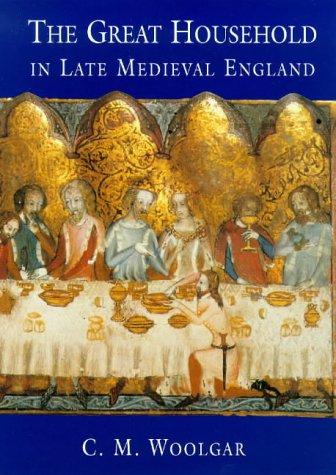
The Great Household in Late Medieval England
by C. M. Woolgar
Buy on AmazonIn the later medieval centuries, a whole range of important social, political and artistic activities took place against the backdrop of the great English households. In this vividly illuminating book, C. M. Woolgar explores the details of life in these great houses. Based on an extensive investigation of household accounts and related primary documents, he examines the daily routines, the weekly and annual patterns, and the life-cycle observances of birth, childhood, marriage, death and burial. He also delineates the major changes that transformed the economy and geography of both lay and clerical households between 1200 and 1500.
Recommended by
"Like Barbara Harvey, Chris Woolgar has read an awful lot of accounts. In fact, he’s published a two-volume compendium of the medieval household accounts that survive for England. So he’s got a lot of experience in using primary sources. In The Great Household , which is aimed at a wider audience, he explores the culture of late medieval England through the prism of the wealthy. Not only are rich people able to afford many more things, but they have left many more accounts of their attitudes, their approaches to the tangible things around them, their ideas, their beliefs—religious beliefs, but also their personal beliefs, their outlook, their superstitions, their attitudes to medicine. It’s a concise compendium of how the wealthy lived. Chris Woolgar was working in the wake of Colin Platt, so he takes into account the fabric too. You’ll have attention paid to the rooms in a castle, and why we go from a society in the 12th century—when perhaps the lord of the manor would have had his own chamber but everybody else used to sleep in the hall—to a late medieval castle like Bodiam, built in the 1380s, where there were numerous private chambers for the officers of the household or for guests. Bodiam Castle had more than two dozen private chambers built within it. That changed the dynamics of a great household and charting that change is part of the book. But the book also deals with things like what people smelled and when they used makeup and perfume in the late Middle Ages. It’s the entire culture of the upper class—not because they’re special, but because they’ve left the best records, which allows us the greatest accuracy. And we do know the middle classes tended to try and ape the upper classes, so this is indicative of some of the things that the lower ranks of society were aiming to achieve as well. It’s a real keyhole view of how people lived."
Daily Life in Medieval England · fivebooks.com