Zeinab Badawi's Reading List
Zeinab Badawi is an award-winning broadcaster, journalist and filmmaker. She is President of SOAS University of London and is an honorary fellow of her alma mater St Hilda’s College, Oxford. Born in Sudan, she has worked in the British media for decades including co-presenting Channel 4 News alongside Jon Snow before joining BBC News, where she interviewed some of the world’s most notable personalities and politicians on the BBC’s Hardtalk and Global Questions. Zeinab is a recipient of the President’s Medal of the British Academy, a Patron of the United Nations Association UK, and is on the bo
Open in WellRead Daily app →Books About African History by African Writers (2025)
Scraped from fivebooks.com (2025-01-07).
Source: fivebooks.com
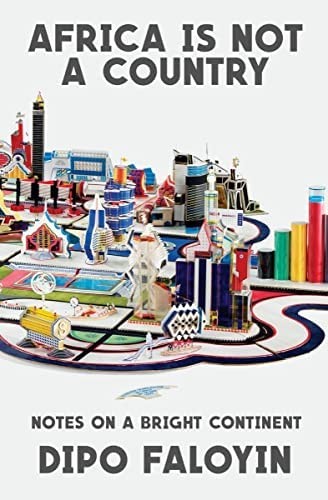
Dipo Faloyin · Buy on Amazon
"Dipo is largely addressing contemporary Africa, but he starts the book with the Berlin Conference of 1884-1885 to show how African countries only really came into being at that time—with some exceptions, like Egypt. I suppose he wants to show how the difficulties that Africa encountered were set in motion by that conference, and how Africans were excluded. Even though slavery had been ended for some decades by the time of the Berlin Conference, that didn’t mean it was the end of Africa’s ills. The colonial powers were still there, carving up Africa for their own interests. So he wants to show how there has been a continuity of that unfair balance of power between Europeans and Africans. He also looks at recent history of African leaders—Idi Amin, Muammar Gaddafi, and so on. It’s not a history book exactly, but he picks up on the slanted way that the world looks at Africa, and he does that by focusing on the coups, the wars, the famines, and how these negative perceptions of Africa have become the whole perception. He tries to show that Africa is a varied continent of 54 countries, all with different histories, different languages, different peoples, different ethnicities. Because it is still the case that, if there is a coup in West Africa, it will stop investors investing in East Africa or Southern Africa, because they see it as all one. He takes the knee-jerk view of Africa and debunks it."

Chinua Achebe · Buy on Amazon
"Yes, this is not a history book, but it is absolutely compulsory reading for anybody who wants to understand the impact that the Europeans had on Africa—particularly those of the missionaries. The colonial officers were accompanied by missionaries intent on ‘civilising’ Africa. Chinua Achebe really captures in this masterpiece the tensions of that period. We still discuss the impact of the Christianising mission of the colonial officers in the building of institutions. Some people say, Look, it was good, the Brits came with their bookkeeping and accounts and literacy. But Achebe writes about how African values were eroded, people began to question the validity of their own value systems, and to advance they had to, essentially, become black British men and women, or black French men and women. Achebe captures all this—the rejection of African traditional beliefs and value systems—and in my view it is a book that should be read alongside the histories, because it shows how these tensions are still relevant today. Because things literally fall apart. Their centuries-old way of living was completely challenged by these new norms. The hero ends up committing suicide. It’s a very, very tragic story, because he felt that all he had aspired to, in the end, was reduced to nothing. I was talking to the Vice Chancellor of Lagos University a few months ago. She was wearing her beautiful African clothes, and she said: A few decades ago, I would never have turned up like this, I would have been in my business suit, you know? Now, she said, look at the students; they are all wearing their African clothes, African hairstyles. They are rejoicing in their Africanness. They want to forge a future based on their African traditions. This book is very important. It is a historical document. I don’t know how old he would be if he were alive today. But if you think that his grandmother would have been telling him stories about life before the British, and he would have used a lot of that knowledge. He wrote the book when he was 28. So it is, in my view, a historical book in that it is based on oral tradition. And the kind of debates that historians have to this day is very much supported by this book. Yes, I think it can be both. This is a debate that a lot of writers—not just African—face. There is this idea that you should preserve your language. Ngũgĩ wa Thiong’o, the Kenyan writer, wrote in English, then switched to his native Kikuyu. So this is a debate that is often had. I think that it doesn’t matter Chinua Achebe didn’t write it in his native language, Igbo. It was translated into Nigerian languages, and many other languages because it is a book with international resonance. I think it’s a bit of a sterile debate. Because books can be translated. Having said that, I do believe in the preservation of local, indigenous languages. We are seeing ‘first language attrition’ right across Africa, in Francophone, Anglophone and Lusophone countries. But I don’t think Chinua Achebe writing in English distracts from his masterpiece. If anybody were to read only one book about Africa, I’d put Things Fall Apart right at the top of my list."

Dambisa Moyo · Buy on Amazon
"This came out about 15 years ago. What Dambisa was saying in this book is much more common currency now, but when it came out—by a Zambian economist with a PhD, who’d worked at the World Bank—people sat up and paid attention. She put a lens on the fact that humanitarian assistance is the way that many people in the West engage with Africa, and that’s a problem, because it exaggerates the importance of humanitarian assistance. It’s just one small tool in a big development toolbox. She then went further, to say: not only is aid not as significant as you think, but it’s also actually quite pernicious. I wouldn’t wholeheartedly agree with that. My view, from everything I’ve read, is that some aid works. Some doesn’t. But I think she had to exaggerate to make the point. I think there’s a role for aid, but she brought out the arguments against it quite clearly. “No country in the history of the world has been developed by outsiders” Development aid is quite different from humanitarian aid. You know, if there’s flood or a famine, then of course you need to send in money, food. But she was looking at development aid mostly, and she said: if you have too much assistance for health and education programmes, it absolves the leaders of these countries from spending money on these things. So they go and put lots of money into their defence budget, or they pilfer it—it lets them off the hook. This is not good, obviously, because at the end of the day, the only thing that will make Africa develop is responsible, accountable leadership. No country in the history of the world has been developed by outsiders. Let the citizens rise and say: We’re not being treated properly in hospitals. Where’s the money? You’re selling oil, you’re selling copper, where is all this money going? That’s what is so good about Dambisa Moyo’s book, it brought home these arguments. She gave a lot of case studies about how aid can prop up irresponsible governments, andabsolve them from having to respond to their citizens. Sometimes it also leads to duplication of efforts due to lack of coordination. That’s why she called the book ‘Dead Aid,’ and I think I was a useful response to what was going on at the time."

Linda Heywood · Buy on Amazon
"Yes, so Linda Heywood is an African American academic. I think it’s important to include the work of the African diaspora, be they in the Caribbean, Latin America, North America or Britain. This all comes under the banner of Africans telling their own history, even if Linda Heywood is disconnected from the continent of her ancestors. It’s important to include that diaspora voice, and they bring something interesting to discussions about African history because they have the benefit of seeing both sides, or being able to relate the history of her ancestors in a way that a Western audience will understand. So I think she’s a very important voice, along with all the fine African scholars in Western universities. Queen Njinga was born in 1583 and died in 1663. She was Queen of the Ndongo kingdom, a vassal state of the kingdom of Kongo —one of the main African empires, established in the 1300s. Njinga is a very good example of strong African female leadership. Her name, in the local language, means ‘to twist’. She was born with the umbilical cord around her neck, which denoted that she was going to be a great leader, a great person. Her father, the king of Ndongo, saw that amongst his children she was the most able and skilled. Although she had a brother who was the heir, he would take her to meetings with elders, judicial occasions, and so on. So she learned statecraft, and she was also a very effective soldier and fighter. She was an exceptional person. When her brother was king—as Heywood relates in the book—Njinga was sent by her brother to Luanda, about 250 kilometres away from their capital Kabasa. She went in all her finery. And when she arrived in Luanda, the Portuguese governor of Luanda told her to sit on the floor. He was sitting in this beautiful chair, embossed velvet and gilt. She refused to sit on the floor, as obviously this would show a subordinate status—so she commanded her tallest female attendant to go on all fours, and she sat on her back. After her brother killed himself, she killed his son and became queen. So she was ruthless. She had said to the governor of Luanda: Don’t enslave our people, we’ll give you enslaved people from our enemies. So the elites were involved in slave trading. The Portuguese turned against her and she outwitted them every which way, and died a peaceful death in her early eighties with her crown on her head. She became a Catholic—was baptized—but she also maintained her own traditional beliefs. So it harks back to what we talked about with Chinua Achebe’s book; even nominally African Christians, to this day, will indigenize their own beliefs into Christianity. They find their own form of Christianity by marrying them. I saw this all over Africa. And the Achebe book is so good because it shows this rejection was not wholesale. Njinga is a very good example of that also. It’s a very thick book, with a lot of sources. The Portuguese wrote about Queen Njinga a great deal. But what Linda does—which is what most African and African diaspora historians do—is also rely on oral tradition, and what that tells us about Queen Njinga. That’s very important too. She pieces together the life of this remarkable, as Heywood calls her, warrior queen. It shows how, as the Europeans began encroaching on African land, it’s not as though the Africans took it lying down. They resisted at every turn. They lost, in the end, because of the superior firepower of the Europeans, but they resisted. Njinga’s story is one of resistance and strong leadership. Jada Pinkett Smith, the wife of Will Smith, produced a TV documentary series based on Queen Njinga . I’m pretty sure she used Linda Heywood’s book as part of her source material . And that shows you how Linda being African American is very very important, because it helps popularise African history and put it out into the mainstream, to the point where a member of the Hollywood aristocracy wants to make a series about it. As a result of Linda’s book and the TV series, many more people will have heard about this strong African queen. You know, we started off with people like David Olusoga writing about Black Britons. That started making people aware of African stories. There was the controversy around the Coulson statue, the Black Lives Matter movement, I think all these things do represent a sea change. Restitution is a very current debate. Dipo Faloyin talks about that in his book—how much British institutions benefitted from the profits of slavery. All of this has come together to put the focus on the African diaspora. In my book, I look at something different—which is African history in Africa. For me, the pre-colonial era is very important. To say: Actually, Africa is part of the global story. You should know about African history, and it’s not all about colonialism and slavery. It’s not all about suffering. While Europe was being decimated by the Black Death, these mighty civilisations were flourishing in Africa. Now everybody thinks Sudan is just a conflict-ridden country with nothing good coming out of it, but hundreds of years before the common era it was a regional superpower. My additional point is that it shouldn’t be left to the outsiders to tell that story, because they will never tell it properly. You know that old African proverb? ‘When the lions have historians, the hunters will cease to be heroes.’ That’s true in many ways. And I’ve been very heartened by the response to my project. Aside from ancient Egypt , I don’t think there’s much African history on schoolkids’ curriculums. And that’s important—because Africans are not only the descendants of slaves, we are much more than that. We have a fine history, and I think that’s very important."