Walter Isaacson's Reading List
The former editor of Time magazine and CEO of CNN has written the seminal work on Einstein’s life and theory. He tells us Einstein bet his wife he’d win the Nobel Prize for his 1905 work and promised her the prize money in return for a divorce. ‘She takes a week to calculate the odds...and she takes the bet. He didn’t win until 1921 but he did give her the money and she bought three apartment buildings in Zurich.’
Open in WellRead Daily app →Einstein (2010)
Scraped from fivebooks.com (2010-12-17).
Source: fivebooks.com

Peter Galison · Buy on Amazon
"This is an absolutely brilliant investigation into two related discoveries that deal with how you define what is simultaneous. Poincaré helped us get to the notion of time zones and longitude in the 19th century. Einstein was working as a patent clerk in 1905, because he couldn’t get an academic job, and Galison shows how he was looking at a lot of applications for ways to synchronise clocks because the Swiss had gone on standard time zones and, because they were very Swiss, they wanted the clock to strike seven in Bern at the exact same time as it struck seven in Zurich. In order to synchronise the clocks, you have to send a signal between them, and that signal travels at the speed of light. So Einstein had to visualise how you define what is simultaneous by using a light signal. He realised that what is simultaneous to two people standing still is different if one person is in motion. And that is how he came to his theory of relativity. He realised that as you approach the speed of light, time flows more slowly. The book is a great piece of research looking at the patent applications that Einstein saw and showing his thinking. Galison tried to uncover the various patents for devices that would synchronize clocks. This is a triumph of research combined with brilliant conceptual insights."
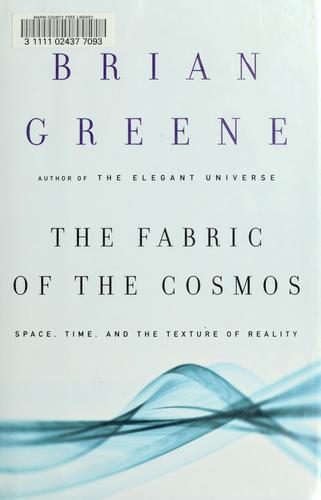
Brian Greene · Buy on Amazon
"Brian Greene is one of the developers and a pioneer of string theory , and what he’s doing is he’s aiming at Einstein’s great unresolved quest for a theory that ties all the forces of the universe together. In The Fabric of the Cosmos, he takes Einstein’s fundamental discoveries of special relativity and general relativity and puts them in their historical context. He starts with Newton’s theory of gravity and helps us understand all the developments that led to Einstein’s theory that space and time create a four-dimensional fabric that is related to gravity. This is the clearest explanation of Newton and Einstein available, and Greene does it with a great sense of humour and wonderful visual thought experiments. “He had a religious-like reverence for the concept of a creator, even though he did not believe in a personal God” He wrestles with the question Newton asked about whether a bucket of water spinning in an absolutely empty universe would show any signs of inertia, would the water spin up against the sides? From that, he is able to walk us through the great issues of gravity and space. Einstein and Greene think it would, yes. The fabric of the cosmos is there even in an empty universe."

Albert Einstein and Leopold Infeld · Buy on Amazon
"Infeld was a poor Jewish refugee to America when he met Einstein. Infeld needed money and so Einstein said he would write a history of physics with him. Infeld was a great writer and Einstein was a great physicist and this book gives a history of physics in a way that helps you to understand Einstein’s great insights. Deeply woven into this is his idea that there must be laws of the universe that are invariable and it shows why Einstein was opposing quantum theory and quantum mechanics which say things happen at a sub-atomic level purely by chance. Yes. Very valid. Einstein was wrong in resisting it. Or I guess I should say it seems like he was probably wrong. He had deep philosophical qualms that drove his scientific criticisms. He thought that God would not play dice with the universe. He had a religious-like reverence for the concept of a creator, even though he did not believe in a personal God, and this is reflected in this book as well."
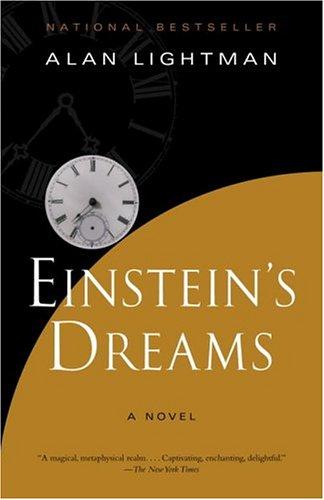
Alan Lightman · Buy on Amazon
"This is a work of fiction that weaves in the whimsy of Einstein’s days as a patent clerk in Switzerland and the types of dreams he may have had. They are little fables that come from his dreams and that relate the theory of relativity to real life. What makes this little book so good is that, as Tom Stoppard does, Lightman understands the science as he ties it into a literary piece of whimsy. Well, time-travel dreams. A man is plucked from the present and put somewhere else and he thinks: ‘If I touch anything, will the universe turn out differently? If I go back and kill my father, will I never be born?’ There is also a dream in which time flows backwards instead of forwards. The whimsy is good and so is the physics."
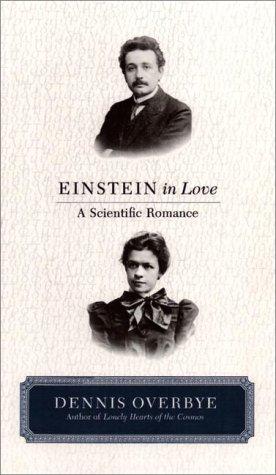
Dennis Overbye · Buy on Amazon
"This is a great piece of writing and of research about Einstein’s relationship with his first wife, who served as his sounding board in the miracle year of 1905 when he discovered special relativity and laid the groundwork for quantum theory. Mileva Maric was a physics student at Zurich Polytechnic, and when she and Einstein met, they fell madly in love. Overbye wrote one of the first books to come out after the huge trove of letters between Einstein and Maric became available. He shows their passionate love but also their shared joy in physics. He helps us to assess how much she helped in the development of Einstein’s theories. Well, she didn’t come up with any of the concepts, but she was a sounding board, and she checked the maths and the proofs. When the passionate relationship exploded and Einstein wanted a divorce, he couldn’t afford the money Maric wanted to raise their two boys. So Einstein said to her that one day he’d win the Nobel Prize for his 1905 work, and if she gave him a divorce, he’d give her the prize money when he won. She took a week to calculate the odds and consulted other scientists, but she was a good scientist herself and she took the bet. He didn’t win until 1921, but he did give her the money and she bought three apartment buildings in Zurich."
By the Book: Walter Isaacson (2017)
NYT By the Book column (2017-11-02).
Source: www.nytimes.com

George Washington Cable · Buy on Amazon
"A novel about a white Creole and his quadroon half-brother with the same name — I've become fascinated by the complex shadings of race and class in 19th-century New Orleans."

Eric Motley · Buy on Amazon
"I was blown away by Madison Park, a book just written by a colleague of mine, Eric Motley, about growing up in a tight-knit African-American enclave of Montgomery, Ala."
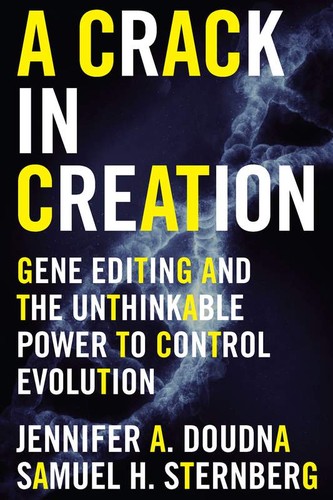
Jennifer Doudna · Buy on Amazon
"Her book is a rollicking scientific detective story that reminded me of the great scene in James Watson's The Double Helix."
James Baldwin · Buy on Amazon
"When my dad died earlier this year, I found it on his shelf and read it. I wish I had read it when he first asked me to."

Ta-Nehisi Coates · 2015 · Buy on Amazon
"I wish everyone would read Ta-Nehisi Coates's Between the World and Me and J.D. Vance's Hillbilly Elegy together."

J.D. Vance · Buy on Amazon
"I wish everyone would read Ta-Nehisi Coates's Between the World and Me and J.D. Vance's Hillbilly Elegy together."
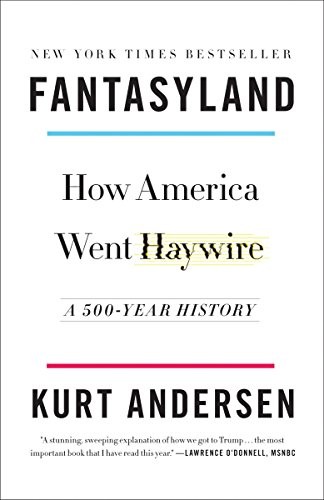
Kurt Andersen · Buy on Amazon
"Kurt Andersen's Fantasyland. Our current wave of crackpot conspiracies and tribal paranoias is nothing new, and Kurt traces their roots back four centuries."
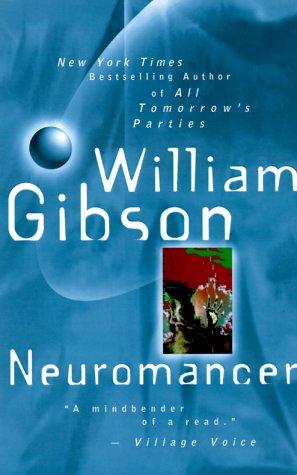
William Gibson · 1984 · Buy on Amazon
"I jacked into it during the 1980s when I subscribed to Omni and read William Gibson's story Johnny Mnemonic, which led me to his novel Neuromancer. The hero is a console-cowboy hacker who gets data stored in his brain."

Neal Stephenson · 1992 · Buy on Amazon
"I also love Neal Stephenson's Snow Crash, which 25 years ago foresaw a virtual-reality metaverse that might supplant the internet."