Vincent Serrano-Guerra's Reading List
Vincent Serrano-Guerra is a digital consultant and author of Kill The French: 100 Stories in French Written With Transparent Words.
Open in WellRead Daily app →The Best Books for Learning French (2022)
Scraped from fivebooks.com (2022-02-11).
Source: fivebooks.com

Anthony Bulger · Buy on Amazon
"The first one is Assimil. It’s a language learning method. It’s French and it’s very traditional, it was founded in the 1920s. It’s very simple. When you open the page, you have one story on the left-hand side of the book, and you have the translation on the right-hand side. There’s audio as well. It’s a bit old style and traditional, but it’s very helpful, because you can control how fast you want to go. You can just do one story every day, or two or three a week, depending on how much time you have. The book I wrote is a little bit the same concept, you have one story per day. Have you heard about Assimil in England? Exactly. In my book, you have very little grammar. After each story, you have maybe one sentence explaining how you do the negative form, or what the plural or singular are or something like that. It’s very, very little. But, in the stories, you have questions and answers, people are talking all the time. So in fact you are in contact with a lot of grammar without being stuck in a lot of theoretical explanations. I moved to Berlin maybe eight or nine years ago, without knowing any German at all. So I started to try all the apps and books and everything. Language learning is a topic that is very interesting, because everybody has an opinion on it. We all went through this difficult process when we were in high school and everybody is very happy to complain about it and to talk about it. You have a lot of people online making videos, a lot of polyglots—people who are able to speak a lot of languages—explaining how they did it. “People who are absolute beginners will need audio” I think many methods are very boring and difficult, and others are pretty exciting. I’m a digital consultant, and I was initially working on a concept for an app. But there’s a lot of competition, so I wanted to do something a bit different, more niche, maybe working on the content. Online, I found a dictionary of cognates. A cognate is a transparent word, it’s the same in two languages. It was very impressive; I found a dictionary of 20,000 words that are the same in English and Spanish. I realized that in French it would be pretty much the same: there are a huge number of French words that are the same as in English. It doesn’t make any sense not to take those words into account when you learn a new language, because it’s a way to acquire way more words much more quickly—and to practise more as well. So I started writing very short sentences. In the beginning, I only had one page. Then two pages. I was testing it on English speakers. Then I thought, ‘maybe I can do short stories.’ I spent maybe five years on this, so maybe it’s a bit too much. But now I’m happy: I published it three months ago, in early November. The more methods and tools you have, the better it is. Assimil is an amazing method. You will have a bit more grammar stuff and explanations related to that. Also, it doesn’t use those transparent words. In my book, in 100 stories you get to learn the 500 most frequent French words plus 1200 transparent words. So, in three months, you learn 1600 words. That’s the idea, to just speed up learning. If they can already read a bit in French, they’re going to be able to use the book. But you might laugh a bit when you hear their pronunciation. I think that is a big problem with French and English, there is a big difference between the way they’re written and the way they’re pronounced. That’s why English is difficult for French people. When I was a teenager, I used to read books in English and then you start to invent your own pronunciation. I had to watch a lot of movies to kill those weird and fake pronunciations. People who are absolute beginners will need audio. My objective is, maybe in two or three months, to do an audio version because when you learn languages, it’s super important, especially at the beginning."

Olly Richards & Richard Simcott · Buy on Amazon
"Yes, it’s part of a series by Olly Richards and he covers lots of languages. There is audio for the book as well. So you have real French content that you can read and listen to. That’s cool. Get the weekly Five Books newsletter"

Hergé · Buy on Amazon
"Tintin is very nice because this is a book where what is written is connected to pictures. So you have a guy with a gun or driving your car. Even though you don’t understand everything, you can follow the story. Comic books are pretty helpful like that and I used them a lot to learn English. What is also very interesting about comic books is that it’s mostly dialogue. When you want to learn languages, you find lots of dialogues for beginners, but then when you read books, most of them don’t have much dialogue. It’s like a different language. When you learn languages, you really need questions and answers. It’s a very specific kind of sentence and grammar. For that comic books like Tintin are very helpful."

Albert Uderzo & Rene Goscinny · Buy on Amazon
"Yes, it’s very local. Asterix is for more advanced learners, who have a better understanding of French culture. Also, you do have a lot of technical words, about the Romans who were occupying Gaul, the food and so on. If you start to open your dictionary anytime you encounter a new word, you’re going to get lost with Asterix. Tintin is more about adventures and planes and cars. It’s easier."
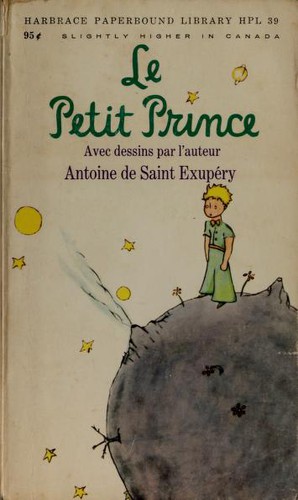
Antoine de Saint-Exupéry · Buy on Amazon
"It’s for both, I think. It’s not too big. It can be your first achievement when it comes to reading a French book, it’s less than 100 pages. It’s a bit like for me, when I was younger, the first book I read in English was The Old Man and the Sea . That’s around 100 pages as well. It can be the first time you read a whole book in French. Also, Le Petit Prince is very poetic. If you lose a little bit the path of the story, there are many other stories. Maybe you will understand some parts and not others, but you can still like it and enjoy it. I tried Babel and Duolingo but personally I am not a huge fan. These apps are a bit frustrating because you’re forced to follow a track that is the algorithm of the app. If you want to go back to what you did two days ago, you’re not able to. In the end, with a book, you do your own algorithm. If you want to do 10 stories, and then go back to the second story, you can. You can just do whatever you want. “Many methods are very boring and difficult, and others are pretty exciting” There is one app I love but it’s a bit geeky and not that well known. It’s called AnkiApp . It’s a flashcard app and you add cards to learn words. The design is very simple and it’s not very beautiful, but the algorithm is very impressive. You have the flashcard and you say, ‘Okay, I know the word a bit/too much/not at all and then, depending on your answer, you have it back in 10 minutes or later that day, the next day, or a week later. You can learn a lot of sentences and small sentences and words with this app. You can build your own cards, but you can also share your cards online and people share their cards. So if you want the 1,000 first words in Chinese with audio, you can find them. But you do need to upload cards and it’s not super easy to use. At the beginning of the first lockdown, I signed up to Verbling and had a conversation every day. I had three different teachers. I was just doing conversation for fun in English and a bit in Spanish. So there’s Verbling and there’s also italki , which is pretty much the same kind of platform. It’s not too expensive and it’s a way to be able to get in touch with native speakers instantly. So that’s really, really cool. There’s Emily in Paris , a TV show on Netflix. People complain about it a lot here in France. They say it’s a lot of clichés but, personally, I really like it. it’s promoting Paris and French culture. French people always complain about everything but I’m happy that Netflix invests in Paris. The series is in English but with Netflix, you can adjust the language or subtitles. I’m not amazing with languages. I speak Spanish , but I learned it at school. I’m okay in German, but I’m not amazing. I’ve tried many times to learn languages, but then I forget. I did an internship when I was 22 in China. So I learned a bit of Chinese but I don’t remember it. Chinese is so different—when you learn Chinese, you realize how similar European languages are in the structure, the words. It’s interesting because high school teachers only talk about false friends. In the end, the false friends are maybe 100-200 words, while there are 20,000 real friends. In my book I don’t have any false friends, I totally avoid them. Instead, I focus on the real friends. In France, we have two hours for lunch. A long time ago I used to work in the automotive industry. The team was German, French and English. For the English team, lunch was only 15 minutes with a sandwich in front of the computer. The Germans had one hour and the French had two. It’s a very different style. Here are some sentences with transparent words that help explain the context: « Le train arrive dans six minutes à la station Opéra » « J’invite mes parents et mes cousins à diner au restaurant » « Le journaliste interviewe le président de la République » « Paul décide de changer de direction »"