Timothy Beal's Reading List
Timothy Beal is Florence Harkness Professor of Religion at Case Western Reserve University. Raised as an evangelical Christian, he has published several books on the cultural history of the Bible, religion and popular culture. He has written essays for many magazines and newspapers, including The New York Times , The Chronicle of Higher Education and The Washington Post .
Open in WellRead Daily app →The Best Versions of the Bible (2011)
Scraped from fivebooks.com (2011-02-18).
Source: fivebooks.com
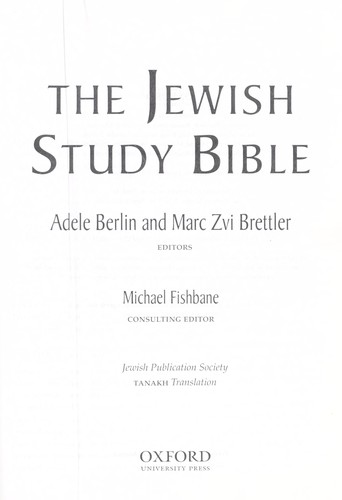
Adele Berlin, Marc Zvi Brettler & Michael Fishbane · Buy on Amazon
"Do you know about the TANAKH translation? I tend to call it the Hebrew Bible, but it’s the same thing. TANAKH is an acronym. It’s what the Jewish Publication Society calls its translation of the Old Testament/Hebrew Bible. TANAKH stands for the three parts of the Hebrew Bible as laid out in the contents of Jewish scriptures. The ‘T’ stands for Torah and comprises the first five books: Genesis, Exodus, Leviticus, Numbers and Deuteronomy. They are in the same order as in Christian Bibles. The ‘N’ stands for Nevi’im . This means ‘prophets’ and refers not only to Jeremiah and Isaiah but also to the ‘historical books’, as the Christian Bible calls them. These are Joshua, Judges, First and Second Samuel, First and Second Kings. The last letter, ‘K’, stands for Ketuvim , meaning ‘writings’. These are the remaining books in the English Old Testament. That’s the basic Jewish structure of the canon – those three parts. The table of contents is different but the actual books are the same. It’s a puzzle. Although they followed the Hebrew text, Christian Bibles took the table of contents from the Septuagint , which assembled things in a different way. It offers an alternative perspective to Christian-oriented Bibles. The translation is very different, beginning with the very first verse. The NSRV says: ‘In the beginning’. The TANAKH says: ‘When God began to create’. They have two very different meanings and it makes you consider there is no single version of the Bible. The TANAKH is also different in terms of the ordering of the books and the fact that there’s no New Testament or Apocrypha. Yes, I would rather use the word ‘scriptures’. I think it’s a better term."

Harper Bibles · Buy on Amazon
"It’s trying to be. It’s green in terms of the materials it’s made from. And it tries to guide readers towards an environmental engagement with the text. It’s a growing interest among many Christians, even conservative evangelicals. This Bible literally highlights in green the texts that have ecological implications. The first chapter of Genesis is all in green, as is anything that relates to creation or nature. That includes references to animals. In the Passover story in Exodus, verses four and five in chapter 11 are highlighted because the firstborn of the livestock are going to be killed. I’m not sure how useful that is for constructing an environmental theology. The Green Bible includes essays by fairly well-known theologians, such as Wendell Berry and Brian McLaren. There’s also a green subject index at the end, which refers readers to relevant passages. I like Mark Twain’s idea of the Bible as a drugstore where you can find poison and cure. There are many moments in biblical literature that, interpreted in certain ways, can contribute to an eco-spirituality or eco-theology. But there are also passages that can lead to environmental irresponsibility. This includes the first creation story, where God tells us to subdue and have dominion over all living things. It suggests you should control and stomp over nature and use it as you wish. There are, of course, ways around reading the text in that way. It’s certainly trying to tap into that market. My guess is that it’s not the first Bible most people own. Part of the challenge of Bible publishing is to add value and encourage people to buy another version. People frequently buy Bibles as gifts and I can see how this Bible might appeal. I’m sympathetic to this Bible’s interests and I don’t think it’s a pure gimmick. But publishers are always thinking about new markets."

Forlaget Illuminated Sweden (Editor) · Buy on Amazon
"Yes, that’s quite provocative. It’s an example of the way Bible Illuminated likes to juxtapose images and text in ways that don’t make obvious or immediate sense. The gun image is used in Matthew when the text says: ‘I do not come to bring peace, but a sword.’ The text is highlighted in yellow and it’s used as a caption under a picture of a boy holding a semi-automatic weapon. I really like this Bible. It’s evocative without being interpretative and the visual images are stunning. It’s a more aesthetic approach to biblical literature. It has no commentary or notes – just an occasional textual highlight and an image with a loose connection to it. It’s not obvious how they relate and it creates, almost like a parable, a tension in the mind with no obvious resolution. It destabilises how one might read that text in relation to the image, and vice versa. For young people who haven’t found a way to engage with biblical literature, Bible Illuminated might open something up."