Tim Weiner's Reading List
Tim Weiner is an American reporter and author. His books have won both a Pulitzer Prize and a National Book Award.
Open in WellRead Daily app →The US Intelligence Services (2012)
Scraped from fivebooks.com (2012-03-18).
Source: fivebooks.com
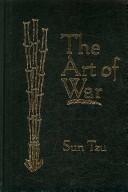
Sun Zi (also written in English as Sun Tzu) · -500 · Buy on Amazon
"Sun Tzu, a Chinese general 26 centuries ago, tells us: “If you know your enemies and know yourself, you can win a hundred battles without a single loss.” That is the mission of intelligence. We can build all the billion dollar spy satellites we want – and we do – but to know your enemy is to talk to him in his own language. That is the job of spies, and that is what The Art of War teaches. Through intelligence. Intelligence is the art of war without weapons. Well, you need to define what that is. Is it disinformation, lying, cheating or stealing? Black ops can mean all of those things. It can mean propaganda. It can mean putting a spy in the enemy’s camp. It can mean putting a bomb under the hood of the car of an Iranian nuclear scientist. The phrase “black operations” encompasses a multitude of sins. The last one I listed was the work of the Israelis."

David Wise and Thomas B Ross · Buy on Amazon
"The Invisible Government was the first reported book that actually described what the CIA did. It was written almost 50 years ago, and was a landmark. It explained that the CIA was not James Bond, which was just then becoming popular – that intelligence was not a matter of flying into a foreign capital in a trench coat, overthrowing a government, having a martini, making love and then catching the next plane. It showed that intelligence was a difficult, dirty, dangerous and at times tedious business which was about information, and how information meant power. So it’s a very good book that is still vital today. And David Wise is still writing great books about intelligence. Things got much more complex. There are now 17 different American intelligence services, with a bureaucracy of interlocking directorates above them overseen by the Director of National Intelligence. All of them are required to report to the secretary of defense, who in turn reports to the president. In the last three years things have gotten better, largely due to the author of our next book."

Robert M Gates · Buy on Amazon
"Robert Gates was the head of the CIA under the first President Bush. Under the second President Bush, at the end of 2006, he succeeded the irascible Donald Rumsfeld as secretary of defense. He stayed on under Obama until just a few months ago. Gates, as you can see in From the Shadows , really understands how intelligence can serve and do disservice to the president of the United States. He probably had more experience in intelligence than anyone who has ever been secretary of defense. The secretary of defense basically runs the show when it comes to intelligence. We spend somewhere just south of $100bn a year – the precise amount is classified – on intelligence, and the secretary of defense controls 85 to 90% of that. Bob Gates basically got off the bus from Wichita, Kansas in 1966 and went to work for the US government. He went from the air force to the CIA. After learning Russian, he became an expert – as we defined it – on Russia during the Cold War. He himself never went to Russia until the Cold War was ending, even though he was considered to be among the leading experts on the USSR. He got off the plane and Gorbachev said to him: “How does it look from the ground?” Because the US had been staring down at the Soviet Union from spy satellites and planes, but we didn’t understand what was going on on the ground. We could count the missiles, but we didn’t see the potatoes rotting in the field because there wasn’t enough fuel to take them to market. Gates learned through bitter experience, over the course of half a century, how intelligence works. It’s an amazing book. And as secretary of defense he used that knowledge to improve our intelligence services. Ultimately, intelligence should serve the national security of the United States. When you get up in the morning and open the paper or turn on your computer, you want to know: Is the world safe? Is my country safe? Is my city safe? Is my family safe? That is what the president wants to know too, and that is the job of intelligence. In theory, it’s a bunch of boxes that connect and send intelligence up through the director of national intelligence and the secretary of defense to the president. In the past, it has worked more like 17 different musicians with 17 different scores playing a cacophonous tune with the conductor flailing his arms madly. But we’re getting better at it."

Barbara Tuchman · Buy on Amazon
"In short, this is one of the greatest books ever written. Why did the Trojans take in the wooden horse? Why was America in Vietnam? Barbara Tuchman explores those questions, and the answer is folly – leaders acting against the interests of their constituents. Folly explains so much of the history of world events. People believe that the world is run by conspiracies because that is what they read in novels and see on cheap TV series. But the course of world events is determined less by conspiracies than it is by stupidity. Why did the British lose the United States? How did the Renaissance popes bring on the Protestant reformation? Folly. Lack of intelligence. Consider the three meanings of the word intelligence. It is the power of your mind; it is secret information; and it is secret action taken in the name of a nation. If we had more intelligence we would know our enemies, have fewer wars and there would be less folly throughout history. Exactly. Why did they let the horse in? Folly. The March of Folly explains how not to make decisions. Leaders must learn to act only out of enlightened self-interest. To use power wisely, they must make intelligent use of information. If they blunder on based on faulty assumptions, then the Greeks end up inside of Troy and Americans wind up mired in Vietnam for a decade."

George Orwell · 1949 · Buy on Amazon
"None of us love Big Brother, but we all know he is part of the family. Big Brother is like the uncle we don’t like who has to be invited for Christmas. The question is: How do we live with Big Brother without him ruining our lives? Nineteen Eighty-Four described, in 1948, what the modern surveillance state was going to look like. At the time, J Edgar Hoover was creating that surveillance state. He is the man who invented the fingerprint file. Every camera that stares down on us in Washington, New York and London, and every bit of biometric data collected on us, is a tribute to Hoover. The greatness of Orwell’s book is that he saw it coming and described it in terms we could understand. What Orwell foretold in Nineteen Eighty-Four was already happening as the book was being published. And that is what my history of the FBI, Enemies , is about. Like I say, we’re relatively new at this. We’ve only been at this in a serious way since World War II. The lessons of Sun Tzu are 26 centuries old and we’re only just internalising them. So give us a chance. Also, to know your enemy you must talk to him in his own language. Nowadays that might be Arabic or Pashto or Chinese or Urdu. We don’t speak those languages very well. We want everyone to speak English. We want everyone to look like us, think like us and be like us. That isn’t a very good cultural climate for producing successful intelligence, nor for the enduring projection of power. In the introduction to Enemies I point out that [US statesman] Alexander Hamilton, writing in 1787, said almost exactly the same thing. We have to have liberty and security. They are opposing forces and there is a constant tug of war between them. We strive to strike the right balance. I would argue that over the last three years we’ve been getting it less wrong than we once did. Have we been attacked in a serious way? No. Have we created any new secret prisons? No. It was the FBI who reported the abuses in Abu Ghraib. It was the FBI director, Robert Mueller, who stared down George W Bush and told him to scale back electronic eavesdropping. Robert Mueller is an ex-Marine and also a great respecter of civil liberties. He has said that he is not going to go down in history as the guy who won the war on terror but took away our civil liberties – because that would be a pyrrhic victory. When the FBI makes mistakes under Mueller, it admits and corrects them. He and the people he reports to must strike the balance between liberty and security every day. Lately, we’re doing a pretty good job. There will always be mistakes. Getting the balance precisely right is extremely difficult and, like democracy itself, is a work in progress."