Tilly Burn's Reading List
Tilly is the Archives and Collections Assistant at The Roald Dahl Museum and Story Centre , and is responsible for the curation and care of Roald Dahl's original manuscripts, as well as lots of other brilliant and fascinating items. These are kept in the Roald Dahl Archive, inside the Museum. The Roald Dahl Museum and Story Centre is aimed at 6 to 12 year-olds and their families, and is situated in Roald Dahl’s home village of Great Missenden in Buckinghamshire.
Open in WellRead Daily app →The Best Roald Dahl Books (2020)
Scraped from fivebooks.com (2020-04-09).
Source: fivebooks.com

Roald Dahl · Buy on Amazon
"It’s about a little boy named Billy who has the bright idea that one day he will own a sweet shop supermarket, filled with long corridors and ladders to reach all the glorious sweets and chocolate. This is his idea of paradise. One day he is standing by this shop called ‘The Grubber’ on the high street, which is actually based on the high street where we are here in Great Missenden. Suddenly, loads of stuff like an enormous bathtub and an empty canary cage flies out the window and he meets the owners of this random shop, who are a giraffe, a pelican and a monkey. So, the title The Giraffe and the Pelly and Me is from the perspective of the monkey—the “me” isn’t the little boy, but the monkey. And together they start this window washing business. The Pelican has this amazing ability to retract his bill, so it turns into a big bucket, and the giraffe can extend her neck so she can reach the higher-up windows and the monkey can clamber up the neck of the giraffe to clean the windows. They clean the Duke of Hampshire’s Hall, clean all his windows and along the way manage to foil a burglary. Then the Duke of Hampshire is so pleased that he gives Billy money to turn the dilapidated old Grubber into the sweet shop of Billy’s dreams. So they all get what they want and Billy gets his sweet shop in the end. Only the burglary, really. This is a book designed for much younger children. The Duchess gets her necklace stolen, but they manage to foil that plan. But there are little bits, like the Duke saying to Billy that he will have the pelican for breakfast, which are not particularly lovely."
Roald Dahl · Buy on Amazon
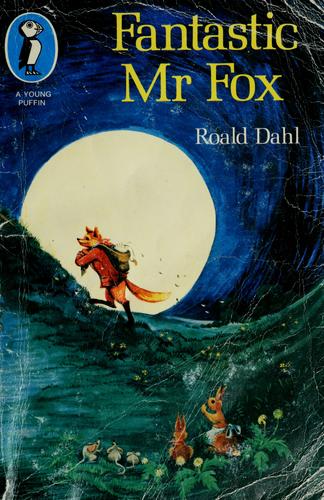
"Yes. It’s about the enterprising and wonderful Mr Fox, whose family are starving in their burrow. He’s fed up of not having enough food to feed them. Mrs Fox asks him to go out and get some food and he comes up with a phenomenal plan to dig tunnels underneath three farmers—Mr Boggis, Mr Bunce, and Mr Bean—and steal chickens, ham, cider and lots of other goodies from them. Boggis, Bunce and Bean are furious about it and very nearly catch him, shooting off his tail in the process, but he and his sons prevail, they manage to get all the food and they have a wonderful big banquet right at the end. I grew up with Roald Dahl books, so most of these are based on my memories of what I really loved when I was little and that hasn’t really changed upon learning more about them. I’ve always really loved foxes, so I like a book about foxes. I grew up in a place where there were a lot of farmers, so I liked the idea of the foxes getting one over on the farmers. I found that quite funny. And I love the illustrations of Mr Fox. I really liked the idea of there being a really comfy, cosy den underneath my feet where badgers and foxes were having wonderful feasts. And I would never know what it was. I would never be able to go into the den, but I could imagine that it was there, this sort of underbelly of the countryside. And I also just really liked the idea of a clever Fox tricking lots of horrible people. I thought that was justified."
Roald Dahl · Buy on Amazon
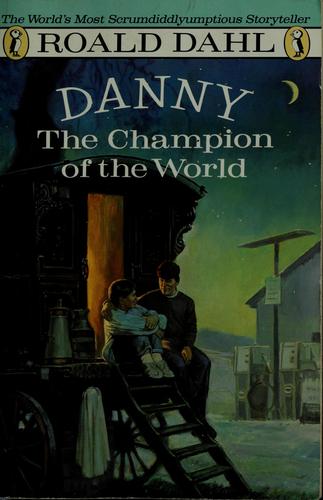
"Yes. Danny and his dad are the two main characters in Danny Champion the World . My dad read a lot of these books to me and I loved this one. The Giraffe and the Pelly and Me was the first one he read to me, which is why it’s my number one favourite of all time. But even when I was little, I loved the relationship between Danny and his dad, and I love the fact that Danny’s dad had to be sparky and interesting and that was what made Danny’s dad so much more amazing than any of Roald Dahl’s other adults, really. If you compare him to Matilda’s parents, Danny’s dad is on another level. Sign up here for our newsletter featuring the best children’s and young adult books, as recommended by authors, teachers, librarians and, of course, kids. And, again, it was the rural, pastoral themes that I knew about that attracted me. I had lots of pheasants around me. And I love the idea of two underdogs tricking really nasty evil people. And there’s so much great imagery in the book. There’s a bit where Danny and his father manage to poach pheasants by using sleeping powder poured into raisins. And there’s some lovely detailed imagery of slicing open the raisins, popping the capsules of sleeping powder, pouring in the white powder, sewing up the raisin, then giving them to the pheasants and the pheasants falling down with soft, fluffy bodies, going ‘thump’, or something like that—I paraphrase. There is so much beautiful, detailed imagery. It’s so evocative with loads of different senses to think about. It was a book that you could really fall into. No, you’re right—right at the end, Danny and his father walk off with some of the pheasants and go to buy an oven to cook them for dinner. Victor Hazell. Victor Hazell is the nasty man who owns the forest. He doesn’t let Danny and his father poach in them and he turns up at Danny’s father’s petrol station and is very rude."

Roald Dahl · Buy on Amazon
"The Gene Wilder version, yes. There were some differences between the film and book, such as Slugworth becoming a spy, and the additional rooms in the film, like the fizzy lifting drink room. Roald wasn’t necessarily a huge fan of these changes. Although he wrote the final script, there were some changes from directors, as well as from another writer named David Seltzer. I think he just felt like it wasn’t necessarily 100 per cent true to his vision of his book. The book came out and was a great success long before the film was made. I don’t know what made Charlie so much more special or enduring than many of his others. It’s one of his first books. It came just after James and Giant Peach , so he was a new, upcoming but very prominent author, so his novelty factor was at its peak. So, I guess it’s one that people really jumped on, but the story is so inventive. Support Five Books Five Books interviews are expensive to produce. If you're enjoying this interview, please support us by donating a small amount . His character names are amazing—Augustus Gloop, Violet Beauregarde, even Willy Wonka—they all have these fabulous, incredible, ridiculous names that are great to say and very funny. And again, you’ve got this darkness, where the nasty children just disappear. They fall away in various different ways or shapes or forms and you’re rooting for poor little Charlie Bucket. And even the way Roald Dahl describes his characters at the very beginning on the contents page, ending with ‘the boy we like very best of all, Charlie Bucket’—I think that those sentences draw you into the story. And because you believe Roald Dahl and trust him, and because you know he tells a good story, you immediately accept that he’s telling you to root for Charlie Bucket. You think, ‘Yeah, sure. Here we go!’ “I grew up with Roald Dahl, so most of these are based on my memories of what I really loved when I was little and that hasn’t really changed on learning more about them” It’s a story about the hero, Charlie Bucket, and Charlie is just a little child just like you, the reader, going on this amazing fantastical, wonderful adventure to this chocolate factory that would be phenomenal if it was real. I think you can really put yourself in Charlie Bucket’s position. And Roald Dahl speaks about Charlie Bucket with so much tenderness that it makes you feel very tender towards him, too. You want everything to go well for him. Yes, that always struck me as a bit brutal. Very rarely do the wicked people come out on top. In Dahl’s short stories, sometimes the wicked people will do very well. “The Landlady” is one such instance. But in the children’s books, the evil characters tend to get their comeuppance. Miss Trunchbull does, the Enormous Crocodile does. He tends to like the idea that good will triumph. One of Roald Dahl’s favourite books when he was younger was Hillaire Belloc’s Cautionary Tales . And they have a character called Matilda, which is where his Matilda came from. He grew up with this notion of horrible children. He thought horrible children were so interesting and so fascinating, but in the end, you don’t really want them to win. It doesn’t make a good story if the horrible children win; we tend to like it when the good guys win—but it was the horrible children who fascinated him most. In the original draft of Charlie and the Chocolate Factory he had nine naughty children, who all came to horrible ends, with names like Tommy Troutbeck and Miranda Mary Piker. He really let rip when writing about these figures. He really enjoyed writing that draft, but they had to be cut because his editors thought that it was a bit much. I think they were probably right. Four is enough. Yes, he cites The Cautionary Tales quite often, in lots of speeches, as a text he liked, one that inspired his love of books."
Roald Dahl · Buy on Amazon
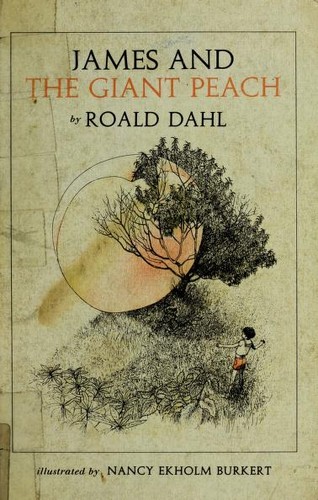
"Yes, absolutely. I think it is one of his darkest books and a very sad book. It’s very gruesome, very macabre. It was Dahl’s first ever children’s book, written in 1961, fresh off the back of writing his short stories. One of his editors suggested to him that now he’d got the short story form down, maybe he could write books for children—because they’re short and because Dahl was very good at getting from A to B in an imaginative, wonderful way. It’s definitely darker and less measured than lots of his later children’s books, which are a bit nicer and a bit happier. I reread James and the Giant Peach recently. Right at the beginning it’s so sad that in James’s house, where he lives with Aunt Sponge and Aunt Spiker, he can literally look out and see his old house, where he used to live with his parents. You find that out on the second page, and it’s just such a heartbreaking little detail that Roald puts in. So James is darker, but it’s equally fantastical, funny, comical and brilliant. It’s got all the good stuff. I think it’s really emblematic of Roald Dahl’s writing. James is a boy with a tragic backstory, unfortunately. His parents died in an accident and he lives with his horrible aunts, Aunt Sponge and Aunt Spiker, and he comes across an old man who offers him glowing green seeds. They’re called ‘crocodile tongues’ in the books. The old man gives him some of these and tells him that they will change his life. And James is running back to his house and trips and falls and drops the crocodile tongues, which sink into the ground. When he wakes up the next day, there’s a giant peach on his tree. The peach breaks off and rolls away and James climbs in and meets all the insects who have been around the tree. They have also been affected by these crocodile tongues, and are now life-sized and can talk. “There is so much beautiful, detailed imagery. It’s so evocative with loads of different senses to think about. It was a book that you could really fall into” James and the insects go on this fabulous adventure across the sea, get circled by sharks, fly into the clouds—all sorts of adventures—and then eventually end up in New York and everyone lives happily ever after. That’s the story in a nutshell. I think it’s fair to say that his appeal is very enduring. There are lots of things coming out based on Roald Dahl; there’s The Witches film coming out in 2020. There are lots of different adaptations of his work. When you think you’ve seen them all, there are always new things to say or new ways to tell the story. We have all of Roald Dahl’s original manuscripts for all of his books, which are just a wealth of information. There are always items from the archive on display, as well as loads of family-friendly, hands-on activities about Roald Dahl’s life and stories. You can even peek inside Roald Dahl’s Writing Hut , where he wrote all his books for children. This was moved into the museum in 2012. One of the first things I did when I started here was just to read everything I could get my hands on. He made so many changes. You think Roald Dahl is an amazing author, which he is, but not even he could write a story without making a few mistakes along the way. He had to rein himself in. For instance, in Fantastic Mr Fox, Roald Dahl’s initial idea was to have the foxes stealing from the supermarket rather than the farmers. And it was an editor who actually said, ‘You know, what? Why doesn’t Mr Fox steal from some farmers instead?’ Dahl thought this was just such a brilliant notion. He took this seed of an idea from his editor and went off and created Boggis, Bunce and Bean. So, if it wasn’t for some input from others along the way, we wouldn’t have Fantastic Mr Fox . It was nice to discover that Roald Dahl was human. He made mistakes. No one can create a Fantastic Mr Fox at the first go—not even Roald Dahl. It takes skill and talent and effort and, gosh, he wrote so much, so many drafts for all his books. He put his heart and soul into them. And I think that’s something you can really see in the archives here. Editor’s note: In some countries boxsets of Roald Dahl’s books are available, very useful for entertaining children and as gifts."