Syreeta Brown's Reading List
Syreeta is currently Group Chief People & Communications Officer at Virgin Money. She lives in London, and Bigger than the Moon is her first book. Syreeta was named Financial Services Leader of the year at 2018 Black British Business Awards and has been featured in the UK Powerlist 2023-2025.
Open in WellRead Daily app →The Best Books for Parents of Autistic Children (2025)
Scraped from fivebooks.com (2025-02-19).
Source: fivebooks.com
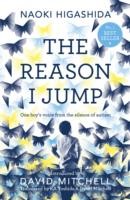
Naoki Higashida · Buy on Amazon
"Yes, Naoki Higashida is an autistic teenage boy. The title alludes to stimming, which can be a feature of autism—you might see rocking, noises, flapping of hands. From the outside, to someone who doesn’t understand, it could look pretty atypical and even quite disconcerting. I think stimming was one of the very earliest indicators I noticed in Chloe, my daughter, who was a baby when I strated thinking about her developmental delay. As I became more enmeshed in the world of autism, I did more research about stimming and understood that it was a sensory need to feel centred, and it was a good thing—right for the individual. Naoki talks about it from the perspective of a person who is autistic. It’s a beautiful book, and even more powerful that it is done through words that aren’t necessary expressed. It was my first experience of challenging my own stereotypes, something I’ve had to do a lot. I think parents have to go through that process to be able to help their child. Reading this book was a pivotal moment for me."
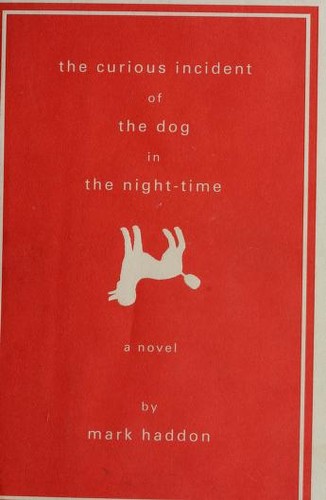
Mark Haddon · 2003 · Buy on Amazon
"Yes, I don’t want to ruin the book for your readers. The story, in this one, is very important. One thing I wanted to pull out in my own book is the impact on siblings. The siblings of children with special needs are really special people, who have to go through a process and a journey themselves. As a parent you are constantly trying to navigate the tension between your neurotypical child and your child with a need—because a child with a need often takes up all the space in the room, right? There are times when they have to. So one of the things I was focused on early on was making sure that my son was supported. He was seven when Chloe was diagnosed, and I really wanted him to understand, just like I was trying to understand. He is a big theatre and drama person, so when he was younger I looked for literature that he could access. The Curious Incident had been adapted as a play at the time, so I took him to see it. That’s how we first got into it. He loved it. This book is actually brilliant for any age. The story pitches the theme of autism implicitly. It’s set in a plot, a story, and the autism is not the main point. For me, that was a great way of presenting it. The story is sad, it’s funny, it has twists and turns. So I recommend it to everyone. Absolutely. It did a great job of raising awareness. And also, it helped me see that it could be an opportunity. I started the journey thinking: Oh god, this is terrible, it’s not what I planned. Then I moved to: What’s the opportunity here? What can I learn? How can I be a better person as a result? Finding these books was a big part of that process, and being able to share these books with other people makes me feel like I’ve not only helped myself but maybe somebody else out there as well."

Steve Silberman · Buy on Amazon
"This book came into my life once I had gone through the process of acceptance and had become an advocate of autism. I was trying to understand the world in its positive sense, right? In the sense of looking at it as an additive, not something that takes things away from people. So this book was recommended to me. I worked for an American company for about 11 years, and America has quite a different approach to autism than here in the UK. It’s much more autism-aware. This is a few years back, but although the UK is getting better, the provision in the US is much more established with lots of early intervention. There’s a much higher rate of early diagnosis. Twelve years ago, when I started going through the diagnosis process with my daughter, there wasn’t really any diagnosis at all at pre-school age. So my American colleague recommended me this book, and I love it. “It makes a lot of sense that people coming at the world from a slightly different angle might be able to bring new insight” It’s empowering, reassuring, and it really focuses on what the title says on looking at it not as a disorder but as something different . Sometimes when you start going down this track, people want to resist. They’re like: Are you saying you don’t want it to be a disability? It absolutely is a disability, in the practical sense. These individuals definitely need support. But it’s not necessarily something that has gone wrong, it’s just gone different. Steve Silberman interrogates that with evidence, and with examples of the opportunity that individuals who think this way have provided to the world, the knowledge that they have given to the world, the benefits… It was an affirming book that helped me manage myself and my thinking. Of course, it makes a lot of sense that people coming at the world from a slightly different angle might be able to bring new insight, and so that means they can offer a great deal of potential in all walks of life."

Louise Gorrod · Buy on Amazon
"It’s a really simple book, and it has a lot of emotion attached to it for me. I knew there was something not right with Chloe from birth. This was an intuitive thing, I didn’t know what it was. My son was always naturally good with my daughter, and he still is—they are very close—but when he got to school I knew he would be challenged by his peers. His sister was going to be different and I wanted him to be comfortable with that really early. I had a really great paediatrician who said: There’s this very simple book by Louise Gorrod, written for children of your son’s age who have siblings with special needs. So it is aimed at the six- or seven-year-old to help them understand how to talk about their sibling. And, you know, he loved it. He would take the book into school to show to his friends and his teacher. After that, they did a session with his class using the book. He’s still in touch with quite a few friends from that primary school, one of whom is his best friend, and they love Chloe just as much as we do. They’re so good with her, you know, and she was always comfortable with them. So this book is for all those parents out there who are still going through those early stages. Don’t forget the sibling! They are on their own journey as well. Absolutely. And being kind to yourself, too, right? Be kind to yourself if you are the person going through this journey. If you are a person supporting that individual, be kind to them. Managers at work, colleagues, friends—you all play a part. They definitely played a part in my journey. I’m quite determined, and I have a natural disposition to carve away at everything I do. But I haven’t done it alone. Although sometimes I did feel desperately alone—which is one of the reasons I wrote my own book. So that people understand: it’s okay to feel alone, but no, you are not. I’ve been very, very fortunate to work with brilliant people who gave me the space to navigate this journey. I now work at a very senior level, and I have a very understanding CEO. But sometimes you can’t see that, when you are going through the process. So I encourage people to seek others out and to be vulnerable. You can’t do it alone."