Suzannah Lipscomb's Reading List
Professor Suzannah Lipscomb is a distinguished historian, author and broadcaster. She is Professor Emerita at the University of Roehampton, Senior Member at St Cross College, Oxford, and a Fellow of the Royal Historical Society and the Society of Antiquaries. Suzannah has written and edited seven books, presented history series on BBC, ITV, More4 and Channel 5, and she hosts the popular Not Just the Tudors podcast from History Hit. In 2020, Suzannah chaired the judging of the Costa Book Awards.
Open in WellRead Daily app →The Best History Books to Take on Holiday (2019)
Scraped from fivebooks.com (2019-07-03).
Source: fivebooks.com
Helen Castor · Buy on Amazon
"This is a light little book, perfect for holiday reading. Yet despite its short length, it provides a wonderfully rich evocation of Elizabeth I ‘s reign, in gorgeously turned phrases. Quite simply, a little gem of a book."
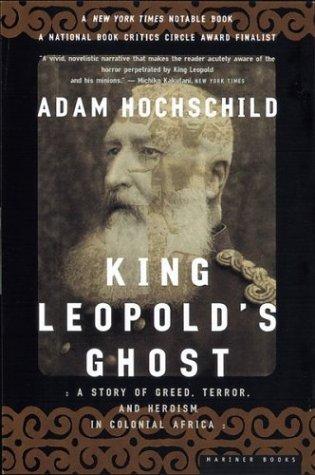
Adam Hochschild · 1998 · Buy on Amazon
"This is an incredibly powerful, horrifying, and utterly brilliant study of Belgian colonialism of the Congo and the brutality and genocide that followed in its wake. It is riveting and deeply important; a must-read book and the real Heart of Darkness ."
Edvard Radzinsky · Buy on Amazon
"This tale of the demise of Tsar Nicholas II and his family is superbly written, brilliantly researched, and an utterly enchanting read. It makes the last days of the Romanovs devastatingly vivid and completely unforgettable."
Saul David · Buy on Amazon
"This book tells the amazing story of the hostage rescue mission at Entebbe Airport in 1976. It is a stunning piece of research based on newly-released classified documents and interviews with the participants. And it is so compelling that, having been reading it in a bath that had gone cold, I got out and sat with my hair dripping because I couldn’t bring myself to put it down."
Natalie Zemon Davis · Buy on Amazon
"This book tells the fascinating story of Martin Guerre: a mysterious tale of imposture, love, and honour among sixteenth-century French peasants. It is a brilliant bit of historical detective work and a captivating read that plunges the reader deep into the world of the past. One of my all-time favourites."
Recent Nonfiction Highlights: The 2024 Women's Prize Shortlist (2024)
Scraped from fivebooks.com (2024-06-11).
Source: fivebooks.com
Laura Cumming · Buy on Amazon
"This is a genre-defying book, as many of them are. It examines the life and work of Carel Fabritius, the 17th-century Dutch artist – who painted ‘The Goldfinch’, among other things. He actually only left just over a dozen paintings, and has been under-recognised in assessments of the Golden Age of Art. He’s always referred to as a ‘missing link’ between Vermeer and Rembrandt, as if he doesn’t stand for anything himself. “Mary Ann Sieghart called it ‘the authority gap’: women are still expected not to be able to talk with expertise in the same way that men are” But it’s also an examination of Cumming’s own father’s work – James Cumming , an artist in his own right. The two disparate stories are drawn together, I suppose, by what one might call memoir. There’s a connection, which is Laura herself. It’s a work of admiration of both people, and it has this incredible structure which unfurls and pulls in all manner of things along the way. Laura Cumming has an incredible facility with words. She can describe a painting in a way that means you see more in it than when you look at it with your own eyes. She brings a lyrical quality, and it’s very, very moving. I mentioned the structure—it is so carefully managed that there’s a revelation on the very last paragraph of the last page that leaves you with you mouth hanging open. Breathtaking. How did she do that? On Chapel Sands , yes. Also a wonderful book."
Noreen Masud · Buy on Amazon
"Yes, another amazing book by a beautiful writer. Masud brings together her love of flat landscapes—she has written about flat landscapes and literature as an academic—with her experience of confinement by her father while growing up in Pakistan, and her diagnosis of complex PTSD. Flat landscapes become both a memory and a metaphor in this book. With complex PTSD, there is no one event that you can point to and say: that happened to me. It is rather a continuous environment that shapes who you are, an environment of fear. Flat landscapes are the same —there are no peaks. She assesses, in all sorts of cool and interesting ways, this metaphor and how it plays out. It’s also a meditation on post-colonialism, what it means to be a woman of colour living in a post-colonial world. It’s revelatory, and very much more than the sum of its parts. It doesn’t sound, in my description, as amazing as it is in practice, you’ve just got to try it. It’s quite extraordinary."
Madhumita Murgia · Buy on Amazon
"This is so interesting. Madhumita Murgia is the Financial Times ’ first editor of AI. She writes about the world in which AI is created, and the human consequences. Every chapter has a name like: ‘Your Livelihood,’ ‘Your Freedom,’ ‘Your Safety,’ ‘Your Writings.’ What’s fascinating about it is that you might go into it thinking it will be about the great tech companies and the men who run them. Murgia is, in theory, very positive towards technology, but she’s looking at the dark underbelly of what it means across the world, for those who are what she calls “slaves to the AI revolution,” whose job it is to monitor social media, day in day out, or who are labelling images of roads so that AI can learn what a street sign is and what a piece of tarmac looks like. Or she thinks about the consequences for those affected by the AI movement into creating ‘deep fake’ photographs, and a number of different ways in which AI can be very detrimental in people’s lives. She also looks at some of the ways in which it can be a positive, always from the human side of the story. I came away never wanting to accept cookies again. It’s essential reading."
Naomi Klein · Buy on Amazon
"This is such an interesting book. It starts, as you say, from the experience of the author being mistaken repeatedly for the writer Naomi Wolf, and her indignation about that. Because here are two women who have gone on very different directions, politically speaking. She uses that as a jumping off point to think about the way in which we all have digital doubles – thinking about our social media presences, and the way we recreate ourselves digitally. She talks about what she terms the ‘mirror world,’ which is the way in which in the places Naomi Wolf has ended up – Steve Bannon’s show, this sort of thing – many of the stories being told by progressives go through the looking glass and become a kind of inverted version. So the ‘Big Lie’—that Trump won the election—is mirrored by the ‘Big Steal’—that Biden stole the election, for example. She examines this idea of doubling in all sorts of different ways that reflects on where we are politically, socially, and economically at this present moment. It becomes this incredibly clever, acutely observed, often funny meditation on the moment in history in which we are living."
Tiya Miles · Buy on Amazon
"This is a work of historical excavation. It concerns a sack that belonged to a girl called Ashley, who, when she was nine years old, was sold away from her mother Rose. Both were enslaved. This was the 1850s, and the sack was later embroidered by Ashley’s granddaughter, Ruth, who worked this incredible inscription that tells us almost everything we know about the story. It says: My great grandmother Rose Mother of Ashley gave her this sack when She was sold at age of 9 in South Carolina it held a tattered dress 3 handfulls of pecans a braid of Roses hair. Told her It be filled with my Love always she never saw her again Ashley is my grandmother Ruth Middleton 1921 This book is what we can know about these women, the discoveries made about their identity, and the thousands of others whose stories cannot be told who experienced unimaginable horror. A people’s trauma. How does one tell history, when the archive is so limited? She thinks about methods for marking the absences on the page, and also looking for what she calls “the chorus of collaboration.” And, when necessary, extrapolating. It’s a very powerful work that makes one think of the horrors done to Black people during the period of enslavement in America."
Safiya Sinclair · Buy on Amazon
"Yes, this is Safiya Sinclair’s first work of prose, I think. She’s a poet. And you know that when you read it, because her prose is astonishing. This is a story of her upbringing in a Rastafarian family in Jamaica, and it exposes the subjugation under which she lives. The father is the god of the household. Women are tightly controlled in what they can wear, what they can do, who they can be. It explores her parents’ story and her experience of growing up in this environment, her breaking free, and the role of poetry in that. It’s lyrical, a completely delicious read. And it has had a lot of attention for the quality of the telling. Yes. I feel very strongly about this. Let me give you some of the data. When the prize was announced a year ago, the Women’s Prize commissioned research that found that, in 2022, only 26.5% of the space given by national newspapers to reviewing nonfiction was given to books by women. In the best books of the year round-ups, they found only a third of the books recommended were by women. Over seven nonfiction prizes over the course of ten years, only 35.5% of the books shortlisted were by women. Perhaps the most shocking is the gender pay gap, which is 14% across all industries in the UK, but among writers has worsened from 33.3% to 35.7%. So, either women simply write less well than men, or something structural is going on here. I think it was Mary Ann Sieghart has called “ the authority gap ”: that women are still expected not to be able to talk with expertise in the same way that men are, after more than a couple of millennia of men being in positions of authority. When it comes to non-fictional subjects, women aren’t considered the authority figures. The Women’s Prize for Nonfiction is an intervention which aims to try to change the literary landscape. One thing that was very interesting was that, as a historian, I know the ways in which women are making interventions in meaningful ways in the factual environment. Yet publishers generally send in the sorts of books that “do well for women.” So we called in a lot of books as well, and I feel we finally ended up with a good representation of what has been published. But publishers found it hard to understand, exactly in the way that the problem exists, that women can speak to subjects with expertise as well as beauty and power. Absolutely. The quality of the work is out there already. We read an enormous number of wonderful books. Please, take a look at our longlist of 16 incredible books . I’m also hoping that the upshot of this prize will be that publishers commission more of this stuff, by women, because they know there’s a place now where it might be recognised."