Stig Abell's Reading List
Stig Abell presents the breakfast show on Times Radio , a station he helped to launch in 2020. Before that, he was a regular presenter on Radio 4’s Front Row and was the editor and publisher of the Times Literary Supplement . He was chair of the judges for the 2019 Baillie Gifford Prize . His books include How Britain Really Works and Death Under a Little Sky , his first crime novel.
Open in WellRead Daily app →The Best Nonfiction Books of 2019 (2019)
Scraped from fivebooks.com (2019-11-04).
Source: fivebooks.com
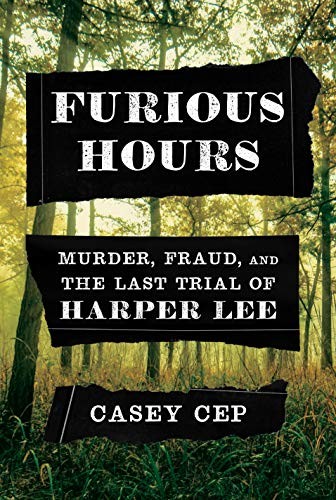
Casey Cep · Buy on Amazon
"Yes. This is flat-out one of the most enjoyable books I’ve read this year. It’s fascinating; thrilling in the sense that it is a thriller, a nonfiction thriller. It has all the elements of a John Grisham novel, but it happened in real life. Although Harper Lee is all over the cover and forms a significant part of the story, she doesn’t even arrive until halfway through the book—at which point you’re gripped by this tale of a man who is thought to have murdered several of his family, before he himself was murdered. His lawyer then began to represent the person accused of killing him. It’s a tremendous courtroom drama. It’s also a tremendous meditation on life in the civil rights period in the southern states of America. And then you have Harper Lee coming in, trying to write a book. I don’t think it’s telling a story that’s particularly well known, and it’s very well written. Casey Cep works for the New Yorker ; it’s written with poise and beauty, and it’s a fine example, I think, of a literary work that you want to rattle through to the end. It’s divided into three sections: the perpetrator-stroke-victim; the lawyer who represents him—and later the person who tried to kill him; and then you have Harper Lee. ‘The Reverend’ Willie Maxwell is this guy who’s accused of murder, a ‘voodoo priest’ who was said to kill people for the life insurance payouts. The lawyer is this fascinating figure—after Maxwell is murdered, he represents the person who shot him and argues for an insanity defence. The lawyer himself had tried to be a politician, and the racial politics of the South affected his ability to stand as a democratic political candidate. And then you have Harper Lee trying to write another book after To Kill A Mockingbird . So there are three distinct strands plaited together. That’s the organising principle, but it didn’t strike me that any one of them is more significant than the other."

Laura Cumming · Buy on Amazon
"This is another beautifully written book. Laura Cummings is an art critic, and as a piece of writing, this sort of stands as an artwork in itself. She’s reporting the mysterious things that happened to her mother when she was a child. It’s written with real clarity and limpidity, but within it are the artefacts of her mother’s childhood. There are lots of photographs from the family collection. There are some paintings, because art is very important in the story—Cumming writes very, very well about art and photography. It reminded me very strongly of W G Sebald . Get the weekly Five Books newsletter But she’s also writing a story about her mum, which is kind of an investigation. It’s not dissimilar to the Casey Cep book in the sense of it being a sort of mystery story. But the artefacts, the means of telling the story, become critical. Her mother is alive, but ageing. So this is looking back on her mum’s life. And that’s rather beautifully and sensitively and movingly done. Because it’s about family in the end. Modern families, and indeed all families, have their secrets, and have better moments that they’re happy to testify to and those that they’ll try to avoid talking about in public. So everyone has a certain connection to this story, which is: How do you deal with the ghosts of the past? How do you deal with the complexity of life? Because not everything is as straightforward as 2.4 children and a family. In some ways, this is a hymn to the complexities buried beneath most humble lives. Not really. I think nonfiction is a fairly broad and welcoming church. I think we all know what is and what it isn’t nonfiction. You know it when you see it. All of the books that we’re talking about now are clearly nonfictional accounts. Now, the extent to which they use creative writing, the beauty of artistry… There needs to be quality at that level of the sentence. Whatever one gets chosen in the end will be a beautiful piece of writing. Like I said, the question then rests on the subject matter. Is the importance, the heft of the subject more important than the beauty of the writing? And there is no right answer to that question. Each judge will have their own calibration as to what they prefer. There are six of us and we’ll have to thrash it out to find one that we can agree on. And by one, I mean one not two. Yes, I think it’s ridiculous. A ridiculous thing to do. I mean, we have six judges. We don’t have an odd number, so the chairman can’t be the casting vote. But we’re going to go for one. I think the Booker judges neglected their duties by not awarding it to one person. They literally had one job. I regard my job, and our job, as to pick one winner and that’s what we’re going to do."
William Feaver · Buy on Amazon
"It is. I mean the level of closeness, proximity to the subject that Feaver got is extraordinary. The level of detail about Freud’s life that he got is extraordinary. This book is kind of a biographer’s tale: biographers will admire it because of its level of engagement, but it also then becomes a broader story about the period, both in terms of location in Soho and in Bohemian London—and remember, this is Sigmund Freud’s grandson. At the beginning, this is the first part of his life. Freud’s family flees from the Nazis and you have a boy growing up in the shadow of his grandfather. He had things to say himself about family influences and their impact on people. So on one level, this is a story of analysis, but on another it’s just the rich tapestry of life that the artist inhabited in Soho and London in the forties, fifties and sixties. It’s very nicely written; the level of detail is absolutely fantastic. And in some ways, it’s not ostentatious about the subject. It doesn’t make grand cases for Lucian Freud as an artist. It just says, ‘Here is everything, the fabric of his existence, and therefore the fabric of lots of other existences around him,’ and delivers it in a very nicely organised, nicely written way. I think it allows the reader to conduct their own analyses of the subject. Because, like I said, it’s the level of detail; it’s an eye for a funny anecdote; it’s an apt quotation, lots of quotations; it’s not very judgemental. I don’t think it is an analysis in the way of a great Freudian figure placing his subject on the couch and drawing conclusions. That’s not how I read it. I find it much more a book by someone who wanted to weave together a person’s life, and does so by presenting beautifully turned, exhaustive detail about it. It’s the detail that sparkles out. Well, he was close to Freud. He spoke to him almost every day. He had absolute contact with Freud himself. As a result, there are lots of direct quotations in the book. This is someone who has a tremendous amount of contact with his subject, which I’m not sure is always true of biographers. And it’s a very readable book. That’s the other thing. I keep coming back to the idea of thrillers—not because that’s necessarily always the way to judge a great book, but because there is something compulsively readable about them. That, I think, is really important. This could have been a book about a great painter that was dry and academic, and it isn’t: it’s full of the blood and guts of his life. All the books that are on this list have a narrative force about them. You want to get to the end."

Julia Lovell · Buy on Amazon
"It’s a difficult book, I suspect, to sell. It probably is the least commercial book on the list, because it is an intellectual history of a vast and imposing subject. And as an imposing subject, not only because it’s complicated, in that the story isn’t straightforward, but also because it’s a story often simplified and turned into postcards, caricatures and pop art. Everyone cites Mao and knows Mao, knows the image of Mao, not least because of how he’s presented in in pop art. So to say, this is a vast, sprawling, global history of a man’s thoughts, and then to attack those thoughts—what I find so invigorating about this book is it attacks with intelligence. It doesn’t try and get lost in every single detail. It has a plan, it has a scheme, and it goes through each aspect of Maoism and its effect on popular culture. And, indeed, global culture and political culture. Taken together, that strikes me as an extraordinarily ambitious undertaking and I think it’s delivered with real wisdom and intelligence, and with style that you wouldn’t necessarily expect in a political theory history. Yeah, it must be. Otherwise there’s no point. It’s readable without simplifying. Because maybe one of the worst things you can say about a book with such an academic pedigree is that it’s ‘readable’, because people might think that’s code for it skipping over things and oversimplifying—but I don’t think this does that at all, actually. I think this has real intellectual heft. What I find most admirable about it is that it has a plan at the level of the sentence, so it can convey the information it wants to convey. And that’s a real trick because this is, at its broadest, a not particularly familiar story about the global impacts of Maoism. And yet on the other side of the spectrum, it’s a very overfamiliar story, because Mao is someone who has been commodified ironically and simplified and turned into slogans and images. Dealing with those two polarities is what the book does really well."

Azadeh Moaveni · Buy on Amazon
"The importance of this book is the way it gives voice to people whose motivations could easily be misunderstood, or subject to political forces that are completely unforgiving. This gives voice to a series of women whose voice is hard to listen to, hard to hear. In doing so, it makes us reflect on the politicisation of religion, how people of different faiths live together. There’s also one of the book’s contentions: that something as orthodox as Islamism can be seen to be revolutionary if your life is otherwise lacking in choices. To my mind, it makes you think about what options that fields for people. Because at one level, these are women entering a system that is extremely misogynistic, extremely limiting to women—getting drawn into ISIS. And yet the reality of their life before that has no great aspect of freedom, no great aspect of modernity, either. And so this gives colour and it gives perspective and it gives three dimension to stories of people that it’d be easy to dismiss as another person who’s joined an obscene cult. Which is a very straightforward narrative and one which has some arguments for it. But this serves to say: Let’s listen to people. Let’s hear why they do the things that they do, and give them the dignity having their story told. No, I think that’s different. I mean, there is an aspect of victimhood, in the sense that often they are placed in situations where there are very limited choices. One expects to have sympathy for people whose lives aren’t straightforward. It’s not that everyone who joins ISIS is evil. But the corollary isn’t straightforward, either—that everyone who joined ISIS is a victim. I think there is balance. Certainly they have made grotesquely bad decisions. But they are looking for answers in a world that doesn’t give them. And in certain contexts you can understand why they made the decisions that they made. I think that’s the bravery in this book, it looks to understand why people made decisions which, to third parties, seem completely inexplicable. I think that’s the argument. It is a timely and important book."

Hallie Rubenhold · Buy on Amazon
"Yes. Also they become fetishised through the manner of their death. They’re just dismissed, sometimes (in this case) even categorised as sex workers. One of Rubenhold’s arguments is that one of the victims was a prostitute, but four of them were not. This is a deeply, deeply moving book built from very scant historical evidence. One of the reasons she wrote this was, these are women without voices; these are women who historical record obscures. What she’s done—through very, very good research, it strikes me—is fleshed out their stories by finding little bits of details about their lives, the lives of their families, their parents, their parents’ parents. She creates a narrative where you see people nearly escaping the fate of horrible poverty, but not quite. So it’s a tragic tale because there are moments in these women’s lives where they nearly get out; they nearly escape the misery that life has allotted to them. And then just a couple of things go wrong. Support Five Books Five Books interviews are expensive to produce. If you're enjoying this interview, please support us by donating a small amount . What’s brilliant, I think, is that their death would be in some way incidental—if not for the fact that it gives a shared reason to write their stories together. They couldn’t escape that fate, but their lives are given dignity and colour. Otherwise it would just be: ‘Jack the Ripper killed people in this flamboyant fashion. Let’s all think about Jack the Ripper and go to a theme park based on it.’ It completely, completely writes against that tradition. Jack the Ripper is not in this book. We know how they die and that they die. And then the rest of it is: here are the lives of people, women, working class women, who are often written out of the history books. And this seems to me to be a brilliant and brave voicing of people who otherwise would be voiceless. That’s an interesting question. I think you can read anger into it . . . I mean, it’s clearly the case that they were given very little chance. That’s what so moving about it. There’s moments where they nearly, nearly defeat those odds. At some point, one of them reaches a good situation, gets into a good marriage, has kids. It looks like happiness is nearby, and then it falls away from her. Even if they’d succeeded, they would’ve succeeded only in the context of their own time, but they don’t even get that. You can get angry reading this book. I think there’s a relevance to how we perceive women, how we perceive victims, how we perceive sex workers especially, and how they can be dismissed—as if it’s reasonable not to care about the horrendous things that happened if the victims were sex workers. All of those political undertones are there, but it didn’t strike me as a political book and is all the stronger for it because it’s not just simply a manifesto. It’s actually a beautiful piece of history, that makes you think once you’ve put it down. Yes. To use that word again, it’s a really thrilling shortlist. One thing I have noticed is a certain, there’s a lot of ‘I’ in nonfiction now. People don’t, as a rule, write straight histories—they are encouraged to write their place into history, or into the context of the subject that they’re describing. There’s lots of, ‘here’s how I felt when I discovered X,’ or ‘here’s how Y affected my life.’ And in some ways I think that that’s rather laudable because it means people have a chance to write with feeling and personality. But I think there’s a risk that can become a cliché. The thing that occurs to me is that these books rise above all that. They tell a story where, if there is a personal connection, it is worthwhile—Laura Cumming being a really good example of that—and it adds to the book. The danger is, if you have people being encouraged to write breathily about their own experience, it can affect the quality of the research and the writing. So that’s the risk in nonfiction; there is a certain convergence of approach and tone. And that brings its own risks. Set against that though, I think there is some fantastic writing going on, some really, really fantastic, vibrant, exciting writing. This shortlist is a really good example of that. And I’m really pleased and proud that we’ve picked these six books because I don’t think you could ever say that they all straightforward or boring. There’s a lot of life in them and I think that’s what you want in any book, fiction or nonfiction: life, pulsing away. See all the recommendations in our best books of 2019 series."
The Best Classic Crime Novels (2023)
Scraped from fivebooks.com (2023-04-16).
Source: fivebooks.com

Dorothy L. Sayers · Buy on Amazon
"This is a really good example of how your relationship with a book changes over time. When I first read Gaudy Night , I thought, ‘Why am I reading this? There’s no murder in it. It’s people fannying about in Oxford. There’s a poison pen aspect to it and not much happens.’ Then I read it again. I love rereading crime books—it’s part of that comfort thing we were talking about—and I just fell in love with it. I’ve probably read Gaudy Night five or six times since then. What I love about it is that it’s beautifully written. And I really love the two central characters. There’s a love story. If you look back, in the 1920s people used to write rules for detective fiction. It was a very formulaic, very structured genre back then. And one of the rules written by one man was, ‘Never have a love interest in a detective story. It ruins it.’ I think that’s complete rubbish—as you can tell from my book, which has a love interest at its heart. “In a very messy world of no real resolution…here is a problem and here is a solution” Gaudy Night is a beautiful love story. I love the relationship between Peter Wimsey and Harriet Vane. I just think it’s magnificent. I love the fact that he’s this damaged man who some people dismiss as a posh twit. He suffered during the First World War, he has post-traumatic stress syndrome, and is in love with this woman who he once saved from being hanged for murder in an earlier book. It’s part of a series and that’s important. The setting in Oxford is brilliantly done. It’s charming. It’s very restful in parts. Nothing that bad happens for large chunks of it, so it’s quite soothing in that regard. All these things together epitomize what I love in the crime genre. Yes, I think I’ve read most of her books and I’ve certainly read all the Peter Wimsey books. The series was continued by another author, Jill Paton Walsh, and I’ve read all of those as well. Often when a series is continued after the author dies the books are rubbish, but these ones by Jill Paton Walsh are brilliant. So if you like the Wimsey/Vane books, the series goes on for another four books after Dorothy Sayers dies, and they’re also really good. Some people will say not enough happens in it, but I think that’s part of its charm. I do think it is her best. The other one I think is brilliant is Murder Must Advertise . It’s also part of the Peter Wimsey series. There’s no love interest in it. He goes undercover in a London ad agency, which is where Dorothy Sayers worked for a time herself. So what it’s like to be in a London ad agency in the 1920s is just brilliantly revealed. That’s a really good one as well. Yes, and that must have been what it was like for Dorothy Sayers. She was a great intellectual and you can sense her personal experience in the book. That’s what makes Harriet Vane so brilliant. In the book, she’s a novelist. She doesn’t take any nonsense. She’s very conscious of the world she’s moving in and the limitations of it—what happens if you constantly dismiss women, if you put them in one part of the university and ask them to live by themselves. She’s very honest about the downside of that as well. The female college is very brilliantly done, and not everyone in it is a heroine."

Ngaio Marsh · Buy on Amazon
"I came to Ngaio Marsh very late. I didn’t fully realize that during the golden age in Britain and its dominions—which included New Zealand at that time—the great authors were all women. Whereas in America they were all men: Raymond Chandler , Dashiell Hammett . Raymond Chandler hated British crime writing. He wrote this very funny article about how the books always had titles like Inspector Pinchbottle to the Rescue or Death Wears Yellow Garters . He said, “The English may not always be the best writers in the world, but they are incomparably the best dull writers.” He was setting himself up as the hard-boiled answer to the female writers in Britain he didn’t like, which included Agatha Christie, Dorothy Sayers, Margery Allingham (who is also brilliant) and Ngaio Marsh. I’d never read Ngaio Marsh at all until about a year ago. Her inspector is brilliant. He’s called Roderick Alleyn. He’s very wry. He’s highly educated and is constantly quoting Shakespeare . He’s got a lovely relationship with his colleagues in Scotland Yard. Ngaio Marsh had a lot of experience in the theatre, so quite a lot of her novels are set there, including this one. She’s very good on what actors were like in the 1920s and 30s. They were horrors, many of them. The idea of the awful luvvie is brilliant in these books. Support Five Books Five Books interviews are expensive to produce. If you're enjoying this interview, please support us by donating a small amount . She is a very good example of a golden age, classical problem-solving detective writer, like Agatha Christie. The murder took place in a theatre: here’s a plan of the theatre, here is where all the people were. How can that person have got to there in time to do the murder? But her book is enlivened by the theatre stuff, which is very well-experienced and very funny. It’s beautifully written. Also, I think what you need in all of these books is at least one character who rises off the page. She came up with a detective who was very dry and funny and whimsical. The whimsy that you get in this novel is there in all of them. Have you read any Ngaio Marsh? I think she gets lost in the mix because when you think of golden age writers you think of Agatha Christie first and Dorothy Sayers second. Not everyone would say Marjorie Allingham and even fewer Ngaio Marsh. I think it might be the problem-solving. I’ve read several of hers and they’re not all brilliant, because sometimes the crimes are too complicated. I don’t like over-complicated crime novels because they can get very dense, where the problem is everything. In mine, I wrote everything over the shoulder of the main character, my detective. Everything that he sees and experiences you see and experience as the reader. Whereas a lot of these writers, including Marsh, dance around and you see several different perspectives and you look over the shoulder of different people. Then it’s quite hard, sometimes, to piece together precisely where everyone was. They’re not very modern, in that sense. The modern lack of an attention span suffers in some of her novels. I really liked it. Roderick Alleyn is very good in it. There is a journalist character in it. He’s a Watson-like figure who shouldn’t really be there but writes down what Alleyn says and listens to him being witty. It’s amazing how all of these books mention Sherlock Holmes. I find it absolutely amazing that Conan Doyle both invented this genre and represented its high watermark. Most people who love these books would still say that the best creation ever was the first one. We’ve all been scrabbling around for 130 years, but Sherlock Holmes is still the best."
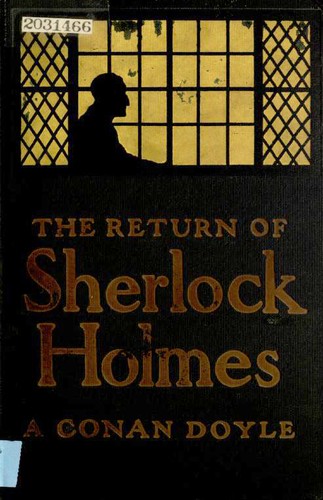
Arthur Conan Doyle · Buy on Amazon
"I’ve probably read the stories of Sherlock Holmes 200 or 300 times in my life, starting from when I was 11. I still read them now. They’re brilliantly written. What I love about this story is that Conan Doyle had written a character who was so good that when he decided to kill him off, he couldn’t because there was too much of a clamor. So in “The Final Problem” Conan Doyle throws Holmes over the Reichenbach Falls. Then, in this book, in a relatively unconvincing fashion, he has to explain why Holmes didn’t die. So in the first story, “The Adventure of the Empty House,” he has Watson semi-bereft, living in London and thinking, ‘I can’t believe Sherlock is dead’ only to find out he didn’t die. Holmes had survived the fall, climbed back up the cliff, and had then gone off around the world chasing down the gang that nearly killed him. Holmes then bumps into Watson and they solve another crime. “The Adventure of the Empty House” is a really good puzzle. It’s a locked-room murder, quite a famous one, where a man is sitting, counting his winnings in cards. The door is locked, the window is very high up: how did he die? “We’ve all been scrabbling around for 130 years, but Sherlock Holmes is still the best” But my favourite bit, the reason why I’ve chosen this story, is because at its heart is the friendship between Watson and Holmes. I’m a gross sentimentalist and I think in the end all these books live and die by the warmth of the characters. Sherlock Holmes spends all his time talking about himself as this cerebral creature, this brain. Does he actually have human, heartfelt relations? In the story, Watson bumps into a hunchback selling books. They go into a room, Watson turns around, and then Holmes stands up and reveals himself. And Watson passes out with the joy of it all. Holmes then leans over him and says, ‘Oh, my God, I’m so pleased you’re okay.’ And you realize that even though Holmes is a very curmudgeonly, annoying, acerbic, coke- and tobacco-raddled figure, there is a beating heart within him. In the end, that beating heart is the thing I love about detective fiction. It’s true in all these books I’ve recommended. That story in The Return of Sherlock Holmes has a beating heart very visible in it. Yes, Conan Doyle then goes off and writes lots more Sherlock Holmes stories. The Return of Sherlock Holmes has 13 stories and it’s got some of the classics. Some of the absolute best Sherlock Holmes stories are in this collection. I could have picked the first Sherlock Holmes collection as well. I could have picked The Hound of the Baskervilles , which is brilliant. I could’ve picked anything Sherlock Holmes. But if someone said to me, ‘You can only reread one Sherlock Holmes story’ that first story in The Return would be the one for me. It’s both a brilliant locked-room mystery and you have Holmes returning. It’s great. Also, in my book, there’s a bit where Jake discovers a secret compartment in the library he has inherited. He sees a book whose title is “The Adventure of the Norwood Builder,” which is a Sherlock Holmes story from this volume. In it, a man pretends to be killed and hides in a little room and Sherlock Holmes discovers that room. My little tribute to that is, if you pull back the book in the library, a secret compartment is revealed which advances the plot a little bit. I was born in 1980 and there were a very finite number of books in my house. There was no Amazon. I read and reread what was there, which included lots of genre novels, but it wasn’t thousands and thousands. I remember Penguin reissued some classic detective books, one of which was a Sherlock Holmes, in these very cheap, green paperbacks. I remember reading them a lot. But I had a finite number of genre novels. So no, the idea that you could have a thriller library in the middle of this beautiful country farmhouse is unadulterated fantasy."

John D. MacDonald · Buy on Amazon
"I love him. He’s not read very much in this country, but he sold millions of copies in his day. He wrote Cape Fear under a different title, The Executioners , so some people may have half-heard of him because of that. I would definitely advise getting into his books. The only warning is that they were written in the 1960s and 70s and, especially with a male author writing a male protagonist, the sexual politics is not great. With all these books written more than half a century ago, they have their moments. There’s antisemitism, there’s racism. I don’t know what you think, but I feel fairly comfortable with that, if you’re able to read these books critically. I wouldn’t get rid of it, I wouldn’t rewrite it, I wouldn’t whitewash it. I’d just accept that it’s there and have a critical engagement with it. And you have to do that with John D. MacDonald. But beyond that, they’re brilliant novels. The conceit behind the central character is magnificent. He’s called Travis McGee and lives in a boat called the Busted Flush in Florida. He wants to have his retirement while he’s still young enough to enjoy it. He’s this charming knight errant. People who have things stolen from them, who can’t get legal recourse, come to him. He says, ‘I’ll get it back for you, but I’ll take half the value.’ That’s how he earns money, and that enables him to live this beach bum lifestyle. Each book has a colour in the title and each one is an attempt to recover something. He’s an environmentalist, which has dated well. He’s constantly bemoaning the building up of the Everglades and environmental pollution in Florida. His best friend, who helps him in Darker than Amber , is called Meyer and lives on a boat called the John Maynard Keynes. He’s this big, hairy economist—this wonderful, completely original sidekick you don’t really get anywhere else. One writer who loves these books is Lee Child—and you can see a little bit of Jack Reacher in Travis McGee. He’s much more gregarious than Jack Reacher. It’s the idea of a man who goes into the uncharted, small-town badlands of America, where there are some pretty rough people. He’s really rough as well. He’s six foot five and good at fighting. He kicks ass and gets stuff back. But he also thinks about things. If you like 60s Americana, there’s loads of it in the book. I think for people who’ve read lots of crime books but have never heard of John MacDonald, it’s quite nice to find a whole unexplored avenue. If you can just have a critical engagement with some of the sex side they’re brilliant. Darker than Amber is a really good tale. A woman is dropped with a cement block into a river where they’re fishing. Then they go after the people who went after her. I’ve read all of them. I’ve got them all in a line on a shelf at my house. The first one in the series is The Deep Blue Good-by, I think it may have been part of that Penguin paperback crime library I had growing up, so I read that. There are about 20 of them, and they’re mostly brilliant. I’ve read them multiple times. Again, it has this charming, very memorable figure at its heart, which I think is really nice. And whoever comes up with a sidekick who is an economist? It is very funny. People might read this and think ‘I can take Dorothy Sayers and Sherlock Holmes, but John D. MacDonald is going too far.’ As I said, he’s not brilliantly read in this country but if you look at the history of publication, his books sold more than 30 million copies. That’s what it says on my mass market paperback, which I bought in the US. He was very much a figure."
Agatha Christie · Buy on Amazon
"Agatha Christie is just there in the culture. If you grew up in this country, you can’t avoid her. It’s always been there. It’s there on television, although I don’t really love watching adaptations of any of these books. At some point in my life, I bought a whole bunch of Poirots. There are more than 30 of them. I just started reading them. A lot of people love the later Christie, I like the early ones. This one is from 1936. It’s set at an archaeological dig. There’s a plan of the dig and where everyone’s rooms are. I don’t want to ruin it for anybody, but it’s quite a neat solution. It’s a good problem-solving one. In fact, the third book in my series (I’ve just written the first draft) is set in an archaeological dig, in a very mild tribute to this book. It’s a good setting. It’s a finite group of people who are suspects. I like the way it’s written. Her framing devices are really good—there’s not just a straightforward narrator. I love Hercule Poirot more than Miss Marple. I think Poirot is a more interesting figure. And I do have a fondness for the dramatic resolution. The ‘I’ve gathered you all in the room together and this is when I point the finger at the person who did it.’ The neatness of it is really appealing. Yes, she really did love archaeology. She even wrote a book about it . Again, this book comes with a bit of a warning. Some of the people—the natives, as she would call them—aren’t necessarily rendered brilliantly sympathetically. You have to be conscious of that. I find with Agatha Christie in particular they’re all blurred in my head. I’ve probably read Murder in Mesopotamia three times in the last five years. I’ll probably read it again in another couple of years’ time. I just about remember the conceit of how the murderer does it, but I’ll have forgotten that in a year’s time."