Stacey Peebles's Reading List
Stacey Peebles is Marlene and David Grissom Professor of Humanities, Associate Professor of English, and Director of Film Studies at Centre College in Danville, Kentucky. She is author of Cormac McCarthy and Performance: Page, Stage, Screen (2017) and Welcome to the Suck: Narrating the American Soldier's Experience in Iraq (2011) editor of the collection Violence in Literature (2014), and co-editor of the forthcoming Approaches to Teaching the Works of Cormac McCarthy . She has published widely on the representation of contemporary war and on McCarthy, and she has been editor of the Cormac McC
Open in WellRead Daily app →The Best Cormac McCarthy Books (2019)
Scraped from fivebooks.com (2019-09-23).
Source: fivebooks.com

Cormac McCarthy · 1985 · Buy on Amazon
"For my money it is his opus, his great work. There is obviously debate about that, but for people who study McCarthy, it usually comes down to Blood Meridian, Suttree or The Crossing . These are probably the most difficult books, the most challenging books, the longest books. So I risk irritating some of my colleagues by going for Blood Meridian rather than Suttree, and I should acknowledge that they’re both great. But Blood Meridian is really the masterpiece; it’s just such a rich mixture of history and metaphysics. “ Blood Meridian is the masterpiece; a rich mixture of history and metaphysics” Of course there’s interest in the region and engagement with the idea of the Western, but most people who have read it would say there’s no other Western like Blood Meridian . People have made some interesting comparisons to Sam Peckinpah’s films, but as a reading experience Blood Meridian is singular. It’s one of those books that, when you finish it for the first time, you think: ‘I’m not sure what to do with that.’ Harold Bloom said it took him, what, three attempts to actually finish it? You have to let it open up, come back to it, read it again, because there’s just so much there. I was recently teaching David Foster Wallace’s Infinite Jest , which is this massive, thousand-page-plus book. David Foster Wallace was very interested in Cormac McCarthy. You can go to his archive and see his own copy of Blood Meridian that’s marked up all over the place. And I think those two books, as different in emphasis and style as they are, are rather similar. You finish each one and just think, ‘Oh, okay, I have to live with this, digest this for a while before I will really know what to do with it.’ I like that about a piece of literature. And that’s one of the reasons that this book in particular has kept being so interesting to me over the many years that I’ve taught it, studied it and written about it. Yes. The quote often mentioned is from that Woodward New York Times piece from 1992. McCarthy said: “There’s no such thing as life without bloodshed. I think the notion that the species can improved in some way, that everyone can live in harmony, is a really dangerous idea. Those who are afflicted with this notion are the first ones to give up their souls, their freedom. Your desire that it be that way will enslave you and make your life vacuous.” So he seems to be someone who thinks you have to look at this stuff. If you’re going to try to capture the human condition in some way, shape, or form, then violence is something that you can’t ignore. Particularly as somebody interested in the American South and the American West—these areas certainly have a history of violence that you really have to grapple with. That doesn’t mean there isn’t a counterbalance in his work; I think he’s also devoted to the idea of human connection and connection with the natural world. But he’s not going to give you that without first talking about conflict—and not just easily comprehensible conflict, the mythic gunfire shootout in the middle of the street at high noon. That’s much less messy and extreme and irrational than violence as it actually occurs. So yes, his stuff is hard to read, and Blood Meridian is a very difficult text for that reason. At the same time, it’s not a gratuitous representation of violence. He does it for a reason, and he does it in a way that works. I think if you want to talk about Cormac McCarthy as an author of intense interest to a certain kind of person, it’s really got to start before that—with his strange little Southern novels and then with Suttree, which is a lot bigger, very funny, and a sort of love letter to Knoxville. People who are really interested in that stuff came to McCarthy pretty early."
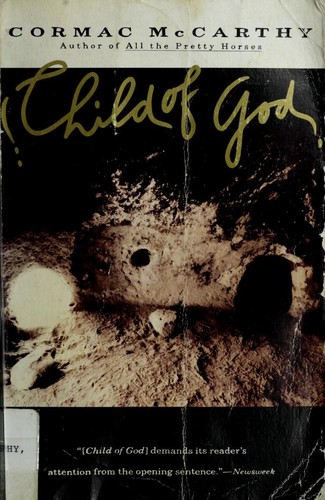
Cormac McCarthy · Buy on Amazon
"Well, there wasn’t much of one, simply because it didn’t sell a whole lot. There were good reviews which appreciated what McCarthy was after, but most conversation happened in retrospect, because after All the Pretty Horses came out, Vintage republished all of his earlier work, which had largely gone out of print. But about the book generally: I love it. It’s an elegant little novel about decidedly inelegant subject matter. I’ve taught it a number of times and I just love how it opens up for the reader. It’s certainly not pyrotechnic or linguistically excessive in the way that both Blood Meridian and Suttree are, but there’s so much going on with it. The reader really has to negotiate her own reaction to the character as the character changes over the course of the book. When I teach it, I often am very careful about how I break up their reading assignments. When students read the first third of it, they say, ‘You know, I really feel for this guy, he’s just trying to get by, his community is pushing him away, he’s doing the best he can with the resources he has.’ Even up to and including his first act of necrophilia—which is really a kind of spontaneous opportunistic act—they’re still sort of with him: ‘He was just so lonely. Is this a violation?’ You can guess the kind of interesting philosophical discussions they have about it: ‘Well, it’s a taboo, okay, but he’s not hurting anyone . . .’ But right after that, the students read the next section, where he turns to actual violence and murder, and they have to question everything they thought up until that point. Then there are interesting conversations right at the end of the book about how to feel about this character, and some gorgeous imagery all the way through. It’s short. The challenge is not in its length, or in its density of language, or obscure references, or anything like that—all of which could be said about Blood Meridian , certainly. It’s really just about encountering this very finely-drawn character, and having to decide how to deal with him. Which I think is a beautiful reading experience, even as it is about such potentially disturbing material. Here’s where I can make a pitch for another book, and that’s Dianne Luce’s book."

Dianne C. Luce · Buy on Amazon
"By this point there has been an awful lot published on McCarthy, both in terms of articles and full books. As I mentioned, there’s no biography, but I was trying to think what would be the one thing I’d recommend to read about McCarthy, and Dianne rises to the top—this book in particular. In it, she covers the Southern novels up through Suttree , and she unpacks all of this historical background. Like me, she’s very interested in McCarthy as a person who engages with region, and her chapter on Child of God is wonderful because she talks about the historical cases that McCarthy may have been drawing on in order to create this character. One of them is Ed Gein, who was also the inspiration for Norman Bates in Psycho . You would never think to put Child of God together with the film Psycho , but they do share this common ancestor. Luce does a great job of looking at the different characterization of these two figures, Norman Bates and Lester Ballard: their motivations, the way that those motivations are explained or not explained. There are some sharp differences and some interesting commonalities, and she does very fine detail work in digging this stuff up. She also puts it in the context of another killer from the region, James Blevins—who interestingly shares a surname with a character in All the Pretty Horses . So she puts that historical basis together, and then adds in a metaphysical understanding of Ballard as somebody who is stuck in Plato’s cave, if you will; he can’t emerge into enlightenment because he’s struggling down in the shadows. And it happens literally in the book: he enters a cave system near the end of the novel. It’s just such a masterful reading. That is probably my favourite of the chapters in her book, although she does excellent work with all of the Southern novels. Typically, when we say that we mean The Orchard Keeper (which is his first), Outer Dark , Child of God and Suttree . Now, The Road was published in 2006—but it is post-apocalyptic, and its location is not obvious to the casual reader. It is set, at least in part, in the South, in Tennessee, although that’s rather veiled. He also has his scripts. His play The Stonemason is set in Louisville, Kentucky. His screenplay, The Gardener’s Son , is also set in Tennessee. Those are lesser known works, certainly less read, but part of that constellation. But when people usually say ‘the Southern novels’, they mean those first four. Yes. She does a great job of laying out the historical—explaining the Tennessee Valley Authority and why that matters, why that’s such a phantom presence in all of his Southern novels. But then she is using the text and the historical sources to author a metaphysical reading as well. I don’t know if I would say that what he thinks his characters are confronting is evil. That’s a philosophically and theologically loaded term. I think sometimes attributing the term ‘evil’ to someone or something is an easy way out—it can subvert the need for investigation, for asking really tough questions. I mean, if you look at Blood Meridian and some of the really atrocious stuff that’s happening, these things are also politically motivated, right? So, parts of the Mexican government are paying the Glanton gang to scalp Native American tribes in the area, and so the Glanton gang is essentially functioning as a band of mercenaries—but they buy weapons from a Prussian working out of Santa Fe and seem to be partially funded by an American consul. And these are historically verifiable figures. What some McCarthy scholars have been interested in more recently is his engagement with economics : how talking about ‘evil’ as simply a metaphysical category might be an easy way of not talking about some of the motivating factors for why this violence was occurring. Or look at Child of God. One of the big conversations around that book is how the community can be seen as driving Lester to do this. They repossess his farm; they reject him socially, they keep pushing him away and away and away. The guy just wants to have some space for himself and he literally is denied any kind of human community or resource. This is his reaction. To call it ‘evil’ is too simple. “Oprah asked McCarthy if he believes in God, and he said: ‘It depends which day you ask me’” You might be able to use the term about particular characters in McCarthy, most notably Judge Holden in Blood Meridian and Chigurh in No Country for Old Men , specifically because their motivations are less clear. Chigurh is not killing for money, he says so, and Judge Holden doesn’t seem to be either. They don’t seem to be satisfying perverse desires. In Judge Holden’s case, it’s not clear how (or if) his perversity is linked to his murderousness. Maybe McCarthy engages evil as what we call it when we don’t have a clear choice of explanatory factors. But the idea of evil as straightforward, ‘there are beings in the world that are black holes’, I don’t know, to me that sounds a little too easy. Oprah asked him that. She was pretty good at asking him straight questions. Oprah asked him if he believes in God, and he said: “It depends which day you ask me.” This was about The Road, which of all of his novels is probably the most religiously inflected. Certainly the father in that book thinks about God and wonders about God, in some pretty specific terms. And so in that Oprah interview, when they were talking about The Road , he did say that “I don’t think you have to have a great idea of who or what God is in order to pray.” Which I thought was a nice way to put it. Oh, those are extensive. Let’s see. Michael Crews has recently published a book about McCarthy called Books Are Made Out of Books , which is a quote from the Woodward interview. Crews went through McCarthy’s archives and wrote about all of the different authors that he seems to be alluding to, or mentions explicitly in his correspondence, in his notes for a manuscript. So the short answer is there’s a whole book-length list of those. But the big ones are Faulkner, both in style and substance, and Hemingway in some of the subject matter and also style. Steven Frye would say you have to talk about Dostoevsky , you have to talk about Herman Mellvile, you have to talk about these capital-R ‘Romantic’ authors. Plato , right, his philosophical works. It seems that for most of McCarthy’s life he’s been a voracious reader and consumer of ideas. So, those would be the big names, but there’s certainly a lot of others."

Cormac McCarthy · Buy on Amazon
"Yes. It came out in 1992 and was an immediate bestseller. There was a bidding war over the film rights, though a film didn’t get made for some years—that’s a whole other story. Like Blood Meridian , All the Pretty Horses is a Western. It is violent, but it has the appearance of being more traditional, more romantic. It’s got a very appealing protagonist, the 16-year-old boy John Grady Cole, who is dissatisfied with his life in Texas and decides to make a clean break and ride to Mexico with his best friend. So it’s an adventure tale. Readers really respond to it. It is a nice balance of accessible and challenging. The plot is pretty accessible—again, it doesn’t have either the density or the hyper-violence of Blood Meridian— but the language is gorgeous. Starting from the first page, it’s got sentences that will just stop you cold, which is why I responded to it so much when I first read it. And yet his virtuosic style is not an impediment to the book, and that’s one of the reasons why it teaches really well, and one of the reasons that a lot of people like it so much. That said, it’s also a book that is not as traditional or romantic as it initially seems. I read it quite differently now to how I did when I first read it. So people can get pretty different idea out of it, depending on what kind of context you’re coming from. I’m not sure that he would put it that way. Certainly not writing in the 1960s. But I think this idea of what does it mean to be a man, what does it mean to have a sense of masculine identity, is there in every book that he writes. But I would be one of the critics who would say he’s critiquing that. John Grady Cole in All the Pretty Horses is almost astonishingly skilful, very appealing, quite sympathetic, but by the end, he doesn’t end up where he thought he would. And I don’t think he ends up where the reader expects him to be either. Especially if you’re expecting it to be a more kind of traditional story. And I have always loved the figure of Alejandra in that book, the girl that he meets down in Mexico and falls in love with, and romances. Do you mind spoilers? Well, in the end she says, ‘Sorry, I can’t be with you. I’ve got my reasons, and they’re important to me.’ He doesn’t get it, although he probably could’ve seen it coming. In fact, her grand-aunt, the Dueña Alfonsa, basically tells him this for pages and pages in this elaborate meeting they have. He still doesn’t really get it. And he doesn’t understand why his mother would want to move to San Antonio to be an actress. He just doesn’t get women, really. And he continues not to get them, later in the Border Trilogy , and I find that kind of refreshing. McCarthy’s not overtly telling you that he’s thick in this fashion, but he is a character that gets confronted with his ideas about how the world should work. You can see that as tragedy, but you can also see that as a fairly sharp critique of what happens when you have those ideas in the first place. Right. A woman is not a horse, it turns out."

Cormac McCarthy · 2006 · Buy on Amazon
"See, in another sense, I think The Road is probably McCarthy’s happiest book. Which is a little weird to say, but it does have the most sincere and overt love relationship of all of his works, between the father and the son. It’s very purely represented. It’s a relationship that is not without its complications, but beginning, middle and end, you can’t doubt the importance of that love and the sustained power of it, and its priority both for the characters and the premise of the book as a whole. “I think The Road is probably McCarthy’s happiest book” So it is a book that is very bleak, but if you’re always looking in McCarthy’s work at this dynamic between human violence—or even the violence of the natural world and what is balanced against that, which is community— The Road , to me, tips pretty heavily in favour of community, even as the violence is so pervasive and disturbing. And I think that’s why people responded to it. 2006 was really the other turning point in McCarthy’s career. Before, he was a well-known author and a best-selling author. But when The Road came out, I think he became beloved in a way that he hadn’t been before. When you’re on Oprah, it’s a sign, right? And I think partly it was because of the way he depicted that relationship. Some would say so, yes. I should preface that by saying this book has now surpassed Blood Meridian as being the book that has drawn the most scholarship. That’s kind of remarkable. Of all of McCarthy’s work, this one has the most stuff written about it. And it’s been written about in just about every way you can imagine. We mentioned theology or morality; it’s been written about in terms of economics. Is this the end of capitalism ? Everybody just consumes one another right at the end. Is it about masculinity without social context, and what that means? But a lot of people have said we should see it as environmental literature. Eco-critics see it as a warning of what it would be like to lose the natural world. I think that’s pretty potent. Another thing McCarthy said to Oprah was: we ought to be grateful. It’s hard to read this book and not then look up from the page and feel some relief at colour and warmth, and trees, and life bubbling around you. In that sense, as a way of reminding you that those things can be lost, and the loss would be profound in ways that you can’t really imagine perhaps without art like this, then certainly we should read it as environmental literature. We do. His most recent work is actually an essay. It was his first published non-fiction in 2017 in the science magazine Nautilus . It’s called “ The Kekulé Problem .” It’s about consciousness and language, and is a fascinating read. What we’ve been hearing for 20 years is that he’s been working on a very big novel that we think is called The Passenger . It’s funny: I think in the very first issue of The Cormac McCarthy Journal , back in 2001, the then-editor mentioned that it might be about to come out in her editorial introduction. And it’s still not out. So who knows. I have not heard of any publication date, although every once in a while there will be a rumour that it will come out next season . . . and then it doesn’t. But you know, that science essay just dropped all of a sudden. He did the same thing with The Road and with No Country for Old Men. They just popped out, and nobody knew they were coming. That’s one of the fun things about studying a still-living author: you never know what kind of surprises you’ll get. But we do know that there will at least be one more book to come."