Shane Whaley's Reading List
Shane Whaley is the founder and host of Spybrary, a podcast for fans of spy books and spy movies.
Open in WellRead Daily app →The Best Spy Novels of 2024 (2024)
Scraped from fivebooks.com (2024-12-15).
Source: fivebooks.com

Nick Harkaway · Buy on Amazon
"Yes, it is. Let me be honest with you, when it first became public that Nick Harkaway was writing a George Smiley novel, I was very apprehensive. For me, the two most famous fictional spies in the world are James Bond and George Smiley. But I try to be open minded. I wondered, ‘If this is like the new Star Wars movies, is it going to be the dreadful Phantom Menace or is it going to be the brilliant Rogue One ?’ And I’m pleased to say it’s more Rogue One than Phantom Menace. I was absolutely blown away with how well Harkaway has written this book. It smells like the Circus. He brings a lot of characters back and reintroduces us to them. Where he was very clever was that instead of writing a brand-new George Smiley novel—like a lot of the James Bond or Tom Clancy continuation novels, which are set in the modern day—he identified that there was a nine year gap between The Spy Who Came in from the Cold and Tinker Tailor Soldier Spy . He’s cleverly positioned his book within that timeline, so he’s able to refer back to the events of The Spy Who Came in from the Cold. What’s really good about Karla’s Choice is you can read it as a standalone novel. So if you’ve never read any Smiley novels or le Carré you can pick it up. I think the intention was—and what I hope happens is—that you then go, ‘Oh, this is great. Now I want to read The Spy Who Came in from the Cold and the whole Smiley series. In terms of the language, it’s not pastiche. Harkaway has got his own style. But he did say in an interview that when he was a little boy—he was born in 1972—le Carré didn’t type and would dictate his novels to his wife over the breakfast table in the morning. So Harkaway acquired the world of Smiley when he was acquiring language and he didn’t have to move the dial too far. The other books that he has written are very different genres: this is the first time he’s written an espionage novel . But my God, it’s incredible. He really has kept that style of his father’s. Just meeting again the characters from the Circus—Toby Esterhase, Peter Guillam, Control, as well as new characters that he’s brought in. It’s a real revelation. This is the book of the year for me, he’s knocked it out of the park. So much so that I wrote him saying, ‘You’d better be writing more of these!’. Harkaway says that his father’s intention was always to write more Smiley novels than he did. The challenge was that because Alec Guinness played such a great George Smiley, le Carré always had Guinness in his head. That prevented him from writing more Smiley. Karla is Smiley’s old adversary, he is the head of the Thirteenth Directorate of Moscow Centre. Karla features in Tinker Tailor and the other Smiley books, but not in The Spy Who Came in from the Cold . Again, Harkaway has been clever here. It’s a bit like Jaws: you don’t see the shark very often. It’s the same with Karla: he’s used very sparingly. The book opens with a Soviet hood turning up to assassinate a Hungarian émigré in London, Bánáti. On the doorstep of the office, which is opened by Bánáti’s assistant, Susanna Gero, the assassin has a change of heart. He says God has told him not to kill Bánáti. When I first read this scene, I thought, ‘Really?’, but le Carré shared quite a few stories with young Nick about the secret world, and this actually happened. Spy fact is often stranger than spy fiction. The first half of the book is George Smiley interviewing people. He’s brought back into the service having left after the events of The Spy Who Came in from the Cold . I don’t want to reveal what happened for those who haven’t read that book, but it has a pretty jarring, emotional ending. Smiley has had enough and doesn’t want to be part of it but Control brings him back in, saying ‘I need you for this. What are the Soviets doing sending in assassins to London to kill this guy? Who was he? We need to know.’ And the plot unfolds from there. George Smiley is like Sherlock Holmes rather than James Bond. He’s not going out there and shooting people, bedding women and drinking too much alcohol. He is sitting down with a cup of tea and talking to people, and that’s how everything unravels. You asked me what I love in a spy novel, and this is it: the good spy novelists keep us guessing throughout the book. We’re trying to find out who it is or what it is before the author tells us. There are clues that are dropped, but also red herrings. In the second half of the book, they have an idea of what’s going on, and go on the hunt for Bánáti. You see George Smiley in some action sequences. He goes to Vienna, he goes to Berlin. You’ve got Hans-Dieter Mundt from The Spy Who Came in from the Cold and also appears in Call for the Dead, the very first Smiley novel. What I love about Karla’s Choice is that you get the history of Mitteleuropa or Central Europe. There’s a lot in this book about Hungary. In 1963 most people would have been aware of what happened in 1956 in Budapest. Today, not so much. Harkaway did a lot of research and was able to tell the history of Hungary without it being a history textbook. I thought that backdrop was very clever. Hungary was part of the Austro-Hungarian empire , then there was World War Two and the Soviets coming in as ‘liberators’, and then there was the Revolution. It’s a heady history. You’ll notice in some of my picks later on that food is very important to me in the books I read. They talk about Hungarian food in the book and the best compliment I can give Harkaway is that on finishing the book I went and bought some really good paprika and made a goulash. So the first half of Karla’s Choice is more mystery or detective book and the second is the pursuit and of course the reveal. I believe there are nine. Again, it’s the shark thing: in some of them he features very little. Smiley doesn’t come into The Spy Who Came in from the Cold till the very end, and it’s a fleeting appearance. But you find out more about that in this book. That’s where Harkaway has been very clever."
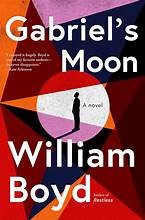
William Boyd · Buy on Amazon
"The book opens in 1936, and you’ve got young Gabriel being tucked into his bed by his mum. He has a lamp in the shape of a moon. There’s such an economy of language: within about 20 pages you find out his backstory. He wakes up struggling to breathe. There’s smoke and the house is on fire. His mother is dead. He manages to escape and is adopted by his uncle. That start affects him for the rest of his life. His bedside lamp is blamed for the fire and the death of his mother. He has chronic insomnia—he can’t sleep. He goes to a therapist, which is quite an important part of this book. Again, it’s difficult with these thriller books because you can’t go down Spoiler Strasse, but there are things that unfold about what happened when he was just six years old. He becomes a travel writer and he’s in Congo. He’s not a political journalist, but he gets the opportunity to interview the then president, Patrice Lumumba. And as we all know, Lumumba dies in very suspicious circumstances , with the fingers very much pointed at the West. Gabriel has tapes of the interview, in which Lumumba says, ‘These three people are out to get me.’ So you can imagine how sought after these tapes are. Gabriel’s Moon was one of the suggestions from the Spybrary community for book of the year. I must confess I hadn’t read any William Boyd previously. Restless is the one everyone talks about, and also Any Human Heart . Boyd also wrote a Bond book, Solo , which I have on my shelves, but just not got round to. I was reminded very much of Eric Ambler . Ambler’s books are very much about the accidental spy and not someone who was trained as one. It’s someone who finds himself in a situation. Gabriel is flying back from Congo and he sees a woman reading his book on the flight. He thinks, ‘How cute! Someone is reading my book. Should I tell her?’ But he decides, ‘No, I won’t.’ She becomes involved in his life. He ends up running errands and messages for her. He’s sent to Spain to a man called Blanco. Gabriel is ‘the useful idiot’ or is he? There’s a lot of humor in the book and I’m sure William Boyd had a good giggle writing it. One of the characters teases Gabriel about his travel writing, the purple prose, and gives examples of his flowery language, which I thought was a lot of fun. Gabriel does drink a lot. I asked a good friend of mine who read the book what they thought of it. They said, ‘I didn’t like it because I didn’t like the protagonist.’ I said, ‘How can you not like Gabriel?’ and they replied, ‘He’s a sex maniac, he’s an alcoholic and he’s a stalker’. I said, ‘James Bond possesses at least two of those three characteristics, but you like him!’ For me, it wasn’t off-putting. He definitely has his sex drive, but we’re not talking Gregg Wallace here. Gabriel has an older brother who works for the Foreign Office, who has a big house in Highgate and lots of money. He goes there for Sunday roasts, and it’s a real contrast in their two lives. I love how this book weaves fact and fiction. You have the Lumumba plot as well as other real-life events that crop up. I love it when writers do that and Boyd does it really well. Boyd is a master storyteller. I’m not sure if this book would have worked so well with a less experienced writer, but the book really does work for me. Yes, and the mystery. There are twists in the book. Who is this woman? We’re trying to outwit the author to find out what’s happening first. Gabriel’s Moon is a profound exploration of the effect of espionage on the individual. I call Gabriel accidental, but he’s not hapless. He makes decisions and does a few things in the book that have serious consequences."

Merle Nygate · Buy on Amazon
"Yes, that’s right. So at the very beginning of the book, there is an author’s note where she says that it was written prior to the horrible events of October 2023. In an interview, she said she actually submitted her manuscript on October 5th. The world is so fast moving right now, you have to feel for these spy writers. Honour Among Spies revolves around the station chief for Mossad in London, Eli. It’s the second book she’s written about him, but it can be read as a standalone. Nygate says she had read The Little Drummer Girl and, much as she’s a fan of John le Carré, she didn’t feel he writes women very well, which is true. She also felt that he didn’t write Jews very well, so she wanted to have a stab at rectifying that. She absolutely insists she’s not a Mossad agent. Of course she’s going to say no, but the reason I asked her is because the book feels like she’s had experience of working as a spy. It feels authentic. Like the Len Deighton novels , it’s not just the global espionage, you also have office politics. In the Deighton books, it’s about class. It’s the upper classes versus Bernard Samson, who is working class. In Honour Among Spies , you have the more fundamentalist right-wing Israelis, and the more liberal Israelis, of which our main character is one. Eli believes in Israel and puts his life on the line, but he’s not an extremist and has to navigate the office politics to get the job done. The central plot is skullduggery. Eli is trying to doctor Russian drones so that they backfire. There’s a lot of following arms dealers and hoods. He puts his marriage on the line. Eli is an expert agent handler, and he runs his wife like an agent. His wife is a therapist, who is working with the relative of someone he wants the goods on. So Eli does the one thing you should never do in a relationship: he gets on her computer and raids her files. That’s the moral dilemma: I have to do this for world peace, even though I might lose my marriage. Petra is the female heroine of the book; she’s been a spy and is now a private contractor. She’s in a relationship with a man who doesn’t know her background and that has repercussions on that relationship as well. So you have the spy story, you have the personal decisions, and you also have really good tradecraft in the book. Nygate uses a term ‘vinyl tradecraft,’ which I really like. It’s tradecraft that can’t be detected electronically. It could be someone on a bus who holds up a Post-it note with the meeting place destination scrawled on it. Mossad do have a tech van, the gadgets and the toys, but there’s much old school tradecraft for us traditionalists. I love the realism of these books. And whereas I went and cooked a goulash when I read Karla’s Choice , on reading Honour Among Spies , I had to go and find some really good hummus. There is one particular scene where they’re in a van doing a stake out. It’s winter and it’s freezing cold. Petra always brings a packed lunch with her, which is really practical: you don’t know how long you’re going to be sitting in a van or on a park bench. And they start talking about someone’s hummus back in Israel. And I’m like, ‘I want some good hummus now!’ You don’t see much of that in shoot ’em up spy books: they’re too busy polishing their guns and counting their bullets. Whereas our heroes are talking about hummus. It just feels real. Not a huge number. Merle cites the nonfiction book Gideon’s Spies for her research. She says that’s one of the best books on Mossad. There’s also a couple of other ones that have come out since. It’s a fascinating history. When you look at their raison d’etre, what they are all about, what they are trying to preserve, and by any means necessary…"

Jane Thynne · Buy on Amazon
"I’m not usually a reader of historical fiction . There are too many nonfiction history books that I would prefer to read. Midnight in Vienna is the exception. It was a suggestion from the Spybrary community and I thought. ‘Okay, let’s give it a go.’ It’s 1938, the eve of war, and I think there are parallels with where we are today. You have Neville Chamberlain going to Munich and other places, trying to appease Hitler. Memories of World War I were still too stark and much of the country was thinking, ‘We can’t face another war. The politicians will figure it out.’ Then you had Churchill saying, ‘We’re sleepwalking into this. We need to rearm and get ready. Hitler is totally fixated on going to war.’ That comes across in the book. You can just feel the mood in 1938 London. No one’s really sure how things are going to pan out. That was very clever. You can tell that Jane has conducted a huge amount of research in conveying that atmosphere. The plot revolves around a detective writer Hubert Newman, who dies suddenly. That’s the backstory, the intriguing piece of this book. Was it a natural death? Or was there something dodgy about it? Newman was a cozy detective novelist who is less cozy than he seems. The two main characters in the book are Stella Fox and Harry Fry, who are very different from each other. Stella has been out in Vienna working as a tutor to a Jewish family. They’re realists and can see the writing on the wall and flee to the US. So Stella comes back to London and gets a job for Newman typing up his book. When he dies the very next day, she’s obviously shocked. And then this big package arrives, which is the manuscript. It is dedicated to her, Stella, ‘spotter of mistakes.’ It’s a book about who Shakespeare really was. But there are clues in it, revealing a modern day threat to national security that Stella picks up on and then investigates. Harry is a former MI5, Special Branch gumshoe. He’s been kicked out under a cloud for reasons that are revealed later on. Again, Jane weaves in fact with fiction. So you start off with Harry tailing George Orwell because he’s on a list of dodgy lefties, creative types that they were following. Harry also follows Wallace Simpson. At one point he visits Dorothy L. Sayers , the famous mystery writer, because Hubert Newman was a member of her Detection Club. I won’t spoil it for your readers, but that scene really made me giggle. It’s very cleverly done. There’s a class divide. Stella is middle/upper class—she’s staying with a friend who’s a socialite. Harry is working class. That’s how it was between MI5 and MI6. MI5 were in the main recruited from the working classes, whereas MI6 recruited the elite set such as Maclean, Blunt, Philby et al. Stella and Harry wouldn’t normally get on or mix in the same social circles, but they join forces to find out what’s really going on. Stella goes out to Vienna at one point to conduct the investigation. Again, Jane has done a tremendous amount of research on Vienna in the late 30s, and what it was like to live there under the heel of the Nazis. I was really enthralled with this book, because I couldn’t quite see where it was going."

David McCloskey · Buy on Amazon
"It’s different from the others. As David makes clear in the author’s note, Seventh Floor is very much a hat tip to le Carré’s Tinker Tailor Soldier Spy . It’s not a rip-off of Tinker Tailor— it’s an American story, but it also revolves around a mole hunt. It starts in Singapore where it all goes wrong for Sam Joseph, the CIA agent from McCloskey’s first book, Damascus Station . He goes to meet a Russian contact at a casino, is rumbled and gets captured. Artemis Procter, a no-nonsense spy, has been the one constant character in McCloskey’s books. She gets kicked out of the CIA, and becomes the operations director of Gatorville, an alligator farm in Florida. She’s such an interesting character. She’s obviously been around the block. She’s bruised, she’s battered. She takes no crap from anyone, and then she’s wrestling alligators. She’s brought back to find out who the mole is within the CIA. It’s one of half-a-dozen people, and you get to know them. They all grew up together. They trained together at the Farm. McCloskey keeps you guessing. Just as in Tinker Tailor , just like with Philby, this is true betrayal—of not just the country but of true friends. McCloskey is able to build up the friendship side so convincingly that I felt as if I had been betrayed by a close friend. It’s not just five random characters, so when you get that reveal at the end you can really see the toll it has taken. When you’re questioning your friends, when you know one of them has betrayed you, where does loyalty come in? How do you be objective? This book is faster paced than my other suggestions, but it’s not a shoot ‘em up. Yes, there’s action in it. There’s violence. There are also—in a nod to that great TV show, The Americans —two sleeper Russian assassins living in Texas who get called on to kill Artemis Procter. They have been living in the US a long time and no one suspects them. Just as I.S. Berry, in The Peacock and the Sparrow, is very good at describing the expat scene at embassies, through these two assassins we see what life is like in suburban Dallas, going to people’s houses for barbecues. It’s all false and all the while they’re loyal agents to Mother Russia. ‘The seventh floor’ of the title is where the bosses of the CIA sit in Langley, Virginia. You do get some scenes there, but you also get Artemis Procter and her sidekick, Sam Joseph, going to different cities and countries. There’s the stuffiness of CIA headquarters and then you have all the debauchery when they go off to interview a Russian defector with lots of money who is living in Las Vegas. You definitely get a bit of globe-trotting. There’s also tradecraft in it. That’s true of all my choices. Yes, we want to guess where the plot is going and unravel the mystery for ourselves, but we all love a bit of good, believable tradecraft in our spy books. Listen to the Spybrary podcast or join the Spybrary community on Facebook"
The Best Spy Books of 2025 (2025)
Scraped from fivebooks.com (2025-12-25).
Source: fivebooks.com

David McCloskey · Buy on Amazon
"Yes! The Persian is a duel between Mossad and Iran’s intelligence and security apparatus, but what McCloskey does particularly well is avoid turning it into a simple good-guys-versus-bad-guys story. When it comes to my love of spy fiction, my favourite spy novels tend to focus on agent handlers and the relationships with their assets/agents. Gifted authors like McCloskey create a realistic yet tense relationship between two parties, each with different aims, both of whom need each other. In this case, our protagonist is a Persian Jew, a dentist living in Sweden who dreams of giving up his practice and moving to sunny California. The agent handler, one Arik Glitzman, is a formidable character and as you can read from this description, he is definitely not a desk jockey: “Glitzman was rather Napoleonic, short and paunchy with a thatch of black hair and a round face bright with a wide smile. There was fun in his eyes and if they had not belonged to a secret servant of the State of Israel, they might have belonged to a magician, or a kindergarten teacher. Nothing in his mouth was really straight; his front teeth, the implants, were blazing white, while the rest were quite stained. I had assumed the implants to be the result of an accident, perhaps a tumble down the stairs, and only later would I learn I was half right: it had been stairs, but he’d been pushed. Also, the stairs had been in Dubai.” But what is very interesting in The Persian is that the agent also becomes the agent handler and is tasked with recruiting an Iranian target: Roya, the wife of a talented Iranian scientist. At the risk of veering into Spoilertown, I shall say no more. “In our frenetic preparations, Glitzman had insisted that Roya should experience an ‘abundance of realness’ in our first hours together. My words were critical. They would be an invitation to betray her country under the blissful ignorance that she was actually serving it. But there also had to be cold, hard facts.” The novel moves fluidly between Israeli operators, Iranian officials, and civilians caught in the middle, and that balance gives it real weight. You feel the paranoia, the moral compromises, and the sheer human cost of intelligence work — not just the tradecraft. It’s tense, often brutal, but also surprisingly reflective. The protagonist is an unusual one in that he is a Stockholm-based Persian Jew who grew up in Sweden. I was fortunate to have lived in Sweden for a few years, so the occasional jab at Swedish society was on point and, to me, very humorous. Not a single true story, but it very clearly draws on McCoskey’s real-world intelligence experience. McCloskey has that rare ability to make spy fiction feel operationally plausible — the way recruitment happens, the motivations of the main players, how cover stories are built, the grinding patience behind long operations, and the ethical grey zones everyone in that world inhabits. The Persian is a novel written by someone who understands not just how espionage works, but how it feels , the waiting, the second-guessing, and the quiet moments where people realise what they’ve traded away to stay in the game. I applaud David for writing a standalone novel rather than the familiar waters of his Artemis Proctor series. Absolutely. The history, the grievances, the cuisine (David’s exotic food references always make me hungry!) the politics, the layers of identity and loyalty all matter, and The Persian leans into that complexity rather than flattening it. What I like most is that you come away feeling you’ve learned something not in a didactic way, but through realistic characters and chilling consequences. If you enjoy spy fiction that focuses on the more realistic spy plot and characters with a moderate splash of action, then McCloskey is fast becoming one of the most reliable names to look out for."

Paul Vidich · Buy on Amazon
"On the surface, the setup is classic espionage. A senior CIA source in Moscow claims to have kompromat on the American president and wants out before Russia does what Russia has a habit of doing, nothing pleasant. He’ll only speak to one man: Alex Matthews, his former CIA handler, long retired from the Agency and now a successful businessman with deep ties to Moscow. Matthews left under challenging circumstances, but he’s still trusted by the people who matter and is trusted enough to be asked for one last favour. But as the blurb says, “Something, though, is off about the whole operation from the start. The Russians seem one step ahead and the CIA suspects there is a traitor in the agency. Alex realises that by getting back into the game, he has risked everything he has worked for in his new marriage, his family’s safety, and his firm.” So the stakes are high. Paul’s literary hero is Graham Greene and stylistically, they are very similar. Despite being American, Vidich writes in what we once called the British style of espionage fiction. However, with the likes of writers such as David McCloskey, Dan Fesperman, I.S. Berry and Michael Idov following suit, I am not sure we can continue to use that term anymore. Vidich’s real strength is authenticity. The tradecraft feels right. The bureaucracy feels painfully familiar. And most importantly, the characters feel real. Matthews is an excellent protagonist: a former Moscow station chief still affected by the death of his first wife, struggling with a resentful teenage son, and increasingly unsure whether his second marriage is as solid as he hoped. But it’s not just about writing believable characters; Vidich’s novels are rich in atmosphere. In The Poet’s Game , Vidich captures modern Russia superbly. I felt like I was walking down the streets of Moscow."
Sam Guthrie · Buy on Amazon
"The Peak, for me, is the standout debut of the year. It’s an Australian political-spy thriller that moves at real pace, but never at the expense of character or credibility. It combines the narrative pull of a first-rate mystery with sharp dialogue, a well-drawn cast and an espionage conspiracy that feels uncomfortably plausible. Written by former diplomat Sam Guthrie, the novel unfolds over a 24-hour period and is brilliantly told in the first person by Charlie Westcott through his interrogation by the Australian secret service. A political fixer, he finds himself scrambling to protect the reputation of his lifelong friend, government minister Sebastian Adler, who has apparently taken his own life. At the same time, Australia is hit by a severe national security crisis as a coordinated blackout brings parts of Australia to a standstill — and Chinese intelligence begins to move. As Westcott tries to untangle Adler’s political ambitions, personal relationships, and increasingly dangerous international entanglements, he finds himself up against forces far more powerful than he anticipated. It’s a story about loyalty, reputation, and the uncomfortable realities of how power could operate when the pressure is on. The Peak moves between Beijing, Hong Kong, and Canberra, tracing events from Sam and Charlie’s childhoods, through the handover of Hong Kong, and into the present day. It works on several levels: a coming-of-age story shaped by a complicated love triangle, a tightly plotted spy thriller, and a genuine race against time. The book crackles with energy and is very hard to put down. It’s smart, timely, and hugely confident for a debut. I agree with my honourable friend and spy nerd, the political journalist Tim Shipman, who believes The Peak has the makings for an excellent, gripping Netflix thriller. TV execs take note! I must comment on the music tracks that are referenced throughout: Guthrie is clearly a fan of The Smashing Pumpkins and mixtapes. (Search The Peak on Spotify for the accompanying playlist). Based on recent news headlines, China will prove fertile ground for writers, and I expect we will see many more spy thrillers involving China in the future."

Dan Fesperman · Buy on Amazon
"Pariah is a funny read but the novel is more satire than parody. In the book, Hal Knight is a disgraced comedian-turned-politician whose career implodes after a #MeToo scandal. Just as his public life appears to be over, the CIA recruits him for an unlikely task: infiltrating the authoritarian regime of a fictional country, Bolrovia, an Eastern European dictatorship whose strongman leader, Nikolai Horvatz, happens to be a huge fan of Hal’s schoolboy humour. Knight is a strong central character, driven by a search for redemption. Hal’s instincts as a comic, timing, reading a room, and knowing when to lean in or hold back make him unexpectedly effective as an intelligence asset. At times, the book is genuinely funny, sharply observed, and clever. Fesperman even weaves a Beatles track with its lyrics into a hilarious sequence, but this is not all satire; there’s also something much more menacing and brooding beneath it. Fesperman paints an unsettling picture of a society living under an authoritarian regime, and when the novel turns dark, it really lands. The regime’s security chief and Hal’s minder are both convincingly drawn, adding weight and menace to the story. Unsurprisingly for such a contemporary novel, Russian influence operations feature heavily in the background, and they’re used to good effect. In a former life, Fesperman covered Eastern Europe as a reporter, and that experience shows in the convincing atmosphere he evokes for his fictional country. I could picture it, smell it and even taste it. Chimney cakes feature heavily in this one; Google them and drool. Fesperman is a writer who is willing to take risks and try something different. A heads up for fans of spy thriller TV series, Apple TV has commissioned an eight-episode spy series titled Safe Houses based on a 2018 novel written by Dan Fesperman."

Richard Kerbaj · Buy on Amazon
"The Defector is billed as the “untold story of the KGB agent who saved MI5 and changed the Cold War.” The defector in question is Oleg Lyalin, and, if truth be told, I knew very little about him, so I am grateful to Kerbaj for educating me about his impact on Cold War espionage and history. Lyalin’s defection changed everything. Arrested in London for drunk driving, he defected almost impulsively, revealing that while posing as a Soviet trade representative, he had been running agents and assessing Britain’s vulnerabilities, ports, energy supplies, and infrastructure. MI5 suddenly realised it had been hunting phantoms such as the MI5 director and deputy director, Roger Hollis and Graham Mitchell, while missing the real threat. The response was swift and dramatic: within weeks, Britain launched Operation FOOT and expelled 105 Soviet ‘diplomats’ and their families, dealing the KGB a devastating blow. What really stands out is the writing. Kerbaj captures the psychology of these figures with a novelist’s touch while staying rigorously factual, turning intelligence history into a gripping read. It’s an important book, and a timely reminder of how easily intelligence services can lose their way when fear and paranoia override judgment. Through the figure of Lyalin, we gain a deeper understanding of how the Soviets operated in London. You don’t need to be a Cold War expert to appreciate this book either. Kerbaj deserves real credit for laying out the earlier Cold War context in clear, accessible language, setting the scene for what follows. In short, this is emphatically not the kind of dry espionage history that can sometimes put readers off. Staying with non-fiction, I must give a shout-out to Gordon Corera’s A Spy in the Archive: How One Man Tried to Kill the KGB . The book is about Vasili Mitrokhin, a KGB archivist who defected to the West and smuggled out vast amounts of secret Soviet intelligence files. It’s another stranger than fiction espionage history story!"
The Best Spy Thrillers of 2023 (2023)
Scraped from fivebooks.com (2023-12-28).
Source: fivebooks.com

I.S. Berry · Buy on Amazon
"Which is a familiar trope! A lot of the spies in the realistic books are washed up, weary spies coming to the end of their tenure. The writing in this book has a lyrical quality. It’s very reminiscent of Graham Greene’s The Quiet American, which she says is her favourite book. It’s different, but it’s definitely a love letter, an homage to that work. IS Berry sets the scene with Shane Collins, who is a CIA operations officer on his final mission. I like the ethical dilemmas. He could just see his last mission out and go home, but things happen and he says, ‘No, I’m actually going to stand for something this time.’ Immediately — even though you might not think a great deal of this womanising, alcoholic spy — he does have these redeeming features that make you want to root for him. One of the reasons I love IS Berry’s work is the way she describes the lives of diplomats and being based overseas. There’s Rod Stewart music being played and karaoke, and it seems that everyone’s getting drunk all the time. It almost seems like a parody. She says, ‘No, that pretty much was my impression of expat diplomat life in some of the stations where I was based.’ As you mentioned, the book is set in Bahrain which is interesting because often spy books are set in places like Berlin or London. It’s a good depiction of Bahrain and its culture. She writes about the dividing line between the ruling class and the poverty that’s in Bahrain, not something we tend to think about a great deal. She is also able to weave in geopolitics, with the threat of Iran supporting a revolution in Bahrain against the ruling family. Who are the Americans backing? What’s actually happening with the terrorist cells? How serious are these terrorists in Bahrain (with her love of Graham Greene and Our Man in Havana , you also can’t help but wonder)? All this is set against the backdrop of the Arab Spring. There are a lot of threads that IS Berry weaves into the book. I think even people who aren’t into spy novels will enjoy this book because of the story. It’s not just about espionage, it’s about the human condition, set against a backdrop of political turmoil, and a journey of personal discovery by a flawed main protagonist. It is. Also — and I’m particularly thinking of Paul Vidich with Beirut Station , and David McCloskey’s Damascus Station — I always get very hungry reading these books. They’ll start describing Lebanese cuisine, and I’ll think, ‘Oh, I can’t get that around here! This sounds like it’d taste amazing.’ I think bringing in the exoticism of the location, rather than rainy Berlin, also adds a lot to these books."
Charles Beaumont · Buy on Amazon
"A Spy Alone is a debut novel by Charles Beaumont (not his real name), an ex-MI6 operative. Everyone knows about the Cambridge spy ring from the 1950s. His premise was, ‘What if there was one in Oxford?’ When I first heard about the book, I remember thinking, ‘I don’t know if this is really going to work for me,’ but then I realised he’s setting it in the modern day. The first question I had as a reader was, ‘Why on earth would anyone want to be a spy for Putin right now?’ In the days of Philby — love him or loathe him — there was ideology: they were all fervent antifascist communists. Philby was still a traitorous so-and-so, with a lot of blood on his hands, but he had an ideology. I wondered, ‘How is Beaumont going to create a spy ring that’s believable?’ I don’t want to go down Spoiler Straße — and that’s always very tricky, talking about spy thrillers, because they’re always going to have lots of twists and turns — but he’s given reasons why some of these Oxford students would be working for Russia, and these are actually very credible. It’s not a surprise when you look at Charles Beaumont’s background — the little that he’s shared. He has served in war-torn places, and he’s seen how things have gone down. He’s taken his geopolitical knowledge and created these characters. I really like what he’s done with it. You have a professor based at Oxford who’s basically a spotter for talent, looking for people who might be able to serve Russia. The main protagonist is an ex-spy, who has left the service and is down on his luck a bit, financially. There’s a lot of tradecraft. The detailed descriptions of spy techniques provide an educational aspect to the reading experience. I’m a fan of the classic espionage novel where the spy has to rely on his or her guile and cunning and wit, rather than a gun of some sort or the instant cavalry arriving, and that’s what you get. There is a scene very early on in the book where we get the protagonist’s backstory. He’s giving a speech to a private concern on security, and he says, ‘This is the speech he really wished he could have given’ and he talks about his background in the intelligence services. That was a really good way of covering a lot of the backstory. The political among us will be trying to guess who the characters in the book are based on. I don’t want to say their names because I don’t want to get sued and I don’t want to ruin the book, but it’s fun trying to guess who everyone in the Oxford Spy ring could be."

David McCloskey · Buy on Amazon
"Moscow X starts slowly and then accelerates into a fast-paced thriller. We have the return of Artemis Proctor, who was in Damascus Station. The book opens in a quite dramatic fashion, where she finds herself in a very compromised position. I won’t ruin it for readers, but she’s immediately defrocked and sent back but she wants to get back in the game. They throw her this project, which is an operation of mind games and trickery. It all revolves around Russian money and oligarchs and the West (or the CIA, in this case) trying to come up with a scheme that will have them all stabbing each other in the back and going after each other. So, a very carefully constructed plot by McCloskey. What I particularly like is there are a large number of scenes about horse breeding. One of the Russians involved runs what they call RusFarm near St Petersburg. Then there is a CIA-backed horse farm in Mexico. How much of this is reality or not, we’ll never know. But it’s still fun to imagine that the secret services are putting businesses together as fronts. For the man who runs the farm in Mexico, the CIA recruited his grandfather first and it’s come down through the generations. He’s sent out to Russia with another agent, to RusFarm, to spy on the protagonists there. I know nothing about horses and horse breeding, but what McCloskey was able to do was write about them in a way that was engaging. It reminded me a bit of Ian Fleming. Say the bridge scene in Moonraker . I have never played bridge in my life, but he is able to write about it in a way that, even if you’re not familiar with the game, you can follow the tension of the moment. I thought McCloskey did a really good job on that. Apparently, he researched with horse breeders in Kentucky—maybe that’s why he was able to write about it for the layperson, because he was once one himself. The two main characters in Moscow X are both spies for the CIA and go undercover to RusFarm. There’s one line which shows just how tough it is to be a spy: they’re told, ‘Look, there are going to have cameras in your rooms. You’ve got to pretend to be a couple.’ Which means making love to each other even though they’re not partners. They have to do this. Again, you just scratch your head and think, ‘I could never be a spy!’ It had a different pace . The first half of Moscow X was a bit of a slow burn. There was a lot of set-up, but there was the payoff. I like slow burns. On Spybrary we often joke that the Brits write the best realistic spy novels, but the Americans are really starting to stake their claim. Three of the writers I’ve chosen (Vidich, McCloskey, and Berry) are American. I might offend some Americans, but they are writing in a British style of espionage, where there aren’t the high-speed car chases and the mass deaths: it is more of an intricate, slow burn. It’s interesting to see that, because my analysis of book sales in the US is that shoot-’em-up books sell a lot more. If you’re a writer who wants to make a ton of money writing spy novels, realistic is probably not the way to go. So we’re very lucky that these authors have picked this genre and are doing well in it. We’re blessed to have them. Also, I just like books, and I tend not to look at gender, but we must be honest that in the spy genre the vast majority of authors are men, and the vast majority of heroes are men. So it’s refreshing to see IS Berry come along. There are others, like Alma Katsu, as well. It’s really good to see these authors write about spies, not just because they’re women but because they happen to write bloody good spy novels. Since Adam Brookes’s Night Heron trilogy, not so many. The one that’s always talked about is Charles Cumming’s Typhoon , but that’s from 2008. I do hear on good authority that McCloskey is considering North Korea and China as the setting for a future book, though."

Charles Cumming · Buy on Amazon
"Yes, and Charles has done a fair bit of research. I saw his photographs from Senegal. I think both he and Vidich are great at transporting us to locations. Even though I’ve never been to Senegal or Beirut, I felt it was authentic, the way they described the food and the smells and the nature and the landscape. Kennedy 35 is the third in the Lachlan Kite series, and I feel Cumming has found his feet with this one. The other two were good; I enjoyed them. It was notable that this one was a smaller book, so a faster read, because Box 88 , the first one, was quite chunky. I like the two timelines. I’ve learned in our Spybrary community that some readers struggle with two timelines, but Cumming has a knack for being able to fuse them together in a way that they’re not jarring, and you know where you are. A good device he has to remind us of what era we are in is that when he goes back to the 1990s, he writes about music that was very much of its time playing in the bar. I thought that was a fun way of doing it. Both timelines are very interesting, very intriguing. It’s almost like you’re getting two books for the price of one—two good books. We see Lachlan Kite in Senegal in the 1990s. His girlfriend is very ill. They’re involved in a stakeout—they’re going to snatch a war criminal from Rwanda. There are plenty of twists and turns. You’re worried about how that snatch is going to go and also what’s happening with his girlfriend, in the middle of Senegal, very ill. Then you’re smack-bang in the modern-life timeline. Having built up the character, he’s very good at fusing the two timelines. I think, in some ways, this is lazy reviewing, but some people talk about Cumming as ‘the next le Carré’ or ‘in the footsteps of le Carré’. Le Carré was famous for building up this whole world and creating his own vocabulary for it. ‘The Circus’ was the head office of the Secret Service at the time; the Lamplighters were the technicians; and there are the scalphunters. Cumming does this as well. I should probably write up a glossary of all the different words and terms he’s using. I’ve seen more and more spy writers do this. Charles Beaumont does it in his book as well. I love it because it’s building that whole world for us to go and explore—a world that we’ve never been privy to. The Cathedral, for instance, is the nickname of the London headquarters for his agency. Falcon are the surveillance specialists. The Closers is the military arm. I really get excited when spy authors do this and create their own worlds."

Paul Vidich · Buy on Amazon
"Paul Vidich is so good. That’s what I enjoy most about doing the Spybrary podcast. People write to me and say, ‘I would never have discovered Paul Vidich if it wasn’t for you and now I can’t get enough of it.’ I picked this book up at Heathrow airport. I had been planning to watch movies on the flight but I inhaled this book instead. I just couldn’t put it down. It’s a thought-provoking and intense spy novel and I just wanted to finish it. The book is set during the Israeli-Hezbollah war in 2006. The events depicted are fictional but revolve around historical incidents, including the tragic murder of the CIA station chief, William Buckley, in Lebanon in 1985. They’re hunting for the assassin. The surveillance is run jointly by CIA and Mossad and Paul comes up with different characters for the different agencies. Condoleezza Rice is visiting and there is a lot of worry that she is going to be assassinated by Hezbollah. There’s a lot of tension around her visit. A bit like IS Berry, Vidich is very good at weaving real-life events and geopolitics into the backdrop of the story. It makes the book educational as well as entertaining. The main protagonist is Analise Assad, a Lebanese-American CIA agent. She’s not the usual downtrodden woman that you often see in spy novels. She’s a ‘NOC’ (non-official cover), which means she’s totally undercover and works for the UN Refugee Agency as a teacher. Her job is to befriend the grandson of the terrorist chief and get to him through the boy. As you can imagine, in a lot of these books there are moral dilemmas. You can ask, ‘Is that the right thing to be doing—to be using a kid to try and murder the grandfather?’ Vidich does this very well. Analise is a very strong woman, but not in the same way as Artemis Proctor in Moscow X or Shirley Dander in Mick Herron’s books. Analise is a very thoughtful, intelligent officer who’s used to getting information that others may miss. For instance, when they’re tracking the villain, she notices that the one thing that’s constant with the driver is that he wears the same gloves. It’s a vanity thing. Everything else changes, but the gloves are the same. I don’t want to go into why that’s important, but she’s able to go in and pick out this information that’s crucial for them in their mission."