Samantha Shannon's Reading List
Samantha Shannon is an award-winning New York Times and Sunday Times bestselling fantasy author. Born in London in 1991, Samantha studied English Language and Literature at the University of Oxford from 2010 to 2013. In 2013, at the age of 21, she published The Bone Season , the internationally bestselling first instalment in a seven-book series of fantasy novels. Her first book outside the series, The Priory of the Orange Tree , has sold over a million copies in English worldwide. Its prequel, A Day of Fallen Night , hit shelves in February 2023, becoming an instant #1 Sunday Times bestseller
Open in WellRead Daily app →The Best Fantasy Book Series (2025)
Scraped from fivebooks.com (2025-10-15).
Source: fivebooks.com

Tasha Suri · 2022 · Buy on Amazon
"The Burning Kingdoms trilogy is inspired by the epics of ancient India and follows Priya and Malini, two women on different sides of a conflict between the old gods of nature and a religion based on fire. Tasha Suri is one of my favourite authors – everything she writes is so intricate, and has clearly been considered with great care. She has a lyrical style, an impeccable command of plot and character, and she’s a master of yearning. The relationships she writes between women, whether romantic or platonic, are some of my favourites in all of literature. She is one of our greatest living fantasy authors, and I’m proud to be working in this Golden Age of the genre at the same time as her. In a sense. Priya is from Ahiranya, which was conquered by the Parijatdvipan Empire. Malini is the emperor’s sister. When she refuses to be burned alive in a religious ceremony, her brother exiles her to a temple in Ahiranya, where Priya, who is secretly involved with the original nature-based faith of Ahiranya, becomes her attendant. So they don’t start off on the best foot, even if they’re not outright enemies."
Garth Nix · Buy on Amazon
"I credit the Abhorsen trilogy with restoring my love of the genre after I drifted away from it for a while, as it was one of the first times I’d seen a female protagonist carving out her own story. It follows Sabriel, daughter of the Abhorsen – the one who controls the border between life and death – as she comes into her inheritance. Its magic system, the Charter, is based on runes. The Abhorsen uses a series of bells of different sizes to control the dead and wield other powers – a concept I still find so fresh and intriguing, even thirty years after it was published. It’s a classic I’d recommend to anyone looking for a great trilogy. Perhaps it’s some reflection of the three-act structure. Our brains are used to absorbing stories in sets of three. My books are usually broken into three internal parts. Trilogies do carry a risk of the middle book feeling like filler, but they can be very satisfying when everything is measured out perfectly. The Roots of Chaos series is set in a world that hinges on the delicate balance between the magic of starlight (sterren) and the magic of fire (siden), which produce different species of dragons. Siden gives rise to fire-breathing wyrms bent on destruction, while sterren creates water dragons, intelligent and peaceful enough to work alongside humans. The two previous books are very long – over 800 pages each – and I wanted to provide a more accessible entry point in the form of a shorter instalment, which would also enrich the lore and characters for existing Roots of Chaos readers. To do that, I decided to expand on a single event, the Fall of Yscalin. We see the aftermath of this event in The Priory of the Orange Tree , when the Kingdom of Yscalin has already fallen to Draconic evil, but Among the Burning Flowers explains how it happened. It follows the isolated Marosa Vetalda, the heir to Yscalin, as she faces the threat of the ruthless wyrm Fýredel, who tried to destroy the world five centuries ago."

Helen Corcoran · Buy on Amazon
"In my opinion, this series is one of the most underrated gems in high fantasy . Queen of Coin and Whispers is about Lia, a young and idealistic queen who inherits the struggling realm of Edar from her late uncle. At court, her path crosses with that of a vengeful noble named Xania, who becomes her spymaster. The political intrigue in this book is some of the best I’ve read, and the romance that unfolds between Xania and Lia is so tender and realistic, grounded in mutual love and respect. The sequel, Daughter of Winter and Twilight , follows their adopted daughter Emri as she confronts a goddess, Lady Winter."
Saara El-Arifi · Buy on Amazon
"The Final Strife was one of the strongest debuts I ever read, unfolding in the Wardens’ Empire, where people are divided based on the colour of their blood. The ruling class, the tyrannical Embers, have red blood; below them in the hierarchy are Dusters, with blue blood; and the lowest group are the brutally oppressed Ghostings, with clear blood. According to the law, only Embers can use the magic of bloodwerk. Sylah, an Ember raised as a Duster, was destined to be the Chosen One who upended the system, but something went terribly wrong. She knows how to nail a twist that wrenches your breath away, and all of her characters are deeply human, with genuine flaws to balance their strengths. Her worldbuilding is vivid and original, her stories are well-paced, and her imagination is boundless. In short, every ingredient of her books hits the spot."

Mats Strandberg & Sara Elfgren · Buy on Amazon
"I first became aware of this trilogy when I did an event with Sara B. Elfgren many years ago. It’s set in the fictional Swedish town of Engelsfors, where six girls discover they’re the Chosen Ones – elemental witches, destined to save the world from evil. Now they must work together to control their awakened magic, despite having very little in common. The basic premise of the trilogy is quite simple, but for me, it stands out because of the complexity of the characters and their relationships. The girls aren’t friends at the beginning – one of them is an outright bully – and they each have their own set of issues outside the supernatural threat. There’s also a beautiful romance that blossoms between two of the girls – one of the first examples of a sapphic relationship I ever saw in fantasy. Absolutely. When you have more than one instalment, you can add so much depth and complexity to both the characters and their connections to each other. You can see the consequences of their choices play out over months or years; you can write a torturously slow-burn romance; you can forge, break, and mend relationships; you can follow the protagonist as they grow and change, regress and fail, and ultimately rise again. The Skane duology by Lisa Lueddecke – A Shiver of Snow and Sky and its standalone prequel, A Storm of Ice and Stars – is really underrated. It’s set on a frozen island where the colours of the aurora are messages from a goddess, and a plague is ravaging the land. I fell in love with Iceland a couple of years ago and I’m very fond of fantasy settings that remind me of my trip there. Other series I’ve loved are the Strange the Dreamer duology by Laini Taylor, the Twin Crowns trilogy by Katherine Webber and Catherine Doyle, and the Singing Hills cycle by Nghi Vo. I’m also looking forward to continuing the Gethsemane series by Jackson P. Brown, which started with The Reaper ."
The Best Mythopoeic Fantasy (2021)
Scraped from fivebooks.com (2021-04-29).
Source: fivebooks.com

Tasha Suri · Buy on Amazon
"Empire of Sand is the first part of an adult fantasy duology set in a world inspired by Mughal India. The first book follows Mehr, the illegitimate daughter of an imperial governor, whose mother was Amrithi—part of a nomadic minority descended from the daiva. When a cruel mystic comes to court, Mehr is pressured into an arranged marriage with a warrior named Amun, which blossoms into a beautiful slow-burn romance. I love so many things about this book, but the magic system, particularly, is unlike anything I’ve encountered before—it’s based on dance. I also appreciate that Suri celebrates the endurance and cleverness of women, and the quieter sorts of strength that women have historically used to survive and claim some power under patriarchy: She did not have her jewels or her fine clothes, but she had this power, at least: she could give him a simulacrum of what he desired from her. And hold her crumbling strength tight. Let him think he had broken her. As long as he believed he already had, as long as she fooled him, he would not succeed in truly doing so. I feel the genre dismissed these qualities for a long time, when we were still fixated on ‘Strong Female Characters’ that embodied traditionally masculine traits. I chose Empire of Sand as a mythopoeic fantasy because the backstory has a rich, mythological feel to it—the world is shaped by the dreams of slumbering gods, whom Mehr can influence through dance and hand sigils. Sometimes you’ll get a rare storm of dreamfire, where the dreams have a visible impact on the world. I’m very excited for Tasha’s next book, The Jasmine Throne . Being able to write a series this long is an enormous privilege. Paige, the main character, and I have grown up together—although I’ve overtaken her age-wise by a long way now. She and I were both 19 when I started writing the series, and now I’m 29. But getting to stay with her for such a long time, put her through so many different situations, and explore how she reacts and changes in response to those situations, is so rewarding. It also means I can build a dystopia far larger than a trilogy would allow, and examine in from both inside and out. I’ve always had the skeleton of the series laid out in my mind, but I’ve been working on it for a decade already, so some of my ideas have changed over time. I leave myself room to manoeuvre. I know where I’m going, but not always exactly how I’ll get there."

P. M. Freestone · Buy on Amazon
"Shadowscent is a duology set in an empire where scent defines everything—perfume is worth more than gold, prayers must be sent up with incense, and smell is queen of the five senses. Scent Keepers, revered by the people, serve as mediators between the gods and mortal rulers: ‘There’s as many myths and stories about Scent Keepers as there are feathers in their dresses.’ As with the other books I’ve chosen, this is a book where the gods feel very close, and myth intersects with reality. In terms of plot, The Darkest Bloom is a classic quest fantasy—the main characters have to collect various ingredients for an antidote to save the prince, who has been poisoned. It reads, to me, like it could be a tale from a long-fallen empire. “Tolkien does represent an era where fantasy was considered far more a male domain” P. M. Freestone has such a fine eye—and nose—for detail, and describes scent so evocatively throughout the series. They inspired me to think about it more in my own work. I actually went with them to a perfumer called 4160 Tuesdays in London to help design a perfume based on the black dakhai, the titular ‘darkest bloom’ and the most valuable flower in the world of Shadowscent . It was fascinating to learn more about the notes and ingredients that make up one perfume, how much each element costs, and so on."

Laini Taylor · Buy on Amazon
"It’s not all that new— Muse of Nightmares , the sequel, came out in 2018. But I think it’s Laini Taylor’s most recent published work, yes. She’s a writer I’ve always admired for her exquisite prose—I learn new words every time I read one of her books. Strange the Dreamer is a masterwork. It begins with Lazlo Strange, an orphan raised by monks, who is enthralled by tales of the lost city of Weep. It seems like a myth until a delegation arrives from Weep, led by Eril-Fane, the Godslayer, who needs help to liberate his city from an enormous structure called the Citadel, which is anchored above the city—a fixed reminder of the tyrannical Mesarthim, the god-like race who once occupied it and terrorised the people of the city below. In Strange , Taylor deconstructs her myth as she creates it—Weep is a story to Lazlo, but is, in fact, a real place, where people live in the literal shadow of their trauma. Laini is very good at approaching serious, complex issues and examining them with compassion and nuance. Eril-Fane, in particular, is a triumph of a character, one of my absolute favourite men in fiction—a haunted figure who tries to be kind, who did terrible things to save his people, who still lives with the guilt of his actions and the burden of his trauma. He’s a villain to some and a hero to others, but between those two identities, he is wonderfully, agonisingly human. Strange the Dreamer is a tragedy, but it’s also full of wit and aches with tenderness, and the worldbuilding is masterful. Weep feels like a real place, even before you see it for the first time."

R. F. Kuang · Buy on Amazon
"People have been recommending The Poppy War to me for years, and I finally picked it up last year. I’m so glad I did—it is a triumph. While it is strongly rooted in real-world history, it feels mythic not only because of its take on magic, where certain people have the shamanic power to channel the gods, but because it feels like you’re witnessing the birth of a character who will pass into legend. The protagonist, Fang Runin—or Rin—is a war orphan who comes from nothing (or thinks she does). When her adopted family threatens to marry her off to further their drug smuggling, she studies until she qualifies for Sinegard, the most prestigious military school in Nikan—an empire living on the knife-edge of peace, while the Mugen Federation lurks just beyond the sea, waiting to invade. Support Five Books Five Books interviews are expensive to produce. If you're enjoying this interview, please support us by donating a small amount . I’m a big fan of this book for many reasons, one of which is that Kuang is forthright about the violence and cost of war. While the book is a fantasy, she draws straight from the pages of history, confronting the Nanjing Massacre and Unit 731 , among other horrors that should be more widely known. I also appreciate the fact that Rin actively seeks power, which she fosters throughout the book. In my experience, female characters are often judged more harshly for qualities like ambition and anger, so the fact that a chaotic, powerful god is acting through a young woman still feels revolutionary, even in an age where fantasy has far more room for women. Yes—there’s a time-honoured relationship between fantasy and history , to the point that we often see fantasy being called ‘historically inaccurate’ without a hint of irony. Using history as a cornerstone can make for strong world, or serve as a mirror for real-world truths, as in The Poppy War— I personally loved weaving details from the past into the The Priory of the Orange Tree— but unfortunately, history can also be used to try to strangle representation and progress in the genre. I wrote an essay on this subject to unpack my thoughts in detail, but as an example, you’ll sometimes get people claiming that, say, a queer relationship in a fantasy is ‘historically inaccurate’ and therefore makes the world unbelievable, which is absurd. I saw a man criticising The Witcher for including women who use swords. There are certain fantasy fans who have a misogynistic, whitewashed, straightwashed view of the past and want every new world to be filtered through that broken lens—forgetting, one: that fantasy isn’t history, and two: even if it were, their idea of history is simply wrong."
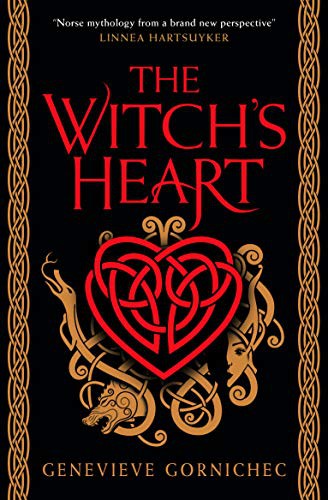
Genevieve Gornichec · Buy on Amazon
"The Witch’s Heart is the exact kind of book I’m actively seeking at the moment—books that enrich and broaden women’s stories from both history and mythology. Books that fill in the woman-shaped gaps in our past. Book that give voices to female characters who have been sidelined and silenced in the very tales in which they appear. Incredibly, despite being half the human race, women are thought to only occupy about 0.5% of all recorded history. Addressing this is crucial, and I think authors have a huge role to play in that. “Certain fantasy fans have a misogynistic, whitewashed, straightwashed view of the past” Some books I’ve loved in this vein are A Curse of Roses by Diana Pinguicha (about Saint Isabel de Aragão), Burial Rites by Hannah Kent (about Agnes Magnúsdóttir, the last woman to be executed in Iceland), The Curious Tale of the Lady Caraboo by Catherine Johnson (about the titular imposter), Hild by Nicola Griffith (about Saint Hilda of Whitby) and The Mercies by Kiran Millwood Hargrave (about the Vardø witch trials). In The Witch’s Heart , we get a beautiful and fleshed-out story for the jötunn Angrboða , who is briefly acknowledged as a wife of Loki and mother of his children in Norse mythology. Genevieve Gornichec both acknowledges her erasure and resolves it, giving Angrboða a life beyond her relationship with Loki, even as she explores their love story in detail. We see Angrboða as a powerful witch and seer, a devoted mother, a lover and friend, and most importantly, as a woman at the heart of her own story at last. I’m very grateful for books like this one. That’s a huge question, and the answer will obviously depend on the reader—or the writer—but for me, part of the genre’s lure lies in its possibilities. Fantasy can reflect on the past, mirror the present, muse on what the future could look like, or do away with our world altogether (in as much as that’s possible) and build a new one from scratch. Speculative fiction has no real limit but imagination."