Richard Bourke's Reading List
Richard Bourke is professor in the history of political thought and co-director of the Centre for the Study of the History of Political Thought at Queen Mary University of London. He is the author of Peace in Ireland: The War of Ideas and co-editor of the Princeton History of Modern Ireland
Open in WellRead Daily app →Modern Irish History (2016)
Scraped from fivebooks.com (2016-07-25).
Source: fivebooks.com
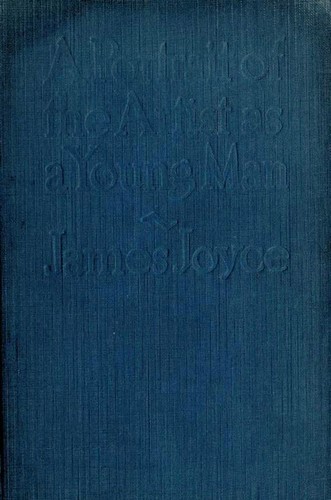
James Joyce · Buy on Amazon
"Irish intellectual life is deeply indebted to its literary culture. In Ireland, in the 20th and the 21st centuries, there’s been a relative dearth of what you might call dedicated intellectuals and, by comparison, a dominant role played by the image of the writer, in a more traditional literary sense. This undoubtedly has something to do with the subtle hegemony exercised by priestcraft in Ireland, coupled, over the longer term, with the declining fortunes of philosophical ingenuity within Catholic thinking. The figures of Joyce, Yeats and Heaney, for example, have been very prominent on the cultural landscape. Their contributions were meant to serve, rather self-consciously, a purely literary program; they did not see themselves as intellectuals, philosophers or political thinkers. For that reason, it’s important to begin any discussion of Irish history and Irish culture with an iconic figure of the literary efflorescence of the early 20th century, in this case James Joyce. “Poetry, drama and the novel provided means of negotiating the past while promising to transcend it.” Within the novel itself, Joyce develops a view of the vocation of literature. The job of literature , as he sees it, is partly to provide liberation from history . To achieve that goal, a vision of history is included in that ambition. It is not an accident that the most prominent and successful forms of Irish intellectual culture took the form of an avowedly literary culture. Poetry , drama and the novel provided means of negotiating the past while promising to transcend it. They dealt with an immediate historical predicament with a view to processing the legacies of the past. You’re asking about the figure of Stephen Dedalus’s father, the elder Dedalus, in the book. I see the novel as very much about the boy liberating himself from the heritage of the father in various ways. The idea that he is rescuing himself out of the shadow of the father overlaps with the larger narrative of the book, which presents Stephen freeing himself from his own inherited culture. This involves a shift in perspective as a new prospect is opened up. There’s a promise of handing initiative to a new generation, from father to son; but the son is still finding that he is a prisoner of the world of the father. The world of the father is not simply the father’s worldview, but also a world in which the father has had to struggle to cope. That’s completely right. Joyce’s depiction is one of Ireland in the aftermath of the fall of Parnell. At the start of the 1890s, much of Ireland glimpsed the prospect of national unity based around Parnell himself, embodying a national project, whilst offering credible leadership. This, as the Portrait reflects, fell apart under the weight of sexual scandal and ensuing religious polarities. One can see all the characters participating in the Christmas dinner scene as representing different strands of contemporary Irish opinion. Casey, Dante, Mrs Dedalus, Mr Dedalus — all of them had been united around the figure of Parnell. In the world of the novel, this has now been shattered by the fact that Parnell has fallen into disgrace in the eyes of, first of all, Victorian Britain and its mores, but also the Irish Catholic Church. Irish nationalist opinion then divides. Get the weekly Five Books newsletter You can see these divisions around the dinner table collide in various ways. There’s Dante, who represents a strand of Catholic piety, there’s Casey, who is the representative of a Fenian strand of nationalism, and there’s Dedalus senior himself, the anti-clerical Parnellite. The collision between these perspectives leaves the child dismayed and baffled; the narrative of the novel plots his emergence from the concussion induced by that bewildering experience. There’s a great poignancy arising from Stephen Dedalus’s relation to the Catholic church. Obviously, from early on, the central character has a longing for escape. There is at first a prospect of liberty supplied by Catholicism itself, in the sense that it provides release in the form of intellectual absorption. It’s an intellectual investment, and it offers a structure of thought. The poignancy arises from the gradual discovery that this structure is actually oppressive and disabling. And I see this as one strand of the national culture from which he feels obliged, ultimately, to free himself. “ Finnegans Wake seems to me to sacrifice both pathos and argument to experiment. ” The other strand is the national story populated by a succession of heroes constituting what amounts to a republican tradition, hoping to realise final political deliverance. There’s a scene in the novel where Stephen is having a conversation with Davin, one of his college friends, and finally we realize that he’s come to the conclusion that the Irish national self-entrancement, if you like, is really a system of delusion. The reality has been that Ireland has ‘devoured’ its own train of would-be liberators. For this reason there’s a disconsolateness about the novel in the face of the lived realities of Irish social, political and religious history. Yes, though this is my favourite novel, without a doubt. Ulysses is palpably a work of genius but I prefer the realist depiction of the Portrait. I like the subtle, psychological, nuance rather than the intense literary experimentalism of Ulysses which just doesn’t captivate me to quite the same extent. Dubliners , again, is a masterpiece of insight and concision. Finnegans Wake , on the other hand, seems to me to sacrifice both pathos and argument to experiment."

Roy Foster · Buy on Amazon
"I chose Modern Ireland because it is clearly a classic text in the history of Irish historiography. It covers the whole trajectory from 1600 to 1972. It’s been a large presence—if not to say a dominating presence—on the Irish historiographical landscape. It brings together with great adeptness the results of post-war Irish historical scholarship, interlacing them with the author’s own nimble cultural commentary. Rather than being a political or social or economic historian, Roy Foster is, or at least became, very much a cultural historian in the old sense, particularly interested in the progress of high culture. Laterally, he has been interested in the course of literary history. “The history of Ireland could be written as the history of property from two angles.” A large influence on Foster was exercised by one of his teachers, F.S.L. Lyons, who, amongst other things, wrote a book called Culture and Anarchy in Ireland . This was about the collision of Irish cultural stereotypes. In many ways, Modern Ireland comes out of a similar tradition of historical writing, except Foster was keen to see the varieties of Irishness as not necessarily settled on a pre-determined highroad to collision. He is more interested in the play of possibilities opened up by the conspicuous diversity of Irish attitudes. That’s very much the keynote of the book. If you need an organising thread for an overarching historical narrative, it’s a very enticing instructor. I think the history of Ireland could be written as the history of property from two angles. First of all, the history of the national property, which is the struggle over jurisdiction. The second would be property in the sense of landholding. That’s partly a result of Ireland’s explicitly colonial history, and I mean that in the literal, technical sense of a settled population who arrive to cultivate (from the Latin ‘colere’) the territory. There were colonists in that basic sense, settling as planters, as they were called, first of all in the 16th century, but then in increasing waves of intensity through the 17th century, especially after the Cromwellian conquest, and then again after the Glorious Revolution. “ There are many stages in this story, but it is certainly right to say that property is at the centre of it. ” What that meant, in practical terms, was a massive overhaul in the sectarian distribution of property such that, by the beginning of the 18th century, the majority Irish population had very little land — having held the great majority before the Wars of the Three Kingdoms in the middle of the 17th century. That is the background to another struggle in the 19th century about peasant landholding. There are many stages in this story, but it is certainly right to say that property is at the centre of it. One of the received images of Ireland is a Yeatsian version of aristocratic ascendancy. In some of Yeats’s poems of the 1920s, he represents his somewhat faux historical image of ascendancy in architectural terms. I would say that for Foster generally, the impetus behind the book is to debunk previous, spurious accounts of the Irish national past. This would be one example. The book’s mood was very much determined by the 1980s. It was published in 1988 in a period in which it was felt, certainly in southern Ireland, that certain politically constricting versions of Irish history had come to national prominence. Professional historians felt that they wanted to dismantle these doubtful, politicised stories with more subtle, more accurate versions of the past. He’s trying to displace an older, monolithic perspective. That’s what gives the book most of its energy, disparaging what it sees as a traditionally nationalist or republican perspective on Irish history. I suppose the controversial aspect of the book is the extent to which there’s a tendency to parody the object of criticism—the representation of nationalism and republicanism in particular—when you get to the 20th century. For this reason the coverage of the period from 1890 onward is arguably the least dispassionate in the book, partly because the period in which it was itself conceived and written, the 1980s, was a period of turmoil during which legitimating ideologies had their roots in the earlier era. I think there’s a tendency to reduce Irish antagonism to the ongoing imperial connection to a kind of cultural animosity, whereas I believe the motives animating anti-government sentiment were altogether more varied than they are sometimes made to appear. Interestingly, Foster’s more recent book, Vivid Faces , moves in an altogether different direction. It’s far more concerned with restoring to Irish popular opinion, in the early 20th century, its nuanced complexity and variety in a way that is not fully captured in Modern Ireland . Nonetheless, because Modern Ireland is the more monumental study, and succeeded in contributing to the transformation of Irish historical debate, it’s the place where any historian has to begin. It’s a good point to end the book because it marked a critical turning point, opening up into a new, unexpected, unpredictable future. It was the closing of a chapter, knowing that the story would ineluctably proceed, but without really being able to thematize the new story because everything was still up in the air."

Eamonn McCann · Buy on Amazon
"War and an Irish Town is a powerful memoir by an angry youth possessed of tremendous intellectual and political confidence, whether wisely or not we’ll leave to one side. He occupied a very individual position in the face of events. I find his analysis overly cramped and dogged when it comes to deeper social questions, but intense and immediate in documenting lived experience. Absolutely, and, in that sense, it really does belong to its time. I find McCann doctrinaire in his social philosophy, but I don’t find him doctrinaire about the situation in Northern Ireland. Here he tries to understand — whilst not endorsing — ‘Provisional’ republicanism [the militant wing, which endorses violence]. He is also disposed to criticise the rival Official Irish Republican Army and party. He thus takes issue with a range of nationalist opinion, but I think what is valuable about the book is its on-the-ground perspective. There’s a compelling passage, at one point, where he is talking about experts being wheeled in to discuss the Northern Ireland problem, and pronouncing on the importance and necessity of separating die-hard militants from the moderates in the ghettos. Yet, as McCann points out, what the self-appointed cognoscenti haven’t realised, is that in practice that means separating fathers from sons, brothers from sisters, mothers from fathers… I would certainly say that a very strong and unreconstructed impulse in the book is to ascribe responsibility for the current conflict — as it then was — to one primary agent, and that’s British government forces. I myself see that as overstrained and implausible. Nonetheless, it does capture the sense of Catholic disenfranchisement in the aftermath of 1968. There’s an appeal to the British government against the local Protestant administration, and there’s a sense that that appeal is not going to meet with an adequate response. “Just 10 years previously the Catholic population had been publicly professing a settled reluctance to revisit the issue of partition.” So there is an overwhelming sense of disempowerment, if you like, part of which of course was stoked ideologically by people like McCann. But he remains incisive about popular perceptions. Of course, perception may operate at a remove from truth. His subject matter is less naked reality than the impact of tutored perspectives. The value of the book lies in its capturing sharply a particular viewpoint that ended up being highly consequential. What it succeeds in explaining is why there was such a huge swelling in the ranks of the Provisional republican position. That’s where I think the interest of the book lies, in explaining the drift towards militancy among large sections of the Catholic population, who just 10 years previously had been endorsing an entirely different agenda and publicly professing a settled reluctance to revisit the issue of partition, not to mention the almost absolute absence of support for any form of insurgency. It’s difficult to say that Britain was exactly neglecting it. I suppose, historically, British policy makers felt themselves to be between a rock and a hard place. They had originally supported a particular outcome, namely equitable reunification, but were seen as being identified with the obstacles to that outcome, and by extension with the provincial injustices that had developed in the six counties. Therefore, by the late 60s, Westminster was extremely reluctant to get involved at all. There was still an ongoing historical memory of the catastrophically counterproductive nature of British involvement in the teens and the 20s. World War I was a complicated story because lots of Irish Catholics fought and died in it. Thus a great many Irishmen fought in defence of the British Empire, or, perhaps more accurately, of a reformed Empire; that was the reality on the ground. In the midst of that, there occurred a counter-imperial insurgency, which was largely ridiculed and certainly took place without any ascertainable form of popular endorsement. Nonetheless, despite having been an unpopular, vanguardist insurgency, it belatedly and curiously, after the fact, won for itself popular acclamation. This complicates utterly the Irish relationship to the First World War because the anti-imperial position was, thereafter, in the ascendant. So that’s a very particular and complex moment, which polarised north and south; there’s no doubt about that. Southern Ireland can’t fully own the depth of its investment in the First World War, which it actually, originally did have. Whereas the north— that is to say the northern majority Protestant population — can and does. “Southern Ireland can’t fully own the depth of its investment in the First World War.” The Second World War, I’m not sure was so profoundly formative, though there is no doubt that it entrenched divisions that already existed. Southern Ireland was neutral and Northern Ireland was actively involved, but I don’t think that this experience drastically polarised opinion between north and south; the die was already cast. The post-war period was, in many ways, more consequential than the war itself because it transformed educational and social provision in Northern Ireland, and, in the context of declining industries, this proved deeply significant. It meant that the Catholic working classes achieved new levels of education. The generation of 1968 were beneficiaries of that change. Rising expectations among Catholics heightened awareness about established inequities relating to housing, jobs, the local franchise, and so forth. On the other side, there was a reviving Protestant posture of entitlement to an ascendant position, which, remarkably, was being stoked under conditions of declining economic security on the margins of a dissolving empire. I think that the vigilante situation was indissociable from the lack of a cross-community, effective policing service. From a Catholic perspective there were good reasons to be distrustful in 1968 and 1969, there’s no doubt about that. I think the vigilante role was an outgrowth of the defence role. The defence role emerged especially after 1969, which saw the burning of Catholics out of their homes in ghetto areas. So the population swung behind defence organisations, and the most prominent defence organisations were the assorted versions of the IRA — principally the Official and Provisional IRAs. The story of McCann’s book really is how this popular street-level defence role was the vehicle by means of which popular consent swung behind anti-partitionist politics. “I don’t myself regard this inevitabilism as productive of genuine insight.” He presents this as inevitable. I don’t really see it as having been inevitable. I think you could regroup for defence and hold your ground and not wish to raise the whole underlying constitutional issue again, i.e. the question of whether the state should be partitioned or not. McCann sees this outcome as having been predetermined, or at least inescapable under the circumstances. I don’t myself regard this inevitabilism as productive of genuine insight. Nonetheless, I do think the sense of vulnerability that McCann invokes, which drew people into local defence committees and therefore allied them to a particular political perspective, is a compelling part of his story. No, that’s certainly true. There’s a section in the memoir where McCann comments that he is aware that political turmoil has made the discussion of Irish history itself at once controversial and polemical. He talks about the deployment of history in Ireland for political purposes, parenthetically arguing that ‘of course this would not be understood by Conor Cruise O’Brien’ — namely, that history is a kind of resource, a fallback option, even a form of consolation for those who feel themselves to have lost politically. This, McCann urges, is what needs to be understood: that history had become both a weapon and a means of consolation. That, we can all see, is very unlikely to make for good history, but nonetheless we also need to grasp why people repair to it in that way. Their recourse perhaps deserves to be better understood instead of being made an object of condescending contempt."

Conor Cruise O’Brien · Buy on Amazon
"I have more sympathy with his judgement regarding the potential for escalation than I do with the deeper analysis that he developed to uphold it. Conor Cruise O’Brien was a very—perhaps an incomparably—powerful intellectual presence in southern Ireland when I was a teenager: he exerted a considerable yet controversial influence. He was admired and reviled in equal measure. O’Brien worked for the United Nations in the early 1960s. He then occupied the position of Vice-Chancellor at the University of Ghana. By the late 1960s he held an academic post at New York University. He then returned to Ireland and entered Irish politics as a Labour party TD [Teachta Dála, member of the Irish parliament]. In due course he ended up as a minister in a Fine Gael-Labour coalition government. After he lost his seat he became editor of the Observer newspaper in London. Thereafter he largely became a campaigner, a publicist, and a freelance writer. Some would argue that, ultimately, he descended into a parody of himself – as many fêted intellectuals-turned-polemicists do. Yet he certainly was, in the 70s, peerless in terms of his powers of political analysis. Conor Cruise O’Brien built his reputation as a critic of what he chose to term ‘nationalism.’ But the truth is that he was himself a southern Irish nationalist who saw nothing but destabilising potential in the rise of rebellious, irredentist doctrine in the north. So much of his project was about securing the stability of the South against the tremendous forces of disintegration in the north. He was very much a critic of what he saw as the most potent ideology capable of connecting the fate of the north to the south — namely modern Irish republicanism. That, in the end, was his real target. Of course, it’s true, Northern Irish republicanism did have enormous potential to destabilize the South — as it succeeded in doing in the late 60s and again during the hunger strikes. O’Brien’s analysis is not exactly false. However, his account of the motivations driving republicanism, though highly influential, seems to me fanciful – abusing his antagonists in terms of their supposed reversion to a species of atavistic tribalism. I find this less than convincing, even superstitious, in its own way. I’m not at all sure that’s right, though it’s true that his constituency was down south. After Bloody Sunday, he almost swung behind the Ireland-wide nationalist option, so he wasn’t immune to the kind of sentiment he liked to denounce. I don’t see him as emotionally detached, but I do see him as having made a political calculation about the necessity for the south to detach itself. In actual fact, he informed himself about the north more than most, and spent some time there, and wrote about it sympathetically from fairly early on. I just think he believed it was essential not to get drawn in, emotionally, by the rhetoric of republicanism — which had been generated by the south in the 1912-23 period but had now found a home in the north. So while his bête noire was a southern creation, it persisted as a northern threat, and he wanted to dismantle it on the grounds of southern raison d’état . What he opposed covertly perhaps challenged his intellectual consistency, less the integrity of his political choices. That may be. I would think that needs some refinement, myself. In the south there was antagonism against northern unionist Protestantism, but I don’t think there was an energised hostility to Protestantism as a sectarian program commonly shared in the south. Of course, there’s a very small Protestant population, but I went to a mixed school in the south of County Dublin and growing up there, I don’t remember any religious hostility – ever, at all. Though perhaps my exposure was limited. I do remember, clearly, animosity to northern loyalism and unionism. In practice this meant Protestants. Southern Protestantism was altogether different, however."

Seamus Deane · Buy on Amazon
"Seamus Deane, though viewing things from a different angle from McCann, was also deeply hostile to O’Brien. Again, he emerged out of a younger generation. He is also, crucially, from the north rather than the south, a product of Queen’s University Belfast who did graduate work in Cambridge, and then spent time in the United States. His great interest was the English literary tradition, together with its related intellectual traditions, though he was also naturally absorbed by specifically Irish culture and the conditions of its historical formation. Deane returned to Ireland to take up an academic post in Dublin, where for a number of decades he gained prominence as an effortlessly eloquent intellectual. He was very much taken up with the mood of outrage shared by Derry Catholics about developments in the late 60s and early 70s. That outrage was easily converted into periodic bouts of antagonism towards Conor Cruise O’Brien. Celtic Revivals is a luminous work of literary analysis and literary history. What is interesting is the extent to which the forces that shaped the historical profession in Ireland are also evident in this book — that is to say a preoccupation with the relationship between culture, moral outrage and history. “All subsequent Irish writers are, to some extent, living in the shadows of Yeats and Joyce.” I see the book as advancing the argument that a certain Irish literary predicament was shaped by a bruising historical past. The predicament in question can be encapsulated as follows: the burden of history is inescapable for the Irish writer, largely because their present is conditioned by a succession of dramatic, often violent and sometimes traumatic dislocations. Deane sees the Irish writer as unable to withdraw from the obduracy of history. Incarceration by the past ignited tremendous moral passion—rather than structured political insight or a program of action—and, as a result, the Irish writer is invariably driven to develop literary solutions to inescapably practical problems. Thus Stephen Dedalus—to take us back to where we began—is forced to navigate a course through the multiple legacies of Irish history. Yet in order to ‘fly’ by the nets of Catholicism and nationalism he embarks, in exile, upon the project of forging in the ‘smithy of my soul the uncreated conscience of my race.’ That is to say, opting to realise in imagination what was not available socially and politically. Joyce offered an essentially aesthetic response to seemingly intractable political difficulties. Yes, he does; Heaney was a close school-friend and one-time collaborator of Deane, though his role in Celtic Revivals is rather tangential to the main argument. The book as a whole is structured around the rise of that more or less absurd abstraction, ‘Irishness.’ The story began, as far as Deane is concerned, with Edmund Burke who provided a singularly compelling diagnosis of the Irish political predicament. Elements of that diagnosis were duly adopted by Victorian men of letters, most creatively perhaps by Mathew Arnold. Arnold added his own mystical brew of dubious ethnic theory. In order to explain why it was that misshapen Irish political arrangements were not amenable to British liberal political solutions, Arnold came up with the idea of the Irish or ‘Celtic’ sensibility or ‘race’ being somehow culturally incompatible with ‘English’ Normanism and Puritanism. It was a benignly intended yet flabby thesis, prone to radical misconceptions. Arnold was thus among the first to develop an elaborate cultural stereotypification of ‘Irishness’, indirectly giving rise to much modern debate about national ‘identity.’ Deane is right that this was basically a misbegotten enterprise. Regrettably it still dominates much historical discussion. Traditions are usually belated constructions. I think Yeats and Joyce strove to escape the mental straitjackets imposed by prevailing attitudes in Ireland. They did so with energy and inventiveness, but also with eccentricity. All subsequent Irish writers are, to some extent, living in the shadows of Yeats and Joyce. They left an incredibly rich terrain for future literary cultivation. It remains to be seen whether their achievement limited the chances of innovation. One thing is certain: Irish history remains the defining horizon of the Irish literary imagination."