Nick Harkaway's Reading List
Nick Harkaway is the author of eight novels including The Gone-Away World, Gnomon and Titanium Noir as well as the George Smiley story Karla's Choice . Two of his novels – The Price You Pay and Seven Demons – were written under the pseudonym Aidan Truhen. Harkaway's real name is Nicholas Cornwell and he is the fourth son of the David Cornwell (who wrote as John le Carré) and his second wife Jane Cornwell.
Open in WellRead Daily app →Negotiating the Digital Age (2012)
Scraped from fivebooks.com (2012-05-23).
Source: fivebooks.com
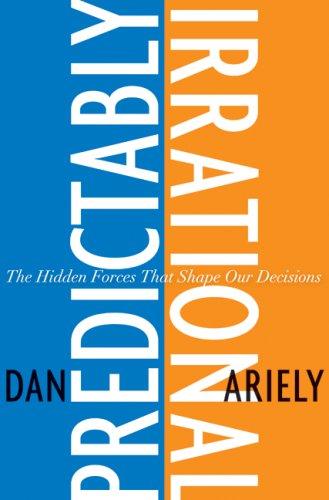
Dan Ariely · Buy on Amazon
"Predictably Irrational is an examination of the way in which we make decisions irrationally, and how that irrationality can be predicted. I find it absolutely fascinating. In some ways it is a handbook for behavioural self-defence. There are governments and corporations which have a high skill level of decision-making judo. If you don’t at least have a basic knowledge of it, they can push you around like a chess piece. Predictably Irrational is the book that can make you more aware of yourself as an irrational decision maker. We have always been irrational, but good decision making is the core skill of the digital age, because the digital world allows people to gather information on an unprecedented scale. There was recently a slightly crude study which collected data from Twitter about mood. They showed a mood cycle which is pretty much ubiquitous. You are get-up-and-goish on Monday, delighted on Tuesday, a little unhappy on Wednesday, and the graph goes down until you get to the weekend. Mood cycle is immensely important when you launch a product, depending on what the product is and how you want people to feel about it. So if you combine that with the information about individuals which you can find on Facebook or Google, you have an awareness of what people are thinking which probably reaches above what they’re aware of themselves. This is important because there is a trend towards choice architectures – nudging – in liberal democracies and in the idea of liberal paternalism. A choice which is deemed to be desirable by the group in power is pushed upon you using a series of options, which are either awful, socially shameful or the option which they want you to pick. One example of this is organ donation, which has always been opt in. There have never been enough organs, and there is obvious societal good in securing people’s consent for organ donation, so you can very simply improve the organ donation rate by making it opt out. The trouble with that, apart from anything else, is that it diminishes our ability to make decisions. Decision making is a skill which you have to practice, retain and do consciously, cognitively and thoughtfully. It is the central tenet of a democratic society that people make good decisions, vote on them and drive good leadership in the process. If you make sure that the electorate is never presented with a difficult decision… Indeed, why bother having an election at all at that point? You’re not doing democracy any more, you’re doing something which looks like democracy but is actually puppeteering."

Alex Nunns and Nadia Idle (editors) · Buy on Amazon
"Tweets from Tahrir is a document that could not have existed before the digital age. Even if you went to all of those people in the aftermath of Tahrir Square and asked them to write down what they thought at the time, they would write down something different, because recollection always colours events differently. This is a genuine live stream of what took place. We talked about Nicholas Carr, and the idea that deep reading is fading away. The theory is that you are distracted by hypertext links and no longer read in the conventional way – and that that alters your whole mood of reading, so your engagement level suffers. You’re not reading properly, you’re becoming lost in a maze of online distractions. The reality, I think, is rather different. When you look at a stream of tweets with the TV on in the background, you are synthesising the story. Your perception of events will be different from anyone else’s in the world, because you will light on different things. That is invaluable in not accepting the authority of a single news source or information source, but assembling your own understanding out of individual perspectives. In the digital age one of the most overused phrases is: “This is a Gutenberg moment.” That was the moment when the printing press took away the Church’s monopoly on information, and suddenly anyone who had an idea or opinion could be distributed. The only Gutenberg moment that I have come across today is this one. Here you have a situation where the same kind of distribution is possible. It’s no longer the case that if you want to know what happened you have to go check the BBC. Because the BBC could be wrong, as could the individual who is telling you what they saw. But if you are following 300 or 400 people in Tahrir Square who are tweeting about what they are seeing in front of their eyes, and at the same time watching the BBC or Al Jazeera, you can weave together a picture of the situation for yourself. It’s synthetic reading rather than subordinate reading – the drawing together of a number of narratives to create an understanding of your own. I think we have diminished respect for the authoritative statement. If the digital age means anything at all, it means the age of participation. People no longer want participation, they assume that they will be given the right to participate. And that is going to affect our politics more than anything else."

David S Landes · Buy on Amazon
"This is an enormous book, which I read from the index backwards. It is a powerful and interesting analysis of the entire flow of the world. The digital debate which is going on now takes place in the context of the last 400 or 500 years. We live with the consequences of changes from rural living to urban living, of the granting of suffrage to women, the arrival of labour-saving devices, or the decline of the Church and the family unit as the centre of life. And these grand changes that took place over the last few hundred years are playing out right now in the way that we live. If we’re in crisis now, it’s because of that progress rather than the Internet having changed everything. David Landes, for example, argues that the most significant invention for the last 800 years was the mechanical clock. Because until you have the mechanical clock and can reliably subdivide time, you can’t have capitalism. How can you sell your labour by the hour if you don’t know what an hour is? The Wealth and Poverty of Nations is filled with wonderful sketches of things like that, which are old but incredibly relevant now. There are truths about the development of our society, and the ties between economy, society and technology. Whatever you think of the conclusions of the book as a whole, the analysis as it goes along is pretty gripping, and relevant to the digital period. The things which drive social change today are very often things which were buried 150 years before. The discussions that people are having right now about how the digital age has changed everything very often should go back to what happened in 1880 or 1920. What The Wealth and Poverty of Nations treats with are the underpinnings of the world that we live in, and the solid ground on which any discussion of the digital arena must stand."

John Ruskin · Buy on Amazon
"I’m a little bit obsessed with John Ruskin at the moment. He had the idea that mass-produced items – the perfect precision of stones made with machines, for example – were un-Christian and diminished the soul of man. “You must either make a tool of the creature,” he wrote, “or a man of him.” You can’t do both. That means you either create someone who can express an identity, or create a cog in a machine. For me, I don’t share Ruskin’s faith but I think it’s worth asking these questions. He looks for hand-crafted items – and by extension he wants the soul of a person to be important rather than machine tooled. In the context of the digital world, where we use a lot of mass-produced digital technology, we have to ask ourselves whether the uniformity of what we use is diminishing who we are and who we might otherwise strive to be. Once you start a conversation about Ruskin, though, you also have to discuss all the people who loathe Ruskin. Modernists say that Ruskin’s perspective was degenerate, and that ornamentation in design was a sign of a society that was backsliding towards barbarism. That debate is very central, and O n Art and Life is a very short, Penguin Ideas book about Ruskin which will bring you into it. I think you can view the little smart slabs of plastic and glass that we carry about with us as statements of our lack of individuality. We are sold these items as the backend to whichever media company wants to show us content – and they assert a corporate identity of which we become a part."

Neal Stephenson · 2000 · Buy on Amazon
"Cryptonomicon is a real humdinger of a novel. Stephenson is a hugely enjoyable writer of action and comedy – I find him a joy to read. This is a thriller set in the present day, about the establishment of a data haven, and it explains the significance and practice of cryptography to the modern world. It goes right back to its digital roots and the codebreakers at Bletchley Park, like Alan Turing. It is a romp through the birth of the computer into an age where control over data and understanding of its flow are vitally important. And in the midst of all that, there are wars and pirates and love affairs. It’s an immensely enjoyable book. It’s a question about what might happen, rather than what will. There are already people putting magnetic resonance imaging (MRI) scanners to novel uses, like lifting low resolution images directly from the visual processing part of the brain. There is a project that is trying to read images and meaning from the sleeping brain – from dreams. And all kinds of civil liberty implications are thrown up from being able to read images direct from the visual cortex, which raise interesting questions about where the boundaries for what is appropriate for the state lie. I think we have to have those kinds of discussions before the moment comes. I think it never stops. In a way we are still dealing with the implications of the industrial revolution. And it’s worth bearing in mind that we are not sitting on a platform of reasonable, effective government, positive financial control over the vagaries of the market or indeed a perfect relationship with our planet’s environment. The challenges we face are, as always, not technological but whether we as a society are capable of making the right decisions. You have to think about digital as part of the rest of the world. In the mid-eighties, when people started to think about graphic interfaces, William Gibson wrote Neuromancer , [the film] Tron came out and we first got the notion of the space behind the screen – a foreign land. When the Internet came along, it was the extension of that foreign land into our lives. We could now participate in that nebulous, piratic, free-speaking space that existed in no country and owed allegiance to no court and no crown. But that place never existed. It was never a separate space. Coincident with the arrival of the iPad and other touch-screen technologies where you can actually put your hand on the data, we have begun to understand that what is on the Internet is just what’s in our heads, and what we carry around with ourselves all the time."
The Best John le Carré Books (2025)
Scraped from fivebooks.com (2025-06-06).
Source: fivebooks.com
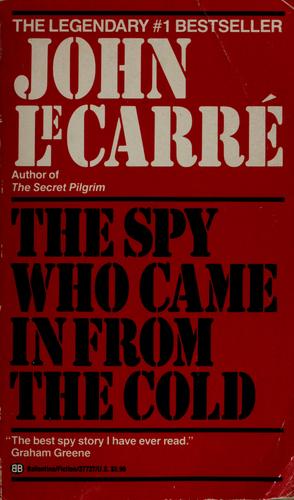
John le Carré · Buy on Amazon
"It’s also, on some level, the glummest. It runs on rails from its inception to a point of crisis from which there is no return. And it’s really beautifully and brilliantly executed in its inevitability. It’s totally bleak, yet at the same time there is a feather of victory in it as well. It’s a really extraordinary book. The stage play is coming now, the first time any of my father’s books has gone to the West End stage. That’s also extraordinary, because while watching the play you have this complicity: at any moment in a piece of physical theatre you could, in theory, stand up and stop what’s happening. You’re never going to, but you could, then when it arrives at this inevitable conclusion you feel responsible. It’s really powerful on stage. If you mention le Carré, most people will say: The Spy Who Came in From the Cold. They’ll talk about Richard Burton and, if they’re of that generation they will remember the book coming out. It was definitive for a moment. Like you said, it was the anti-James Bond. Before The Spy Who Came in From the Cold , you had spies who were, for the most part, glamorous people. There was a wash of wartime spying, extraordinary people like Noor Inayat Khan , who parachuted into occupied France and worked with the Resistance behind the lines. Sadly she was eventually caught and executed. But these figures had that gloss of glamour. Then came the 1960s, and there was a growing sense in the UK that the empire had fallen, and it turned out that some of the time we may have been ‘the baddies,’ you know? So there was this extraordinary reflection, and the revelation that the heroes of empire, or the heroes of democracy, might have been flawed, broken, desperate people looking for a place to put their faith. Then it came down to the wire: Are we the goodies or are we not? And the answer is, well, do we behave like the goodies? It’s an extraordinarily live-issue book. Yes, and heaven help us, moral crisis is definitely a 21st-century conversation."

John le Carré · Buy on Amazon
"Absolutely. The Spy Who Comes in From the Cold is this short, driven, linear narrative. It just happens and it plays out. But it doesn’t really give you the architecture of my father’s world of espionage. It’s just a brutal incident. Whereas Tinker, Tailor is far more baroque and meandering. It goes all over the place and introduces you to this entire world of The Circus, George Smiley, and all the players around him. Obviously there was Sir Alec Guinness in the role, and then there was Gary Oldman. There have been extraordinary audiobook readings—most recently Simon Russell Beale. As a standalone, Tinker, Tailer is an absolutely top-grade detective story. It’s all about this process I talked about, the archaeology of truth. There has been a gasping crisis or a deep fracture in how the world ought to work, Smiley comes along, and little by little he brushes away the dust, the misdirection, the obfuscation and he holds up the truth and says: This is what happened, here it is. There’s an actual ‘I expect you’re all wondering why I called you here this evening’ reveal. It’s classic. People don’t always realise that, because the theatre of espionage is very strong. But in the end that crime-investigation-solution shape is what stops you from getting lost in the book, and it’s incredibly elegantly executed, in a completely different way to The Spy Who Came in From the Cold . It meanders, it conceals, it shows you one thing but tells you another. You don’t realise that you know things. It’s just an extraordinary piece of writing, something that has been incredibly successfully adapted. Inevitably these would be the two books that I mention first, because they are the benchmarks of my world at the moment. Karla’s Choice comes directly after The Spy Who Came in From the Cold . George Smiley is unhappy with what’s happened. He’s retired. Then Control, who—as I re-read the books—increasingly comes across as an extraordinarily malign spider in the middle of the Circus web—wants Smiley back, and he wants him back now, and for him to do as he’s told. He contrives a situation where Smiley does come back to investigate what appears to be a quite minor issue. But of course it balloons and brings Smiley, ultimately, into a situation where he is uncovering the existence of, or the rise of, Karla, who becomes a kind of arch nemesis in Tinker, Tailor , eight or nine years later in the chronology of the books. In Karla’s Choice , you get to see the evolution of that, the first clash between them, without compromising the mystery of either Smiley or Karla. It’s like the moment at the end of Raiders of the Lost Ark , where they put the Ark of the Covenant in a box, they put the box in a warehouse, and you see the trolley going down. All I wanted to know when I saw that final sequence was: what was in the other 10 million boxes? What other mysteries are hidden in that warehouse? I love that. With Karla and with Smiley, anytime you reveal something, what it has to make you feel is that there are now ten more things that you need to know to understand what you just find out. The mystery has to be deepened every time. Or else it’s like the moment when you see the shark in Jaws and you think, oh. I wish I’d shut my eyes for that. Yes. This was a post-facto realisation that I had. I had this moment when I asked myself whether I could write the book. I sat down and wrote little bits of Smiley and it became quickly apparent that it was a very small adjustment in my thinking that was required to find a voice that was authentically mine, but also read as authentically Smiley, authentically The Circus. I won’t say ‘authentically my father’s voice,’ because, interestingly, people go back and forth about that. Some people say this feels like ventriloquism, some people say, actually this feels like Nick. That’s an argument I’m delighted for everyone to have without me. I’m the last person who’s going to know the answer to that question. I was born in 1972, and my dad used to read the books aloud to my mother as part of the writing process as he wrote them. He’d write by hand, then he’d sit there with a sheaf of 30, 40, 50 pages in his hand, or maybe with her typed version, and read them back to her. Sometimes he would read and you could see her eyebrow twitch, and his pen would come out and go scribble, scribble, scribble. There was a real interplay. As the years went by, that became more and more acute. As I was acquiring language, I was getting an hour and a half, two hours of Smiley every day, basically. So when I came to do this, it’s in me. It was really a question of going back to a very simple sound in my head, and finding that that was recognisable to people reading."
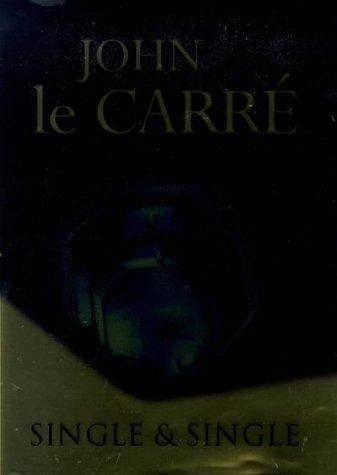
John le Carré · Buy on Amazon
"Yes, so this is for love. Absolutely. I read Single & Single for the first time before the proof stage, as I read most of these books as I got older. And I loved it, from start to finish. I recognised myself, I recognised my older brother Tim—we were blended together with, inevitably, my dad, and half a dozen other people to make Oliver Single. My long coat, Tim’s brooding desire to get things right, just these beautiful little sketches. I just fell in love with it. And if you’re looking for the sin, the sin in Single & Single is so viscerally wicked and extraordinary. I won’t say what it is, but if you are looking for a book about international wickedness in the post-Cold War period, I don’t think I can imagine a more perfect metaphor for it that is also a literal truth about the nature of the world. Something my father did extraordinarily well. Then, thrown in with that, just a wonderful riff on wicked international private banking and enforcement. It’s classic le Carré. That’s a really good question. Obviously, I think of my dad, David Cornwell. His performance piece was John le Carré. That was the coat he wore to write. And there was a difference between the two of them. You know, Dad was shy. He loved to laugh, but he was quite vulnerable and quite shy. John le Carré feared nothing, you know, and was choleric and radical, and could go out on stage and entertain the Royal Festival Hall and hold the room for hours, just at a lectern in his eighties in an extraordinary act of mesmerism. They were fundamentally the same, because there’s no such person as John le Carré without David Cornwell. And yet. The dedication to Karla’s Choice is to the both of them: the one who was the ping pong player, the drinker of wine, the walker of dogs, the teller of stories; and the one who was a novelist. There is truth in that in the same way as they were one person. We all contain multitudes. I feel this particularly strongly at the moment because I’m the Nick Harkaway who is now writing a new George Smiley novel. I’m also the guy who just released the second Cal Sounder novel , with my own hat on. I’ve also been Aidan Truhan, and they are now making a TV show of Kill Jackie . I have so many hats, and my dad wore many hats throughout his life. We contain multitudes. We do many different things. We behave differently with different people, or at least I do—perhaps some people don’t have that experience."

John le Carré · Buy on Amazon
"So The Night Manager and Single & Single are kind of a pair. Each of them is about somebody going voluntarily into a dangerous situation as an undercover figure to root out wickedness, to block bad action in the world. And it follows the person on the ground, as well as, at the same time, the activity of the people in the political apparat and the security apparat. The success or failure of that activity is a sort of judgement on whether our society is capable of justice, because the rules have to be there for everybody. It doesn’t matter if you are supremely wealthy, you still have to be governed by the rule of law. If not, you no longer have a democracy. Then, also, in both of these stories is the question: What can you do as the spy? How far can you go? And will you fall in love with the universe of this wicked person whose life you are invading? Because, of course, the bad guys have a great time, you know? This is something mission critical about the post-Cold War stories. In the Cold War stories, Karla represents, very clearly, the inhumanity of the Soviet machine. Whatever virtues may have been sought in the Soviet project, what it became was very destructive. Karla is the representation of the inhumanity of that system, as is the Wall. They are one and the same. But when you come into The Night Manager , you’re seeing the very human bad guys. Richard Roper, portrayed by Hugh Laurie in the TV show, is vastly compelling. The idea that you would go to a Richard Roper party… You can absolutely see how everyone would have a great time and be seduced by this wicked man. Again, you’re coming down to the line where the dividing line between good and bad evaporates and you are left in the grey zone, an area where you can’t tell whether you’ve crossed over the line because you are so close. The line is everywhere."

John le Carré · Buy on Amazon
"I think A Delicate Truth is an absolutely cracking modern novel. I just love it. Let’s just put that on the table before we get donnish about it. I read it in a single sitting, and then I read it again a couple of years ago. I just love this book. It’s about misdeeds, political interference at high levels, wickedness inside the British establishment. It dovetails very nicely with The Night Manager and Single and Single . It’s seen from a completely different angle of view—it’s seen in retrospect. And it’s about uncovering the misdeeds of the cover-up. I think one of the reviews from the moment it came out said that the American characters were, I think, ‘cartoonishly wicked.’ I don’t think that stands up in 2025 as a critique. They look reportage-real. I think he saw it before we did, before the first Trump presidency, and he put it on the page, and people reacted the way they did before the first Trump presidency, by saying, well, this could never happen. These people are impossible, implausible, preposterous. No, as it turns out, they were not. So there’s that. And, as I say, the misdeeds of Britain are in the foreground. It’s a really cracking read about the rot inside the doors of our establishment. It’s a great spy story. I think so. You know, I’m not a proper le Carré-ologist. There are people who devote themselves to this, who do textual analysis at a deep level. I have simply never done that. It’s not part of how I work. Having said that, I think the first three books have a kind of linear narrative. They observe unities of time and place—not properly, but the take place in relatively short periods of time and they rattle along, and they have very little meandering or digression. Then you get an intervening period, then you get to Tinker, Tailor, which is much more discursive, beginning by discussing Jim Prideaux at his school, and the characters move around. There’s a lot of ornamentation and sleight of hand to convey information. It’s much less direct. You get that with the core Karla-versus-Smiley trilogy: Tinker, Tailor; The Honourable Schoolboy ; Smiley’s People . Smiley’s People brings the Cold War to a close. Then you get these transitional books. People look at them and say, well, you know, he’s finding his feet. No, he was absolutely, perfectly iterating what was happening in the world; the world was finding its feet, and the books reflect that. Then you get into the strongly post-Cold War books, like Single & Single and The Night Manager , which are different again. You’re looking at a new style, a shift in perspective, which comes in around the second decade of this century, where he’s working much shorter, more concise, more reflective. The politics becomes more naked in the later books and less abstract. But it’s always about who is getting stitched up like a kipper, who is getting destroyed for no reason—and how we can stop that from happening. I find that through-line very persuasive. It’s not difficult to work out. I have a hobby horse at the moment, which is to remind people that he was fun. There have been so many wonderful books and pieces about his ability to determine the geopolitical future, which he did simply by opening his ears and listening to people who understood the cross-currents in the world. People would bring him stories. You know, the inception of The Constant Gardener was people coming to him and saying: If you want real wickedness, you need to look at drug testing in Africa and how that works. Not to say the pharmaceutical industry does not also save lives, but it’s a huge money industry and with that comes corruptive drift, let us say. So he wrote into that space, and people say, rightly, that it was prophetic, incisive, and so on. But the thing that I want to say all the time is that he was fun, and he was mischievous. When you read these books, you get rippling moments of laughter which can catch you by surprise, and those moments indicate more what it was like to be with him in the day to day than I think people realise. They assume he was a very serious, very angry fellow. But he was impish and joyous and hilarious to be around. Recently I’ve started saying that out loud, lest we forget that."