Michelle Rhee's Reading List
As the chancellor of Washington DC’s public school system from 2007 to 2010, Michelle Rhee gained a reputation as a reformer that landed her on the cover of Time and in its list of the world’s 100 most influential people. A graduate of Cornell and the John F Kennedy School of Government at Harvard, Rhee taught in the inner city before founding an organisation to support teacher training. Since stepping down as chancellor, Rhee has continued her advocacy by founding Students First
Open in WellRead Daily app →American Education (2011)
Scraped from fivebooks.com (2011-08-17).
Source: fivebooks.com

Ron Suskind · Buy on Amazon
"A Hope in the Unseen is an amazing first-hand account of the struggles a poor African-American student with tremendous ability and potential went through while growing up and going to schools in Washington, DC, where I was chancellor. The book walks through the challenges this young man had to overcome during his schooling and his transition to higher education. It’s a great book for people who believe that the circumstances of your upbringing don’t need to circumscribe how far you can go in life. One of the biggest lessons that people should take from this story is that there are so many Cedrics out there. People shouldn’t assume that a kid from a certain school or a certain neighbourhood can’t achieve at the highest levels. Kids like Cedric prove those assumptions wrong. This is an important point and one that educators think about a lot. We need to find ways, within the culture of schools, to celebrate academic achievers as much as we celebrate athletic achievement. Even in low-performing schools people come out for a basketball game or a homecoming game. That’s why athletes are revered – the entire community rallies around them. We have to do the same kind of thing for the kids that are succeeding academically. It can’t just be that we give them a plaque at an awards ceremony. We have to create an ongoing culture where the entire community is saying that these kids are making us proud."

Lisa Delpit · Buy on Amazon
"Other People’s Children is one of the books that all educators should read because it really gives a different perspective on teaching children who may not be of the same race or socioeconomic background. I think it’s always important for teachers to understand the cultural norms and expectations that prevail in the school environment where they work. Teachers need to be cognisant, not complacent, about teaching across difference. Other People’s Children helps educators ask themselves the right questions and gives them a lens through which they can view and think about how cultural dynamics play out in the classroom. I think that her perspective is worth considering. When I was training to teach, I was taught a lot about cooperative learning and giving students autonomy. But once I got in the classroom, I found that what my kids really craved was structure. A number of them had very chaotic home lives, so when they came to school having the freedom to explore wasn’t what they wanted. What they wanted was to know step-by-step what to expect and what was expected of them. They responded well to structure, so that’s what I gave them. I learned to adapt my methods to their needs. Adjusting your approach to fit the cultural dynamics of a classroom – without lowering your expectations for kids’ achievement – is what Delpit really advocates, and I agree. Adults often make sweeping proclamations, like kids are going to learn better from teachers that look like them. When I was working as the chancellor of the District, I’d talk to kids a lot about who their best teachers were and why. I never spoke to one kid who said, “What I need to learn well is someone who looks like me as a teacher.” Kids might poke fun at teachers who are different from them, and teachers need to know how to handle that, but what kids ultimately wanted was teachers that had high expectations of them and teachers who were willing to go the distance to make sure they were successful."

Richard Whitmire · Buy on Amazon
"We have spent a lot of time over the past decade talking about the racial achievement gap, which is incredibly important. But the achievement gap between boys and girls is also an incredibly important issue for the future of education, and it’s an issue that doesn’t get nearly enough attention. Often the warning signs that teachers or parents could pick up on get brushed aside. Richard shows that people aren’t taking the issue nearly as seriously as they should. We need to look at boys as a subset of kids, just as we track educational outcomes by socioeconomic status, grade et cetera. Focusing on the differences in achievement levels that are occurring will enable educators to focus resources on ensuring there is parity. I think the focus has to remain on how you meet the individual needs of kids. I wouldn’t want to say that all boys have certain characteristics and all girls have certain characteristics – that’s just not the case. There are rambunctious boys but there are also rambunctious girls. One of the hardest things to do as a teacher is to differentiate, to see every kid in your class as an individual and to tailor your instructions toward every kid, to make sure that every kid is getting what they need, no matter where they are. Kids do learn differently. I remember a little boy whom I taught in the second grade, who for the first few months of class was very, very active and unable to focus on any lesson. I couldn’t get him to settle down and focus, until one day when he knocked something over and I asked him to sweep up the mess he made. I was doing a read-along and asking kids questions and all of a sudden he started. I realised that the physical activity of cleaning up gave his body something to do and allowed his brain to focus in on what I was asking. I realised that this was just a very kinesthetic kid and I was able to develop strategies so he could concentrate better."
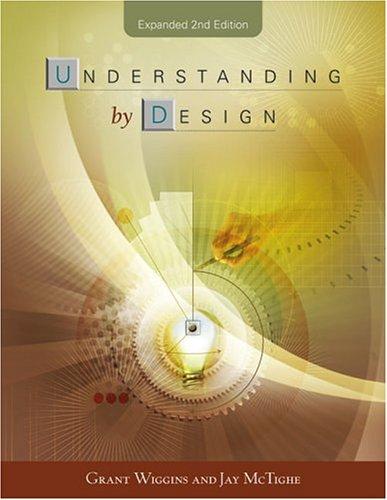
Grant Wiggins and Jay McTighe · Buy on Amazon
"Understanding by Design is an incredibly influential book. Its premise is that you have to start curriculum design with an end in mind. You figure out what your goal is first and plan backwards from there, building your curriculum around what you want to achieve. It sounds very simple but for a long time people weren’t doing that. They were covering units or textbooks without clear priorities or purposes in mind. Backwards design helps teachers to focus on the endgame and hold themselves to account for meeting their goals. Curriculum is not something that we want every individual teacher to determine for his or her own classroom. There has to be a standardised curriculum. When people hear about a standardised curriculum some assume that teachers are stymied or stifled, which is absolutely wrong. When you have a set of standards and a set curriculum a tremendous among of creativity goes into determining the instructional strategies teachers use to convey and reinforce the curriculum."

Terry Moe · Buy on Amazon
"Terry focuses on teachers’ unions and their influence on education policy in this country. His book presents the facts on how the unions operate and what their sphere of influence is. I think that people will be shocked by some of the information in the book about political involvement of teachers’ unions. Understanding teachers’ union dynamics helps us understand why we are where we are as a country. I probably have very different views from Dr Moe on teachers’ unions, but I do think his book sheds some light on the political dynamics that shape education policy in this country. I think there is a general perception that teachers’ unions spend a lot of time and their money on professional development. I think people are shocked when they find out how much money unions are spending on the political process. I understand why they are doing that – their job, ultimately, is to protect the rights, privileges and pay of their members. Being an influential player in the political arena enables unions to influence laws and policies that are going to affect your members. But everyday people in the grocery store may not know the extent to which that happens and how massive their influence is. People ask me, “How can we change teachers unions to make them more reform-oriented?” I think that is the wrong focus. Teachers’ unions are doing exactly what they are supposed to be doing – maximising the pay, privileges and priorities of their members. They’re doing a great job of that. I don’t believe that we should deny teachers the right to be well represented. I think we just need some balance. We need to create a national organised interest group – with as much or more heft than teachers’ unions – to advocate on behalf of kids. I think that’s the way to solve the problem. There are three main aspects to our policy agenda. First is human capital – making sure there is a great teacher in every classroom and a great principal leading every school. The second is choice and competition. We think it is incredibly important to never have a circumstance where a family feels like they are trapped in a failing school without options and opportunities for their kids. The last agenda item is accountability for every child and every dollar – governance systems that are better able to help kids live up to their potential and make sure that we are spending our education dollars in the most highly impactful way. That’s a great question. One of the challenges reformers face is that people don’t see how the failures of our public education system impact on them. The modern global marketplace requires a well-functioning public education system. Businesses need a well-educated workforce. Property values hinge on the quality of local public schools. A sound public education system is a way to combat crime in your community. So even people that may think they are insulated from the weaknesses in our public education system, their lives and livelihoods are negatively impacted because we don’t have a public education system that serves all kids well. We’re not going to get real sweeping reform until every citizen understands that having a poorly performing public education system means that we all lose. August 17, 2011. Updated: May 4, 2018 Five Books aims to keep its book recommendations and interviews up to date. If you are the interviewee and would like to update your choice of books (or even just what you say about them) please email us at [email protected] Support Five Books Five Books interviews are expensive to produce. If you've enjoyed this interview, please support us by donating a small amount ."