Mary Elise Sarotte's Reading List
Mary Elise Sarotte holds the Kravis Chair in Historical Studies at the Johns Hopkins School of Advanced International Study in Washington DC. She is also a Research Associate at the Minda de Gunzburg Center for European Studies at Harvard. Sarotte’s publications include Dealing with the Devil: East Germany, Détente, and Ostpolitik , German Military Reform and european Security . And 1989: The Struggle to Create Post-Cold War europe was named one of the best books of 2009 by the Financial Times . Sarotte has been a member of the Institute for Advanced Study in Princeton and a White House Fellow
Open in WellRead Daily app →1989 (2010)
Scraped from fivebooks.com (2010-08-05).
Source: fivebooks.com
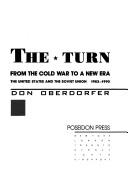
Don Oberdorfer · Buy on Amazon
"Don Oberdorfer is a journalist who spent many years with The Washington Post . The Turn is not a new book; it came out in 1991. There are more recent books by journalists, but I really like this one, because he was present at a number of the key events and he did a good job of documenting what was significant and then pulling it together immediately afterwards. So, if you ask me for just one book to give you the narrative of events, I actually would still recommend this one. He is particularly good on international relations. This topic is a key part of the story of 1989 and 1990; it is hard to understand what happened if you look at just one country. Obviously, it is interesting to look at divided Germany when the Berlin Wall comes down, but you have to put that in the context of Solidarity coming to power in Poland, Mikhail Gorbachev and his reforms in the Soviet Union, and how the United States reacted, and how France reacted. You need to understand the actions of a lot of different countries. Yes, I think that Oberdorfer’s book is a good first cut of history. The theme of multiple potential futures going forward from 1989-1990 is something that I tried to develop further in my own book."

Anatoly Chernyaev & trans and ed Robert English and Elizabeth Tucker · Buy on Amazon
"To put this title in context: if I were giving you a longer list of recommended books, it would include many in foreign languages, as well as collections of original documents from the time, and various memoirs such as this one. An honest memoir, written by someone of significance, who either has some documents or notes taken at the time, is always a valuable resource. I usually hesitate to recommend translations because you lose some of the original flow, but this is a very interesting book and English-language readers are fortunate to have this skilfully translated version. Anatoly Chernyaev was one of Gorbachev’s top foreign policy aides. He kept a diary which has since been summarised into this memoir, translated by some very capable experts who are good at giving added value through detail and explanation. So, if you are interested in understanding Gorbachev, this is one way to get into his mind, so to speak: through the diary of one of his closest advisers, who spent six years working with him. Well, it becomes apparent that, on the one hand, he is very optimistic. He has great hopes that he can reform the Soviet Union. But it is also apparent that he feels embattled. By the end he only trusts a very few people (with some justification, because in 1991 there was a coup against him). So, this book is by one of the people who was part of his inner circle and was privy to his thoughts. I am a historian of international relations in the modern period, which all too often means I am an historian of war. I wanted to write a book about what I thought was a happy ending – a peaceful ending to the thermonuclear stand-off between the superpowers. So that was why I started to write the book. And, of course, when you start writing a book and doing the work, it becomes more and more interesting, because surprises start to pop up. What became apparent to me, surprisingly, is that 1989 is really a Janus-faced story. On the one hand you have this wonderfully peaceful ending to the conflict that could have ended in nuclear war, but on the other, you have missed opportunities afterwards. The ending could have been a lot worse, but it could have been a lot better if there had been more of an outreach to Russia at the end of the cold war. Get the weekly Five Books newsletter Another complete surprise that emerged while I was researching the book was the way in which the origins of NATO expansion got tied up with German reunification. Up until I wrote this book, the general assumption was that NATO expansion started in the mid 90s with the Clinton administration; but I found a great deal of evidence showing that the Bush administration in 1990 anticipated it, so that was a real surprise to me. It became a priority of the United States to keep NATO’s options open. That kind of big surprise comes up when you research a book."

Jana Hensel · Buy on Amazon
"This is an English translation of a memoir that came out in Germany. The title in German is much more evocative; it is called Children of the Zone, a reference to the fact that East Germany started life as the Soviet zone of occupation in divided Germany. The book was a bestseller in Germany but also a very controversial one. The author was a teenager and living in East Germany at the time the wall came down. She was old enough to know her world was ending but not old enough to know why. Neither she nor her family had been particularly political before the wall came down. This is a story about how she tries to come to terms with seeing her world collapse. All her expectations change and the values that she grew up with are thrown into question. It’s a controversial book because she decided to use the pronoun ‘we’ throughout the book, even though she is talking about herself. Her critics say that she shouldn’t speak for an entire generation. Other people had different experiences. There was another book that came out from another young woman who was a child of dissidents. She jokes that until she was an adult, she thought that the word ‘cockroaches’ meant the Stasi agents who spied on her parents. Support Five Books Five Books interviews are expensive to produce. If you're enjoying this interview, please support us by donating a small amount . I find Hensel’s book to be a very interesting account of the time. There is a powerful moment towards the end where, many years later, she is talking about the Nazi era with some friends who grew up in West Germany. In East Germany state rhetoric declared that West Germany was the heir to fascism and East Germany was not. She realises when she is having this conversation that actually all Germans are heirs to the legacy of Nazism whether they like it or not. It is part of their shared past and they are all linked to it. It is also interesting to read about her relationship with her parents. She is jealous of her West German friends’ easy relations with their parents, because they share similar values. She, in contrast, feels alienated from hers. So, I found this book interesting because of all the internal mental discussions that she has with herself."

Odd Arne Westad · Buy on Amazon
"This book was written by a Norwegian scholar, now a professor at the London School of Economics. He is a phenomenal researcher who is capable of working in a dozen languages – not just european ones, but also Chinese and some indigenous African languages, which he picked up in younger years when he was as a development worker. This book was a success amongst professional historians but is less well-known in the popular sphere. It seeks to understand the global Cold War by looking at times when the United States and the Soviet Union intervened in other countries. It comes to the conclusion that interventions benefited no one. They didn’t benefit the United States or the Soviet Union and they certainly didn’t benefit the developing countries that were invaded or intervened upon in some way. And, because he has worked with so many sources from all over the world, it is a very powerful argument. If you have readers who are interested in a good work of serious history on the cold war then I would definitely recommend this book."

Frédéric Bozo · Buy on Amazon
"This is a terrific book which changed our understanding of the French role in unification. It shows that Mitterrand, unlike Thatcher, very quickly realised that the smart move for France would be to get in front of the German unification process, support Helmut Kohl and to see what he could get for France."