Louise Hare's Reading List
Louise Hare has an MA in Creative Writing from Birkbeck, University of London. She was selected as one of the Observer's ten best debut novelists in 2020. Her debut novel, This Lovely City , was shortlisted for the RSL Ondaatje Prize in 2021. Her latest novel is Harlem After Midnight .
Open in WellRead Daily app →The Best 1930s Mysteries (2024)
Scraped from fivebooks.com (2024-04-05).
Source: fivebooks.com
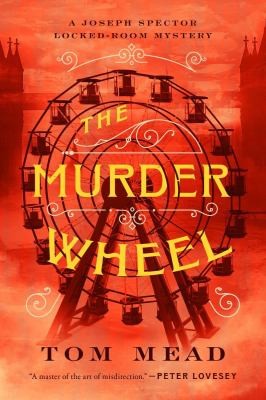
Tom Mead · Buy on Amazon
"I did a couple of events last year with Tom, as our books are a nice fit. And I’m always fascinated by writers who write in a completely different way to me. I guess I’m what they’d call a ‘pants-er’—I have my characters but I don’t necessarily know what’s going to happen. Obviously you’ve got to kill someone if you’re going to have a murderer—but I don’t always know who the murderer is until I get to the end. So I kind of find out along with the reader. But when I was on these panels with Tom, he talked about his process, which is very spread-sheet based. With a locked-room mystery, the plot has to be so tight—you need to know how it’s been done before you can write about it. “It’s interesting to compare the fiction of the time to fiction written now—with the benefit of hindsight” He has two locked room mysteries; this one starts with a detective going to interview a woman accused of murder—but then you have a murder in a theatre as well, which happens in real time, so to speak. So you’re trying to figure out what’s going on, and how these two things are connected. I’m just in awe of people that can site down and plan these things. And I know that people who love locked-room mysteries just love Tom’s books."

Natalie Marlow · Buy on Amazon
"I love a bit of noir. Three of my five picks I would categorise in that noir category. Over the years, it’s a genre that has been more associated with American writers, but now we are getting a lot more British crime fiction of that kind, set in this period. I also love that this book is set in Birmingham, as we have a lot of London- and New York-based books. So it’s nice to go somewhere different. I never knew where this book was going, but I loved the journey. It’s very character driven, too, which I love. If you are into Peaky Blinders , it has a similar vibe, some similar elements—there are lots of scenes on canal boats, things like that. It’s a great book to lose yourself in for a weekend. Well, it’s kind of dark, right? That’s a literal translation. I guess we are moving away from the cosier, safer elements of mystery. A lot of Golden Age fiction focuses on that Agatha Christie style: there’s a straightforward murder—a poisoning, a stabbing—without the murkier elements like sexually-based crimes, drug addictions, those harder topics. It’s more like: Someone’s been shot! Let’s solve the mystery! That kind of thing. Whereas noir does go into those darker places that we might not necessarily want to think about, and we might hope are removed from our own lives."

Dominic Nolan · Buy on Amazon
"It feels epic to me. I think because it takes place over quite a long period of time. It starts in the thirties, which is why I’ve included it on the list, but it goes on for a few decades. It has a great story, and you can get lost in Soho, down in all the jazz clubs, with celebrities popping up. There are all these different elements, but then it all comes together like a big conspiracy. You’re trying to figure it out: Who’s the good guy? Who’s the bad guy? This is more cop-driven—it’s not a police procedural, but there’s a detective at the heart of it. It moves through World War Two, and by the time it got to the end I was just in awe. It was one of those books where there is nothing that I would have changed. Word perfect. As a writer, you can pick up books and start editing them in your head as you go, which cuts down some of the enjoyment, it’s like work. But this one was more like, wow, how has he done this?"
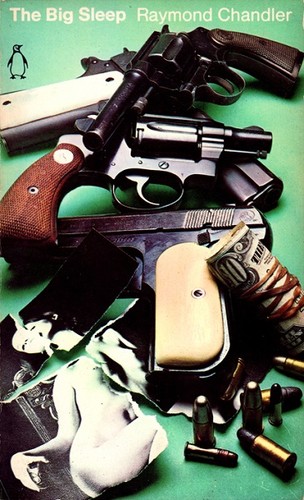
Raymond Chandler · Buy on Amazon
"Right. I feel like I should hate this book. It’s written in the 1930s by a guy. There’s a femme fatale trope, which can be cringy, and the treatment of women? But it’s such a good story that I overlooked that, I guess. And that’s a problem with a lot of what was written during the 1930s. It’s problematic for many, many reasons. As you say, Chandler is the daddy of Noir. When I was first thinking about writing crime, I decided to go back and read the classics that I hadn’t read already. And this was one of the first things I picked up. The story just drags you through. That’s right. And the tone reminded me a lot of those old movies—in fact, this was made into a movie—and it helped get me a sense of the aesthetic of my own writing of that period. I have American characters in both of my last two books. I was trying to figure out how to write their dialogue. And I think that Chandler’s dialogue is really good—you can hear it just as it might be spoken."
Agatha Christie · Buy on Amazon
"Well, this was one of the first books of hers that I read. It’s one of the best known ones. And it has all the things I love about Agatha Christie in terms of plot, this large cast of characters, the reveal at the end. It’s quite dark for her. And I love that her travelling books have a bit of glamour. Poirot is probably my favourite detective, although I wouldn’t want to hang out with him because he’s very fussy about everything. Yes. And I watched a lot of the television show with David Suchet, to help picture the décor and fashion. It’s an escapist kind of novel. One of the things I did realise while re-reading Agatha Christie was just how much racism and anti-semitism was chucked in, often with no relevance to the plot at all. There was a man, Knox, who wrote the ‘rules’ for mystery writing at the end of the 1920s. One of them was ‘no Chinamen’—because it was a weird trope to have just a random Chinese person in there as a dodgy character. He was like, no, everyone has done that already. Not: don’t be racist. Just, it’s been done to death, nobody wants it. So, yes, what contemporary crime fiction is able to do is not only look back at the politics of the period, in terms of what was happening globally, but also include diverse characters without reverting to stereotypes, which a lot of the stuff written at the time leant quite heavily on."