Lindsay Chervinsky's Reading List
Lindsay Chervinsky is a historian of the United States presidency, political culture, and government, especially the president’s cabinet.
Open in WellRead Daily app →The US Cabinet (2022)
Scraped from fivebooks.com (2022-02-21).
Source: fivebooks.com

Noble Cunningham · Buy on Amazon
"This is an oldie, but a goodie. No historian looked more closely at the intricacies of government. I included this book because of Cunningham’s picture of the cabinet’s functioning and because Jefferson had a remarkably effective cabinet. He had very little turnover. He carefully cultivated relationships with cabinet members. Jefferson pulled what he saw as the best from both Washington and Adams’s cabinets to guide him. His cabinet represented and served his presidency well. Cunningham does a great job of showing that. After Washington, most presidents mostly selected cabinet members from their own party. They recognized that it was difficult to have people working towards different outcomes in your administration. There are some key exceptions. Presidents brought in voices from the other party when it made sense to do so. For example, at the start of his third term, Franklin D. Roosevelt brought in Republicans who were aligned with him on how to fight World War II. Although the Republicans didn’t agree with all of Roosevelt’s social and economic policies, they could work together on the war and present a united front. Other presidents adopt that example to present a bipartisan image of their administration. If cabinet members have enough shared values to pursue discreet goals together, it works."

Jeffrey E. Cohen · Buy on Amazon
"The best way to understand how this institution works is to study individual administrations. But it’s also helpful to have an overview of how the appointment process works and how the Cabinet evolved over time. If you’re looking to get a sense of how the institution has evolved, The Politics of the U.S. Cabinet is the right resource. The cabinet is constantly evolving. The heads of all the departments created by acts of Congress are included. There are currently 15 department heads. The Secretary of State, the Secretary of the Treasury and the Secretary of the Interior are among the department heads whose appointment requires congressional Senate approval and who are always included in the cabinet. There are also what are called ‘cabinet-level appointments.’ Those shift, depending on the president’s preferences. So sometimes the CIA director is a cabinet-level position, sometimes it’s not. Biden has removed that position from his cabinet, while President Trump included the CIA director. Presidents will also include certain envoys in their cabinets. Former Senator and former Secretary of State John Kerry currently serves as President Biden’s Climate Envoy, which the Biden Administration designates as a ‘cabinet-level’ position. But it does shift, depending on each president’s preferences and priorities."

Doris Kearns Goodwin · 2005 · Buy on Amazon
"This is an essential read for anyone who wants to understand the presidency and it’s beautifully written. I would argue that every president up until Lincoln pulled from their key political rivals when assembling their administrations. That was just how it was done. But even if you disagree with Doris Kearns Goodwin’s central argument, Team of Rivals still reveals so much about the Lincoln administration. What makes this book so important and what made Abraham Lincoln so remarkable was that he was perhaps the least known and least experienced of all the people in his cabinet, and yet managed to cultivate close relationships and real respect with his cabinet members. Lincoln’s command of his cabinet shows his political genius. I would say Jefferson, Lincoln, Grant, Theodore Roosevelt, Franklin Roosevelt, and Kennedy. Although Kennedy’s cabinet undermined his administration."
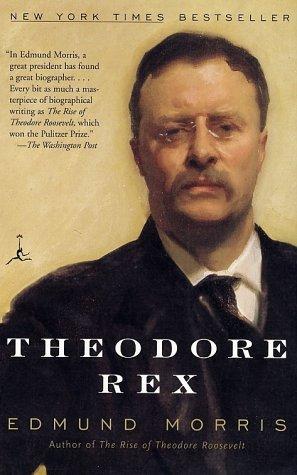
Edmund Morris · Buy on Amazon
"This is one of several volumes by Edmund Morris on Theodore Roosevelt. Theodore Rex is probably the most detailed look at his presidency. It demonstrates the centrality of the cabinet to Roosevelt’s success in office. Not many presidential biographies focus on the cabinet. It tends to be an underappreciated aspect of presidential administration. Morris turns that tendency on its head. It’s hard not to enjoy reading about Roosevelt because he was such a colorful character. Morris brings that to life. For example, he describes how Roosevelt—who previously had been Assistant Secretary of the Navy and was very passionate about the role of the Navy in the United States’s emergence as a global superpower—just could not stop meddling with the work of his Secretary of the Navy. That drove several secretaries from office. In the 18th and 19th centuries the cabinet was seen as a stepping stone to the presidency. Especially the Secretary of State post, because that was the most prestigious spot. It was common for a president to appoint a natural successor to that position. Since the turn of the 20th century, that has been the case less frequently because of the professionalization of the departments. Now you typically see someone who has built a career in a particular field nominated as the secretary of the department in that field. When President Obama appointed Hillary Clinton as his Secretary of State, she presumably hoped that would set her up as his successor. But, as we know, Donald Trump won instead. Cabinet secretaries serve as messengers and defenders of policies, rather than the president himself. Often a president will appear publicly with a cabinet secretary to discuss a piece of legislation or a new policy pertaining to that secretary’s department. They might go to a department site, like a Veteran’s Administration hospital, to highlight an issue. Cabinet secretaries are rarely the subject of stories unless there is scandal or difficulty in their department. Photographs at the beginning of cabinet meetings are common, but these huge validator events were new. The 25th amendment provides that if the president is no longer cable of managing the responsibilities of the office, the cabinet and the vice president can request that the president be removed from office. That clause has never been invoked. But it has been discussed when prior presidents experienced acute health crises. So, when President Reagan was shot and in surgery, it was discussed. And, according to reports, there was serious discussion of invoking the 25th amendment after the January 6th insurrection."

Peter Baker & Susan Glasser · Buy on Amazon
"This book is a fascinating read. It provides both the story of what motivated Baker to serve and an in-depth look at the very powerful role he played in shaping the modern Republican party across many administrations. Many of the most fascinating details are based on newly declassified material. Get the weekly Five Books newsletter The Man Who Ran Washington is so important for understanding the cabinet. It gives us a firsthand look at someone who participated in the institution in multiple capacities, insight into how the cabinet functioned during two different administrations and how two different presidents worked with their cabinets. There’s no doubt that the rise of the chief of staff has shifted the role of the cabinet. The presidency is a very personal institution. The power of any given chief of staff depends on the person in the Oval Office and their relationship with cabinet secretaries. If a cabinet secretary like Baker has a very close relationship with the president, like he did with George H.W. Bush, they can circumvent the chief of staff. In White Houses relationships matter so much. The power and influence of presidential positions are not static. They shift depending on the individuals in office and their relationships with others in the Oval Office orbit."