Kevin Mattson's Reading List
Kevin Mattson grew up in the suburban sprawl known as the Washington, D.C. Metropolitan Area. It was here that he first experienced the "punk rock world" that fuelled his formative years. He played in bands, wrote for zines, and became politically active, helping to cofound the organization Positive Force. He now teaches American history at Ohio University and is the author of numerous books that explore the intersection between culture and politics, including Upton Sinclair and the Other American Century , What the Heck Are You Up To, Mr. President? , and, most recently, We’re Not Here to Ent
Open in WellRead Daily app →Punk Rock (in 80s America) (2021)
Scraped from fivebooks.com (2021-01-27).
Source: fivebooks.com

Jon Savage · Buy on Amazon
"That’s right and that’s one of the things that the book England’s Dreaming does so well. It tells the story of the Sex Pistols’ formation and their demise, but also shows how many punk offspring the Sex Pistols had in Britain in the late 1970s and beyond in the 1980s. With this band there’s certainly a feeling of something being born."
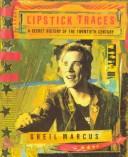
Greil Marcus · Buy on Amazon
"Absolutely. One of the things that Marcus does, for example, is to bring to our awareness the Situationist International. Supposedly – although this is debatable – the Situationists were influential on Malcolm McLaren , the avaricious Sex Pistols manager. That’s perhaps apocryphal, but the fact of the matter is that the Situationist International , with its critique of spectatorship and of ‘The Spectacle’, as modern society was described by them, became a key theme that I believe had a profound influence on punk music. Its underlying message is one of DIY, to stop looking at your television screen, stop going to the movies and stop watching movies. To create your own culture rather than waiting for it to be handed down to you by the powers that be. In that act you become truly rebellious. Even though it was an international organisation, it was based in France and was very French in spirit. “Punk was a movement with a lot of humour at heart” This comes across in Lipstick Traces , although I remember from my own research for my book that Marcus also authored a series of articles that he did for the Village Voice in the early 1980s in which he brought the parallels to light. He was one of the first people to try to explain the Situationist International – not an easy task! Especially if you’re reading them for the first time, there’s all sorts of Marxist jargon that’s difficult to penetrate. But Marcus convincingly made the link between punk and the Situationist International, and in the process explained this arcane philosophy, which is no small feat. Not something that other punk rock books even attempted!"
Michael Foley · Buy on Amazon
"That’s right, the country’s turning. If there’s a new chapter of punk as we move from 1979 to 1980, the country is also turning the page to a new chapter and moving to the right with the successful election of Ronald Reagan and the defeat of Jimmy Carter. Michael Foley’s book about the Dead Kennedys does a really good job of teasing out the kind of political and social criticism that was quite serious on the part of the Dead Kennedys, with an element of shock and surprise, but also with humour. One of the things that’s important to keep in mind is that punk wasn’t just dire seriousness, whether it was criticising the Queen of England or criticising America as it existed under the presidency of Ronald Reagan. Punk was a movement with a lot of humour at heart. Much of it dark humour, gallows humour, but equally a humour tempered by an understanding of theory or a political earnestness or seriousness of someone like the Dead Kennedys’ lead singer, Jello Biafra. Get the weekly Five Books newsletter It is significant. The Sex Pistols’ final act in San Francisco was witnessed by many people who were in bands or went on to create bands. The Dead Kennedys crystallised out of that as well. On the West Coast, an earlier generation of musicians, numerous bands formed in the 1970s, basically call it quits in the last 70s, most famously the Avengers. This opened up a path for new bands like the Dead Kennedys to become even more dominant – although they would probably balk at the term – within the San Francisco scene. I’ve noted that one of the things that Jello Biafra gets very, very excited about is when he started seeing the composition of the audience changing toward an ever younger crowd coming in as we move into the 1980s. It’s not quite generational, because I don’t think it’s that big of an age difference, but it had the feeling of being something different. There’s new blood coming onto the scene that hadn’t been there before, perhaps as they were only just coming of age. It lends the scene a new energy. Whenever he performed in theatres in San Francisco or as the Kennedys started to tour the United States, Jello Biafra would always make it a point to say things to the audience like, ‘Go out and read a book!’. Don’t stop here, when the concert ends. We the Kennedys are gonna pummel you with political criticism, but don’t take our word for it, think for yourself, go to a library and read some political theory! The other thing that I really enjoyed discovering was another of the most pioneering bands for this generation of teeny punks, the Minutemen . They were notorious when they toured. But not for the reason that the Sex Pistols were notorious. They would hit the tour circuit, going what they called ‘jam econo’ by doing it all as cheaply as possible – driving a van, crashing on people’s couches, doing their performance and moving on to the next town. On the way, they are said to have gotten into these huge arguments. Typically, it was the lead singer D. Boon versus their bass player Mike Watt in epic arguments about things like the finer points of British history. They would literally head into a town, stop the van and go to a library to resolve their debates. That’s so punk rock! It’s just a marvellous story. “It was about disagreements concerning the way we look at the world” This anecdote maybe also illustrates why this sort of movement could never be successful ever again. The Internet has changed that sort of autodidactic experience that I believe a lot of the people involved in that scene were dedicated to. It also shows up the typical stereotype for being much more than just a kind of violent thug culture. Read the lyrics of Dead Kennedys songs and they are brimming with biting, well-informed social and political satire. There’s a great volume called Double Nickels on the Dime , the title of the Minutemen’s double album that was released in 1984. It’s an excellent book which explores the ideas and historic background of the movement. One thing to keep in mind was that my official training in graduate school was American intellectual history. I’m probably being audacious in saying so, but I actually believe that punk zeroed in on powerful ideas. This was intellectual life. It was young and riotous, but it was an intellectual life. Perhaps it wasn’t as well informed or articulated as we would expect intellectual life to be, but it was about ideas, it was about debates. It was about disagreements concerning the way we look at the world. This perhaps is the most forgotten or misunderstood aspect of punk rock, if indeed it was ever understood in the first place. Or my insanity more like…!"

Stacy Russo · Buy on Amazon
"Absolutely. One of the ghastly things is that people are selling their archival material on the market rather than depositing valuable records at places where scholars and others who simply have an interest in this sort of stuff can go through and peruse them. That’s one of the crimes that I discovered as I wrote my book, the many people who have sold precious archives that I didn’t otherwise have access to. One advantage that I devised was to use Maximumrocknroll, a nonprofit monthly zine of punk subculture founded in 1982 and based in San Francisco, as a way of cross-checking what was going on in other cities in the US. If I came across word of a fanzine that was say, out of Tulsa, Oklahoma – which believe it or not had a profound political punk scene – I would test by seeing if Maximumrocknroll was talking about it. Needless to say, I would also sometimes, trying not to do this too often, deploy the ‘bullshit detector’. Of course I didn’t remember every single moment of my engagement in the scene and what I knew was going on nationally, but I had enough experience of it to be able to crack through the thin veneer of the evidence and say, ‘OK, yes, this is something significant’. Russo’s book does this very well, and that’s one of the reasons that I chose it for my selection. The dominant way of writing punk history is to compile interviews alone. Some of your readers may be surprised at one of the books I did not include in my list, which is Please Kill Me , just a series of interviews with people on the scene pasted together. I find that sort of oral history to be dangerous. I don’t trust people’s memory. I don’t even trust my own memory! Exactly, you’ve got to know where people are coming from. It’s the music scene, and so you will always find self-aggrandisement somewhere, that ‘I was there for the formation of this or that or that band’ or whatever. What Russo does so well is to blend together the memoirs and the evidence which allows for a longer narrative rather than just a paragraph statement from any given individual. Like the author here that I suppose I most admire, Jon Savage, there’s a narrative development that goes beyond oral history. England’s Dreaming is such a good book because it’s not merely an oral history. He did conduct interviews, of course, and these have been released uncut in a follow-up edition, the England’s Dreaming Tapes . But for the most part, he’s going back to the record and recreating events in a way that’s actually quite alarmingly literary. It’s a beautifully written book. That’s no exaggeration. “Punk isn’t just about music. It’s about building a wider popular movement” One of the things that I wanted to reject and not fall prey to in my own work was the reliance on oral interviews with the participants. I kept that to an absolute minimum, and only contacted people and interviewed them when I couldn’t find a specific piece of ephemera, be it a zine, poster, bootleg recording, or a booklet attached to a record or something like that. True primary sources were key, and only having exhausted these I might consider an interview. Even when I did those interviews, I was quite hesitant about relying upon the person’s memory and what the person wanted to convey to me in terms of what they saw as being significant. The levity is a common thread in almost every single interview she chose for this book. Many of the protagonists say that this was an act of politicisation, that they became politically aware though Punk Rock. In my book too it’s one of the things that I wanted to emphasise. Punk isn’t just about music. It’s about building a wider popular movement that can include engagement in politics in different ways than was possible before. You can see this in the art of the time, you can see it in movies, you can see it in many different forms of self-expression. I wanted to get away not only from the over-reliance on oral history which dominates the study of punk, but also the way in which we usually tell the story as a narrative of different bands, their playlists and their members. This is an approach that usually silos things rather than giving you a wider perspective on what makes punk truly interesting as a social phenomenon. The forms of creativity that punk mobilised were much more diverse and inclusive than I believe people recognise. Another important artist here is Winston Smith , who did a lot of the Dead Kennedys’ promotional materials. Like Pettibon, he was knowledgeable about art history and the history of the avant-garde in modern pictures and painting. Pettibon would take part in the epic Minutemen discussions with Mike Watt, for example, in recounting the story of Surrealism , Dada and how they influenced him as an artist. He had this wonderful way of doing things where his technique would confront the viewer with a radical disjuncture – between the actual image and then the accompanying text, usually written either above or below in such a way as to be a provocation and a puzzle. This was part of what made him successful and it’s part of the power of punk. Like Winston’s cover art, Pettibon makes you sit up and say, ‘What is this?’. Support Five Books Five Books interviews are expensive to produce. If you're enjoying this interview, please support us by donating a small amount . The iconography was in large part about the death of hippie culture and the hippie movement, along with the rise of key personalities in the 60s counterculture, like Charles Manson, the insane organiser of what he called ‘the family,’ which was mostly manipulated young women who went on murder sprees for him. This is intelligent, interesting, urgent, neck-snapping art that he created. Winston Smith in visual terms was continuing and innovating with a technique for cut ups that takes us back to Dada and the literary work of writers like William S. Burroughs , not to mention of course the Situationist International."

John Patrick Diggins · Buy on Amazon
"This is a work of intellectual history and history of ideas, as opposed to a settling of scores or taking account of the Reagan presidency. It’s not unimportant, making sense of the politics, but I just didn’t find it as interesting as trying to get inside a president’s worldview. Diggins goes so far as comparing Ronald Reagan to Ralph Waldo Emerson , which is just remarkable! I totally disagree with the interpretation, but I do recognise how many Americans probably saw Reagan in this light. My favourite episode described in this book is welcoming Michael Jackson to the White House, when Ronald Reagan goes on record as saying, ‘What a Thriller it is to have you here…!’. He’s flagrantly showing off just how much he’s indebted to celebrity culture for his status, which is something that absolutely no self-respecting punk in the 80s would ever saddle up to. With his almost foolish obsession with dreaming and optimism Reagan was a Romanticist, and I think Diggins is right to draw this out. The more important question is obviously whether or not one thinks that he was a good or even fitting head of state. Kill your idols. Which I don’t think is a literal statement! But anybody who appears as a celebrity or as a star deserves rejection and ridicule in the punk worldview. That’s difficult to say, as these things often only come to light in retrospect. For sure, there are hip hop artists who are writing brutally critical songs about Trump’s America. If we consider the DIY ethic of punk, this also seems to be very much alive and well. When asked this question I often give an example that’s very local to me. Early in the pandemic , which we’re still going through, just a block away from where I live, neighbourhood citizens put together a spontaneous recurring performance where people will sit in their front yards and play music to one another. All the while they are social distancing, and using masks and taking relevant precautions, but they are without a doubt creating their own culture. To the extent that there is a central theme of my book, it’s the call to act, to create your own culture. Creating your own culture also changes your consciousness. Channelling one’s anger against the triteness of the culture industry’s offerings can be an organic, spontaneous and creative act of resistance and rebellion. That’s probably the best place to look for the successor to punk in the 80s."