Katherine Isbister's Reading List
Katherine Isbister is Professor of Computational Media at the University of California, Santa Cruz, and is the author of Better Game Characters by Design . She was the founding Director of the Game Innovation Lab at New York University.
Open in WellRead Daily app →Video Games (2016)
Scraped from fivebooks.com (2016-06-22).
Source: fivebooks.com
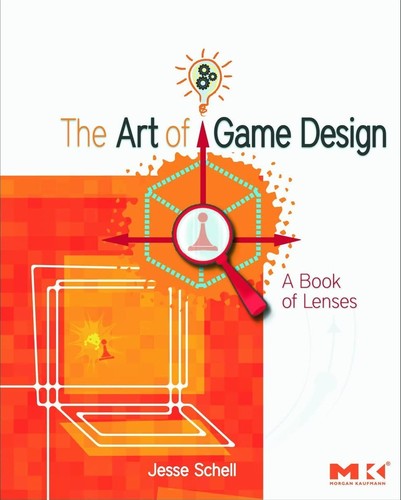
Jesse Schell · Buy on Amazon
"This book is written by a respected game design practitioner and academic, and it is one of the classics. It is one of the books that many game design education programmes would have students read. It is also very accessible, so I think it is a great way for someone who is curious about game design to learn about the different components involved. What Schell means by a books of lenses is that he doesn’t offer a single approach, he offers a lot of different perspectives to thinking about how to engage with design. “If I am choosing books that will cut to the chase, and get them running on the subject very quickly, this book is one of them.” For example, there are several sections devoted to game mechanics, as well as sections devoted to story, game worlds, and characters. Each has practical information gleaned from Schell’s experience as an educator and game developer. Jesse Schell has a well regarded game company, and he is a professor at Carnegie Mellon University in the ETC [Entertainment Technology Centre] programme, so he is sitting in both of those worlds. If I am choosing books that will give someone a head start, that will just cut to the chase and get them running on the subject very quickly, this book is one of them. Yes, I work with teams of students. In the last few years, we’ve done a lot of co-located multiplayer games: games that use sensors that track where and how you move to create fun dynamics. I play a producer-designer role, but it takes a team of people to put these kinds of games together – technical skills, artists and such. No, the thing is now we have these tools like Unity , for example, one of the most broadly used tools for game generation. It is free, or at least the student version is free, and you can create a simple game in a day if you want. If you want to make, let’s say, a very simple, html-5 based mobile game, it might take a team of three people three months. You can craft an interesting experimental game in that sort of time. It’s a matter of the scope of your idea and the platform you are trying to build it for, and then how polished you want it to be. If you want it to make it through the app-store, it is going to take more people and more time. Are you familiar with Steam ? Well, in the last few years, aggregator websites have arisen that allow you to purchase and download all sorts of games. Steam is the most well known example, and the games there range from the mainstream to the experimental. But Itch.io is a place to go for really quirky, experimental content. You can find all kinds of things there. Another thing that I would recommend is to check out the winners every year of the IGF [International Games Festival] awards . For example, have you played Papers Please ? That was one of the IGF winners in a couple of different categories. In brief, you are a customs official in a made-up country, and you are given these rules for who to let through and who not, and from this simple premise develop some interesting moral conundrums and decision points. That’s a good example."

James Paul Gee · Buy on Amazon
"This book, you could argue, is the book that launched – at least in the US – the tremendous interest in games for learning. Gee was a professor who had nothing to do with video games, who just dove into the subject and ended up realising what an incredible potential resource they were for learning. “He ended up realising what an incredible potential resource they were for learning.” In this book, he takes what I would say is a sort of ethnographic style approach, where he is trying to understand games as a participant observer, and then extracting these learning principles for games. He translates for the reader what he sees as specific learning techniques that are embedded in different styles of games. I think it was a really valuable account for educators who otherwise maybe didn’t play. I mean, at some level, we have a bit of a generational issue with video games, that people who are older maybe they played early arcade games, but they didn’t necessarily grow up playing complex games, and so they have all kinds of preconceived notions. I think that James Gee did a really good job in this book of unpacking games for educators and parents. One example is that he points out how games offer ‘psychosocial moratorium’, basically that gamers can take risks in a space where real world consequences are lowered. What it means is that one reason games can help with learning is that game play happens in a magic circle, a play space outside real-world consequence, so you can take a risk in a game and you know you can just go back and replay. In typical learning situations, you take a test and there are stakes, you are being graded, right? Or you are in a classroom situation, someone asks you a question, and then suddenly the social stakes are high, if you answer correctly or not. Whereas if a kid is playing a game, you know, they have this feeling [of safety]. I guess you have to be careful about putting metrics into these educational games, because then they will start to have real world stakes too. But his point being it actually encourages a sense of risk taking and experimentation for kids because they learn, ‘Oh, it is not so bad. My character died in this level, but I’ll just play it again, and I’ll learn from it. I’ll take a different strategy.’ Absolutely. Sometimes I come across students at the university level who are afraid to run forward and take risks. They are waiting for the metrics to be handed to them so they know how they can succeed. So one of the points Gee starts to make, in contrast to the views people had early on about video games taking away motivation, is they are actually training a certain kind of risk taking and engagement that is valuable to you as an adult."

Celia Pearce · Buy on Amazon
"I really like this book because I think that Celia Pearce takes the perspective of players and shows how players think about which games they play and also how they move among different game worlds. One of the interesting things she is studying in this book is how in massively multiplayer online games, as you mentioned before, there are a huge number of people and sometimes very complex communities. So she traces this diaspora of people who got very attached to one particular game [ Uru: Ages Beyond Myst ] and when that game’s servers closed they went to different gaming and online world platforms trying to recreate the sense of community that they had in the original game. “She’d heard so much about the game that actually getting to play it had this heavy meaning for her, like walking into an ancient city” She got to know these people as they were mourning the loss of this particular game world, and watched them trying to recreate it in another environment. At one point, they get access to the source code for the game and they can kind of resurrect a version of the game. She gets to walk through it. It is funny. She describes how she’d heard so much about the game that actually getting to play it had this heavy meaning for her, like walking into an ancient city. I think this book would really help somebody who is trying to understand player culture and why it’s so compelling, to get a feel for that intersection of community and virtual place, and how those things fit together. Because those players really loved the folklore of that game, and they also liked the interactions that they had in that game, and they had particular identities they formed. It is sort of like, a high school reunion kind of thing. You try to recreate these particular settings and scenarios that were so resonant for you. Yes, it’s like a communal memory palace, and it speaks for how profoundly place affects how we engage with each other. I guess that’s the thing that I think is really undervalued and not well understood when thinking about games, is how because they can create a powerful shared place, they can create community and history for people. They did. Definitely my takeaway from the book was that although it is a sad thing and a loss when these servers shutdown, there is this living organism: communities that travel from game to game."

T L Taylor · Buy on Amazon
"This is T. L. Taylor’s. She is just a wonderful academic, a sociology-trained researcher of video game experience. She was early in looking closely at e-sports, and e-sport has now become this huge phenomenon in gaming. So I think this is a great book if you are puzzled by this idea of professionalised video gaming. This book really unpacks it, because she doesn’t play competitively – she comes from the outside in and does a nice job of showing the world of e-sports, how it is evolving, how the players are becoming professionalised. Sports networks are starting to show tournaments now. And I don’t know about the UK, but here in the US they are even starting to have collegiate leagues… Who knows? Maybe video game scholarships will soon follow. Get the weekly Five Books newsletter One interesting takeaway from the book is how much players customise hardware for play; often they have special mic, special keyboard, special track-pad even, to give them a little bit of a physical edge. Yes. And, you know, you normally think of gaming and think that they are just sitting there – it is not physical at all. But in fact there is a lot of performance aspect to this sport. Well, I think the difference is that now games are being created for competitive play, to produce a very satisfying spectator experience. So if you think of, you know, a sport like basketball, sports were invented and then evolved in relationship to their audience, so I think that is one really interesting thing to think about is how the game designer is shaped by the need to cultivate expertise and spectacle. Exactly. There is this hilarious game Rocket League , essentially car soccer… You can find YouTube videos of people playing this at a very high skill level and it is just this rapid fire, round-based, competitive game, and it is a kind of thing you sort of can’t imagine evolving without an audience. It is so clearly about this goofy, over the top spectacle. That is another thing you may not realise when you first think about game design, is that it differs so much when you are thinking about spectating to when you are thinking about people playing alone. It stays in your brain and in your hands. And I think too there is something beautiful about expressing yourself through performance in that physical way and games because they augment and heighten your capacities. It is basically like you are a bionic version of yourself, then it heightens that crazy spectacle. Like if you are in Tony Hawk , and doing these crazy skateboard’s routines, it allows you to do a performance that is an exaggeration of yourself that is really satisfying to you and to others"

Ernest Cline · Buy on Amazon
"Ready Player One draws heavily on eighties video games – it is a mashup of eighties arcade-style games, and this very immersive VR-enabled, massively-multiplayer world that’s imagined in the future. I think a lot of people have access to them [the eighties games] as cultural tropes, so that’s just really fun. “What are the potential social implications of gaming extending further into our lives, and how will it affect our relationships to others?” It taking these current trends around the rise of VR and people’s fascination with that, also cultural forces like income, inquality and other disparities… it takes those things to the extreme and crafts this fantasy world in which you get really good at this game, you have the potential to succeed. It tracks a particular character who is an underdog-type figure, really good at the game despite all odds who ends up meeting one of the creators of the game. It is sort of a classic feelgood adventure story. I actually think it is a pretty lighthearted book in that way. There’s going to be a movie version in the next year or so – Spielberg is signed up to direct it. Exactly. What I really like about it, or the reason why I think it is good for this list is that it melds this eighties gaming culture with current gaming culture tropes. I think that gives an interesting access point for readers from both generations to think: What are the potential social implications of gaming extending further into our lives, and how will it affect our relationships to our bodies and our relationships to others? Will it give us access we didn’t have before to people? Will it cut us off from ourselves in certain ways? It is really grappling with a lot of these questions. Yes, it is very fun. Yes, I’m definitely continuing to do research on this area, so I can tell you about one project that we are working on now. We have a project called All the Fields , and we are basically developing… Are you familiar with Twitch , the streaming video game platform? Oh, you really should check this out. Twitch allows you to very easily put a stream online of yourself playing a video game live. Just like you see my picture [on Skype], you can put your picture on screen and can be giving a blow by blow as you play – people love watching these streams. If you sign on to a stream, you can chat with the other people watching the stream and comment on what’s going on. So these days, when you are trying to decide whether to buy a video game, you might just go on to Twitch and watch someone streaming it, see what it is really like, see what they have to say about the game. Anyway, what we are doing is that we are taking biosensors, and we are building a plugin for use with Twitch that allows you to see the players bio-signals. So we’ve got a Microsoft Band that reads heart rate and skin response, and we are also using software that labels facial expressions from the webcam. If a player who is streaming user our plug-in, everyone can see how their heart rate is changing, how much they are sweating, and how the software would label their expressions in real time. Well, the interesting thing is that there have been waves of doing this behind the scenes for game developers and all sort of researchers in academia for a while, but there hasn’t yet been a release of those tools for players and spectators. We want to spark those conversations."