John Kerry's Reading List
John Forbes Kerry is an American politician who served as the 68th United States Secretary of State from 2013 to 2017. A member of the Democratic Party, he previously served as a United States Senator from Massachusetts from 1985 until 2013.
Open in WellRead Daily app →Progressivism (2011)
Scraped from fivebooks.com (2011-08-07).
Source: fivebooks.com
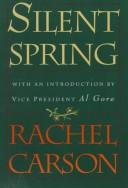
Rachel Carson · 1962 · Buy on Amazon
"I’d start with Silent Spring by Rachel Carson, which looked at how pesticide use was harming, and in some cases killing, animals and humans, and really was the first book of its kind to illustrate this environmental destruction. I’ve been so involved in the environment for years and years and that has been a great guideline – it was really the awakening, if you will, to the environmental movement and to the progress we’ve made over the last quarter century or more. She was. She was writing about her own, what she found in Pittsburgh, Pennsylvania. The book speaks to not just an important issue – our environment – but how we can all make changes in our communities and in our societies. It speaks to how individuals can change things and also focus on a particular injustice – environmental health risks."

John Steinbeck · 1939 · Buy on Amazon
"If you wanted to pick a fictional work that really had a profound impact on people’s attitudes to the union movement, and about rights, unfairness and the social contract in America, it would be The Grapes of Wrath . It does indeed – very, very much so. It puts it in a context that people can really understand. While there is a story that takes place between characters, the hardship and unfairness is a central element of the book. It shows how fiction can create progressive change as well. I think it had a profound impact at any rate in shaping opinions. I think we need a new Grapes of Wrath today, a modern times version. Who knows, since not enough people read that much any more?"

Martin Luther King Jr · Buy on Amazon
"Personally, I think the Letter From the Birmingham Jail from Martin Luther King was as eloquent and as influential a document on the civil rights movement and progressive thinking about rights as anything that I’ve ever read. It’s one of the most powerful pieces I’ve ever read, period. On Martin Luther King day it’s one of my favourite things to remind me, it’s so powerful. It’s unfortunate many people have never read it or if they have they have forgotten the power of it. Both. It was significantly addressed to the whole question of patience, and why they weighed what he was doing and measuring the church and its involvement, so it clearly applies to the whole question of public responsibility by any leader anywhere at any time. I find it monumental. To me it’s just very, very powerful – one of the most powerful political documents I think there is. It’s very influential, very eloquent."

Paul Wellstone · Buy on Amazon
"It’s a call to conscience. It also reminds us of the sacrifice that large-scale injustice requires and also explains why civil disobedience is required. Speaking of call to conscience, I think Paul Wellstone’s The Conscience of a Liberal is a pretty good statement of principle and values. Just the honesty, the wear-it-on-your-sleeve commitment to address questions of fairness and the poor."

Michael Harrington · Buy on Amazon
"I think in conjunction with that, probably Michael Harrington’s The Other America in the 1960s was huge for those of us who came of age in that period. It really created the war on poverty and defined Lyndon Johnson’s initiatives and the great social leap forward of that period. And I think Paul Wellstone is an outgrowth of that in every respect. The Conscience of a Liberal spoke to Barry Goldwater’s counterpiece The Conscience of a Conservative , which had a huge impact. It would be interesting some day to take the two of those, Harrington and Wellstone, and see where they actually come together. I just thought of that. It would be interesting to see where the values actually intersect and what it is that departs. The book also marries an agenda on issues like health care, universal pre-K [pre-kindergarten programmes] and campaign finance reform to core progressive values like opportunity and fairness. There’s not much discussion of it in America and there ought to be more given the divide between the haves and have-nots. What’s happened in terms of incomes in the last 20 years is inexcusable. It’s just that the system has institutionalised this inequity to a much greater degree. That’s part of what this fight on the budget is about right now. That’s really a centerpiece of whether you’re going to address our priorities in a fair-minded way and with some kind of sharing of the burden or not, so I think it’s fundamental to what we’re fighting about right now."