Jason Furman's Reading List
Jason Furman is an American economist. He served as the Chairman of the Council of Economic Advisers under President Barack Obama. A leading voice on fiscal policy, inequality, and labor markets, he frequently contributes to public discourse on economic issues through research, writing, and media appearances. Currently, Furman is a professor at Harvard University's Kennedy School of Government and Harvard College.
Open in WellRead Daily app →Market Competition (2019)
Scraped from fivebooks.com (2019-09-12).
Source: fivebooks.com

Luigi Zingales & Raghuram G Rajan · Buy on Amazon
"At the risk of offending every economist friend of mine who has ever written a book, this is my favorite title of any economics book, the one I most wish I had come up with. And it’s an excellent book, too. The basic thesis is that capitalists—like the CEOs that run major corporations—do not actually like competition or markets. They like to be insulated from competition, to receive subsidies from the government, and inside the corporation it is more like Soviet-style central planning than the stereotypical American capitalism. Rajan and Zingales hate this. But they love markets, competition and capitalism, and see capitalism as a powerful force for allocating resources and propelling innovation. This leads them to want to save “capitalism” from the “capitalists”. I have met a lot of CEOs in my life and I have to say this idea resonates with me. I often find myself more excited about markets and capitalism than they are. In some respects, Rajan and Zingales’ argument comes out of the notions of regulatory capture developed by James Buchanan and popular with the laissez faire crowd at the University of Chicago (where Rajan and Zingales were) and elsewhere. The argument was industries would capture their regulators and use them to protect incumbents. The solution proposed by Buchanan was very limited government with very little regulation. They go beyond simplistic analysis. They appreciate the ways in which government needs to be active if it wants to save capitalism from the capitalists, including active competition policy, financial regulation, a social safety net, and investments in education. The framing and specifics defy some of the typical left-right characterizations."
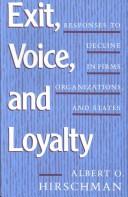
Albert O. Hirschman · Buy on Amazon
"Economics is largely the study of what the brilliant Albert Hirschman called “exit.” If you don’t like a product, you stop buying it and instead purchase an alternative, exercising your ability to exit the product. Giving consumers multiple options is essential for ensuring their ability to exit any given option, something that both restrains prices and can also promote innovation and expand quality and choice. Support Five Books Five Books interviews are expensive to produce. If you're enjoying this interview, please support us by donating a small amount . Hirschman, however, points out that in society more broadly, and even in the economy specifically, “exit” is not our only option—we also have voice. We can complain about a product in an effort to get it improved, either because we are loyal to a product or because it is a monopoly we have no choice about using—think your local cable provider. Unions can use voice to improve workplace conditions. Voters at the national level almost exclusively use voice to influence public policy, although there is also some exit at the state and local levels in response to the incentives associated with policies. Hirschman’s model reinforces the importance of competition because in conventional markets it is a complement to voice and critical for helping people get what they want. In this way, exit and voice can be complements; the threat of exit makes companies listen to the voice exercised by their customers. “In society more broadly, and even in the economy specifically, “exit” is not our only option—we also have voice” But Hirschman also sensitizes us to the fact that too many economists, most notably Milton Friedman , reach too enthusiastically for exit solutions to everything without asking whether there is a role for voice or whether exit might undermine that role for voice. For example, competition for schools—like school choice vouchers—expands the role for exit, but may undermine the voice of key constituencies for school improvement. So, competition has an important place, but may not work everywhere."

Robert H. Bork · Buy on Amazon
"The Antitrust Paradox was an extremely important book, a real example of how ideas can have a major impact in the world, for better or for worse. It was an important corrective to some of the badly thought-out overreaches in antitrust policy at the time and advocated for concepts that are still relevant today. It was written by Robert Bork, a Yale law professor who had spent the previous several years at the Justice Department. He advanced the notion that a consumer welfare standard should be central to antitrust. That is, competition policy should protect consumers not competitors. While lawyers may debate if this was the actual intent of the original U.S. competition laws, like the Sherman Act, the idea has substantial economic merit. When governments prop up failing businesses, the result is higher prices, worse products, and potentially worse jobs. Looked at this way, some practices that had previously raised concern—like “predatory pricing”—start to look more favorable because they offer lower prices for consumers and their only “victims” are less efficient businesses that cannot match the prices. Moreover, technical economic analysis offers the hope of assessing whether mergers or anti-competitive actions by businesses help or hurt consumer welfare. Bork combined this correct general idea with a specific set of views informed by his reading of economists at the University of Chicago, most notably Aaron Director (thus the name “Chicago School”), to argue for an almost blanket presumption against any concern with many of the practices that previously had bothered the courts, like vertical combinations (e.g., when a supplier and distributor get together), predatory pricing, tying products and price discrimination. (In fairness, Bork was not entirely laissez faire and was concerned with collusion and price fixing.) “When governments prop up failing business, the result is higher prices, worse products, and potentially worse jobs” Bork’s reading of both the law and the economics, together with Richard Posner, a set of professors at Harvard Law School and others, has become the standard understanding of competition for judges in the United States and around the world, as Tim Wu showed in The Curse of Bigness . A generation of judges were raised on these ideas and even though the statute governing antitrust has not changed, the way courts interpret it has. It has become increasingly difficult for the government to block a merger or restrain anti-competitive conduct. Today, American courts are increasingly tolerant of three, two or even one player in a market."

Michael D. Whinston · Buy on Amazon
"When I was Chairman of the Council of Economic Advisers, one of my outgoing staff members gave me this book as a present on their last day. Lectures on Antitrust Economics is definitely not light reading. But this book of lectures by MIT economist Michael Whinston is important reading, and it played an important role for me. Get the weekly Five Books newsletter These lectures help readers understand the role of “industrial organization” in market competition. Stepping back, Bork’s economics came largely from an oral tradition in Chicago. Much of it was not formalized in models; even less was empirically tested. In the ensuing decades, the study of markets with imperfect competition was revolutionized by game theory , which takes into account how the different firms strategically take into account the actions of others, and also by modern empirical methods. It turns out many of the simple economic propositions that Bork built his theories on were actually special cases that relied on specific assumptions. For example, more general models, and empirical evidence, found that there was indeed reason to be concerned about exclusionary vertical contracts (e.g., an exclusive distributor). Horizontal mergers are when two companies competing in the same market merge, often with one buying the other. This could be United buying Continental, or one local hospital buying another. These arrangements have the potential for efficiency improvements, but also the potential for higher prices (in contrast, price fixing collusion generally does not lead to this sort of tradeoff and only results in higher prices). Whinston largely frames the issue, is mostly supportive of the Justice Department’s approach, but recognizes that the empirical evidence on the question is severely limited, especially retrospective studies of what actually happened to prices and efficiency after a merger was concluded. He challenged economists to come up with more of this evidence and in the more than a decade since it was published, they have obliged. A good summary of the evidence from retrospectives is in John Kwoka’s Mergers, Merger Control and Remedies which finds that mergers were generally followed by price increases with relatively little of the promised efficiency improvements showing up. This is the same conclusion that many of the experienced economists and practitioners in this area have reached. And this is why there is a shift in the discussion towards more aggressive merger enforcement. Although a real change would likely require either decades to shift the views of judges or legislation making it clear how mergers should be evaluated."

E. Glen Weyl & Eric A. Posner · Buy on Amazon
"I love reading economics and I love reading science fiction. Radical Markets is a great combination of both. This book is by E. Glen Weyl and Eric Posner, son of the Richard who played a critical role in the spread of the Chicago School view. It centers around five ideas for promoting more inclusive growth. Each idea gets its own chapter, beginning with a fictional vignette set in the near future, depicting their idea in action and explaining the economics of the idea. Both of the words in their title may be modest understatements. The first idea eliminates private ownership, enabling anyone to buy anything from anyone else, whether or not it’s offered for sale. Prices would be posted. People pay wealth taxes based on these prices, so overpricing possessions is discouraged. And anyone could buy anything. The wealth tax, which at 7 percent makes Senator Warren’s proposal for a top rate of 3 percent look modest, allows the authors to abolish every other tax and pay for a universal basic income. This would solve all sorts of economic problems, like “hold up”, where one person interferes with an efficient project by trying to extract the maximum benefit for themselves. Other chapters propose other ideas, including a radical reform that would let people sponsor an immigrant who would essentially be tied to them, “quadractic voting,” which would give people a voting budget they could allocate across different issues, a plan for people to be paid for the data they provide to tech giants, and a new rule limiting the ability of large fund managers to foster collusion among the companies they hold. None of these ideas are ready for prime time. Most of them may never be ready. But all of them have important applications and implications for how competition leads not just to a better economy but a better polity and society. Lack of competition is not the only problem in the digital sector, and the digital sector is not the only place in the economy plagued by a lack of competition. But it is an important aspect of an important issue and I hope we showed how it is possible to make progress on it. While the report our expert panel put forward, Unlocking Digital Competition , may not be as fun reading as some of the books we’ve talked about, in some ways it reflects many of the ideas. Like Rajan and Zingales, it is motivated by the belief that competition will lead to more choice, quality and innovation but that companies left to their own devices try to limit that competition. Like Bork, we center our work squarely around benefits for consumers. Like Whinston, we have a broader concern about some practices that might otherwise seem benign. And while we cannot compete with the Posner and Weyl’s radicalism, our ideas—which were based on listening sessions, written submissions and extensive evidence gathering—share their interest in more inclusive growth. Support Five Books Five Books interviews are expensive to produce. If you're enjoying this interview, please support us by donating a small amount . Our report made six strategic recommendations that could be advanced through 20 recommended actions. The most important was the establishment of a “Digital Markets Unit” that would engage in pro-competition regulation, helping to foster more entry and consumer choice by requiring a code of conduct for the most strategically important platforms, necessitating data mobility and systems with open standards, and moving towards more data openness. We also recommended several measures to update merger control for the digital era, taking into account some of the risks mergers have for eliminating potential competitors or undermining innovation. Finally, we called for greater international cooperation on these issues. I am thrilled that the UK is in the process of implementing a number of our recommendations and have also been pleased by the broader global discussion of these issues."
The Best Economics Books of 2024 (2024)
Scraped from fivebooks.com (2024-12-27).
Source: fivebooks.com

Carola Binder · Buy on Amazon
"The big economic story of the last four years has been the rise and fall of inflation. This is not the first time that inflation has dominated the national conversation or affected politics. Carola Binder, an economics professor, offers a history of inflation and monetary institutions in the United States, studying how they have affected politics, reshaped economic institutions, and upended economic theories. The book has several themes: inflation and disinflation has had a distributional aspect, helping some groups and hurting others; unexpected changes in purchasing power and the value of debts have affected contracting and due process; inflation crises have expanded the role of government; and modern inflation targeting has deep historical roots. The biggest impact has been that incumbent parties have lost everywhere and inflation is almost certainly part of the problem. High price levels are also still with us. To the degree that wages adjusted upwards by a commensurate amount that does not necessarily matter—if you add a zero to all prices then everything will be the same. But wages do not seem to have fully adjusted, at least not yet, leaving workers somewhat behind. There is evidence that going through high inflation permanently changes the mentality of policymakers but so far that is hard to see as politicians around the world are continuing to push inflationary deficit increases while, in some cases, trying to push their central banks to take steps that would increase inflation still further. The problem is that it is always tempting in the short run to undertake policies that just result in added inflation in the long run—which is why the types of institutional arrangements that Binder describes in her book have been so important in overcoming the natural tendencies of politicians."

Christopher Meissner · Buy on Amazon
"If inflation has been the big economic story of the last four years then trade might be the big economic story of the next four years. This book zooms out on the ups and downs of not just trade but other forms of globalization like capital movements over the last 170 years. It focuses on three periods: pre-WW I globalization, interwar delinkage, and globalization/hyperglobalization after World War II. It is well-grounded in the economic literature and considers trade, capital and immigration flows. It is also readable but with no particular attempt at a unique or original thesis. It’s generally pro-globalization with some nuance and downsides—but ultimately it argues, “globalization is nothing more than the urge to trade and improve the quality of life. These goals are a significant part of our shared humanity. In this view, globalization over the long run has been rising and will continue to rise in the future.” First, I should say there is much more hostility to trade in the United States than in many other countries. Research shows there are two reasons for that. First, trade is much less important to the United States than it is to other countries. Most people are employed in jobs that are not producing exports and most of what we buy actually is made in America. That’s a stark contrast from a country like Sweden where workers realize they would not have jobs without exports and consumers understand Sweden cannot produce everything they need. A second factor matters too which is that Sweden, and other countries, have stronger social safety nets than the United States so people are better protected from the downsides of trade. That said, there is no doubt that there is at least some hostility to trade everywhere. Part of the issue is that there are some people that can be very hurt by trade, for example workers competing with foreign producers, while the benefits of trade are collectively larger but more diffuse. The beneficiaries do not realize the ways in which they benefit and absent a strong personal incentive can fall prey to false zero-sum arguments that treat trade and technology asymmetrically even if technology has actually had bigger impacts on jobs. Finally, some of the recent hostility to trade does reflect a reasonable national security concern about the incredible concentration of certain forms of production in China , a country that is a geopolitical rival to the United States and Europe. All of that said, the benefits of globalization are so large that I believe it is more like a dandelion that can thrive in any conditions than an orchid that needs to be carefully nurtured. There are bumps in the road but we will always have a lot of it."

Robert Lawrence · Buy on Amazon
"The biggest driving force behind politicians misleading the public about trade is the desire to restore a lost heyday of highly paid manufacturing jobs for men without college degrees. This book provides a comprehensive, global, and factually grounded rebuttal to this hope. Full disclosure: Its author, Robert Lawrence, is my colleague at Harvard and the Peterson Institute for International Economics, but I am recommending this because it is the most reliable and comprehensive book on a very important topic. Lawrence shows that the decline of manufacturing employment in countries around the world (yes, it is also declining in China) was not primarily the result of free trade or other policy choices but instead mostly due to technological advances that require fewer people in production and changing consumer tastes. As people get richer, they buy more services. Moreover, policies that attempt to help protect manufacturing are at best ineffectual and at worst can set back inclusive growth by raising costs for consumers or hurting other workers. He argues for alternative policies to help workers cope with the continued changing economy. Lawrence does not sugarcoat the economic situation facing workers in the United States and around the world. He chronicles the fall and then rise of inequality and the people and places that have fallen behind. He also recognizes that the decline of manufacturing played a role in these problems. But he is passionate—or I should really say analytical—about why industrial policy is such a limited and often counterproductive way to solve these problems given that the vast majority of workers facing challenges are not in manufacturing and new manufacturing will employ fewer and fewer workers. Instead, Lawrence pushes for more support for people rather than industries, focusing on assistance for transitions, apprenticeship programs and wage insurance for older workers who cannot get a better paid job."

Raghuram G Rajan & Rohit Lamba · Buy on Amazon
"Breaking the Mold picks up where Behind the Curve breaks off, arguing that the same forces that Robert Lawrence analyzes will prevent India from following the East Asian manufacturing-led development path. Instead, to become a richer country India will need to focus on the service sector. Doing this, they argue, will require both better rule of law and governance and more investment in the main input into the service sector—education—focusing on people instead of heavy subsidies to manufacturing. Although the book is specifically about India its broader analysis and lessons are relevant for a wide range of emerging economies and an interesting window into what might be the most important economic story of the next four decades."
Andrew Leigh · Buy on Amazon
"If you read just one economics book in 2024—and perhaps if you just read one economics book in your life—it should be this book by Andrew Leigh, an Australian economics professor turned elected politician. How Economics Explains the World is a relatively short and easy read, proceeding chronologically from the advent of agriculture to the present day. Underlying it is an immense wealth of scholarship and economic ideas about economic history, the process of growth, and economic concepts like opportunity cost and thinking on the margin that are almost invisibly woven into the fabric throughout the book. As an elected politician, Leigh has continued to publish books that are relevant for the public policy issues he works at on his day job. In this case, the overarching theme of the book is enthusiasm for the enormous progress we have made economically, the importance of economics in helping foster that progress, but also enthusiasm for a more robust social safety and appreciation of the role of government in addressing myriad market failures. In this sense, it feels like a contribution to what many are beginning to call “an abundance agenda”. In 2025 central banks will continue to do the important work they do stabilizing the economy in the short run. Governments should be focusing on the long run, particularly how to increase economic growth and ensure it is more shared and sustainable. The United States has had decent productivity growth but it is terrible in Europe, slowing in China, and mixed in the rest of the world. Technologies like AI offer a hopeful way out of this disappointing situation but ultimately it will take bigger investments in people to advance and harness innovation. These investments in people can also help ensure that this growth is shared. Finally, for growth to be sustainable governments around the world are going to have to start worrying a bit more about high and rising debt levels—and acting a lot more on the threat of global climate change. I don’t expect much or all of this to happen in 2025 but I will keep pushing for it."
The Best Economics Books of 2022 (2022)
Scraped from fivebooks.com (2022-12-10).
Source: fivebooks.com

Oded Galor · Buy on Amazon
"I have a soft spot for extremely broad histories like Jared Diamond’s Guns, Germs and Steel and Joseph Henrich’s The WEIRDest People in the World . I particularly appreciated The Journey of Humanity because it is an ambitious and deep story about the past tens of thousands of years of economic development that is also well grounded in a growing economics literature into the deep origins of growth that is rigorous, empirically grounded, and peer-reviewed—a literature that Oded Galor has been an important contributor to. The book synthesizes and extends this literature, it is not just ungrounded speculation but the product of genuine scholarship. Galor’s headline idea is that the Malthusian view of the world was largely correct for tens of thousands of years—that as humans improved their technology, they mostly made more humans rather than higher incomes per capita. When humanity eventually reached the point where growth finally took off, it did so extremely unevenly. Galor interprets the take-off in growth as a virtuous circle between education and technology, which has left us with enormous global inequality. Almost everyone in the world used to be poor; now some people are very rich, while others remain very poor. Galor locates the roots of global inequality in factors that go back tens of thousands of years, including geography and genetic diversity, which have been mediated and reshaped through culture and political and economic institutions—along with a dose of contingency. Some sweeping histories become a bit like the cosmology you get from modern physics. You get a grand story that’s internally consistent and consistent with data, but you’re not sure that it’s true. Galor’s evidence, which was published in top economics peer-reviewed journals, helps him coalesce a convincing argument. The deepest argument, but not the only one, is: If you have lots of genetic diversity, it’s hard for people to cooperate and if you have very little genetic diversity, it’s hard to have the variations that can lead to excellence, and so, you want something in between. That’s certainly not all there is to the story of economics. Am I a hundred percent sure it is true? No. Am I excited to have his formulation in mind as I attempt to understand our world? Absolutely."

Brad DeLong · Buy on Amazon
"Slouching Towards Utopia is a rich, nuanced story of the interplay of politics, economics , and ideas and how they shaped progress. It is a great book to read right after The Journey of Humanity because Brad DeLong focuses on the 140 years when most of humanity’s economic growth has taken place. Support Five Books Five Books interviews are expensive to produce. If you're enjoying this interview, please support us by donating a small amount . Brad DeLong does not try to develop a single simple, unified theory. Instead, his account emphasizes contingency, periods of progress, periods of regress, and ways in which ideas mattered. He focuses on the battle between Friedrich Hayek’s idea of free markets and Karl Polanyi’s ideas about the need for regulation. Brad believes political leaders do matter. All these factors are important if you want to understand why some economies grew in certain decades, but not others, or why, for instance, the United States became richer than Argentina, and why inequality fell for a while and then rose for a while. It portrays progress as halting, non-linear and not necessarily destined to continue. Growth picked up after the Industrial Revolution but slowly at first—with virtually no progress in per capita incomes for most workers and losses for some. Growth and innovation picked up dramatically later in the century with larger increases in per capita income and a much wider spread of that growth. So something really has been special about the last 150 years."

Leah Boustan & Ran Abramitzky · Buy on Amazon
"Streets of Gold focuses on one of the most important economic issues, immigration. Like The Journey of Humanity , this book is grounded in a deep, broad set of published, peer-reviewed research that its authors and others have conducted in recent years. Their research and this book sharpen our understanding of the changing patterns of immigration and their economic impact. Absolutely. It is incredibly enjoyable and readable. The authors, in a way that is very rare for economists, find small stories that paint big pictures for the points they make. The first is the myth of rags to riches; in both earlier generations and today, immigrants generally did not climb the ladder that quickly. Their second point is that immigrant children have been highly mobile and that mobility has been similar across generations, although it varies depending on where your parents come from. The third point is about how the pattern of assimilation today is like the pattern of assimilation in the past, with regards to things like adoption of American names, moving out of ethnic enclaves and marrying out of one’s ethnic group."

Richard V Reeves · 2022 · Buy on Amazon
"Although his training is not in economics, Richard Reeves draws on economic research, as well as research from the fields of sociology, psychology , and political science, to tell an under-told story. The book explores the problems faced by boys and men, the roots of those problems, and possible policy solutions. Richard Reeves does not pit his argument against any argument related to the difficulties women face. If somebody says nuclear proliferation is a problem, it does not mean they don’t care about climate change . Similarly, to say there are a set of problems faced by boys and men that need a policy solution, does not mean that you don’t think there are a set of problems facing girls and women that need a policy solution. We tried to bring attention to both sets of issues when I ran the Council of Economic Advisers. One issue that we documented is that for decades—from the 1950s through the present—men’s employment has been falling fairly steadily; it is the equivalent of a massive recession happening in slow motion over several decades. The increasing disparity between the degree to which males and females attend college and an even bigger disparity in the degree to which males and females graduate from college and go on to grad school is indicative of a lot of potential being lost. Reeves devotes an entire chapter to this issue along with other chapters on education and culture. He then goes on to explain the problems, grounding his explanation in a rich mixture of economics, culture and biology. Finally he devotes considerable space to proposing policy solutions, ranging from an effort to get more men to teach elementary school to more radical ideas like making the default that boys start school a year later than girls."

Chris Miller · Buy on Amazon
"Microchips are one of the hottest economic topics of 2022. A chip shortage was part of the inflation picture over the last year and a half. Microchips are among the biggest economic flashpoints between the United States and China. Continued progress in microchips is central to American economic growth. Chris Miller tells us the history of how microchips were developed, emphasizing the critical role of the government, and especially defense procurement. He gives us a description of how microchips became the single most complex global good, with different pieces and aspects of the technology located in the Netherlands, the United States, Japan, Korea, and especially and most importantly, Taiwan. And he gives us a discussion of the risks that a literal war in Taiwan or an economic war of the type that we are seeing the beginning of could pose for this incredibly important, complex and globalized technology. Humans are always the most important driver of economic growth, and they were an important part of the story in every one of the five books that I recommended. There is almost no limit to the study that can be done to try to understand the human aspects of economic growth. Get the weekly Five Books newsletter In 2023, the spotlight will grow on the levelling-off and potential reduction of globalization that we’re going through. This will be a big issue going forward. Fifteen years ago, there was a whole raft of books about globalization. We might start to want to read or research and write about de-globalization, as we might be in the beginning of that process. And finally, the rehabilitation of industrial policy is an area of increasing importance. ‘Industrial policy’ used to be an insult levied against ill-conceived government plans; now, governments around the world are increasingly comfortable getting directly involved in industry. I’m not sure if that is a good thing or a bad thing, but it is one of the many things worth reading about in 2023. Part of our best books of 2022 series."
The Best Economics Books of 2025 (2025)
Scraped from fivebooks.com (2025-12-21).
Source: fivebooks.com

Kenneth Rogoff · Buy on Amazon
"Ken Rogoff—full disclosure, he’s my colleague—has been at the forefront of international macroeconomic research and policymaking for more than forty years. He’s written on debt, financial crises, exchange rates, capital flows—pretty much every major topic you could name in international macro. This book manages to pull all of that together in a way that’s genuinely readable and engaging, helped along by anecdotes from his own policymaking experience that both clarify the arguments and make them feel concrete and accessible to a much broader audience. There’s a clear throughline about how U.S. monetary and fiscal choices shape the global system, and how that system, in turn, constrains the United States. The explicit narrative is a warning. Rogoff argues that the era in which the dollar enjoyed unquestioned dominance alongside broad global stability may be fading, and that erosion could bring more frequent or severe crises—sovereign debt problems, inflationary episodes, and financial instability. But running alongside that is a quieter, almost contradictory story. The world has learned. Countries have more flexible exchange rates, larger reserves, less foreign-currency borrowing, and stronger monetary institutions than they did a generation ago. We also have new tools, like central bank swap lines, that didn’t exist in earlier crises. The fact that shocks like COVID did not trigger the kind of cascading emerging-market crises we saw in the 1980s or 1990s is not an accident. It reflects institutional learning. The book is most interesting where these two stories collide. Overall, the book is balanced and nuanced. I like the U.S. dollar as the global reserve currency as much as the next person. But I am not sure the advantages are quite as large as Rogoff claims. Some of the borrowing advantages the United States gets from it have diminished substantially over time. Moreover, I wanted to see more engagement with the counterargument that a strong dollar affects the U.S. economic structure, including manufacturing."

Dan Wang · Buy on Amazon
"It’s powerful because it’s simple without being simplistic and, like Rogoff’s book, is interspersed with engaging personal stories that deepen the substantive argument. Dan Wang’s claim is that China is largely governed by engineers and the United States by lawyers, and that this difference shapes everything from infrastructure to innovation to risk tolerance. Once you adopt that lens, a lot of observed differences suddenly make sense. Engineers tend to optimize for building and execution; lawyers optimize for process, rights, and constraint. Wang is careful not to turn this into a morality play. An engineering mindset can deliver breathtaking speed and scale, but it can also be ruthless when individuals or rights get in the way. That tradeoff—capacity versus constraint—is one of the most illuminating ways to compare political systems. According to Wang, engineering works well for building big stuff. It doesn’t work well for protecting the rights of people who are in the way of that big stuff. Wang tends to support the engineering approach (but not without reservations) for infrastructure and manufacturing but condemns it (pretty much without reservation) for the one-child policy, zero COVID, and “fortress China.” At times it does feel a bit too neat. You sometimes wonder whether the deeper distinction is simply authoritarianism versus democracy, with engineers and lawyers acting as proxies. But even when the analogy strains, it remains clarifying. It forces you to ask what a system is trying to maximize and what it is willing to sacrifice. That’s a productive question to ask about both China and the United States, especially in debates about infrastructure, regulation, and what people now call an abundance agenda. Wang’s admiration for making things is visceral, and I share some of that instinct. But the book doesn’t fully articulate why the United States should manufacture more, or under what conditions. If the implicit model is Shenzhen-style assembly lines with harsh working conditions, that’s not an obvious aspiration. If the argument is about productivity, resilience, national security, or high-quality jobs through automation, then that case needs to be made explicitly. Relatedly, I am skeptical of the admiration for Chinese ‘completionism’—the idea of being present in every manufacturing sector. Specialization matters, and there’s a real question about whether completionism diverts resources away from higher-productivity uses and ultimately slows improvements in living standards. Despite these differences—or perhaps because of them—I found the book enormously stimulating and well worth engaging with."

Dean Spears & Michael Geruso · Buy on Amazon
"It had the best opening sentence of any nonfiction book I read this year: “In 2012, 146 million children were born. That was more than in any prior year. It was also more than in any year since. Millions fewer will be born this year. The year 2012 may well turn out to be the year in which the most humans were ever born—ever as in ever for as long as humanity exists .” Such a simple and obvious fact but I had not known it before. I had to keep reading. For most of modern history, population growth was a background constant; now we may be entering an era of sustained population decline. Spears and Geruso use that fact to motivate a careful examination of why fertility is falling so broadly, why it has proven so hard to reverse, and why this matters for economic growth, fiscal sustainability, and social vitality. The central concern of the book is the ‘spike’ of population growth that has defined the past century—and the steep, possibly irreversible decline in birth rates now unfolding around the world. Spears and Geruso explain why this shift is happening, what the consequences are likely to be, and what might be done to stabilize global population levels. They make the case not only for why the trend matters, but also why we should want more people in the future, not fewer. One of the striking intellectual reversals over the past fifty years has been the shift from fears of overpopulation to concerns about underpopulation. Importantly, both perspectives can be valid: a fertility rate of 7 is clearly too high, but a rate of 1 may well be too low. The surprising reality is how rapid, widespread, and so far unreversed the fertility decline has been—posing significant challenges for economic growth, fiscal stability, and societal dynamism. Meanwhile, many of the dire Malthusian predictions from the 1970s have proven deeply misguided, if not outright false. A substantial part of the book is devoted to rebutting popular arguments against population growth, some of which echo 1970s-era anxieties—such as the belief that more people inevitably mean more climate harm. Spears and Geruso challenge these ideas with empirical evidence and logical clarity. They also advance affirmative arguments for larger populations, ranging from economic benefits tied to innovation and productivity to moral claims about the value of human life and flourishing. The book concludes with a candid discussion of the limitations of current policies and the need for more ambitious thinking. While it doesn’t offer a single ‘solution’ to the population decline, After the Spike succeeds in what is arguably more important at this stage: raising awareness, reframing the conversation, and laying the intellectual groundwork for collective action. Problems of this scale are rarely solved quickly—but they are never solved at all unless people begin thinking and talking seriously about them. This book is a vital contribution to that process."

John Y. Campbell & Tarun Ramadorai · Buy on Amazon
"Problems with personal finance used to be a big part of the public policy debate but have faded in recent years. That is not because they have been solved, but because people forgot the financial crisis and moved on to other topics. Returning to this topic feels like a blast from the past. But it also is exciting and refreshing to see it addressed with such originality and cutting-edge research. At its core, the book is about the persistent fragility of household finances and why market forces alone don’t fix it. Drawing on evidence from the United States, the United Kingdom, and India, John Campbell (another colleague of mine) and Tarun Ramadorai show that financial illiteracy is widespread and remarkably persistent. This wouldn’t be quite so troubling if financial markets were forgiving, but they aren’t. Instead, complexity, hidden fees, and product design often exploit consumer weaknesses rather than accommodate them. I should say I’ve read a lot about this topic, but was still shocked at some of the questions people often get wrong, including: if you earn 2% interest on $100 over five years, how much do you end up with? The correct answer was “More than $102”—it didn’t even require understanding compounding. These errors do not simply reflect lack of education but are undergirded by behavioral biases in thinking about the future; the lack of reinforcement learning when financial decisions have consequences decades later; and the social fact that people talk about personal finance even less than sex (the authors’ observation, not mine!). Companies, of course, don’t suffer from these issues, and their complex, opaque products—with bundling, hidden fees, and other traps—are often designed to exploit them. The authors make a compelling case that education runs up against structural barriers. People are present-biased, feedback arrives decades later, and personal finance is socially taboo—people talk about it less than sex. Firms, by contrast, face none of these constraints and can systematically design products that take advantage of consumer mistakes. Nudges help in some contexts, but they often suffer from leakage: improving outcomes in one account while worsening them elsewhere. That limits how much we should expect from light-touch interventions. They argue for more active regulation, closer in spirit to the original mission of the Consumer Financial Protection Bureau. In some cases, that means moving beyond nudges to what they provocatively call ‘shoves.’ One intriguing idea is a publicly designed, regulated personal-finance starter kit that households could default into—simple, transparent, and hard to exploit. The book feels both very current and like a revival of post–financial-crisis debates about consumer protection that have faded more than they should have. Nothing."

Adam Smith · 1776 · Buy on Amazon
"Economists the world over are going to be celebrating the semiquincentennial of The Wealth of Nations this year, a book that was published on March 9, 1776. I first read it in college and recently, as we approach this milestone, decided to re-read it and was amazed about how fresh and vivid it felt, as well as how nuanced and humane it is. In many ways, all of the questions in my other four books came out of The Wealth of Nations which is, justly, credited with launching the field of economics. It asked big questions about the nature of money, why different economies developed in different ways (including the American colonies—not yet the United States—and China), the past and future of population growth, and even a bit of personal finance. Of course, we have learned an enormous amount since 1776, both through theory, experience, data and techniques that were not available to Smith, like statistical analysis. Economics is not hermeneutics, where economists pore over ancient texts hoping that by understanding them they can discover truths. That said, Smith does have some bigger picture wisdom that remains relevant up until today, and in some cases expressed in ways that have not been surpassed since. The Wealth of Nations centers people. Wealth is not gold accumulation or national power, it is the living standards of the citizens. The source of that wealth is the people as well, through their work. This work is able to produce more through a division of labor (his famous example is the division of labor in a pin factory). And that division of labor itself can be finer—and thus people more productive and living standards higher—if there is more trade. The division of labor then gives rise to how all these people are coordinated, the person farming the cotton, making the farming implements, making the thread, sewing the clothing, selling the clothing, making the die, and everything else. Smith’s answer is there is no coordinator but instead an ‘invisible hand’ where a combination of markets, prices and people acting largely in their own interest end up coordinating all of these efforts towards a common purpose. There is a lot of subtlety in Smith’s argument. He is very worried about monopolies and collusion between businesses. He discusses the way wages are set by a few businesses colluding on one side of the market, who take advantage of disorganized workers on the other side. He also has a broader and more subtle conception of morality than just the ‘greed is good’ made famous by Gordon Gekko in the film Wall Street. Perhaps most important, Smith was an empiricist. He was grounded in history and observation. In that way, he set up the paradigm that an additional nearly two-hundred and fifty years of data and observation has brought us all the insights discussed in the other four books and more. What will matter most is whether we’ve recognized that many of today’s problems aren’t temporary shocks but structural shifts. Slower population growth, tighter global constraints, more fragile households, and rising geopolitical tension aren’t going away. The open question for 2025 is whether we respond by clinging to outdated assumptions or by updating our institutions in ways that preserve prosperity, stability, and human flourishing. These books don’t offer easy answers, but they do make clear that pretending nothing has changed is the riskiest option of all."