James Riley's Reading List
James Riley is the critically celebrated author of The Bad Trip: Dark Omens, New Worlds and the End of the Sixties , and is renowned for his writing on contemporary literature, popular film and 1960s culture. He has lectured and performed spoken word internationally and is the Muriel Bradbrook Official Fellow in English Literature at Girton College, Cambridge.
Open in WellRead Daily app →Wellness (2024)
Scraped from fivebooks.com (2024-03-27).
Source: fivebooks.com
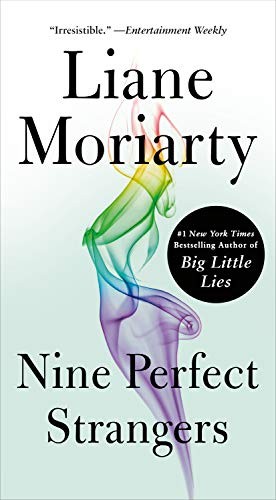
Liane Moriarty · Buy on Amazon
"It’s a great thriller of its type. It’s tightly written. When I’m not writing on the 1970s, I’m an academic, a literary critic—I teach contemporary English literature—and I offer this here as a very good example of popular fiction. I don’t denigrate it for that. By calling it ‘fiction’, I mean it is yet to accumulate ‘literary’ status. I do think that will come, not least because it is a good go-to text if you want to get an overview of the contemporary stereotypes connected to wellness, both in terms of its seductions and its problems. I was going to nominate Michel Houellebecq’s Atomised (1998) on account of its excoriating depiction of a ‘New Age’ retreat-style resort. On balance, though, while Moriarty doesn’t bring to her book the same mordant gravitas as Houellebecq does to his, and while Nine Perfect Strangers is thus a comparatively much ‘lighter’ read, I think it would be hard to find another recent novel so immersed in or at least so in-tune with the glossy, Instagrammable exclusivity of modern wellness. Read the acknowledgements and you certainly get a sense that Moriarty has spent some time in a resort similar to the one she describes, and that she came away somewhat ambivalent. From this context she’s crafted a very engaging story, that is very much a page turner. All the shimmering attractions of the modern wellness industry are there—infinity pools, super-smoothies, personal wellness advisors—but so too are all the anxieties. The plot clearly veers towards an image of the wellness industry as something malevolent, even cultish, a set of practices that verge on brainwashing and which raise difficult questions about consent. All of these things were said about the Esalen Institute and have been said about similar institutions since the 1970s. It’s not without its problems as a novel. There are some plot elements that stretch credulity, and it is essentially a set of strangers in an ‘ old dark house ’, except of course Moriarty’s house is brand new and perpetually bathed in sunlight. At its best, though, Nine Perfect Strangers gets to the root of what I was trying to highlight in my own book. As a novel it is aware of the power of conviviality and the power of a certain kind of mutual care. For example, there’s one point, early on, where the central character—a weary, slightly cynical novelist—has a personal consultation with her assigned ‘wellness counsellor.’ When asked how she’s feeling, the novelist briefly let’s her guard down and with massive understatement (as the details of which the novel make clear) admits she has ‘actually been feeling very unwell lately.’ In response, the counsellor simply puts his hand on her shoulder and says: ‘I know you have.’ That’s it. There’s nothing sexual or sinister about it, it is simply a moment of comfort through human contact. It is a brief encounter, but one that’s incredibly emotional. It’s a moment that shows the power of non-judgemental understanding. I think that’s what Moriarty ultimately frames so well: the value of sympathetic human connection."
John Travis · Buy on Amazon
"It’s a great book. It’s the source book for a lot of the thinking I’ve been talking about, and there’s a fascinating autobiographical narrative running all the way through. Travis uses the book to outline his ideas and to tell the story of how and why he left professional medicine to set up the first dedicated ‘Wellness Center,’ in California’s Marin County in 1975. It’s debatable whether Travis actually was the first. One can point to lots of similar, parallel examples that offered clients the same type of service, but Travis, I think, could argue he was the first to use the actual branding when calling his operation ‘The Wellness Resource Center’. The Wellness Workbook is a practical textbook. It contains most of the documents Travis would use in his consultations and it essentially takes the reader through a typical course offered by the centre. All these graphs and questionnaires provide a fascinating glimpse into what the pursuit of wellness meant in the 1970s. The book’s real value, though, lies in the autobiographical aspect. It’s an early example of what has now become a veritable subgenre of self-help books, the ‘wellness journey’. Travis is extremely candid about his own sense of professional and personal malaise—how he trained as a doctor, and in the early 1970s became incredibly disheartened with the fact that when faced with wards of terminal cancer patients he couldn’t do anything other than load them up with painkillers. At one point, Travis describes how he was pushed to the point of suicide through a combination of stress, disillusionment, and the weight of his own familial expectations. His father was a well-loved country doctor, and Travis realised his work was utterly at odds with the small town, long-term, personally focused work his father had done all his working life. Travis’ problem was thus two-fold: he was wrestling with the frustration that came from realising the limits of his work and he was struggling with all manner of psychological hang-ups regarding his father. He needed to deal with both challenges at once. He set about this by trying to develop a more holistic approach to medicine. He would try and attend to his patients’ mood and mindset as well as their physical ailments. If someone came to him with high blood pressure, rather than giving them a handful of drugs, he would talk to them about relaxation techniques. At the same time, he was trying to self-analyse his own life, what he had done well and what he had done wrong. This twin approach thus set the tone for what he would later term ‘wellness’: a detailed, comprehensive re-evaluation of all aspects of an individual’s life, oriented towards the task of helping them to develop towards long term mental and physical health. Support Five Books Five Books interviews are expensive to produce. If you're enjoying this interview, please support us by donating a small amount . The other book along these lines is High Level Wellness (1977) by Donald Ardell. It’s another practical guidebook; but with a personal narrative of its own. Travis and Ardell knew each other and worked with each other. If you’re interested in The Wellness Workbook , I very much suggest you have a look at the Ardell too. It makes for a curious study to compare their ‘systems,’ their ‘journeys’ and their pages of questionnaires. Of course, there are problems. In both there’s a covert, quietly spoken but nonetheless detectable sense of patient-blaming: if these methods don’t work, if you fail to get well, then it’s your fault. But beyond that, there’s a very clear sense of what wellness used to mean. And what I argue in my book is that there’s a lot we can extrapolate from wellness, seventies style, that can help us through our own contemporary difficulties."

Cyra McFadden · Buy on Amazon
"As I said, I’m an academic working on contemporary fiction. So, when I write about wellness, I’m not writing a self-help book. I also come from a cultural-historical perspective; I write about film, music, and also other forms of popular culture. With my project, Well Beings , I’ve been trying to diagnose and question one of the key ‘myths’ of the 1970s, the idea that the decade lost all of the radicalism of the 1960s and disappeared into self-regard. I argue that wellness absorbed this radicalism, and that there was a real political potency to the practice. That said, the idea of the 1970s as a decade of compromise, political exhaustion and selfishness is hard to avoid. There are three texts from the period that helped to establish this: The Culture of Narcissism (1976) by Christopher Lasch, which is a sociological take; Tom Wolfe’s essay ‘ The Me Decade ,’ which is classic piece of New Journalism, and then there’s the fictional take, Cyra McFadden’s novel, The Serial (1977), subtitled: ‘a year in the life of Marin County.’ Marin County is an affluent area outside of San Francisco that was famous in the 1970s for being an alternative health hotspot. In The Serial , McFadden uses Marin as the backdrop for a long, extended satire of the Human Potential Movement. She lived there at the time and what she saw around her was little more than a vapid culture of selfishness and self-regard. The Serial got a lot of attention from the national press and was later adapted into a film. The novel is full of invented names and but also a lot of actual locations. Travis’ Wellness Resource Center even makes an appearance at one point. Thanks to this specificity, McFadden received a lot of criticism—often very vociferous—from those who felt personally mocked by the novel. McFadden’s response was that she was not questioning those who want to improve their lives or enhance their sense of wellbeing. Rather, she was trying to critique what she calls the “smell of sanctimony” that went with it. It was this attitude and not specific people, that McFadden had in her sights. But the brilliance of The Serial as a piece of writing lies in the way that McFadden nails the art of satirical superficiality a good decade before Bret Easton Ellis tried something similar in American Psycho (1991). This style allows The Serial to be both incisive and funny. There are plenty of scenes, for example, that play out on the passive aggressive dinner party circuit. We’re shown groups of people who talk at length but fail to listen to each other and who are able to talk about cookbooks and primal screaming in exactly the same breath, as if there’s no difference between them. The main plot follows a young-ish, middle-class couple who move to the area and then split up before going through various individual crises and exploring alternative modes of health in response. It’s very well done and very well written. Razor sharp. A collection of vignettes, all superbly well observed. The Serial isn’t that well known today but —speaking as a critic— I think it really should be right up there alongside Armistead Maupin’s Tales of the City (1978)."

Brigid Delaney · Buy on Amazon
"Yes, I liked this one. Very much. It’s a really good example of a personal journey through wellness culture and, in that sense—and I don’t mean this in a bad way—it’s a good example of the kind of book I didn’t want to write. I always had a very clear idea of what I wanted to do with Well Beings . It was connected to a previous book I wrote about the end of the 1960s called The Bad Trip . I wanted to do something of a follow-up looking at the retreats, the meditation centres, the whole 1970s scene. But as I got into it, I realised that because wellness had such contemporary relevance, it seemed useful to focus on how wellness as a concept came to the fore during the decade. For the record, I have actually tried a lot of the methods and practices I write about in the book. I could have done a journey-through-wellness type of project. But instead, I wanted to write an engaging, narrative-focused cultural history. But I see the value of that more personal engagement, and this is a wonderful example of the form. It’s well-researched and very engaging. It really communicates a sense of curiosity and illustrates how curiosity can lead to commitment, and, how that effort can, in turn, lead to change. Practicing wellness is, invariably, a personal process. One thing that a lot of the practitioners say, and certainly what Travis often said, is that the pursuit of wellness is necessarily subjective. Part of the journey is working out what works for you. That can open you to the criticism that you are simply cherry-picking from lots of different traditions in a restless way, indicative of the way we might swipe and scroll our way through on-screen options. That off-the shelf attitude started in the 1980s with the rise of ‘lifestyle branding’: the tailoring of products to meet personal aspirations. What the practitioners of the 1970s argued, in contrast, was that wellness takes time, commitment and often an investment of money. Wellmania , I think, follows that line. It makes it clear that some things work, and some things don’t. What you need, throughout it all, is curiosity-led focus and a willingness to experiment. Well, yes, there was one book I came across which turned out to be very sobering: Is It Worth Dying For? (1984) by Robert Eliot, a study of work, stress and heart attacks. It drew on Eliot’s own experiences as an academic entering his forties. He didn’t drink, didn’t smoke, had no history of heart problems. He was interested, as a medical academic, in cardiovascular disease. He was driven, ambitious but he was also being overwhelmed with stress, constantly exhausted going from consultation to seminar to conference and back again with no rest or respite in between. His aim, as he explains, was career advancement. He wanted to be chief of cardiology by his early forties. Professional achievement and the status that came with it: that was his target. But this ambition was the very thing putting enormous pressure on him. He talks about things finally, inevitably, coming to a crisis point when he was at a conference, and he suddenly realised he was having a heart attack. Eliot describes how he made it to a hospital where he told the staff: ‘I know what’s happening, I’m having a heart attack, I’m about to pass out, this is what you need to do.’ He survived, and the rest of the book describes, along with this academic approach to cardiology, the changes he made in his life to deal with the aftermath of the attack and his experience of stress. I couldn’t help but identify with this fellow stressed-out academic. Work shouldn’t kill us, right? There’s no reason that it should. Eliot’s narrative, however, made me think through all the manifold pressures that come with the working life, all of which have got worse since he was writing in the mid-1980s: the presenteeism, the precarity, the demands for extreme commitment with no security in exchange; The idea that you, the worker, are the one who needs to be ever-more robust to deal with these problems. That all seems to me to be completely wrong, and utterly at odds with the idea of well-being. I was writing Well Beings in the thick of all this, entering the same life stage as Eliot. I was also writing it during lockdown, a period that came with its own extreme stresses. Once I came across Is it Worth Dying For? I remember thinking that I wasn’t sure if it would be dreadful or absolutely fabulous for the book, if I had an Eliot-like episode and died during the writing of it. Sensibly, thankfully, I realised I needed to be thinking about things differently. And what I ended up working through the kind of process that John Travis advocated: I slowly, comprehensively, rethought all the habits and routines that made up the way I was living my life. Much of this was on a small level. I like coffee, right? I love a cup first thing in the morning. It is as if I need it to get through the day. From a John Travis/wellness perspective the question here would not be how healthy the coffee is, it would be what’s so terrible about your day that you need a regular infusion of low-level stimulants just to deal with it? It’s a small detail, but examining it opens out a much bigger issue that likely needs attention. Lockdown was like a psychic acid bath that helped me get rid of a lot of things I’d been unknowingly unhappy about. It was only when I had that pocket of slow-time in which to finally think properly for the first time in years, that I realised, leading up to lockdown I’d been very unwell – most likely with anxiety and depression – thanks in part to things that suddenly didn’t exist anymore. The commute didn’t exist anymore, for one. That doesn’t sound like much. A First World problem, for sure. But I couldn’t deny the fact that it had been wearing me down in all kinds of ways. The pace, the grind, the head thumping difficulty of it all. My reaction to it was clearly symptomatic of problems elsewhere, and they needed work. I started to ask myself: What’s important? Who and what are my priorities? What constitutes living well? Hard to answer, but living well certainly has nothing to do with the atmosphere of the contemporary workplace, such as it is, more often than not an arena of perpetual precarity, overwork and terminal freelancing. So, I came out of writing the book thinking: I need to make changes. I need to think about what I’m actually doing and where I’m going. And I don’t mean I suddenly decided to give it all up and go to a meditation retreat. That’s a stereotypical seventies thing. I mean that I took a long hard look at how I was functioning in my role, as I saw it. So: big questions. And no matter how cynical you are about the wellness concept, you can’t get away from the basic value of those deep questions; of searching for an understanding the answers to them in the context of your own life."