Imani Perry's Reading List
Imani Perry is an American interdisciplinary scholar of race, law, literature, and African American culture and the Hughes-Rogers Professor of African American Studies at Princeton University. She has published many books: May We Forever Stand , a history of the black national anthem; Vexy Thing: On Gender and Liberation ; and Looking For Lorraine: The Radiant and Radical Life of Lorraine Hansberry , which won the 2019 PEN/Bograd Weld Award for Biography . Her recent book, South to America , won a 2022 National Books Award. She can be found on Twitter @imaniperry .
Open in WellRead Daily app →African American History Books (2019)
Scraped from fivebooks.com (2019-05-28).
Source: fivebooks.com

W. E. B. Du Bois · Buy on Amazon
"W.E.B. Du Bois was the father of American sociology and one of the most influential intellectuals of the twentieth century. His classic text, The Souls of Black Folk , was published in 1903. Black Reconstruction in America came thirty years later. Black Reconstruction in America is important for a number of reasons. One, it sets the stage for the field of reconstruction studies. Prior to its publication, the failure of post-Civil War reconstruction was cast as the inevitable result of the inadequacy of black people. Du Bois’s diligent scholarship and his political, economic and social analyses proved that image was wrong. He showed that freed people, together with Radical Republicans, created transformative political solutions to post-Civil War problems. He showed the promise of reconstruction ended ingloriously because government abandoned the cause of freed people. It’s a dense book, but it’s filled with compelling narratives and analyses of the motivations, frustrations and aspirations of participants in the process of Reconstruction. He explores why disaffection exists between poor and working-class white Americans, how race is deployed to destroy the potential for class solidarity and the stark reality of antebellum black life in the South. It was a groundbreaking text, which remains widely influential to this day. Du Bois was not just a scholar, he was also amongst the most important political organizers of black Americans. He was one of the founders of the NAACP. All of his intellectual commitments, as writer, scholar, mentor and organizer, were geared towards addressing these problems."

Eddie S Glaude Jr · Buy on Amazon
"Glaude is a groundbreaking scholar who writes beautifully. Exodus is an incredibly sophisticated, highly readable work. It’s a nice entry point to early nineteenth-century black life in the United States. Exodus was widely acclaimed when first published in both literary circles and among academics, and by historians and those who study religion. Glaude provides us a narrative of the earliest stages of black freed people as they are imagining their political future. He does that through the document trail of the period’s intellectuals and the institutional documents of black religious organization. So, it’s an intellectual history, a political history and a religious history, beautifully written and filled with engaging figures from this period. It’s important not to see black nationalism as a late civil rights movement reaction. Often, black nationalism is imagined as emerging in the late 1960s. But in the early nineteenth century, with the exception of Haiti, black people were not citizens anywhere. Enslaved people are not citizens; colonized people are not citizens. So, in the early nineteenth century there was a fervor for creating a state that black people could be a part of—not just in America but in many parts of the world. By reading Glaude, we can apprehend that black nationalism is a recurring current that flows throughout the history of black politics, black religious life, and the entire course of US history."

Robin D G Kelley · Buy on Amazon
"The history of the black left is often a missing piece in the histories of how the civil rights movement grew. This is a foundational text for understanding the deep roots of the black left in the deep South, the lingering plantation economy and early southern industry. Many of the figures that Kelly treats in the book were early twentieth-century organizers who became mentors and teachers of civil rights leaders. Kelly shows the activists at work generations before the 1960s Civil Rights Revolution. Support Five Books Five Books interviews are expensive to produce. If you're enjoying this interview, please support us by donating a small amount . It’s an adept Marxian analysis of Alabama, and an economic and sociopolitical analysis of the region that is at the core of black life in the United States. Even though it’s no longer the case that the majority of black Americans live in the Deep South, that is where most of the roots of black life lie. Its stories are wonderful. Kelly drew from archives to deliver a strong sense of what black life was like in agricultural Alabama. It’s both a beautiful book and an instructive one. It frustrated Lorraine that figures in the theatre world looked down on ‘the social dramatist.’ She saw that all art is political, whether explicitly so or not. She didn’t subscribe to the idea that there’s something strange about artists engaging in the world that they’re trying to depict or change. The political economy has always been a central aspect of racial domination in this country, so it makes sense that people who are thinking deeply about questions of injustice are drawn to the ideas of the left. That is the political reason for the link. “Lorraine Hansberry saw that all art is political, whether explicitly so or not” There is also an institutional reason. All art depends on patronage. We think of patronage as an individual relationship, but patronage is usually institutional. The Communist Party had a cultural policy to nurture artists. During the New Deal, the WPA (Works Progress Administration) created institutions to employ black artists, writers and dramatists. Both institutions nurtured the blossoming of black artists and intellectuals."

Nell Irvin Painter · Buy on Amazon
"Nell Painter is an incredibly prolific and influential scholar—and she knows how to craft a really compelling narrative history. Her prose is always clean. This book gives you the broad picture of the history of a people in context. She looks at laws, events, and economics; she also is sensitive to cultural milestones and political organizing. When she writes about the racial politics of military during World War II, it’s rooted in what’s going on nationally and internationally. Get the weekly Five Books newsletter There’s a handful of books where you could say, if you want to know the story of black Americans, here you go. Her book is amongst the most meticulous. It’s hard to breathe life into narrative survey history; she does. She gives details, she draws you in, and she sends you off in other directions, with suggestions of other books that you should read. It’s hard to think of myself as being central. I do think of myself as being part of a community of people who are seriously and creatively trying to take up the responsibility of filling in gaps in the American story and helping America understand how we got from then to now. “Historians are always asking what parts of the past we need in order to imagine our future” I like to think about the map as a metaphor. If you put every detail on a map, it wouldn’t be a usable instrument for navigation. For the map to be usable, cartographers must make choices about what parts of a map are necessary and what relationships they must show. Similarly, historians are always asking what parts of the past we need in order to imagine our future. African American historians are particularly focused on rethinking what we need to understand about our past. How do we build archives of information to help us make history useful? One of the things that I like about emergent scholars is that their work is less bound by specialization. They have methodological training and rigor, but they move across disciplines and subject areas and types of research and types of writing. So I don’t think we’re “doing everything,” but we’re doing a lot of different things; we’re mixing methods. We’re inspired by people like Nell to see intellectual life as not just a scholarly endeavor, but a creative enterprise."
By the Book: Imani Perry (2019)
NYT By the Book column (2019-09-12).
Source: www.nytimes.com

Min Jin Lee · 2017 · Buy on Amazon
"Min Jin Lee's "Pachinko" is a masterpiece. It is a complex epic story rendered with sensitivity and emotional nuance."

José Saramago · Buy on Amazon
"He transformed my conceptions of both the political and psychological novel."

Marie NDiaye · Buy on Amazon
"I find her style (spare, eerie, symbolic) to be such a distinctive companion to the subject matter (race, assimilation, class, immigration). I am both made uncomfortable and wholly captivated by her writing."

Chinua Achebe · Buy on Amazon
"It is a novel that crisply and potently explains the ravages of empire and colonialism. It is specific to Nigeria yet has global implications."

Magda Szabo · Buy on Amazon
"It's stunning in terms of both its depth and subtlety when it comes to the relationship between a writer and her housekeeper who is stoic, imaginative and intensely prideful."
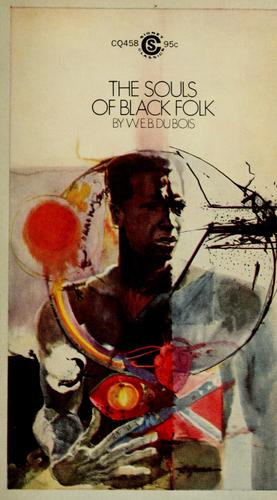
W. E. B. Du Bois · 1903 · Buy on Amazon
"W. E. B. Du Bois's "The Souls of Black Folk" is a gift that keeps on giving: social history, legal history, Jim Crow, sociology, philosophy."

Toni Morrison · 1977 · Buy on Amazon
"She's a fallible guru who is guided by love. She is the cornerstone the builders rejected, strange and beautiful."

Toni Morrison · Buy on Amazon
"It's at the pith of modernity, before everything has been settled in terms of social relations, and all of these different types of people have been thrown together in human encounters that are at turns, violent, remarkable, and creative."
