Gail Simmons's Reading List
Gail Simmons is a 'walking writer' and the author of The Country of Larks , which was shortlisted for the 2020 Edward Stanford Travel Writing Awards. She has an MA in Medieval history and a PhD in creative writing, and teaches at Bath Spa University on their MA in nature and travel writing .
Open in WellRead Daily app →The Best Hiking Memoirs (2023)
Scraped from fivebooks.com (2023-02-17).
Source: fivebooks.com
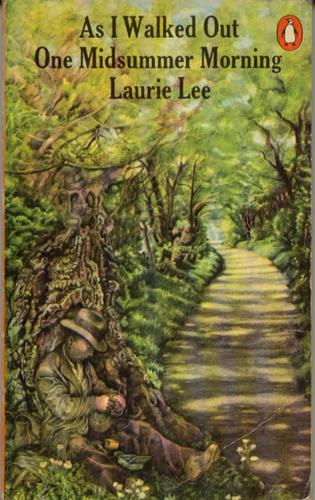
Laurie Lee · Buy on Amazon
"It’s an interesting book, a young man’s coming-of-age classic. He’s a 20-year-old troubadour wandering through Spain, playing his fiddle for supper, enjoying the romance of it, and just in love with the freedom, with the road under his feet. And he just happens to walk into one of the most devastating civil wars of the 20th century. The sheer exuberance of youth comes over in the book, and his vivid description of the landscape—the same intense description you get in Cider With Rosie , the first of his trilogy of memoirs. The prose feels as fresh and youthful as the day it was written. It’s like poetry to me. The book was published in 1969, but he was walking in 1935. I’ve heard other people say, well, a lot of it was recreated, it’s written through the prism of memory. I don’t really think it’s an issue that some of it might not be as accurate as if he’d written it while he walked. These writers aren’t journalists. This is literature, after all. It’s a very northern European concept, to believe there is a clear division between fiction and nonfiction. There’s less of a divide in South America and southern Europe. It’s a false binary. After all, we all rely on memory to recall the past. We’re not taking notes about every incident of our lives. Some people keep diaries, I guess, but things we recall change in the recollection. That’s a reflection of reality."

Patrick Leigh Fermor · Buy on Amazon
"Yes, that’s a similarity with Laurie Lee. But Lee was a rural lad, brought up in virtual poverty. Leigh Fermor was from an upper-middle-class background. He had letters of introduction to some of the finest aristocratic houses in Europe. His is an interesting take on Europe on the eve of the disruption of World War Two . Reading these books now is like reading history—this is how Europe was pre-1939. The final book in the trilogy, The Broken Road , was completed after he died by his biographer Artemis Cooper. It’s a very different book, a far more reflective book, about an older man recalling his more youthful self—which the previous books don’t have, because they were written earlier. The first two, interestingly, were written from memory, because his diary was stolen with his backpack from a hostel he was staying in. So they were recreated from memory, whereas the diary was returned to him later and The Broken Road was recreated from that diary. Does that make it a better book than the earlier two? I don’t know. The books go together well. A Time of Gifts is like a Beaujolais Nouveau—very youthful and fresh. The last book is like an aged Burgundy— deepened, more reflective, and profound. Through those three books, we see someone’s life journey, from a young man to an old man; we see him evolve. He died at the age of 96. Yes, unless you cheat and take buses, you just have to take what comes. You encounter people from all different walks of life, who you wouldn’t do otherwise. I found this on my own walking journey; you place yourself at the mercy of people, rely on the kindness of strangers. That puts you in a vulnerable situation—you are vulnerable, particularly traveling on your own. But that means that you are opening yourself to encounters, and you get much more out of it in terms of material as a writer."
Nan Shepherd · Buy on Amazon
"This book was written long before it was published. A draft was completed around 1945. She had written some fiction and poetry before. Neil Gunn was a mentor of hers, and she sent it to him. I think he said something like, this is really good but I’m not quite sure it should be published. So she stuck it in a drawer. It was finally published by Aberdeen University Press in 1977, and then reissued in 2011 with an introduction by Robert Macfarlane. Now it’s considered a minor classic alongside another half-forgotten book, J. A. Baker’s The Peregrine. Nan Shepherd walked, not on a linear journey, but over a lifetime. She went ‘into’ the mountains, not onto them, so a very different approach to the view that mountains are there to be climbed and conquered. She was probably quite an eccentric. She would swim naked, walk barefoot. She wanted to immerse herself in the landscape. She realised that striding out over the landscape for hours and hours was a liberating experience, even a metaphysical experience. So I do think that the book can be shoehorned into a list of hiking memoirs. She lived to the age of 88, but her memoir was pushed away in a drawer. Now it’s a modern classic, even though it’s only novella-length—around 30,000 words. It shines like a highly polished diamond. It’s absolutely beautiful, and the more you read it the more you get out of it. I love books that you can read again and again, and still find something new in them."

W. G. Sebald · Buy on Amazon
"I think the key thing is to approach it without trying to think, what genre is this? What’s interesting about this book is that it was published in German first, in 1995. Sebald’s books were first written in German, even though he taught at the University of East Anglia and was a citizen of Britain for a long time. And his books defied categorisation at a time when travel writing was the genre of the day, the way ‘New Nature Writing’ is reaching its peak today. Now, it’s a celebrated genre, the bookshelves are full of New Nature Writing. Robert Macfarlane, as you know, has been at the forefront of this. Before that, in the mid- to late-20th century, it was travel writing. You had writers like Bruce Chatwin, Norman Lewis, Patrick Leigh Fermor, people like that. But as you got to the end of the 20th century, travel writing as a genre hit rock bottom. Chatwin was, like Macfarlane, a literary celebrity as well as a writer. I think he was less shy than Macfarlane, though. He died in his late forties, from Aids, in 1989. After that, he started to be criticised because he made stuff up, embellished characters. People he wrote about objected to the way they’d been portrayed. He was vilified for not being accurate. Here we come back to this fiction/nonfiction thing. His book The Songlines was nominated for the Thomas Cook Travel Award, but he withdrew it because, he said, it was fictional. Later you got people like Tony Hawks going around Ireland with a fridge…. It got ridiculous. Then, at the end of all this, you have Sebald writing The Rings of Saturn . Is it a travel book? Is it memoir? Is it fiction? Is it history? I mean, it’s everything. It’s a book about time, it’s a book about space. It is a book about walking. But it’s also much more than that; it’s a journey of the mind as well as a journey on foot. He was really a psychogeographer. He burst open this idea that travel writing had to fit into a neat category. Right, he does describe the landscape, but all through the prism of his mood. He’s low, he’s been in hospital, he’s quite depressed. He talks about how feeling unwell colours his rather bleak view of the landscape. The weather’s not very nice. It’s not a conventional celebration of the landscape. But everything around him triggers a great journeying in his mind, which is absolutely fascinating. You’re journeying around his head, and his immense knowledge, more than you journey around the landscape. The traditional travel narrative is a linear journey—an outward journey and an inner journey that takes place at the same time. In this case, the inner journey is more important than the outer journey."

Raynor Winn · Buy on Amazon
"There are lots of reasons why I think it was a hit. It’s a story of jeopardy: of losing your home, and of potentially losing your life partner to terminal illness. Because so much is in the balance, it reads like a thriller. It’s a page-turner. And it’s so immersive you can taste the sea as you read it. And it has humour and tenderness. It’s the sort of book that people who wouldn’t normally read travel or nature writing read. Recently I was taking proofs of my book around bookshops in southern England last week in anticipation of my book launch. I was in one Waterstones, talking to the bookshop owner, and this woman came up and said, ‘Your book sounds so interesting. I’m into nature writing now, because I read The Salt Path .’ Get the weekly Five Books newsletter Again, this is a book that defies easy categorisation. It’s travel, nature, memoir. It was shortlisted for the Costa Biography Award, shortlisted for the Wainwright Prize for nature writing and it won the Royal Society of Literature’s Christopher Bland Prize for first authors over 50. It’s an inversion of the traditional quest narrative, because The Salt Path is about two people in a desperate situation, with nowhere to go. They’re on an anti-quest—they’ve just got to go, whether they want to or not. If you had to make the elevator pitch, you’d say: in the same week, she lost her home, her business, and her husband. Moth is told by his doctor not to do anything strenuous—‘don’t climb stairs!’—but the bailiffs are knocking at the door. It sounds very high concept, but it’s real. So they get their backpacks, Paddy Dillon’s walking guide to the 630-mile South West Coast Path , and they just walk. They’ve got nothing else to do. So the book is about finding home when you have no home. It’s about homelessness as well—how the homeless are treated. When they were walking, if people thought they were homeless, they’d be shunned. But if they changed the narrative and said, ‘we’ve sold our home and decided to go on a life-changing walk’, people would say, ‘how inspirational’. The same facts, but a different perception. It’s funny and warm. And she didn’t write as she went along, she just made notes in the margins of Paddy Dillon’s guidebook. Then she wrote them up for Moth because he was losing his memory, and her daughter said, ‘Mum, you must do something with this, it’s good.’ Winn thought she meant bind it in a proper binder, but her daughter meant she should get it published. She sent it out, an agent got straight back, and Penguin published it. It’s like a dream come true. Cheryl Strayed is similar in many ways. She was reaching rock bottom because of drug addiction , and losing her mother. Readers live that kind of jeopardy vicariously, without having to live it themselves. So that’s part of the appeal. And that’s true of all great travel literature too—readers travel through the eyes of the author. In her latest book , Raynor Winn walks the Cape Wrath Trail, and meets people who say they are there because they read some book by a woman called Raynor Winn—they don’t recognise her—and she doesn’t say, hey, that’s me. Her book has inspired people to walk, even though in The Salt Path she was walking because she had to, not through choice. Those young men like Laurie Lee and Patrick Leigh Fermor didn’t have much money, but there’s less sense of jeopardy. But there is that same sense of freedom, in not needing very much to be able to do this—to walk out with a backpack, all your possessions on your back, and not needing anything else. In my book, Will Parsons , who created the ‘Old Way’, is the guy who inspired me. I got to know about him years ago when he and two mates set out and walked around Britain with just their backpacks—nowhere to go, nowhere to stay. They started singing to earn a bit of money, like medieval troubadours. They walked around the country for months. You can do that when you’re 20. When you’re older, it’s harder, you’ve got responsibilities. So seeing other people doing it makes you feel that freedom again. Journeying on foot is as old as time. And people still like reading about it."