Flora Carr's Reading List
Flora Carr was named one of 40 London Library Emerging Writers 2020/2021. She won the Vogue Talent Contest and was highly commended in the 2020 Harper’s Bazaar short story prize. She was also shortlisted for the 2018 V.S. Pritchett Short Story Prize. Her work has appeared in TIME , British ELLE , and The Observer New Review. Flora grew up in Yorkshire and currently lives in London. The Tower is her first novel.
Open in WellRead Daily app →Five of the Best Feminist Historical Novels (2024)
Scraped from fivebooks.com (2024-05-27).
Source: fivebooks.com

Pat Barker · Buy on Amazon
"Yes, it’s from the perspective of Briseis, the one-time queen of Troy and now the war bride of Achilles. What Pat Barker does so extraordinarily is she turns The Iliad inside out, telling it from a female perspective. I think the title speaks to the fact that the book is so much about the interior life of Briseis. She very rarely speaks aloud, I realised. I’d read Barker’s ‘Regeneration’ trilogy prior to reading this, and she has always written so, so powerfully about war and its aftermath, its impact on the vulnerable in society. Various scenes have stayed with me—particularly one scene towards the end of The Silence of the Girls , where Priam’s daughter Polyxena is sacrificed on Achille’s burial mound. It’s so blistering, the way Barker describes the butchering of the girl. It’s a brilliant book. I think when we are talking about feminist historical fiction, it is usually about a strong female figure within a specific historical context, and the ways in which gender impacts that character’s life. So, for example, with The Silence of the Girls , Barker flips on its head this very famous scene from the Iliad where Priam goes to Achilles and begs for his son’s body. He says: “I do what no man before me has ever done, I kiss the hands of the man who killed my son.” And in that scene, Briseis silently thinks “And I do what countless women before me have been forced to do. I spread my legs for the man who killed my husband and my brothers.” So it’s about re-examining things from the perspective of women and the things we take for granted. Absolutely."

Maggie O'Farrell · Buy on Amazon
"Yes. I first read this during lockdown, and late last year saw the Royal Shakespeare Company’s theatrical adaptation , which I thought was fantastic. It prompted me to reread and reexamine the book after a period of some years, and it floored me. I read it so greedily, and it absolutely brought me to tears. It reexamines the life and legacy of Shakespeare’s wife Agnes. O’Farrell has spoken about how Shakespeare’s many historians have, in the past, ridiculed Agnes. She’s been much maligned. O’Farrell’s book is all from Agnes’s perspective. It’s about her life as a woman and her particular skillset. I mean, she’s illiterate, but she has extraordinary gifts that her husband cannot understand. It also examines her as a mother—the title, is derived from the name of her and Shakespeare’s only son, who died from the plague. O’Farrell writes so deeply movingly about grief. Hence the tears."
Madeline Miller · Buy on Amazon
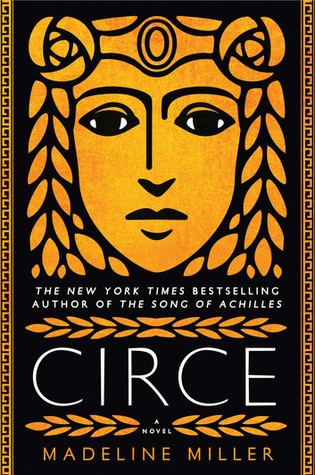
"Yes, there’s been a real trend in reimagined Greek myths recently. I think Madeline Miller should be credited for popularising that. Her Song of Achilles probably remains my favourite of her books, but Circe is a very close second. It’s about a goddess and witch from the Odyssey. She’s best-remembered as the witch who turned Odysseus’s men into pigs. But what Miller does so cleverly is that she reframes Circe’s story and brings us right back to the very beginning—so by the point that Odysseus enters the frame, her turning the men into pigs feels an entirely understandable reaction, given what we’ve found out about her life predating that moment. For a long time, female and LGBTQ stories were forgotten or overlooked in history books. I think fiction is an extraordinary tool for filling in where there is a gap, and imagining what those stories might have been. Women would have been very active in the past, yes. You’re right that history is told by the powerful, and the powerful have been, for centuries, men. Stories have been told by male historians."

Lauren Groff · Buy on Amazon
"Yes. This book reimagines the life of 12th century poet Marie de France, imagining her as an abbess in England. She’s a character of extraordinary will; she envisages this female-only utopia and sets about realising that dream. She’s a very charismatic, skilled leader who knows how to manipulate people. Sort of like Mary Stuart, in a way. I’m a huge fan of Lauren Groff. I also really enjoyed her new book, The Vaster Wilds . But I think Matrix really resonated with me because of its cloistered religious setting. I’m not religious but was a cathedral chorister when I was a child. From the age of 8 to 13 I spent almost every day within the walls of York Minster cathedral. I think religion and faith have always been fascinating to me, and that that experience impacted my outlook and interests. It certainly helped in being appreciative of how history might be living and breathing, all around you. Groff does it so cleverly. She never really weighs in on whether or not these divine visions are truthful experiences, or whether they are a means of manipulating the rest of the convent. Which I think is very clever, and is what contributes to what a brilliant character Marie de France is in this book, and how flawed and compelling she is."

Virginia Woolf · Buy on Amazon
"Well, it’s known first and foremost as a feminist classic. But it is also a historical novel because its plot spans centuries. It’s a sort of pseudo-biography of a young Elizabethan era nobleman who is mysteriously immortal, and also mysteriously transforms into a woman partway through the book. They revel in this new form, yet also push up against the kind of gendered expectations of the time. My favourite scenes are set in the 17th century, during the Great Frost and the ‘frost fair’ where Orlando falls in love with the Russian princess Sasha. Yes, it’s very much a tribute and a love letter to Vita, although one thing I hadn’t realised was that the recurring image of the goose in Orlando is apparently a metaphor for the great novel that Vita always wanted to write, but never did. In the book, the goose is always just out of reach. I found that so interesting, as The Tower has a great deal of bird imagery in it. In my book, birds have a myriad of meanings, one of which is the freedom that Mary Stuart seeks. Again, it’s always just out of reach. Yes, I found Orlando very funny. And, although I didn’t see Emma Corrin’s recent stage version , I think Tilda Swinton caught the comedic potential of the character in the 1992 film . I think fun is always desirable when it comes to feminist historical fiction, because the themes can be dark and uncomfortable and challenging. Even small moments of levity can be a gift for your character, and also for the reader."