Emma Styles's Reading List
Emma Styles writes contemporary Australian noir. Her debut novel, No Country for Girls, won the 2023 Wilbur Smith Prize.
Open in WellRead Daily app →The Best Adventure Novels: The 2024 Wilbur Smith Prize (2024)
Scraped from fivebooks.com (2024-10-09).
Source: fivebooks.com

Louis de Bernières · Buy on Amazon
"Light Over Liskeard is a dystopian and futuristic story. It’s mostly set on Bodmin Moor in Cornwall, which I loved. The conjuring of that landscape, especially the wildlife, was beautifully done. We don’t know how far in the future this world is, but it’s dominated by artificial intelligence, and the effect that has had on human beings is different for each individual person. It’s about a character called Q, who is a quantum cryptographer and works for the government. You get this sense that there’s an impending crisis for humanity. This small group of people take themselves off to Bodmin Moor. It wasn’t quite a prepping-for-the-end-of-the-world story, but it had elements of that. Because of his job, you sense Q is going to be called on to try and avert disaster. What we, the judges, particularly loved about it was the incredible imagination and ideas that had gone into the story and building that world. I particularly loved the landscape and wildlife, and the contrast between that and this very strange world human beings have found themselves in. There’s both an internal adventure, a personal growth element for the main character – the way he sees himself as a man really changes over the course of the book – and there’s the bigger picture of impending disaster for humanity. What was interesting was that each of the characters in the book responded to that differently and in quite original ways. It’s a very original story."
Chukwuebuka Ibeh · Buy on Amazon
"Blessings is a coming-of-age story—a queer coming-of-age story. It’s about a boy, Obiefuna, and his life in Nigeria. It starts when his father takes on a new apprentice. When this young man comes to the house Obiefuna is just captivated by him. It’s a life changing moment for him. Obiefuna’s father sees there’s something between his son and this young man, so sends his son off to a very strict and quite brutal Christian boarding school. I haven’t been to boarding school, but there’s always this sense of brutality to people’s stories about it. It’s the story of Obiefuna’s journey through boarding school and, afterwards, coming to terms with his sexuality, experimenting, dealing with shame. It’s also about Obiefuna’s mother and his relationship with her. She gets cancer and has her own story. I’m not sure she even knows why her husband has sent their son away, but she senses who he really is. They have a close relationship, the son and the mother. Obiefuna has a tender relationship with his brother too, who is a very different character to him—sporty and popular. Obiefuna is always the one who is bullied by his brother’s friends. But they have this beautiful relationship, which comes out later in the book. Emotionally, we were all blown away by this book. We were so involved with the characters and their relationships were so real. We were frequently moved to tears by it. It transported us to a different place and we felt like we were there. The novel follows Obiefuna right up to and past the time when Nigeria outlaws homosexuality and makes it a criminal offence. At that point, it becomes almost a matter of life and death for him and his friends. People are being imprisoned. It was already an emotionally involving book. When it got to that point, this big context change, it brought home the reality of his situation, which we’d been building up to. You realize he’s writing about a real place he knows well and that it is like that. It’s a beautiful book."
C.E. McGill · Buy on Amazon
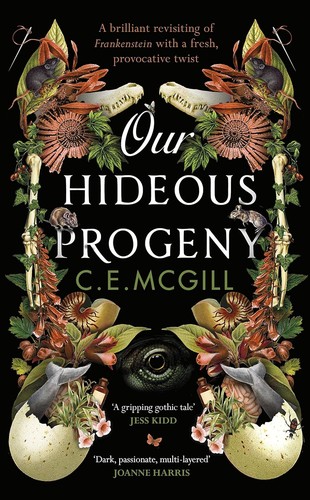
"Our Hideous Progeny is set in the 1850s and the main character is Mary, who is the great niece of Victor Frankenstein. In the background is this debate about science—London is on fire with all of these new discoveries and there’s a fascination with science. It’s all very patriarchal. Mary is fiercely intelligent and hugely ambitious and she discovers the partly burned diaries of her great uncle, Frankenstein. She becomes consumed with the idea of taking his research further. Her husband is ambitious too, but not as smart as her, and she discusses the idea with him. They start plotting and experimenting and doing all this research. That’s what the story is about—the art and science of making a monster. One of the many things that we, as judges, loved about the book is the incredible originality and ambition of the story. It made us believe the impossible: that’s what it felt like reading the book. We all found the ending incredibly satisfying. There’s a great villain in the story, someone who is helping them and betrays them. There are strong feminist themes. It’s a Victorian feminist novel that also has a queer relationship, which is handled beautifully. In fact, quite a few of these novels had either queer relationships or interesting explorations of gender. There’s a bit of travel. They start in London, where there’s the exhibition of dinosaur sculptures at Crystal Palace. That’s how the author first got the idea for the book: dinosaurs-meets-Frankenstein. It was taking the historical reality that people were discovering fossils and dinosaurs and the author wondering, ‘What can I do with that? How can I make a Frankenstein story out of it?’ The quest takes them to the wilds of Scotland and they end up traveling up near Inverness, where they build a workshop in a boathouse on the sea. It’s about what happens there. All these books have a strong internal journey for the main characters, as well as the external adventure. That’s what makes them so compelling and satisfying."

Derek B Miller · Buy on Amazon
"This novel is set in Italy in 1943, in and around the Abbey of Monte Cassino. It’s a heist-within-a heist. There’s a definite quest, which is made very clear at the beginning of the story. The main characters are a 14-year-old boy called Massimo, who is not quite who he seems. He meets an older man, Pietro Houdini, who rescues Massimo after he’s been attacked by a group of boys. Pietro Houdini is posing as someone restoring works of art, and they go to the Abbey, which is full to the brim with the most important artworks in Italy. Italy is occupied by Germany and under fascism and the Allies are gradually advancing northward. You know that this war is going to come upon them in Monte Cassino. Houdini’s plan is to steal three paintings from the Nazis, while the Nazis themselves are emptying the Abbey of all these incredible treasures. The fact the Nazis did that saved a lot of that art, because although they may have been intending to steal it, a good proportion of it ended up in the Vatican—while the Abbey was bombed to smithereens by the Allies. I don’t know much about art history, so I learned a lot from the book. And I rarely read war stories, but I loved reading about this different side of war. It wasn’t that there weren’t terrible trauma and atrocities—there were—but there was a huge adventure happening between these two characters too. After the heist, it’s a question of, ‘How are these characters going to escape?’ Partly it’s how are they going to escape the Nazis, but also how are they going to escape the Allies? What we, the judges, loved was the weaving of real history with story, and the story between these two characters. We all felt the author did that brilliantly well. It was historically accurate and yet there was this whole other adventure happening."
Francesca de Tores · Buy on Amazon
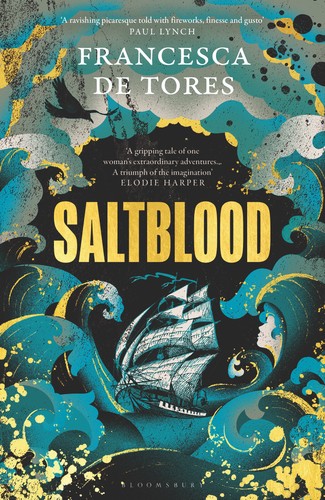
"Yes, it’s about and written from the point of view of Mary Read, and involves her relationship and pirating with Anne Bonny. It tells the story of Mary’s life, which is amazing. It’s almost like she lives several lives, and each of her lives is an adventure. Mary is born in Plymouth, and her mother makes her pretend to be a boy from a very young age. She poses as her slightly older half-brother who died, so they can continue to receive money from the father’s family. So she starts living as a boy because that’s what her mother asks her to do, but then she continues. She leaves home as a young teenager and goes and works as a footman. Then she joins the Navy, again as a boy. Then she joins the army and fights on the battlegrounds of Flanders, at which point she falls in love, leaves the army and marries a man. Then, eventually, she finds her way back to the sea. She meets Anne Bonny, and they are pirates in the Caribbean together. The yearning this character has for the sea is a theme throughout the book. I haven’t read a true account of Mary Read’s life, but there’s quite a lot of historical fact in Saltblood and I suspect it is accurate. One of the things I found incredibly skillful about this novel is that the author makes a real person’s life into a page-turning story. That’s difficult to do. As judges, we all loved Mary Read. One of the judges described her as “the badass central character.” There’s also a nuanced handling of gender and queerness. We loved the many, vividly described ways of being captivated by the sea. The sea is a strong presence throughout the book. Again, there’s external adventure, but almost more compelling are the transformations the character goes through herself. That absolutely blew me away. And I found it so interesting that when she left the army and got married to another soldier, their relationship changed. They’d been so close and enjoyed this companionship and burgeoning love. The roles they then found themselves in as husband and wife totally destroyed that, it seemed to me—certainly they did for her."

Leo Vardiashvili · Buy on Amazon
"Yes, a lot of it takes place in Tbilisi, the capital of Georgia. The story is told from the point of view of a young man, Saba. The backstory is that Saba left Georgia as a child with his father and brother during the country’s civil war, claiming asylum and living in Tottenham in London. They couldn’t afford to pay everybody’s passage, so their mother had to stay behind. That’s the first heart-wrenching thing that happens in the book, these boys yearning for their mother. Their father is working himself to the bone, trying to send her money to get her to come. At one point, their father pays someone they call the ‘honest stranger’ a huge amount of money to go to Georgia and bring her back. Of course, this man just takes the money and disappears. There are strong themes of betrayal in this book. The main story takes place when the boys are older. Their father decides he’s going back to Georgia, and he’s a bit mysterious about it—he doesn’t really explain why he’s going. He goes back and falls off the radar. The older brother goes after him, and he too falls off the radar. Then the younger brother, Saba, goes to find out what’s happened, first to his dad and then to his brother. It’s an incredibly vivid picture of this war-torn city and the effects of war and generational trauma. Saba is on this quest and it has a surreal edge to it. There’s been a great storm and animals have escaped from the zoo. He’s in this city, and you don’t know who you’re going to meet. Around one corner there’s a Bengal tiger, then there are wolves. That was a real thing that happened, I’m sure, and a brilliant backdrop to this story. There’s a sense of him going around in circles, which was such a skillful way to give a feel for the life of an asylum seeker and the whole refugee experience."

Emma Styles · Buy on Amazon
"Of course! No Country for Girls is a Thelma and Louise -style road trip through outback Australia. It’s about two teen girls, Charlie and Nao, who are thrown together by an unfortunate incident that leaves a man dead on Charlie’s kitchen floor. They go on the run in the dead man’s Holden Rodeo twin cab ute, and discover a bag of stolen gold bars under the passenger seat. I wrote the book as a love letter to Western Australia and road-trip movies. I was a huge Thelma and Louise fan and I was writing it almost exactly 30 years after that film had come out. I couldn’t believe no one had updated it, though once I started I realized it was actually quite hard! You’ve got two characters in a confined space on a road trip. How do you make that into a page-turning novel? I was so surprised even to get longlisted for the prize because I didn’t think it was enough of an adventure. Which was interesting, because it did satisfy all the criteria. There was a journey, and it took people somewhere most hadn’t been before. For me, writing it, almost the biggest adventure was what happened between the two characters, because although they’re both teenagers, they’re very different. Charlie is white and queer. She’s just been kicked out of school. Nao is Aboriginal. She’s in her first year studying law at university, and she’s straight. There’s a lot more too, that’s different about these two characters. And I felt the adventure was more about what happened between them than anything external. It really came home to me when we were discussing this year’s books. I thought, ‘Wow, my book went through this process with all these people talking about it.’ That was cool. I’ve loved being on the judging panel. It’s been amazing to read these books I might not have discovered otherwise. Emma was joined on the 2024 Best Published Novel award judging panel by Matt Barr , writer, journalist and host of the Looking Sideways Action Sports podcast; Lee Craigie , former professional mountain bike racer, author and director of The Adventure Syndicate; Dr Alasdair Harris , marine conservationist and National Geographic Explorer; and Sarah Outen , record-breaking athlete and therapist."