Emma Gannon's Reading List
Emma Gannon is a Sunday Times bestselling author, speaker, novelist and host of the award-winning creative careers podcast in the UK, Ctrl Alt Delete , which has reached almost 10 million downloads. She has blogged since 2009 podcasted since 2016 and is the author of five books including her award-winning debut novel Olive . Her new book ( Dis)connected will be published in 2022 in the UK and US.
Open in WellRead Daily app →Creating a Career You Love (2019)
Scraped from fivebooks.com (2019-01-11).
Source: fivebooks.com
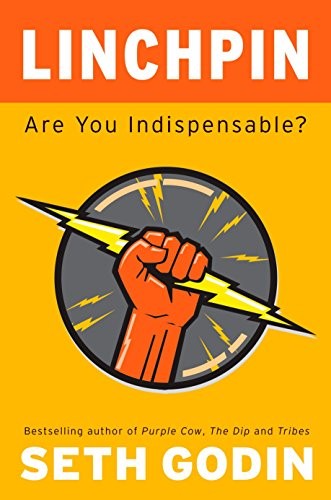
Seth Godin · Buy on Amazon
"Whenever I’m feeling a bit out of my depth and overwhelmed and confused—which is a lot of the time—Seth really inspires me to go back to basics. We are so overwhelmed at the moment with possibility and choice and options. Because the internet has opened our world up so much, we have so many options that can lead to confusion about what we want with our lives. That’s the downside of the multi-hyphen method, to be honest: we are constantly looking around to what other people are doing. Seth goes back to the core: what do you want to make, why do you want to make it, who do you want to reach, and what is this for? Instead of the other way around, the temptation of immediately longing for the end result, which is often about glory or fame or social media followers. What do you actually want behind all of that? Another thing I love about him is that he inspires me to start new projects, because he really believes that we just need a small audience. We don’t need a million followers on Instagram to be successful. He says we need 1,000 people to believe in our idea at the very beginning, which sounds like a lot of people but over time that’s quite easy to reach online. He believes in starting really small, and that’s something I believe too. We should always start small, and if it starts taking off, then invest. Don’t spend all your money on the latest equipment to start your new shiny project, only to realise it’s not working. I think we have to make sure that we start planting a very small seed and seeing what happens. Linchpin is his most famous book and therefore has received the most attention, but it’s also quite divisive. It might seem outdated, but I believe that we can all make ourselves indispensable. We are all human, and are all quite unique in our offering. I think that the workplace made us feel like we had to be machines. We had to turn ourselves on at 9 am; we had to turn ourselves off 5 pm; we had to work when someone told us to work. In the future, robots will take over the jobs we used to do, so being human in the workplace is becoming more of an asset than it was before. It allows us to be ourselves; it allows us to be a parent in the workplace and be honest about that, not have to lie about it and then leave the office feeling rubbish about ourselves. It means that we can kind of be open about our identity, our background, our orientation in all sorts of different ways. Why can’t we bring our human aspects to work? That’s kind of how I see Linchpin: it’s just about celebrating how we’re all different and our actions matter. Well, that is true. I’m taking the Linchpin approach and moulding it to my own, if that makes sense. I do this quite a lot with books. I take an idea and kind of rejig it in my head. He is talking about working in an office, and obviously I don’t work in an office. I think being a linchpin is making sure you are useful and able to work your way up. If you keep on learning and educating yourself and being a source of knowledge for others, your bosses or clients won’t want to keep you squashed down because you’ll be able to bring so much more to the table in higher positions. Yes. He says that the education system as it stands is really quite outdated. He thinks that school just prepares you to be obedient, and obedience isn’t a metric of success anymore. Being obedient used to get you promotions, it used to get you pay rises—because being obedient just means following the rules and sitting at your desk until midnight. But success (for me) doesn’t mean following the rules any more. It means the complete opposite. It means rebelling in some way. Every single good thing that’s come off the back of my career is from rebelling. It is scary, but I think it’s needed, especially at the moment we’re at in the world. We don’t need more people just following the rules, I think."

Julia Cameron · Buy on Amazon
"I absolutely love this book. It cuts to the core and truth of why people have a side hustle. Personally, I don’t mind the phrase side hustle, although I think it’s quite American. I think it’s a phrase that just got trendy. I never called my side projects a side hustle, ever, until the last few years when, let’s be honest, my publisher probably thought, ‘Oh, that’s a good word to get us some more press.’ But really, at the heart of it, for me, my projects were passion projects. They were things that kept me sane. The blog that I started about eight years ago, it’s now a side hustle—because I made money from it in the end. But really that blog was . . . you know, I’d get home, my soul felt shrunk to the size of a raisin, and writing that blog was a way of me genuinely living my life and not feeling so miserable. It kept some joy in my life, and reminded me that actually, maybe I can write. Even if no one reads it, I can still just get something from writing. I think everyone should have something that’s just for them. Whether or not you monetise it is up to you. “At the heart of it, for me, my projects were passion projects. They were things that kept me sane” The Artist’s Way is for anyone who thinks: ‘I want to have a side project, but I wonder what that would be.’ It’s a really good starting point to discover what lights you up. It could be anything. It could be gardening; it could be ice skating; it could be writing poems. There are two things—tools, or practices—that Julia Cameron recommends. One of them is ‘morning pages,’ which is when you wake up—before you check your phone, before you make a cup of tea, before you look out of the window, before you do anything—write three pages. It can be anything (I mean, it’s normally rubbish because it’s just your brain filtering), but it gets your creative juices going for the day. Then, the second thing she calls an ‘artist’s date.’ Basically, once a month, you take yourself out on a date. I know it sounds a little bit cheesy, but all it means is take yourself off to a coffee shop for the afternoon and treat it as just your time to read or write or think or listen to music. She basically says you will come up with an incredible idea being on your own, thinking—it won’t take long. I love it, and it’s true: you do. Instead of reading all these fast paced books saying: ‘Here’s how to be amazing, here’s how to get a side hustle, here’s how to hustle, hustle, hustle.’ This is the total opposite. It’s about slowing right down and connecting with yourself again. Yes, and maybe that comes from a level of guilt. It’s always bottom of the list, you know. There’s helping others, doing the laundry, work, and then right at the very bottom, maybe there’s some time for you. I definitely think that is true for many people. Elizabeth Gilbert’s book Big Magic was another really inspiring read for me, because she talks a lot about permission. I think confidence and permission are kind of linked, because it almost feels arrogant to say, ‘I think I’m creative,’ or, ‘I think I can write.’ There’s something in there that wants you to squash that and tell yourself you’re rubbish and that you can’t. “Asking for reassurance is pointless. Other people’s reassurances just don’t stick” There is a level of permission, and that takes us back to Seth Godin quickly. I interviewed him on my podcast last year and something he said really stuck with me, and actually changed the way that I approach things. He said that asking for reassurance is pointless. That reassurance is something that fades instantly in a human mind. If I say to you: “Do you think I can do it, do you think I could maybe write this next book?” You say, “Yeah, yeah, I think you can.” But it just vanishes. What you really need to do is give yourself reassurance , because other people’s reassurance just doesn’t stick. I was someone who always asked for reassurance, and actually now starting a project without hearing you can do it from random strangers is really empowering."

Mikael Krogerus & Roman Tschäppeler · Buy on Amazon
"Oh, it’s so good. I guess it goes back to what I was saying before—about how there’s so much choice now, and this is, I guess, a criticism of a portfolio life, that we can do too many wrong things at once. Why does anyone want to add something else on? We’re busy enough. Why do you want us to work more? I get it—multi-hyphen life can sound like more. It sounds complicated. It sounds stressful. It sounds like you’re piling stuff onto me. But that is 100% not what the book is: it’s saying if you want to do multiple things and have multiple strands in your life and not have one career, here’s how, and here’s how to streamline that. Here’s how to do less . The multi-hyphen method isn’t about multi-tasking—it’s about picking a few things to do well. The Decision Book is one that I come back to a lot. I’ll just explain one page from it that I always come back to. There’s this graph with two axes: importance and urgency. It splits the page into four areas: urgent and important; important but not urgent; urgent but not important; and not important, not urgent. Support Five Books Five Books interviews are expensive to produce. If you're enjoying this interview, please support us by donating a small amount . Sorry if that sounds complicated, but for so long I didn’t see the difference between urgent and important. I looked at my to-do list in completely the wrong way. It really has encouraged me to understand there are things you can just do immediately—like an email that takes two seconds; things that you can delegate; and things that you can just do later, even a week later. I think that’s the problem with living in this modern world where people think if you haven’t replied to an email in three hours then you’re dead. There’s no room for taking some time. It’s an amazing book. If you are confused by how to get through the day with your multiple projects, it tells you how to prioritise your day. It’s incredible. I don’t really believe in it, no. For me, a lot comes from getting your hands dirty and jumping in the deep end. I don’t think there’s anything you can learn out of business school that you can’t learn from doing it yourself and maybe getting it wrong a few times. I’ve always been that person who really struggled with academia. It never really stuck in my head. I don’t know whether that’s because I’m a visual person or because I remember things when I hear them said out loud, or maybe I am just like better in real-life situations than in hypothetical situations. But I also believe that you don’t need to spend money on courses to be successful. That, to me, says that maybe there can be some sort of fairness in this industry. That you can come up with a brilliant idea and execute it and reach millions of people without having to have money, and spend it on a degree. Maybe it’s wishful thinking, that I just like the idea of everyone having a fair go. But I actually think that a lot of people are better at just rolling up their sleeves and getting on with it."

Marlee Grace · Buy on Amazon
"Yes. It’s a really sweet little book. It’s pocket-sized. It’s pastel pink. But it’s also funny. I think it taps into this weird problem we’ve got at the moment. Maybe it’s millennials, maybe it’s everyone, but we feel so guilty when we’re not working. It’s almost a good problem to have in the world, isn’t it? That we’re all obsessed with working. The opposite would be a problem, wouldn’t it, if no one wanted to ever do any work. It feels like we’re full of an incredible energy at the moment. Young people want to be activists; they want to do things for the world. And it feels like there’s a nervous energy around taking time off. That’s something that always comes up in Q&As. People will say: “I feel guilty when I’m not working.” “This is something that always comes up in Q&As: people feel guilty when they’re not working” This book is really great. It’s quite practical but it’s also written in a kind of memoir style. One of the exercises is the most basic thing ever, but it’s one of those things where you realise, ‘Oh, I’ve never actually done this before.’ To do it, you write down what ‘work’ is, and you write down all the things that aren’t work. Then you have these crossovers, the grey area of what could be work. For example, going on Twitter. That’s work, but it’s kind of fun, so is it? Basically, you make three lists, and the not-work is stuff like having a bath, going for a walk, eating your dinner, talking to a friend. It’s amazing just how many of them cross over, but the ones that don’t are really crucial for self-care, and if you’re not doing them on a daily basis, then you need to make more time for them. Yeah, I love it. I love this little book. Oh my god, that’s so true. Yeah, I mean it’s such a difficult one because what’s so amazing about being self-employed is that every single gain you make is yours to keep. Everything goes into the pocket of the business that you own, so those Sunday nights I stay up until midnight working on a project—they are never going to be the same as if someone else is barking orders at me, making me do it. Because that kind of big project might allow me to go on a massive holiday or take time off. The choices are ultimately mine, so it never feels as bad. But it’s true. We should be kind to ourselves. There’s another very simple thing: sometimes I listen to the way I speak to my friends and think, ‘I should speak to myself in the way I speak to my friends.’ Because I am kinder to my friends than I am to myself sometimes. Because I don’t think I do that enough. The other myth, I will say, is that I do think that being your own boss has been romanticised. It’s not true that you don’t have a boss. You do. You’ve always got bosses—you just have them for shorter periods of time. You always have clients, people that you have to please and work hard for. I do think there are some sides of self-employment that people love to put on a t-shirt or put on a mug and glamorise. It’s not always the case. What I was getting at with ‘bulk recording’ is that the more that you can do of the same task in one go, the better. Even—and I’m not saying I’m perfect and I stick to this all the time, but still—only doing your emails in the morning and at night. Well, not night, but maybe 5 pm. That has changed everything for me. We shouldn’t feel like we have to be at the beck and call of everyone else all day long. As an author called Tom Chatfield wrote , “your inbox is a to-do list written by someone else.” It is something that I try and do, and although I know that not everyone can, it’s good to keep the day as free as you possibly can. What else? One thing that is important is really, really planning ahead. Making sure that you are always at least one step ahead. For example, with my podcast, I plan that around a month in advance and I make sure all the content is up and ready. Much like a magazine would or any company plans ahead—I don’t think you should ever feel like if you’re self-employed then you shouldn’t stick to those things. Because what if you get ill? What if something happens? It’s really important to make sure that you aren’t chasing your tail, because we just don’t know what’s around the corner. At the end of the day when you work for yourself, you need to look after yourself. I think planning ahead is something that makes me feel much more in control."
Monika Kanokova · Buy on Amazon
"Yeah. I really like this book. It doesn’t look like a book that’s been self-published, if that makes sense. It’s really, really brilliant. I think it’s an interesting time for self-publishing because you can make the same amount of money as in traditional publishing. There’s a project that’s just won an award in the UK called The Pound Project . Basically it’s a model like Kickstarter, where you pledge a pound for a book. Fine, it’s only a pound. But what happens is so many people put money in because ‘it’s only a pound’ that a book recently raised £12,000 in a few weeks. That’s not actually that far from, say, an unknown debut author’s advance. So it’s an interesting time: if you can get the right editors and the right marketing team, who’s to say you can’t put an idea out that is just as valuable, and just as good? I really think Monika is someone who has done self-publishing brilliantly. Not to say she might not do it more traditionally in the future. “It’s an interesting time for self-publishing because you can make the same amount of money as in traditional publishing” What I like about this book is that has lots of interviews with people who have made their side businesses into their main business. They’re not famous people. I think, and I’m probably guilty of this because I interview a lot of well-known people on my podcast, that there are so many lessons to be learnt from people who aren’t always shouting about it, or sitting on social media every day. This book has really opened my eyes, and I’ve discovered so many interesting people who do interesting jobs. It’s full of tips, and I love books that have interviews. It’s quite meaty, this book. There’s a lot in there. There are chapters on building multiple income streams and passive income. When I look back at the last decade or so, there are times where it’s been so hard because I’ve had a full-time job and was trying to make a side business. That is quite horrific in terms of time spent working. But I think it’s the antidote to the ‘quit your job and follow your dreams’ narrative, which I don’t like. I could never have quit my job. There was no way in a million years I could just have quit my job to start my side business. It’s about transition, doing both for a bit, and saving enough money by doing both that you can then slowly do less of the full-time job and jump across. I mean, that’s the strategy that seems to have worked for a lot of people in this book; there’s always a crossover point when you feel like you’re going to burn out. But then, without that bit you don’t get to reap the reward. Every single interview is so different, and I guess maybe that’s the point of the book. There isn’t only one way to do any of this. So many books say ‘here are the three steps to make your life easier.’ But there’s no such thing as an overnight success. I get frustrated by that approach—sometimes when I’m doing events it’s almost like people are sat there with their notepad and pen like, ‘just tell me in one word how I can be successful.’ Or, ‘tell me in one short sentence what the answer is.’ Get the weekly Five Books newsletter The answer is that you keep going and over time, build something. This can take a year, or years, to kind of get right. Everyone in this book has learnt by doing. I think that we like to reward starting things in society: it’s very easy to caption an Instagram post, “I’m starting this side business.” You get all the likes. Or even when people get engaged—people love people getting engaged! We want to reward people who are starting things. Then what happens, I think, is you get such a buzz from telling people ‘I’ve started my novel’ that you end up not really finishing it. I love this book, but it’s very granular and it’s not romantic, and some of it is kind of boring. Some of it is talking about finances and how to save, how to do a spreadsheet so you know exactly how much money you need each month, because maybe you’re reaching burnout and you need to turn down a project. Can you afford to say no? How do you not go mad when you’re spending so much time on your own? It’s all these things. They’re hard, and it’s hard to keep going. Well, this is why I’m so passionate about flexible working. What happens is that we feel so trapped and we feel so tired and we feel so exhausted when we have a full-time job, because when you don’t like something your mental energy is being used up. You’re spending so much time and energy hating it and being upset and exhausted and frustrated that when you get home, the last thing you want to do is work on a side project. But it’s about flipping that narrative: the side project will be your saviour. In my book, I wrote about how nurses have actually prescribed to patients to go do something artistic as a way to try and help some of the mental health problems that they’ve been going through. We all need something that we can get lost in. Finding the time shouldn’t be seen as a chore. It should be seen as the opposite. This is why I really want a lot of people and a lot of companies to kind of take on the four-day week. I think the world would be a better place if everyone had one day or even one afternoon to use their time in a way that might help themselves or the world. Sometimes people act like I sound crazy when I suggest that. I feel like we’re so ingrained in the way things have always been done, that making any suggestions on how to do it differently is just met by, ‘no, we can’t do that, that’s not the way it’s been done.’ But I don’t think that it’s crazy to think that more people should have more time to be happier."
The Best Self Help Books of 2021 (2022)
Scraped from fivebooks.com (2022-01-05).
Source: fivebooks.com

Oliver Burkeman · Buy on Amazon
"I love this book so much. He’s an amazing writer. He was the productivity guru for The Guardian, so every single week he would try out a different productivity hack. He was obviously someone who was quite obsessed with productivity—but realised that ‘inbox zero,’ smashing deadlines, so that you can produce more and more is a trap. This book is all about his realisation that it’s all a bit of a scam: there is no finish line, no trophy for doing the to-do list every day. Get the weekly Five Books newsletter The title of the book is roughly the span of a human life. It’s meant to be quite arresting and shocking; it’s not that many weeks if you really think about it. The book is about life being finite, and how a lot of our daily stresses are quite pointless. He’s trying to remind us that we’re obsessed with something that just doesn’t need to be obsessed over. I’ve really noticed that, across the board, a lot of business authors, or traditional self help coaches, are turning so much more philosophical. And I think talking about spirituality seemed a bit ‘out there’ a few years ago, but it’s going to become incredibly mainstream in the next few years. It’s already getting there."

Beth Pickens · Buy on Amazon
"This is a really great book about being an artist, and making art, no matter the outcome. Her book is really rebelling against that idea that if you don’t quit your day job and make money from your art, you shouldn’t bother. No: it’s OK to keep your day job, and it’s OK if things don’t immediately start making money. Your art is worth something. The time you spend making it is worth something. Beth says we should all make art, even in our spare time. It really reminded me of reading Big Magic by Elizabeth Gilbert back in 2015. It’s really encouraging—a person reminding you that making art can bring you joy. It doesn’t have to be about other people. It’s really a sort of manual, a bit of a guidebook. It covers absolutely everything. It really looks about the hurdles that people face. She talks about fear of self-promotion and fear of marketing. Dealing with the pain of rejection. I love that she busts a lot of myths. For example, one thing that people think is that you need a lot of time to make something. People will say: if I only had six months, I would write a novel. Well, actually, if you had six months of doing nothing, I actually think that might be worse for your writing. You’ll just say, ‘oh well, I’ll do it tomorrow.’ For me, my books aren’t written in week-long staycations by the sea or months away from other work, but in short regular pockets of time e.g. 1 hour in a cafe or in bursts of 25 minute Pomodoro sessions. The obsession with wanting long stretches of free time can get in the way. Exactly. Having too much thinking time hasn’t been great for me. If I sit around, I can reflect on the problems with what I’ve just written. But if I’m busy, I can’t dwell on it too much. Similarly, some people think that if they had all the money in the world, you’d write the great American novel. But she breaks down why that isn’t the answer. For example, someone she knows has a big inheritance and a lot of time, and the woman has been trying to write this novel. But the grief from this death in the family is causing problems. There are other examples of this: people who, on paper, have a perfect environment, but it just hasn’t worked. So it’s very uplifting. I reminds you that no matter what you have, you can do something with it. I interviewed Jessie Burton for my podcast a few months ago . She wrote The Miniaturist in and around her job as an executive PA. Obviously I don’t want to romanticise that, because it’s really hard, and not everyone can have that energy at the end of the day to put into something else, but the idea of someone writing for 20 minutes on their lunch break and actually producing something of importance in literature is really inspiring to me."

Nedra Glover Tawwab · Buy on Amazon
"Yes, I love this book. It’s a beginner’s guide to boundaries, which has become a bit of a buzzword. People who have had a lot of therapy will be familiar with this word, but I only came across it quite recently. Nedra has been a therapist for nearly 15 years. She’s very good on Instagram, but having a physical book of her knowledge is very useful. She describes how having bad—or what she’d call ‘porous’—boundaries impacts your whole life. You might not like your friends, because you’ve let people in who aren’t right for you. You say ‘yes’ to events that stress you out. You’re drinking on nights out when you don’t want to. Basically, if you’re someone who feels like you’re getting pushed around your life, this book is just amazing. It helps you get under the skin of why you’re doing that, and perhaps without even realising it. Support Five Books Five Books interviews are expensive to produce. If you're enjoying this interview, please support us by donating a small amount . I’ve got so much from it. It’s across family, work, romance, technology. For example, some people want to please their parents too much, even as an adult. She explains that if you don’t have good boundaries you will burn out much more quickly than someone who does. There are practical quizzes and scenarios in the book. And it’s really, really interesting once you’ve noticed what you’re doing. Eye opening. Yes. There’s another book out called Please Yourself by Emma Reed Turrell, which is all about that. I think a lot of people feel like that—wanting to please everyone around us, and make sure they like us all the time. Definitely, it’s all about realising what’s not serving you any more. It can be really difficult. I found it quite confronting, because there are some relationships that probably would change if you start putting boundaries up. As she describes in the book, there are a lot of people unfortunately who quite like it if you’re that person who says yes to everything. Especially in a work context. I found that once I learned to say no to things I didn’t want to do, some people would be quite shocked, because I used to say yes to everything. But it’s freeing me up to say yes to things I want to say yes to. It’s an amazing feeling to look at my calendar and know deep down that I do want to do everything on it. That’s shifted everything completely. Although obviously I have more agency than some, that comes with being self-employed. It’s scary, but it’s amazing when you put it into practice. One thing that really helped me is having ready-made templates. I bought a book, a self-published book by Natalie Lue of the podcast Baggage Reclaim, which is like four hundred ways of saying no . I remember copying and pasting some of them into an email, and saving them to use whenever I needed them. She says that you don’t have to give excuses. Don’t write, like, a massive paragraph about why you can’t do it. Just say, ‘I’m sorry, I won’t be able to do that right now.’ And what’s really great is that it really takes the pressure off. It gives you the power to realise that you are allowed to say no. You don’t have to flap around making excuses. It’s just a no."

Martha Beck · Buy on Amazon
"Martha Beck accidentally became a life coach after doing, I think, a sociology PhD at Harvard. She was going down a very intellectual, academic route, but realised that she wanted to help people by putting all of that science-based knowledge into helping people. She was famously Oprah Winfrey’s life coach for a while. She’s amazing. I pre-ordered this book as soon as I heard about it, a year before it came out. It’s all about the meaning of integrity. This book isn’t about being a really good person who always gets things right. It’s more about being your whole self and not cutting yourself into pieces to please everyone. I think we all do that to some degree, because we are different with different people. But she encourages you to just be you, and not shapeshift all the time. “It’s an amazing feeling to look at my calendar and know deep down that I do want to do everything on it” At the beginning of the book, she says that this all came from this period where she decided not to tell a single lie for a whole year. Not even white lies. So if someone rang her up and asked her, ‘do you want to come to my birthday party,’ and she didn’t, she’d say, ‘no, I don’t want to.’ It’s quite amazing to see that in action. From there, she realised that her life got better. She left her family of origin, who were Mormon , came out as a lesbian, got married. Basically her life became amazing. But it was really scary. She had to throw away her old life. She calls it an ‘integrity cleanse’, when you don’t tell any lies. But she also says that you don’t have to be so extreme. Even by telling slightly fewer lies, it impacts your life and health. The science backs that up. The structure mirrors Dante’s Divine Comedy . So it’s really geeky, but also really accessible and really good. Definitely. There are lots of exercises in the book around that—asking yourself: are you are feeling what you really feel, and saying what you really mean? Are you doing what you really want? Because, yes, sometimes we get confused. But what I took from it was that whenever you are in intergrity, you feel relaxed. For example, I was organising a big party for next year. Every time I thought about it, I was stressed. It just didn’t feel right. So I sent an email to everyone that said ‘I’m really sorry, but I don’t want to do it any more.’ And everyone said, ‘oh my god, it’s fine.’ And my body just relaxed. I felt relief. There was just the feeling that, yes: that’s the truth. I don’t want to do it any more. That’s a really random example, but it’s real life. Yes. And once you realise what you actually want, you have a lot of clarity on what you need to have a really nice life. I think we’re often conditioned to want certain things like a big home, lots of money, and so on. But actually, when we think about it, a lot of us don’t actually care about that stuff so much. So you might be striving towards something you don’t even want in the first place. I think she’s a very, very happy person. Or not even happy, fulfilled. She lives in the woods with her non-traditional family set up, living her own life. It’s very infectious, that kind of peace. I think we can all aspire towards it, whatever shape that might take."

Julia Cameron · Buy on Amazon
"I love Julia Cameron. I read everything she ever puts out. She’s just so comforting, I think that’s the best word to describe her. I think I’ve also been seeking that sort of maternal, grandmother’s wisdom. She’s in her late seventies, I think. Julia’s work, across all her books, is about helping artists become unblocked. It’s really interesting, because I think Julia Cameron’s books are like Trojan horses. She talks about intense topics, through quite a broad lens. And she’ll use words like ‘God’ in her books, but prefaces it with the statement that she’s talking about ‘creative energy’, which I think appeals to younger people who might not be religious. I think at this time in history, so many of us feel lost because we don’t have anything to believe in. Most of us don’t have a religion, or it’s fading away. We might not have a strong sense of community, especially if you live in the city. Julia Cameron is asking the reader to believe in something again. For her, it’s speaking out loud. You don’t have to believe you’re praying for something, it’s just manifesting your hopes and dreams by talking outwardly about what you want. She’s very into journaling, and putting things out there. Even if you don’t know where those things are going out to, I think she’s just asking you to believe in the world again. There is something about her that really seems to capture people. I think it’s because she’s so honest and vulnerable about her own journey. In the new book, she recaps on her alcoholism. Her life was going one of two ways, and thank God it went this way, where she got sober. The thing that got her out of the grips of that was her Morning Pages. And the ‘seeking wisdom’ she talks about in this book is seeking help not only from people around her in her physical form, but more widely, from people who have passed away. Not in a woo-woo way, but by writing them letters or speaking out loud to them. That’s an interesting thing about her. It could turn a lot of people off. But weirdly, she brings everyone in. Her book Floor Sample is one of my favourite memoirs. It’s about her alcoholism and being married to Martin Scorsese, and how she nearly ruined her career—but got it back again. So I just find her endlessly inspiring and I have interviewed for my podcast three times now!"