Edwidge Danticat's Reading List
The author Edwidge Danticat was born in Haiti. Her many books have won prestigious literary awards and been selected by the Oprah Book Club. She is the editor of The Butterfly’s Way: Voices from the Haitian Diaspora in the United States .
Open in WellRead Daily app →By the Book: Edwidge Danticat (2013)
NYT By the Book column (2013-08-08).
Source: www.nytimes.com

Ludwig Bemelmans · Buy on Amazon
"Actually I owned only one non- school-related book before I was 12. It was Ludwig Bemelmans’s “Madeline” (French version), which my uncle had given me for my birthday."

Makenzy Orcel · Buy on Amazon
"many of them mentioned this young man named Makenzy Orcel who’s published two poetry collections and two very powerful novels called “Les Latrines” and “Les Immortelles.”"

Makenzy Orcel · Buy on Amazon
"two very powerful novels called “Les Latrines” and “Les Immortelles.”"
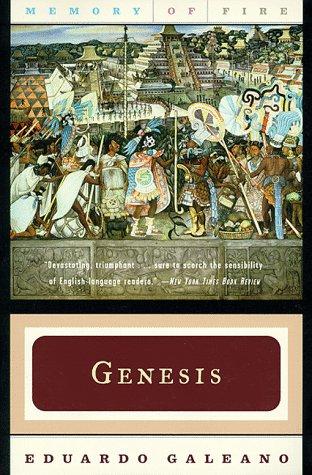
Eduardo Galeano · Buy on Amazon
"It would be Eduardo Galeano’s Memory of Fire trilogy, an epic and poetic history of the Western Hemisphere, which offers, among other things, a unique and almost intimate view of what happens when U.S. administrations cause or participate in the devastation, if not the total destruction, of other countries."
Millery Polyné · Buy on Amazon
"“The Idea of Haiti: Rethinking Crisis and Development,” edited by Millery Polyné. This book offers a wide range of perspectives on how certain narratives about Haiti’s politics, history, religion and culture have affected its past and can affect its future."
Jonathan Katz · Buy on Amazon
"Jonathan Katz explores some similar issues in a much more personal way in his very poignant book “The Big Truck That Went By.”"

Michel-Rolph Trouillot · Buy on Amazon
"For some brilliant analysis from the past — and on the past — one also cannot fail with Michel-Rolph Trouillot’s “Silencing the Past” and Joan Dayan’s magnificent “Haiti, History, and the Gods.”"
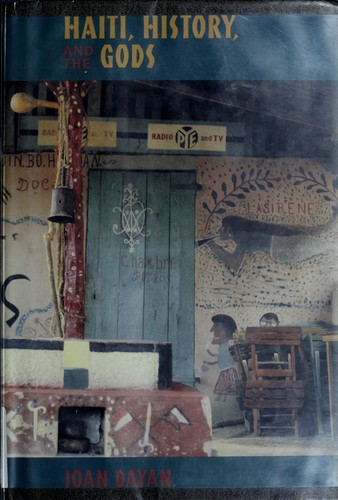
Joan Dayan · Buy on Amazon
"Joan Dayan’s magnificent “Haiti, History, and the Gods.”"
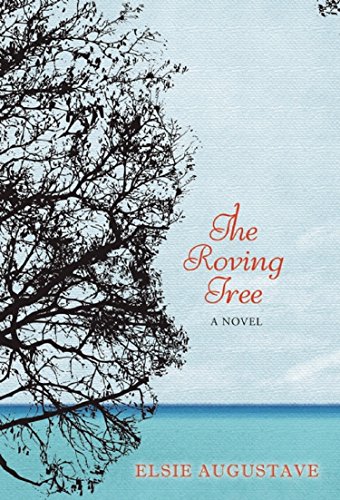
Elsie Augustave · Buy on Amazon
"I’d also recommend “The Roving Tree,” by Elsie Augustave, a gorgeous new novel about a Haitian adoptee finding her way in many different corners of the world."

Jesmyn Ward · Buy on Amazon
"I loved “Salvage the Bones,” so I am looking forward to reading Jesmyn Ward’s memoir, “Men We Reaped.”"

Jesmyn Ward · Buy on Amazon
"I am looking forward to reading Jesmyn Ward’s memoir, “Men We Reaped.”"
Alexander Maksik · Buy on Amazon
"Also on my list is Alexander Maksik’s novel “A Marker to Measure Drift,” which is about a young Liberian woman with a mysterious past."

Cynthia Bond · Buy on Amazon
"In manuscript, the talented Cynthia Bond’s first novel, “Ruby,” is there too."

Bob Shacochis · 2013 · Buy on Amazon
"next to Bob Shacochis’ new novel, “The Woman Who Lost Her Soul,” which is partly set in Haiti."
The Best Haitian Literature (2010)
Scraped from fivebooks.com (2010-10-20).
Source: fivebooks.com

Marie Vieux-Chauvet · Buy on Amazon
"Marie Vieux-Chauvet is for me one of Haiti’s iconic female writers. She wrote primarily during the Duvalier dictatorship and her personal story is a powerful story of the choices writers during that time were forced to make. Her book was printed and ready to go when the publication was stopped in France because it would put her family in Haiti in danger. So she really had to choose between the safety of her family and her book. The book is a beautiful trilogy, three sets of stories of people who each in their own way are taking a stand against the dictatorship. It isn’t polemical at all but that alone was enough to make the dictatorship want to stop it from being published. The first story is all about one woman who keeps a journal and talks about her own personal pain and also the pain of her environment. She looks at what is going on with people around her – the beggars and the brutal henchmen in the town. In the second story there is a woman who, in order to save her family, is forced to offer her body to this henchman in the town. And the third story… I think was probably closest to Marie’s own situation. It’s about a group of poets in hiding and it also gives a clue about how people might be writing under the types of circumstances Marie was in. She had a group of writers who met at her house regularly to read each other’s work which was somewhat similar to the group in hiding in the book. But, this story takes everything further. One of the wonderful things about her work is that she also writes so exquisitely, so beautifully. So you can also take out the political context, which I must admit is virtually impossible – but even if that part of the work is of little interest to you, you can just enjoy her prose. But there was enough of a sense of protest in her book that it was deemed dangerous to the people in power. Marie eventually decided to go into exile in the United States for her own safety and that of her family. She continued to write there until she died of brain cancer in her 50s. Love, Anger, Madness is her big book, if you will, the one she’s best known for. Yes, especially at the time of the dictatorship. One of the other writers on my list, Jacques Stephen Alexis, was ambushed by Duvalier’s henchmen coming back from abroad and he was killed and his body was never found. So there was a good reason for a lot of these writers to fear."

Jacques Stephen Alexis · Buy on Amazon
"This book is about a massacre of Haitian cane workers in the Dominican Republic in 1937. It tells the story of this man who has just got out of prison and leaves to go to the Dominican Republic at the time when this massacre is happening. It is a beautifully written book with also a sense of the larger historical narrative. Part of it is set during the US occupation of Haiti so you have some of that history weaved in as well as what was happening in the Dominican Republic at the time. And you also have the journey of the man who crosses both countries. Actually, it is one of the books that I loved so much that when I started writing my own novel about the massacre of Haitian cane workers, The Farming of Bones, it was one of the inspirations for that. I thought that he did such an amazing job with his main male character that I wanted to do the same with a female character! Recently there’s been some rapprochement, since the earthquake. The Dominicans, because of their proximity, were the first foreigners on the ground to help and many Haitians ended up in Dominican hospitals after the earthquake. But slowly some old hostilities are creeping back, particularly due to the increased number of Haitians now in the Dominican Republic since the earthquake. (It’s estimated that the Haitian population in the DR has increased by 15 per cent since January.) Often when you talk to Haitians about the relationship between the two countries, unless they have more close personal connections, they will think about this massacre in 1937 and Dominicans often think of the years when the Dominican Republic was occupied by Haiti which was 22 years after Haitian independence. The leaders of Haiti took over the whole island in order to prevent the French from returning. And the Dominican Republic celebrates its independence from Haiti, not from Spain. So there is tension there and I think that, aside from the historical wounds, these tensions also arise from the economic disparities between the two countries and the fact that Haitians are, frankly, treated very badly there. Legally as well in that a family could be there for generations and have no avenues to get their papers. I’ve met people who can trace their roots there over 70 years, but they are not allowed to have Dominican birth certificates for their children. But maybe the response right after the earthquake is a sign that some healing is possible."

Jan J Dominique · Buy on Amazon
"This is one of the Haitian novels I read as a teenager in the United States. I found it in the Brooklyn Public Library one Saturday and it simply blew my mind. It’s a fascinating stream-of-consciousness novel about a woman writer. It’s about her relationship to power and her relationship with her father and her eventual exile in Canada. So you hear about her experience of trying to silence herself, of her migration. It is also a great book about migration and writers in and out of Haiti. It is written in this very different style which isn’t a formal narrative style but the prose makes you think, laugh, cry. It is one of those books that you find something new in each time you read it. Oh yes, even though the character was much older than me, certainly it struck a chord in terms of being about a young woman writer and also having this fear that people have when they migrate that they will forget everything. You are worrying about forgetting what is important, especially if you are leaving, not knowing whether you are going back. Forgetting is probably one of a writer’s greatest fears and she does a fantastic job of capturing the artistic essence of that. Support Five Books Five Books interviews are expensive to produce. If you're enjoying this interview, please support us by donating a small amount . I feel like Haiti is always with me. The smells, the sounds, the tastes. Everyone says that, I know. But memory is a powerful thing and love is one of the things that keeps memory alive. That’s one of the themes of J J’s book. When I was little my parents always used to say: ‘We left Haiti, but it didn’t leave us.’ And we were always surrounded by Haitians and living in a Haitian neighbourhood, so that was our way of keeping Haiti with us. I live in Little Haiti now and when I look out of my window, I always see something that reminds me of Haiti. Of course, this place is its own thing, but one of the things that is extremely interesting about the immigration experience is seeing how people try to reproduce a part of their old lives in a new place, and, whether through our music, our art, our literature, Haitians try to do a bit of that everywhere we go. I think of it in a smaller and more manageable way. I see the faces of the people I know, I see the countryside where my grandmother’s house was. I see individual images rather than TV ones, even as people are dealing with the earthquake. I see the children in between the ten alleys. I see my friends, the young people who read to them in this wonderful group called Li Li Li. I just see folks. I hear voices, individual voices. No, they are not getting easier at all. Like everyone else I have family with a different range of means. But even for people with some means it is extremely hard because, for example, they recently suffered through a terrible storm which was very difficult. People were hurt. People were killed, thought not my family members. Although some people are back home and not living in camps, some are sleeping in camps in front of their houses. Many have also gone back to the countryside. We’re still in the middle of hurricane season so it is very hard for more than a million people who have no choice but to live outside in tents that are thinning after nearly nine months of use… One can hope but I think a lot of people are weary. It will be a year soon. People need so much. There is a great urgency. We are not only electing a president here, but a whole government. Since the election is going forward, let’s hope that we have people with vision, with empathy, people who will not be able to ignore what is under their noses, that more than a million people are homeless, that half the children of the county are not going to school, that people are hungry and thirsty, that they cannot count on people’s resilience forever, that they need new ideas and new visions that will feed people, house and educate them and create humane and sustainable jobs. This is all urgent. It’s an emergency. It has not stopped being so since January 12, 2010."

Ida Faubert · Buy on Amazon
"Ida is an extremely interesting woman and writer. They say that she is Haiti’s first female published writer. She was born in 1882 and published around the turn of the century. Her father was President of Haiti which gave her some opportunities to observe the country and its power structure at the time from up close. She wrote primarily poems and short stories, and after she left Haiti she lived in Paris where she died in 1969, the year that I was born so I have always felt this connection with her! She was beautiful and her poems were beautiful. She is probably the least known of my choices, but certainly deserves to be better known. Her poems tend to be very personal as are the short stories she wrote. She was, of course, writing what women were supposed to be writing at that time but you also get glimpses of the power and politics that she was surrounded by. She was also a great Haitian feminist who later inspired other wonderful women writers from Haiti. Here’s a fitting sample of Ida: Je n’avais apporté de mon lointain rivage, Que les jeunes espoirs de mon âme en éveil, Je n’avais apporté qu’un peu de ce soleil Qui brûle tout mon sang et dore mon visage… I will attempt a rough translation: From my distant brook, I brought nothing But the nascent hopes of my rousing soul I brought nothing but a sliver of sun Which burns in my blood and in my golden face… This a rough translation and could probably be done better, but it gives you some idea. I am not doing her justice here, but I’ve always loved that verse. It speaks volumes for me about migration, being an immigrant, especially an immigrant writer."

Jacques Roumain · Buy on Amazon
"This is the story of a peasant family whose son has been in Cuba working in the sugar cane, and he comes back and tries to reunite his whole village. It is almost a fable – I think of it as being like a Greek myth because he sacrifices himself to unite these warring families. He is in love with the daughter of the family his relatives are in opposition with. Eventually he dies but the woman he loves is pregnant and that son, we hope, will unite their families. Jacques Roumain wrote one of the first novels to be set in a rural setting and it was a huge success, I think because it is very rare that you have a novel that comes out of that milieu because of the limited opportunities that those people have to write about themselves. Still, he does his best and the novel portrays these people, people like my grandfather and those of his children who stayed in the countryside; it portrays them in a complicated way, as people facing very important problems. These people, who are essentially the majority of the population, are often marginalised. They are said to belong to the peyi andeyò, the outside country. They are often treated badly and neglected and never really part of the decision-making process, but here they are at the centre of the novel. The really amazing thing about this novel is that at some point it became almost like an oral story for this section of society. It was done as a radio play so people who were living in the countryside, even though they couldn’t read the book, would hear it and hear something of themselves in it. And it was even made into a film, so it enjoyed a huge success. It really permeated the consciousness of the country so much that it went back to the people that it was about. People even call their children the name of the main characters, Anaïse and Manuel. Can there be a greater compliment offered to any writer?"