Edmund de Waal's Reading List
The bestselling author of The Hare with Amber Eyes , who is also a ceramic artist, tells us about books that have influenced both his careers, from the life of a celebrated potter to a collection of Japanese haiku
Open in WellRead Daily app →Inspiration for Writing and Art (2012)
Scraped from fivebooks.com (2012-05-09).
Source: fivebooks.com
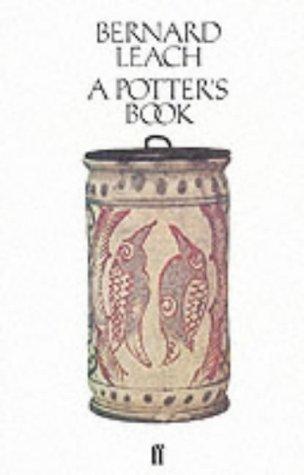
Bernard Leach · Buy on Amazon
"Bernard Leach was the most significant 20th century potter. He was the person who articulated why pottery mattered. He did it through his evocation of the value of Eastern pottery, and his advocacy and evangelism for the handmade pot. He was English but grew up in Japan, and he “got” Japanese pottery earlier than anyone else. He came back to St Ives in Cornwall [in Britain] in 1919 and set up a pottery studio. He can be regarded as the father of the studio pottery movement. As a young man, I wrote a debunking book about Leach for the Tate gallery. It was a critique of the myth of Leach more than a critique of Leach himself. But A Potter’s Book remains incredibly important because of its ability to allow any reader who picks it up to understand the excitement and energy of the making of pots. You pick it up, and you get it. He articulates with great energy why pots are interesting things to have in your hand, and to make. That’s a pretty extraordinary thing to be able to do. It works as a manifesto and as a handbook simultaneously, which is remarkable. And the book itself remains remarkable – it’s over 70 years since it was first published, but it still has that buzz to it. It does act as a practical guide. It tells you what to do with clay, what a glaze is and how to build a kiln. But it’s also a manual on aesthetics. It has his philosophy of why pots matter. And it has a kind of canon of his favourite ceramic objects scattered through it. You can pick it up and “get” Leach – why he makes things, how he makes them, what to look at and why they’re worth looking at. So it’s both a philosophical guide and a manual all in one. Absolutely. He was an Edwardian gentleman at large in Japan. There’s nothing wrong with that at all, but throughout his life he gave the impression that he’d seen truly into the heart of Japan and the Oriental man, and come back to the West bearing the gift of knowledge of the Orient. That was absolutely bogus. I tried to write something which said why he mattered, but also that he was a big enough man and a significant enough figure in the art world to bear a bit of truth telling as well."

Walter Benjamin · Buy on Amazon
"I first read them when I was studying English, and they completely blew me away. The reason that they mattered so much to me then – and still matter to me now – is that I’ve never read philosophy that was so personal, and completely engaged with the experience of thinking and looking at people and at art. The essays that matter most to me are the one on [collector and historian] Edward Fuchs, and another called “Unpacking my Library” where he records the experience of unpacking crates of books that have been put away for several years. As he unpacks he talks about where he bought them, the experience of having them and what they feel like in the hand. So it’s a meditation on history, a meditation on philosophy, a meditation on collecting and an autobiography as well. It was the idea that you could write in an engaged way about diverse things that has remained incredibly important to me. Yes, he was a Jewish Marxist philosopher. But it’s difficult to think of a less dry Marxist. He is completely besotted by the world of things and commodities – how things get made, how they get turned into art, and how they get traded, collected and dispersed. He’s very good on all those different things. He can also write about cities beautifully. Another of his books, Passagenwerk [ The Arcades Project ], is the greatest book about Paris in the 19th century that there is. But he’s also completely brilliant on toys, on photographs and on books. What I absolutely love about him is the feeling of someone who cares about the world of things, and how things work with people – but he’s also a philosopher, which is very unusual. My take on it is that there is still something extraordinary about art which comes out of an encounter between a person and a material. The further you get away from that, the more you get into something which is commodified and reduced to a series of other people’s interactions with it. There is something extraordinary which is lost. But here I am. I’m sitting next to my [potter’s] wheel while I’m talking to you. No. I’ve got fantastic assistants working for me. But everything here, I make. People help me, but that’s different from the other way of making contemporary art."

W. G. Sebald · Buy on Amazon
"This is an incredibly beautiful book. Sebald was a really interesting German writer, and I think this is his masterpiece. He’s interesting because he blows away genre. You read his books and you’re not sure at all whether it is fiction, non-fiction, travelogue, memoir, art history or urbanism. But you are absolutely gripped by its extraordinary melancholy and powerful prose. It completely grips you. Austerlitz incorporates one man’s journey across Europe and his encounters with people on the way. But you know what: I cannot sum up Austerlitz . I refuse to sum it up. It refuses to be summarised. What I will say about it is that I read it in the English translation, and then I read it in German, and I was absolutely amazed because it has the feeling even in German of being a book in translation. It has a cadence to it which is really intriguing, and which is something to do with being a book about Europe. So it doesn’t fit into a genre, and doesn’t really fit into any particular language. It isn’t at all challenging. I think it’s a really approachable book. It’s a book that is ambitious but not pretentious. What Sebald did for me was to say that a particular voice was allowed. That voice was very internal, very quiet and credible across a whole piece of writing. I think I learnt that entirely from reading Sebald."

Wallace Stevens · Buy on Amazon
"I love American poetry even more than contemporary English poetry. I absolutely loved Stevens when I first read him. There’s something at the heart of his poems which is very abstract. He’s dealing with issues about what’s real and what’s imagined, and how you reconstruct the world endlessly through your imagination. They are very beautiful poems and poems that you can reread endlessly, because they are really about imagination and being in the world. They’re also odd poems. The early ones are quite florid, seemingly over the top, until you realise that he’s using language in an incredibly precise way. If I had to pick a book of poems for my desert island, I would probably end up with Wallace Stevens. No there isn’t, except to say that they are often poems which need to be read aloud. It’s very rare to find people who will admit to reading them aloud, because they look so strange on the page. But once you do read them aloud, they become much clearer. There is also the most beautiful poem about a pot – about placing a pot – called “Anecdote of the Jar”. So how can I not love Wallace Stevens? He wrote the best poem about a pot in any language ever. Not for a very long time. I haven’t got a third career up my sleeve as a poet. It would be hopeless."

Matsuo Basho · Buy on Amazon
"He was a 17th century haiku poet, and this is the record of his journey through the Japanese countryside. He is so fed up, so cold and so beset by fleas, noisy travellers, the rain and the heaviness of the journey. What he does is simply record his life through haiku. A haiku is a tiny poem. It looks like a fragment of a poem but in fact it’s complete. It has a certain number of syllables in it, so it’s a very formalised structure. It captures a single image or a single perception or a single moment of the world – and they are very beautiful. They slow you down. It’s not an attempt to tell the world in some kind of epic form, it’s just catching sight of something beautiful or something odd, like the expression of a fellow traveller, or a cheering glass of sake at a particular moment. It has that sense of encounter with something very particular. Get the weekly Five Books newsletter This book is a very beautiful travelogue. I love it because it rings true with how you travel – that feeling of fed-upness, coupled with moments of complete surprise and delight. I have travelled a lot in Japan, and it’s difficult for me to travel there without Basho near me. No, not particularly if I’m honest. You don’t get the density of the language, because when you read haiku [in Japanese] you also see the Japanese characters – which are dense with visual meaning as well as with literal meaning. But it’s still worth it. You don’t have to learn Japanese to enjoy Basho. They are wonderful poems."