David Greenberg's Reading List
David Greenberg is a professor of History and of Journalism & Media Studies at Rutgers University, New Brunswick, and a frequent commentator in the national news media on contemporary politics and public affairs. He specializes in American political and cultural history.
Open in WellRead Daily app →Richard Nixon (2022)
Scraped from fivebooks.com (2022-08-12).
Source: fivebooks.com
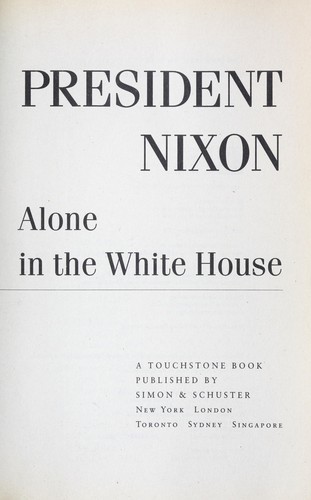
Richard Reeves · Buy on Amazon
"I wanted the list to include one book that covered the whole of the Nixon presidency. Watergate dominated Nixon’s presidency but was not the only thing. The problem is that some of the surveys don’t really capture Nixon. They tend to be dry monographs or whitewash his underside. But the Reeves book is a close narrative. “His supporters saw in him a wholesomeness that helped propel his success” Reeves tries to show you, day-by-day or month-by-month, life inside Nixon’s White House. But it also has a strong theme. You see that Nixon’s character came into play—his secrecy, his duplicity, his suspiciousness—with respect to his policymaking. In this view, Watergate doesn’t seem like an aberration, it seems like an outgrowth of tendencies that infected all of Nixon’s presidency. It’s a very good introduction to the significant political and policy developments of his presidency, but it’s also a very good introduction to his character. To make a big splash, Nixon announced the opening to China in 1971 without having done much to prepare the public. Kissinger secretly negotiated—in China—to make the announcement more dramatic and redound to their credit more. To be fair, there are elements of diplomacy that do need to be conducted with secrecy or at least discretion. But Nixon reveled in secrecy. The obsession with secrecy led him to set up the plumber’s unit, which was so called because they were supposed to stop leaks. This was an illegal White House intelligence unit that committed burglaries to find out who was leaking from the White House and how to stop it. Leaking is something other presidents have been concerned with, but none went so far as to set up a private intelligence unit in the bowels of the White House."

Bob Woodward & Carl Bernstein · Buy on Amazon
"All the President’s Men is a dramatic story of how dogged reporting exposed the Watergate scandal and kept public focus on it at a time when a lot of the press corps was ready to move on. I almost didn’t put All the President’s Men in because Nixon himself is not really a character. The book was later made into a very successful movie. It became iconic as a representation of our understanding of what investigative journalism can and should be. It’s the wonderfully written story of Bob Woodward and Carl Bernstein. They were young metro reporters who were assigned to Watergate when it was seen as a local burglary that happened to be at the Democratic Headquarters in DC. Recall, reports about Watergate didn’t deter Nixon’s reelection by a landslide in 1972. But the reporting of Woodward and Bernstein did catch the attention of senators and the judge in the trial of the burglars who were apprehended during the Watergate break-in. So, their reporting was influential and consequential."
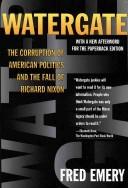
Fred Emery · Buy on Amazon
"While All the President’s Men is primarily the story of uncovering the scandal, for a basic narrative of Watergate it doesn’t get better than this book by Fred Emery. How did Watergate start and who was involved? The great New York Times journalist Anthony Lukas’s Nightmare has unsurpassable character sketches of key Watergate figures, but it dates to the early seventies. In the 1990s, Fred Emery wrote this concise, fast-paced narrative of the whole Watergate scandal. It’s the book I recommend as an intro to Watergate."

Robert Dallek · Buy on Amazon
"Kissinger was a long-time foreign policy guy who had worked for Nelson Rockefeller, among others. Nixon and Kissinger had this very crazy relationship. On the one hand, they worked closely together, but there was also a lot of acrimony and distrust. Apart from Watergate, what people tend to remember about Nixon’s presidency, and often respect—despite debate and controversy—is his foreign policy. Nixon really did care about foreign policy, more than anything else. He always wanted to be known as a peacemaker as his legacy. Get the weekly Five Books newsletter There were three big areas of his foreign policy record. One was his attempt to end the Vietnam War . He did end it, but only after several more years of American involvement, which was not what was expected when he had been elected in 1968. The second most important aspect of his foreign policy regarded the Soviet Union. Whatever you think of the long-term ramifications of détente, he did start the process. Thirdly, the opening to China. Communist China had been isolated from the family of nations and had no engagement with the United States when Nixon moved to reintegrate it. Robert Dallek is one of our leading presidential biographers. He did great books about LBJ and John F. Kennedy. Dallek decided to blend Nixon’s story with Kissinger’s story, mainly focusing on these three arenas—the Soviet Union, China, and Vietnam. There’s other stuff about the Middle East and Latin America. There are several good books on Nixon’s foreign policy, William Bundy wrote one called A Tangled Web . There are a few others I was tempted to name. Dallek’s Nixon and Kissinger is readable, enjoyable, and comprehensive."

David Greenberg · Buy on Amazon
"There was a lot that was shadowy about Nixon. For one, he was known for his five o’clock shadow. Some argue that his dark stubble was one reason he lost the 1960 televised debates to John F. Kennedy when he was first running for president. Nixon’s Shadow is about the man and what he meant to different groups of Americans—from his Southern California boosters to the liberal intellectuals who hated him. And it’s about how different groups have reinterpreted and reconceptualized Nixon. You could say it’s as much historiography as biography. Nixon was, even more than most politicians, obsessed with his image. There’s a great story about how he wanted to bring in a television advisor to tell him whether he should hold the phone with his left or right hand when photographed. Nixon emerged in an era when politicians were learning to master television and the politics of image, and when the public was coming to see politicians in terms of image. There was interesting interplay between his own obsession with image and the media’s focus on optics. Now, a great deal of our political discourse is about image, message and talking points. It feels hollow because we’re not really engaging with underlying concerns. But image is not just a distraction, it is an expression of something fundamental. Image reflects the way values surface and express themselves to the public. So, Nixon’s Shadow is both a study of Nixon, but also a study of how image has come to dominate our thinking about politics. For many decades after Nixon, people would compare contemporary scandals to those of the Nixon years. Does the Iran-Contra scandal rival Watergate? What about Bill Clinton’s relationship with a White House intern? John Dean, who was Nixon’s White House counsel, wrote a book about the George W. Bush years called Worse Than Watergate , but he later said the title was hyperbolic. Watergate was the benchmark. No scandal came close to it until Trump. Support Five Books Five Books interviews are expensive to produce. If you're enjoying this interview, please support us by donating a small amount . Although we should await the verdict of history on the Trump years, it’s safe to say that the scandals and corruption of contemporary democracy during the Trump administration match or outstrip what we call Watergate. There are certainly some similarities between the Nixon and Trump administrations, which both tried to chip away at the constitutional constraints of the presidency. After Watergate, there was some legislation that tried to reign in what was being called the “imperial presidency” in the 1970s. Fears remained of what a single individual with extreme will to power might do in the Oval Office. The echoes of Nixon’s presidency during Donald Trump’s were not a shock. I wrote a few pieces, over the Trump years, drawing on parallels between America’s 37th and 45th presidents. When Trump talked about firing his attorney general and firing Special Counsel Robert Mueller, who was investigating him, people thought about the so-called ‘Saturday Night Massacre,’ when Nixon fired the special prosecutor investigating Watergate and his attorney general quit. These echoes suggest there are recurring dangers emanating from the structure of American government which allow abuses of executive power. Although television still has an important role in presidential politics, social media using internet mobile devices has become a more dominant form of media. A lot of politicking is still image-based; but it’s also meme-based and tweet-based, as you say. So future analyses of image in our current politics will have a different starting point. Twitter was around throughout the Obama presidency, but because Obama wasn’t a Twitter kind-of-thinker he didn’t harness it much. The Twittersphere is about brevity and impulsivity. So, naturally, Donald Trump was drawn to that domain. It wasn’t so much that Trump cracked the code of Twitter, but that Trump was the type to use the unique properties of Twitter to amplify his political image. It doesn’t mean every president thereafter is going to be a Twitter president. Joe Biden isn’t. But having an intrinsic knack or affinity for a newly dominant medium does serve a president or a candidate for the presidency."
Political Spin (2009)
Scraped from fivebooks.com (2009-09-29).
Source: fivebooks.com

Plato · Buy on Amazon
"Right. The word “spin” for this phenomenon is new, and there are ways that contemporary political spin is different from what Plato wrote about. But it’s essentially the same problem that Plato and Aristotle were arguing about when they argued about rhetoric. And in the Gorgias, Plato – or really Socrates – deplores rhetoric, which is the ancient version of spin: an artful, skilled effort to persuade people in politics, as well as in other areas, of a particular conviction. Plato objects to it because it’s designed to induce a certain feeling or conviction regardless of whether that conviction is truth. So for Plato spin or rhetoric is the antithesis of philosophy. Philosophy aspires to truth and Plato, of course, wants the philosophers to run the Republic. Today we wonder, “Who is to say who has truth on their side?” And that was the position of some of the Sophists, who were relativists. So, back then this was a battle. And I think Plato’s attitude towards rhetoric has very much carried over into our own day. And I’m still trying to figure out how to characterize our current position towards spin. I think what it is is that we are superficially Platonists, but that deep down we’re Aristotelians. Aristotle took a much more practical view of rhetoric. He thought that sometimes it could be used for good ends, sometimes for bad ends: it depended on the particular rhetorician, how honest he was, and there are all of these situational variables that affected how we might regard any use of rhetoric. For Plato it was all corrupt. It was all designed to induce something other than truth. And he makes the comparison: rhetoric is to philosophy as beauty and cosmetics are to health. A doctor aims to induce health and keep you well and that will make you look good physically. The corrupted version, the superficial version that’s only concerned with outward appearances, is the branch that focuses just on cosmetics and beauty. Yes, I’m more of an Aristotelian. And, while I fully admit that there are politicians and handlers who misuse spin, who deceive us, I think that a lot of what we complain about is simply spin by the other side, spin by people we don’t agree with. I don’t think it’s the arts of persuasion – even our advanced, technologically refined arts of persuasion – that are really the problem in our politics. Partly the problem is just an ancient resistance to different viewpoints, our insistence that we can arrive at a single truth from which all political and policy decisions can flow."

Walter Lippmann · Buy on Amazon
"Lippmann is one of many early 20th-century philosophers and journalists (and Lippmann was both of course) who are trying to figure out the place of spin – or as it was called then, propaganda, publicity, public relations – in this new modern age, where we had mass democracy, mass media, a shrinking world. And by the 1920s, when Lippmann wrote this book, he had become disillusioned with certain aspects of classical democratic theory that assumed, somewhat naively, that citizens could just be fully rational and knowledgeable in making up their minds about public issues. He saw how often that had not been the case: in the case of the war, and the postwar failure to bring about the peace Wilson had hoped for. He saw how ill-informed people were. But he didn’t really blame people for being stupid or ignorant. He realized that it was impossible for any person in the modern world to know as much as he or she needed to know to weigh in intelligently on so many different issues that they had to weigh in on. And as public opinion became this governing force in our political life, and as the public became this mass public, this creates a real dilemma. And Lippmann’s solution, a watered-down version of which has sort of been adopted, was having an increasing reliance on experts to help arbitrate the situation. So that experts could sort out truth from spin, truth from falsehood, and present this to the public."

Vance Packard · Buy on Amazon
"This is a classic expose of the advertising industry from the 1950s. And what is interesting about the 20th century is that even in Lippmann’s time, in the 1920s, there are anxieties about what the rise of advertising and public relations are doing to democracy, and the degree to which people can be so easily spun or persuaded. It makes a lot of people – journalists, thinkers, ordinary citizens – worried about whether our democracy is as well-functioning as traditionally presumed. But in the 1950s and early 1960s, with television and the vogue of the “advertising man”, these fears about PR and advertising reached fever pitch. This is the era of David Ogilvy’s Confessions of an Advertising Man, it’s the era that the television show Mad Men is set in. And what Vance Packard did in this book (admittedly in a sometimes reckless and exaggerated tone) was to try to play the role of the exposer of the magician’s secrets. We take this delight in seeing him explain different techniques that advertisers use to try to get us to buy products that we didn’t think we wanted. The book was influential. And for all the ways it might have been exaggerated and a reflection of certain anxieties of that historical moment, it did help people appreciate that advertising does stimulate consumer demand. Consumer demand is not just this naturally occurring phenomenon. People don’t just buy what they need and that’s how the market works. The book is also interesting from a political point of view. Packard does have a section on the new techniques of advertising brought to bear on politics. Looking back from our own time, some of these techniques look pretty naïve and benign. Eisenhower in 1952 had what was then this fancy television advertising campaign . You watch those ads today and they’re incredibly crude and simplistic and you wonder how anyone could have charged, as Democrats did, that these ads were corrupting American politics. And Packard also focuses a lot on one of my favourite people, Richard Nixon. And by favourite I mean as an object of study, not of admiration. Packard marks Nixon as one of the key practitioners of this new modern politics that relies so heavily on advertising and public relations. And I see this as the origins of “Tricky Dick” and this concern we now have, that was exhibited most by Nixon, but we have it about all our presidents, about whether a person is authentic. This has become this kind of recurring concern in our politics and with every president – Obama, Bush, Clinton. You can go back and find these debates going on about every president. I think it has to do with what Packard identified – this kind of sense that politicians are using these tricks of the trade that are very sophisticated to present themselves as someone they’re not. And that is deeply disturbing to people’s sense of how politics, especially presidential politics, should function."

Sidney Blumenthal · Buy on Amazon
"I don’t know how old or young Sidney Blumenthal must have been when he wrote this book, it’s from 1980 and unfortunately it’s out of print. It’s a wonderful book and really one of the first books to explore the consultants who in the following decades – especially the 1980s and then into the 1990s and our own time – would come to have this immense influence on our politics. Having public relations people involved, of course, wasn’t new: PR people started to get involved in politics as early as the 1920s. In my Calvin Coolidge book, I have all this stuff about how Coolidge used Edward Bernays (who is sometimes called – inaccurately – the father of public relations) and Bruce Barton, another early PR man. And there are other spin doctors (though they weren’t called that) in successive decades. Blumenthal is writing about these early practitioners. He has a chapter on Bernays, but also about the people of his own time, people like Stuart Spencer who worked with Reagan and Pat Caddell who worked with Jimmy Carter. Blumenthal really appreciates the way power is shifting, especially in the television age, from the old machine bosses and the political experts, to the media consultants, pollsters and spin doctors, although that particular term still wasn’t used. And what he also notes, and what you start to see, especially with Reagan, is the migration of a lot of these campaign techniques into full-time governance. So that nowadays it’s sort of assumed that there’s going to be some fancy PR campaign to sell a policy or a piece of legislation that a president is throwing his weight behind. And it is assumed that the opposition is going to have their ads, and there’s going to be television wars over healthcare and so on. This is complicated because spin in the basic sense of the term has been with us for a long time – it means “a take”. To put a particular spin on something goes way back. But spin as the name of the phenomenon writ large seems to date from the late 1980s. It really gets going with the name “Spin Alley” – which is the corridor in the auditorium after the presidential debates, where the spinners are deployed on behalf of each candidate. And journalists go to Spin Alley knowing full well that what these candidates’ surrogates will tell them is going to be completely pure campaign propaganda. And yet they happily take this down and pass it on to their listeners, informing them that this is spin. But there’s a kind of admission here with Spin Alley that there is a game going on – and we’re all a part of it: candidates, surrogates, journalists, and the audience. Everyone is kind of in on it. That seems to me to mark a new moment."

D.A. Pennebaker and Chris Hegedus · Buy on Amazon
"The War Room is by the great documentarian D A Pennebaker, who also made the Bob Dylan film Don’t Look Back and directed Primary which was one of the first political documentaries about one of the primary contests in 1960 between Jack Kennedy and Hubert Humphrey. And Pennebaker couldn’t get access to Bill Clinton, though he’s in the film a little bit. But he did get access to James Carville and George Stephanopoulos, who turned out to be great characters for a film. So it’s really about the Clinton campaign through their eyes, a behind-the-scenes look at what these two key spin doctors are doing in shaping the Clinton campaign. Now, it was subject to some constraints. I wouldn’t say actual censorship; it’s not as if the Clinton campaign censored the final product. But Pennebaker didn’t have unlimited access so he, you might say inevitably, ends up showing up these guys in a mostly favourable light. Although there are a few scenes in there where they don’t come off so well… Get the weekly Five Books newsletter This film is important for a couple of reasons. One, it marks this sense of the handlers becoming newsworthy in their own right. To have this theatrical release of a documentary about two campaign consultants, is, in some ways, a watershed. It’s also important because, for me at least, the 1992 Clinton campaign was the last political romance. I suppose some people have it with Obama. But for my generation the Clinton 1992 campaign was the last moment before cynicism set in. Or rather it was a recognition of the cynicism of politics. What was appealing about Clinton was that unlike previous Democratic leaders he was not above fighting back with a “War Room.” Liberals were finally recognizing that “it’s okay to engage in politics, it’s OK to engage in spin”. It’s not (as Plato would have argued) this corrupt business to be avoided at all costs, and we have to win just by the purity of our motives. You fight back, you put out your own spin, and you trust that you can win at that game. Previously, whenever Democrats would lose, they would blame it on Lee Atwater – or more recently with Karl Rove, that sort of sensibility has returned. Of course, conservatives do the same thing, they say: “Oh Clinton was just a good talker, he was just a good communicator.” They couldn’t recognize what his popularity was based on, that he had genuinely appealing policies that people liked. But to come back to the film, Pennebaker set out to expose or illuminate the process of spin, but he winds up making this romance. And I think there is this danger in every generation: those who set out to illuminate spin find themselves in the position of contributing to it more."