Carol Dweck's Reading List
Carol Dweck is the Lewis and Virginia Eaton Professor of Psychology at Stanford University and an elected member of the American Academy of Arts & Sciences and of the National Academy of Sciences. She received the Distinguished Scientific Contribution Award from the American Psychological Association in 2011.
Open in WellRead Daily app →Mindset and Success (2018)
Scraped from fivebooks.com (2018-07-05).
Source: fivebooks.com

John Holt · Buy on Amazon
"This was a revolutionary book. In it John Holt talks about why students turn off their minds, why even students from privileged backgrounds and schools become intellectually numb. Why do they fail? His answer is because they’re afraid. They’re afraid of disappointing people. They’re afraid of being wrong. Then he asks: Why does this happen? Because people and schools sit in judgement of them. The reason I love this book is that this fear of failing, disappointing and being wrong is at the core of the “fixed mindset”. I read this book in graduate school and it really helped set me on my path. It fed my desire to discover the psychology behind vulnerability and its opposite, resilience. I read this book again many years later, and I realised that Holt had redefined intelligence itself. Intelligence for him was not about the kinds of abilities we measure or about school achievement. Intelligence for him was a set of attitudes, a way of approaching challenges. Intelligent people are those who grapple boldly with challenges, people who look at their mistakes and learn from them. He was equating intelligence with a growth mindset. Failure is important to understand because success involves repeated setbacks. If you don’t know how to welcome failure, grapple with it and ultimately overcome it, you’re not going to develop your potential to the fullest. I became fascinated with failure because I confess I had more of a fixed mindset early on. I often wondered: Why are some people able to roll more easily with the punches and not see setbacks as a statement about their abilities? When I first started my research I saw these kids – we would give them problems they couldn’t solve and they would say things like “I love a challenge” or “Mistakes are our friends”. I knew that they had a wisdom I had yet to achieve. I wanted to understand their mindset and figure out how I could bottle it and distribute it to more people."
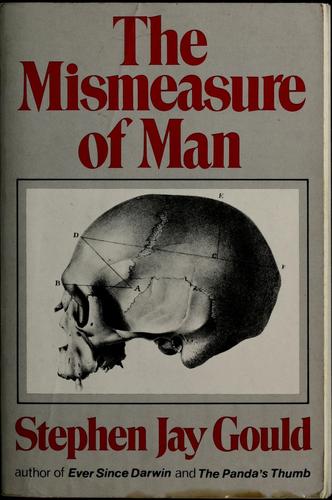
Stephen Jay Gould · 1981 · Buy on Amazon
"This extraordinary book came out as I was beginning to develop my mindset theories, and it placed the work I was doing in a larger social context. Gould describes how the passion to measure, label and categorise people swept through western culture, taking different forms from craniometry to IQ testing. It talks about the origins of this mania for measuring fixed traits and the many consequences of the hierarchies it created. I saw this firsthand. I was raised in the heyday of the IQ craze. My sixth grade teacher seated us around the room in IQ order and assigned all privileges on the basis of IQ. This book made me realise the effect it had on us and I saw that my work could play a role in bringing that era to a close. Gould also introduced me to my hero, Alfred Binet, who invented the IQ test. So why is he my hero? He developed the test to serve a truly positive social mission. He was asked by officials in the Paris public schools to create a way to identify students who weren’t profiting from the existing curriculum and to design new courses of study that could get these kids back on track. He didn’t create the test to categorise and limit children. Unfortunately, Americans thought they could use this test to measure fixed intelligence. Binet was enraged. He did not think his test measured intelligence at all, let alone fixed intelligence. But he could not stop the Americans, and we’re still grappling with the legacy of the misuse of his test. Binet’s life was devoted to creating programmes that would increase children’s intelligence, and when he saw the fruits of these programmes he said: We have increased what constitutes the intelligence of the pupil, the capacity to learn and assimilate instruction. In other words, Binet had a true growth mindset. You can imagine how painful it was for him to see people take a tool he had developed in the service of a growth mindset and use it to propagate a fixed mindset. Both Gould and I agree that rather than measure and label people, as a society we must again focus on understanding how people really function, and how we can help them function better. I wish Gould had been arguing against dead hypotheses. Fixed mindset hypotheses are alive and well. People aren’t measuring skulls anymore, but they are still looking to tests to measure qualities they believe are innate and unchangeable."

Benjamin Bloom · Buy on Amazon
"This book reports an in-depth study of 120 people across different fields – from music and art to science and sports – who reached the highest level of accomplishment. Bloom and his colleagues set out to understand how these people were able to develop their capacities so fully. Did they achieve because of some rare, innate qualities or did they achieve as a result of training and encouragement? Or both? His conclusions were surprising, to say the least. What he found was that exceptional achievement seemed to come from training and perseverance, and not really from genetic endowment. In fact, he found very little relationship between early signs of aptitude and later success. Few of the great achievers studied were considered child prodigies. Very few, even by 12 years of age, showed signs that they would be the ones who went to the top. So he asked: What commonality can you identify in their backgrounds? And he found that a key factor was the home environment. Their home environments developed a work ethic and focused on the importance of doing your best at whatever you do, across the board. Nowadays, we think we need to tell our kids that everything they do is great and that we need to make sure they aren’t struggling. But the homes that produced the really high achievers focused on work ethic and pride in doing your best. They were not pushing the child every minute or pushing them towards greatness, but they taught the child to set high standards and persevere. The other critical thing was at least a decade of commitment to increasingly complex learning. Bloom identified stages of learning that become more and more demanding, and that take more and more commitment on the part of the individual and the people surrounding him or her. Early on it’s the parents and the mentors who support the child in approaching demanding tasks, but ultimately the individual has to assume that commitment. Bloom also studied normal academic achievement and came to a radical conclusion. He said that after 40 years of intensive research on schools and learning he believed that “what any person in the world can learn, almost all persons can learn with appropriate prior and current conditions of learning”. He’s not including people with severe learning disabilities and he is acknowledging that there are people with extraordinary abilities. But other than a few percent at the top and bottom, he concluded from his research that what anyone can learn everyone can learn. That is a radical and thrilling idea. I don’t know if it’s true, but I really hope it is. This book and subsequent work by researchers like Geoffrey Cohen shows that setting high standards and mentoring people to reach those standards is critical. My work suggests this needs to be done in the context of valuing the learning process and incremental improvement, not just pushing kids for the end product. Lavishly praising kids has almost become synonymous with good parenting, and in some cases good coaching. Parents believe that if they tell their kids they’re great they are equipping them with confidence and setting them up for the good life. My research shows that the wrong kind of praise – praise for intelligence – actually makes children fragile. I’ve done some work with professional sports coaches and one of them told me recently that his biggest shock in coaching was discovering how fragile professional athletes are. They’re vulnerable because their talent has been hyped. They feel they shouldn’t make mistakes and they shouldn’t need to struggle. A few years back, a compelling magazine article came out about our research on praise. Panicked parents started forming support groups to help each other break the habit of bad praise and to help each other redefine good parenting as parenting that acknowledged, encouraged and praised kids for choosing hard tasks, working hard, overcoming obstacles and mastering new things. I tell parents to sit around the dinner table and ask, “Who’s had a fabulous struggle today?” “Who tried something really hard and learned something new?” What this does, over time, is create a new value system. Being brilliant and perfect is not a good value system. Encouraging kids to take on challenges and work hard to achieve things is better. Teach kids that when they struggle and stretch out of their comfort zone to learn new things, that’s when their brain makes new connections, that’s when they become smarter. In a fixed mindset struggling makes you feel dumb, but in a growth mindset if you visualise your brain making all these new connections it has a dramatically different feeling."

Michael Lewis · Buy on Amazon
"My choice, I can assure you, had nothing to do with Brad Pitt. I chose Moneyball because it’s a wonderful book and because it influenced my own. Moneyball was published right before I wrote Mindset and it showed that the fixed mindset was alive and well in the world of sports. You would think that the relationship between training and skill would be utterly obvious in sports, but apparently it isn’t. Many of the baseball scouts described in the book really thought they could look at superficial physical features of baseball players and know who had the potential to be a superstar. It’s the sports version of craniometry. The book is built around Billy Bean, who as a young man was identified by baseball scouts as the next megastar. However he was a dismal failure because of his fixed mindset. He thought everything should come naturally. He disdained practice and he got hung up about mistakes. Every time he struck out, which even the best players do most of the time, he had a temper tantrum. The book tells the story of how Billy Bean went from having a fixed mindset that doomed him as a baseball player, to having a growth mindset that made him one of the greatest general managers of all time. How do we go from a fixed mindset with all its fears to a growth mindset with all of its opportunities? One thing you can do is start listening to the voices in your head. Each mindset has a voice that says different things. With a fixed mindset, as you’re approaching something that’s really difficult the voice says: Watch out, maybe you’ll humiliate yourself, maybe you’ll show yourself that you’re not as smart as you think you are. But the growth mindset answers back: You’ve got to try this, you’ll never improve unless you try and everyone, after all, is a novice before they’re an expert. As someone is struggling with a task and making mistakes, a fixed mindset voice says: See, I told you. You’re making a fool of yourself. Look at these mistakes. Obviously you’re not good at it. If you were, you wouldn’t be struggling. The growth mindset replies: It’s called learning, and learning happens over time through persistence. If you want to hold your head up high you’d better keep at it. When someone with a fixed mindset sees someone who is really great at something, the voice says: That’s what talent looks like and you don’t have it. You’ll never be that person. In fact, studies show that people in a fixed mindset are not inspired by role models, they’re intimidated and demoralised by them. But the growth mindset voice must answer back: That’s what you could become. Learn more about how that person did it so you can do it too. Another important thing is to understand the neuroscience behind the growth mindset – how your brain changes with learning and how you can actually shape your brain through your thoughts and actions."
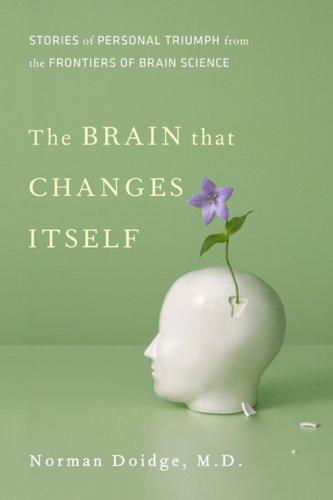
Norman Doidge · Buy on Amazon
"For me it was exciting to read this book because while my research shows a growth mindset is really good for you, this book shows that a growth mindset also has a strong basis in modern neuroscience. It illustrates, though fascinating case histories and descriptions of recent research, the amazing power of the brain to change and even to reorganise itself with practice and experience. For over 400 years, science said that the brain and its anatomy were fixed, and even in the recent past the brain was viewed as a static organ. Scientists thought we were born with a certain brain and it more or less stayed that way until it declined with age – and if the brain was injured, too bad. In other words, people who had limitations would always have those limitations. But in the last decades we have discovered neuroplasticity. This book describes how many brain circuits, even reflexes, are not hardwired the way we thought they were. It shows how a damaged brain can be reorganised. It presents research suggesting that if brain cells die they can sometimes be replaced. The book also gives many examples of people who had limitations and trained their way out of them – for example people who had had strokes decades before and used neuroplastic training to recover functions, or people who rewired their brains through their thoughts to alleviate obsessions or recover from traumas. Even more astonishingly, new research is showing that thinking and learning can even turn our genes on and off, further shaping the brain. In our interventions, we teach people that the brain is like a muscle that can grow with exercise. This book demonstrates that what we teach is not just true on a metaphorical level. The brain can in fact literally change with exercise. Get the weekly Five Books newsletter There are several ongoing studies and several completed studies showing that growth mindset interventions can raise students’ grades, achievement test scores and most important their motivation to learn. Teachers report marked changes in their students. They pay more attention in class, want more challenging work, study more, persist longer on hard tasks, turn in their homework on time, seek and learn from feedback. We are very excited about these findings. No, it’s never too late to change your mindset. Our research and that of others has produced striking changes in mindsets in adulthood. Research has even shown that when you teach adults in their sixties through eighties a growth mindset about their memory, their memory performance improves. There are so many important avenues to explore."