Attica Locke's Reading List
Texan Attica Locke’s noir novel Black Water Rising was nominated for numerous awards and long-listed for the Orange Prize. The New York Times compared it to the work of Dennis Lehane. A successful screenwriter, Locke now lives in Los Angeles.
Open in WellRead Daily app →By the Book: Attica Locke (2019)
NYT By the Book column (2019-08-29).
Source: www.nytimes.com

Nafissa Thompson-Spires · Buy on Amazon
"It's a tie between Heads of the Colored People, by Nafissa Thompson-Spires, and Heavy, by Kiese Laymon. They are both books of astounding insight, humor and language so sharp you may cut your fingers on the pages."

Kiese Laymon · Buy on Amazon
"It's a tie between Heads of the Colored People and Heavy, by Kiese Laymon. They are both books of astounding insight, humor and language so sharp you may cut your fingers on the pages."

John Steinbeck · 1939 · Buy on Amazon
"The book is exceptional and timelier than I might have expected. But my primary experience of reading it was of sharing something with someone I loved who is no longer living. It was quite moving."
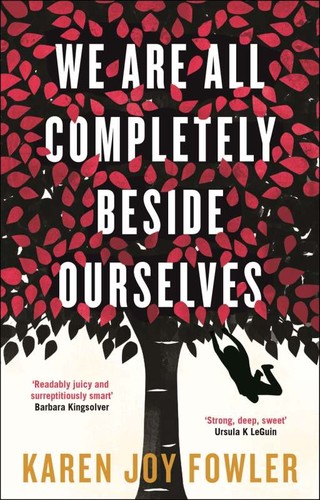
Karen Joy Fowler · 2013 · Buy on Amazon
"Karen Joy Fowler because We Are All Completely Beside Ourselves is one of the best books I've ever read in my life."

Tayari Jones · Buy on Amazon
"Tayari Jones for the breadth of love she has for her readers. And for Celestial and Roy in An American Marriage. I will never forget them."

Min Jin Lee · 2017 · Buy on Amazon
"Min Jin Lee because Pachinko knocked my socks off, and I was lucky enough to spend an evening with her at the Texas Book Festival."

Imani Perry · Buy on Amazon
"The breadth of Lorraine Hansberry's political intelligence and curiosity in Looking for Lorraine, by Imani Perry."

Ellen Raskin · Buy on Amazon
"I was absolutely mesmerized by The Westing Game, by Ellen Raskin, when I was a kid. I must have read it 15 times. It lit up my mind in a way that other books didn't."

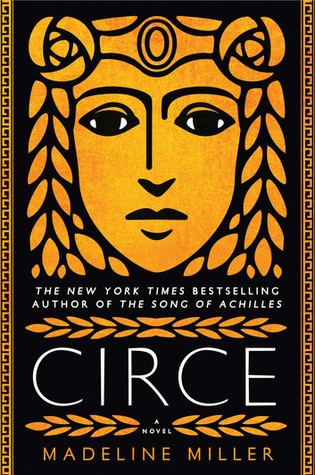
Madeline Miller · Buy on Amazon
"Circe, by Madeline Miller. I never saw a single episode of Game of Thrones, but I would watch the hell out of this female-centric mythical epic."

Jade Chang · Buy on Amazon
"Jade Chang because The Wangs vs. the World should have won a National Book Award. It is funny and touching and achingly poignant."
Texas (2011)
Scraped from fivebooks.com (2011-08-15).
Source: fivebooks.com

J California Cooper · Buy on Amazon
"To my mind, J California Cooper is one of the most under-read American authors alive. Wake of the Wind is a story about living in the wake of the Civil War and emancipation, a picture of a nation and a state in transition. It’s a beautiful sweeping story about a black family trying to navigate a new landscape – a new cultural, political and physical landscape. And about how a recently emancipated people struggled for their version of the American dream. There’s so much literature about what it was to be enslaved and not nearly enough literature about what it was for people to learn to be free, become landowners, reunite with relatives, and put a life together. It’s a point of pride for me that Juneteenth , a commemoration of emancipation celebrated among blacks, started in the state of Texas. It takes place on June 19, the day – 200-plus years ago – that the Emancipation Proclamation finally was enforced in Texas, more than two and a half years after President Lincoln signed it. Now people celebrate Juneteenth all over the country, it’s an official holiday in 39 states. It became a day in which people celebrate their freedom. It turns the concept on its head. In The Wake of the Wind it’s people in power, people behind the badge, the whites who fear their way of life is “gone with the wind” – they’re the ones who operate outside the law in this story and throughout reconstruction."

Bryan Burrough · Buy on Amazon
"There’s no way to understand the culture and politics of Texas without talking about oil. It’s just not possible. The Big Rich follows four men who used to be called “The Big Four”: Roy Cullen, HL Hunt, Clint Murchison and Sid Richardson. These are the men after whom streets are named in Texas. The book starts all the way back in 1901, when oil was first discovered in Beaumont, Texas and stretches through the second half of the 20th century. For the most part these men came from very modest backgrounds. I think one was an elementary school dropout. They were called wildcatters, a name that reflects their risk-taking and outsized personalities. Support Five Books Five Books interviews are expensive to produce. If you're enjoying this interview, please support us by donating a small amount . People who remember the TV show Dallas might think the brand of conspicuous consumption associated with it is hyperbole. When you read this book you realise it was grounded in reality. These guys had huge mansions and every toy under the sun. They were from the sticks, but ended up travelling the world and entertaining world leaders. In my opinion, yes. You cannot separate oil from the state. The oil industry fuelled the rise of Texas and even though oil production isn’t dominant, the energy industry as a whole still looms large over the state and cities like Dallas and Houston. In the world’s imagination, we’ll always be associated with oil. Plus, as The Big Rich shows, oilmen were able to insinuate themselves into state and national politics. They used their oil money to lubricate the rise of the conservative movement and help along the careers of the three Texans who landed in the White House. This book came out in 2009, before the BP oil spill. Reading it will give you a sense of how we arrived where we’ve arrived in terms of oil power in our economy and our politics."

Larry McMurtry · Buy on Amazon
"The Last Picture Show captures the adolescent energy that epitomised the state in the second half of the 20th century, when Texas was taking off in people’s imaginations. It takes place in 1951, on the eve of a real explosion in car culture and as the state is about to really come into its own. That reckless adolescent energy, which McMurtry wrote into the book, just speaks to the state at that time, in my opinion. It’s about best friends and a girl that comes between them in this little town called Thalia. At the beginning of the book, these boys have just played their last game of high-school football. It’s time for them to move but there is nowhere for them to go so they just roll around like tumbleweed. One of the things that he’s able to do is to draw a vivid picture of this dusty rural North Texas town. He does a beautiful job of juxtaposing the claustrophobia of small Texas towns with the wide-open spaces of rural Texas. When I drive through Texas now I find that the places which once might’ve been like Thalia have disappeared or been swallowed up by surrounding sprawl. They’ve thrown up a bunch of Walmarts and Starbucks. Now they look like anywhere, instead of what they once were. And those small-town theatres that McMurtry made the centrepiece of The Last Picture Show ? Everyone knows they’ve been replaced by megaplexes."

Mary Karr · Buy on Amazon
"The book starts with Mary Karr’s recollection of her mother, this tall striking woman who seemed out of place in this small, stinky, chemical-waste town. Her husband worked in a refinery. She was an artist who dreamed of a different life but was locked down by whatever was expected of her at that time in our nation’s history and in this region. There’s a lot of rage, alcohol and guns in this book. I cannot say enough about the power of Mary Carr’s voice. It’s the kind of book you almost want to read out loud. And it’s just so Texas, so specific East Texas. It’s like I grew up down the street and went to high school with her. Liars’ Club makes the reader feel like they’re sitting at a bar with somebody who is telling them about their crazy fucking life over cocktails. It’s fantastic. The book paints a picture of how oil towns feel. My dad actually worked in oil – Shell Oil in Houston. People who work at refineries form a brotherhood. I wouldn’t go so far as to compare it to the military, but almost. Dangerous work, weird hours and lots of accidents produce a culture of people who look after each other. Women at times get left behind, either because the men are out on rigs or working in the Gulf or on the night shift. This book really captures the culture that comes from oil work."

Nic Pizzolatto · Buy on Amazon
"It’s just a great piece of fiction , lean and literary. The book starts out in New Orleans and ends up in Galveston. Those cities, to me, share the same soul. A lot of people don’t realise how French Galveston is – Galveston’s town centre looks very much like the French Quarter in New Orleans and there are a lot of Creole folk there. There’s symmetry between the two cities. Get the weekly Five Books newsletter The story starts in New Orleans with this guy Roy, who works for people connected to the underworld. He finds out he may not have that long to live, he gets into trouble, there’s a big shoot-out within the first couple of chapters and he ends up on the run with this barely legal girl. They hide out in Galveston. A lot of the action takes place on the eve of Hurricane Ike. Ike devastated Galveston in 2008. So many of the places Pizzolatto wrote about aren’t there any more. It’s particularly poignant to read it while realising what the city is about to go through. Hurricanes are part of the way of life along the Gulf. I’ve spent a lot of time in Galveston because I’m a Gulf girl. Pizzolatto really captures coastal Texas to a T. As you say, Texas is big. It is geographically, ethnically and culturally diverse. I’m from Houston, which is part of East Texas. East Texas borders Louisiana. Parts of it are more like New Orleans than Arizona. East Texas is lumber country – they call it “the big thicket”. It couldn’t look more different than tumbleweed territory. It seems more southern than Waco, which is in West Texas and it’s much less western than El Paso or San Antonio, the town of the Alamo. Texas is not typically Southern or entirely Western in feel. Texas is its own thing."