Ariel Lawhon's Reading List
Ariel Lawhon is a critically acclaimed, New York Times bestselling author of historical fiction. Her books have been translated into numerous languages and have been Good Morning America Book Club, Library Reads, One Book One County, Indie Next, Costco, Amazon Spotlight, and Book of the Month Club selections. She lives outside Nashville, Tennessee.
Open in WellRead Daily app →The Best Historical Fiction Set in the 18th Century (2025)
Scraped from fivebooks.com (2025-05-28).
Source: fivebooks.com

Diana Gabaldon · Buy on Amazon
"I love this book. I have no idea how it’s interpreted in the wider world; all I know is that the first time I read it, I fell in love with a country, not just the characters. Jamie and Claire have this incredible love story, there’s time travel, there’s war—there’s a lot going on in this story. There’s even a murder mystery buried at the heart of it. But she gave me a window into a world I’d never been able to witness. I read it so long ago, but it stuck. And of course, she’s written many sequels since then. I watched a couple of the first episodes of the television show, and I loved them and thought they did a great job. But I had to step away, because I felt like I was sharing this thing that I loved—that was personal to me—with the world. When I fall in love with a book, I feel like it’s mine, like I don’t want to share it or see another person’s interpretation of it. So I haven’t seen a lot of the show, but I think that the novel is a masterwork of how to transport a reader to a previous time, and to make them care about the world those characters inhabit. I read that book decades ago, and I still think about Jamie and Claire. It’s a love story for the ages. Yes. Time travel gives us a willing suspension of disbelief. You’ve been picked up, you’ve been transported. Establishing that up front with the reader, I think, helps them overcome their hesitation, because it feels fantastical. It’s a little bit of magical realism that helps them make the transition in their minds."

Susanna Kearsley · Buy on Amazon
"Susanna Kearsley is one of my favourite authors. She’s Canadian. But she has had a lifelong fascination with Scotland, particularly the Jacobite era , and specifically one family that really existed, the Graeme family, which appears in most of her books, if not all. This particular story, The Vanished Days, is about a young widow called Lily, who is trying to claim her husband’s portion of money from the failed Darien expedition, and a man named Adam who has been sent to investigate Lily’s claims. Adam and Lily have a history, and as you move through the story, you don’t know who is telling the truth and what their motives are. As you go back and forth between their perspectives—and back and forth in time, from the late 1600s to the early 1700s—you have this mystery that builds and grows. You want to know what their relationship is, what she’s hiding, and what he’s hiding from the people who have sent him. Again, it all takes place in a beautiful, lush Scottish setting. It unfolds from the Highlands all the way down to Edinburgh, and it builds and grows with the scenery of the story. You can tell that Susanna Kearsley loves this country, its history, and its people. I’ve always felt that my job as a writer of historical fiction is to make my readers really care about the people that I’m writing about—especially because all my characters so far have been real people—and Susanna accomplishes that. She pulls you in, gives you this amazing setting and people you care about, and throws you head-first into their lives. It becomes this wonderful, immersive experience. Every time she has a new novel come out, I go and buy it and read it immediately. I’ve loved them all. Yes. I didn’t set out to write novels about real people and events. It just happened that way. My first novel was based on real people, then my publisher wanted another one. You know how it goes—you get inspired, you find ideas everywhere. So, thus far, all my characters have been real. But it’s intimidating. You want to portray their lives accurately, but you are a novelist telling a story, and no one’s life is recorded perfectly in its entirety. We have dates, events, maybe letters or autobiographies. But we don’t ever get to know what was said behind closed doors, or what people’s motives and intentions were. So we have to fill in the gaps. I like to find my stories in the gaps between the facts. And then, at the end, in the author’s note, I do my best to ‘fess up to anything that I don’t know, made up, or had to rearrange for the sake of the story. Because there does come a point, usually when I’m about 75% done with a novel, where I have to give myself permission to say: This is a novel. Some of this is real, some of it is not, but I’m telling you a story."

Laura Shepherd-Robinson · Buy on Amazon
"I have a fondness for stories about orphans, and this particular one is about a young woman whose name is Red. She’s never known her mother. Her father dies when she is very young, and she is given into the care of an English gentleman. She’s raised as a lady in Bath, England, and early in her adult years she discovers a document that describes a fortune-telling method called ‘the Square of Sevens,’ something that her father was in possession of and worked very hard to make sure she had access to. The story is Red trying to figure out what this is and how it works. She’s trying to figure out why people are trying to steal it, and her friends and loved ones begin dying around her as these elements close in. It’s a really wonderful mystery within a puzzle. Who were her parents, her mother in particular? How did her parents come to be guardians of this very specific fortune-telling device? What is she going to do with it now that she’s the caretaker of it? It’s a really fun romp, a love story, and a coming-of-age novel that gives you a really interesting look into Georgian society in England in the 1700s. When I put together my list of books, it was revelatory to me. I realised how few books are set in the 18th century, particularly 18th-century America. If I look at my shelves, I have hundreds of historical novels. Many of them are set in the 1600s, many in the 1800s. Countless books are set during World War Two. But for some reason, fewer in the 1700s, and in 1700s America, almost nothing. It was an in-between time in our history. We had the Revolutionary War , when we gained independence from England. Most of the fiction we do have is set then. But almost nothing else. It got me thinking that perhaps that’s why The Frozen River was so difficult to write. It was an odd, in-between time in American history ."

Kell Woods · Buy on Amazon
"Kell Woods is an Australian author who I’d never read before. Upon a Starlit Tide is really fun. I don’t know if I’d call it full fantasy, it’s more like magical realism . It takes place in 1750s Brittany, and it’s a delightful mash-up of the Cinderella story and The Little Mermaid. Again, it’s the story of an orphan girl who is adopted into a very wealthy family. She’s the youngest of three sisters, and their father is a shipbuilder. The story begins the morning after a terrible storm, when a sailor has been washed onto shore. Technically, he’s off-shore and she swims out to rescue him. That sets into motion this entire series of events where she begins to question who she is and where she came from, and what secrets her parents aren’t telling her. Then you have this delightful conflict with the step-sisters—or in this case, the adoptive sisters—and all their rivalries and tensions. There’s a delightful love triangle as well. You’ve got Lucinda, the young woman at the heart of the story, the sailor she’s just rescued, and then a privateer she’s been friends with for most of her life. And, of course, you have the occasional fantastical being that is just there in the story as if that is the most normal, logical thing in the world—to have a conversation with a garden fairy. I loved this book. It reminded me why fantasy novels are my comfort food. When I want to escape and just block out the world, I will pick up something like a historical fantasy. She did such a great job of blending these fairy tales. If you are going to blend genres, I actually think that historical fiction and fantasy are a perfect match. They work so well together. You already have to do all the world-building, you’re already asking your reader to step outside everything that they are familiar with. So putting them together is natural. I think that’s why Game of Thrones did so well. It’s historical and fantastical at the same time. There’s a part of us that just wants to be taken away. We want the battles, the epic love stories, the rivalries, the conflicts between good and evil. It’s a winning combination."
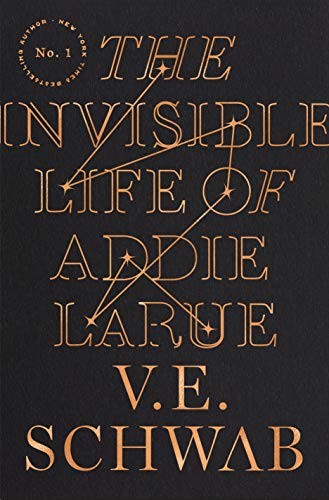
V.E. Schwab · Buy on Amazon
"It does, a little bit of magical realism. This is quite different from the others I’m recommending. It begins in 1714 France, but half the story is told in the present day, while the young woman we know as Addie LaRue tries to find her place in the world. The gist of the story is that Addie was born in the 1700s, was about to be married off in an unwilling way, but made a deal with the devil. She’s never going to die, but the price she pays is that no one will ever remember her. She takes the deal because it gets her out of a terrible situation, but then she proceeds to pay for it dearly for 300 years. So it’s a story of loneliness—who you are when you cannot form a relationship over time. It’s the story of memory—who you are when you meet the same people over and over, but it’s like they are meeting you for the first time. And then, of course, it’s a story about legacy—who you are when there’s nothing to be remembered. But my favourite parts of this story are the historical elements. We see Addie navigating 300 years in time: what she has to do to survive as she navigates an ever-changing world around her. I thought it was so clever, so creative. I think it’s one of the best premises I’ve come across in the last ten years. I loved reading it. I realised quite late that I had always loved history and learning. One of my favourite quotes is from Rudyard Kipling, that “if history were taught in the form of stories, it would never be forgotten.” A good history lesson is just a good story. So, I’ve always loved to write, I’ve always loved history, and at some point I realised that writing historical fiction allowed me to fill in the gaps in my own education. No one gets through their education having learned everything. For me, I have an ongoing opportunity to plug those holes. I’ve written about the jazz era in New York City. I got to write a novel set on the last flight of the Hindenburg. I got to write about the Romanovs during the Russian Revolution . I’ve written two novels set during World War Two , one in France and the other in the Philippines. Now I’ve written about post-Revolutionary War America, and I’m currently working in medieval Ireland. So it becomes the world’s best kind of homework, the kind I want to do."