Annie Worsley's Reading List
Annie Worsley is a writer, crofter and professor who lives in the Highlands of Scotland. She moved there with her husband over a decade ago. Together they manage their croft for traditional hay and wildlife conservation. She regularly blogs about nature and crofting. Her first nature non-fiction book, Windswept , was published in 2023.
Open in WellRead Daily app →The Scottish Highlands (2024)
Scraped from fivebooks.com (2024-03-04).
Source: fivebooks.com
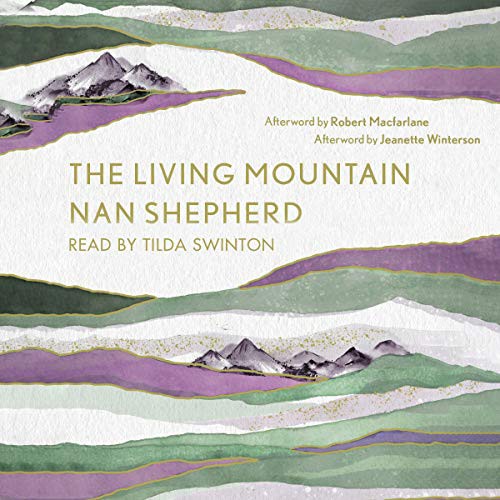
Nan Shepherd · Buy on Amazon
"Yes. It’s an astonishing book. I first came across it by accident, in a tiny bookshop not long after it was first published in the late 1970s. It’s one of the books that are now regarded to be the finest in nature and landscape writing. It takes you right into the living heart of the Cairngorm Mountains. It’s a short, slim book, but it gives us more than most major books I’ve read on mountain landscapes and particularly the Cairngorms. It is spiritual, it’s emotional. There’s so much light in it. It dazzled me. And it still does when I re-read it, which I do often. One of the key aspects is that it transformed the way many modern writers now think of high places. We don’t look at them so much as things that should be conquered with grit and determination and muscle power—mainly male muscle power—but as somewhere where we can learn as much as anything else, about landscape and nature, about ourselves. That’s right. She uses the most interesting colour descriptors. There’s a section where she talks about the colour blue that reminds me of Rebecca Solnit’s essay on the blue of faraway places . Just thinking about it brings up goosebumps. I think it’s that sense of spiritual acuity, which a lot of writers don’t pick up on or are not able to express. But Nan Shepherd did, and that’s why it’s a book that so many people love. It gives us a completely different way of looking at mountains, beyond the tourist thinking, ‘goodness, look at that,’ or the mountaineer trying to bag all those Munros, they’ve got to climb this or that face of Ben Nevis with ropes in winter, whatever it is. Here she is, going solo in winter to the top of the Cairngorm plateau and describing the utter bone-flaying beauty of those high places. It’s a wonderful book."

Adam Nicolson · Buy on Amazon
"It was given to me when it was first published in paperback around 2002. It’s about the Shiant Isles, on the eastern edge of the Outer Hebrides. I can see them from my house on a good day. Adam’s father bought the Shiants maybe 80 years ago. When Nicolson was 21, his father gave them to him as a gift. And he began a love affair with these islands. The book is the result of all those years of loving these islands. I didn’t imagine for a moment, when I read the book all those years ago, that I’d end up living opposite them. The books is filled with the most beautiful and elegant prose. It has geography, geology, history, ecology. It talks about the weather, the sea, his own relationship with the land. It’s beautiful. But I chose it not just because it’s a beautifully written book, but because it gives us a little sliver of the Highlands. The islands are not big, but they are the Highlands encapsulated. The story of the Highlands —the geology, maritime history, Clearances, agricultural history—can be found there. There were many trading routes undertaken by sea, from the Mediterranean around the coasts to Shetland and the far north beyond. The passed up and down through the islands. That makes you look at Scottish history in a slightly different way: the real story might lie in the edges, along those sea routes and coast roads. These edgelands as a kind of heartland. There are a lot of treasures in the island landscapes."

John Lister-Kaye · Buy on Amazon
"Again, it’s another book that gives us the story of the Highlands through a small sliver of it. John has an estate that he bought from the Highland Council. He’s written many books, but Song of the Rolling Earth tells the story of how he bought Aigas, set up a field studies centre, and what it taught him about Scottish history, natural history, geography, archaeology. He tackles aspects of Scottish history like the Highland Clearances, the Jacobite Uprisings, and so forth. But he doesn’t get wrapped up in it. He has careful and beautifully observed descriptions of nature and wildlife and his daily routine—how, as he walked through the estate, he learned more about nature, wildlife, and the more enriching these walks became. It’s a lesson to us all about walking in the same places over and over. This happened to me when I was ill. I could only manage short walks, but they became more intense. One of the interesting things is that he was talking about rewilding long before ‘rewilding’ ever became a term. This is a word bandied around a lot now, and is controversial in some areas. Lister Kaye talks about the ‘retreeing’ of the riverbanks and the ‘re-treeing’ of a little island that appears after a storm flood in the river. After a few years, it starts to grow birch saplings. In actual fact it’s rewilding, and it shows he’s astute enough and wise enough to present this as something we should all be thinking about. It’s another book that shows how we are all interconnected: wildlife, people, landscape, climate. There are threads and entanglements between the elemental and the human. He’s one of the few writers who can articulate this, and he expresses his love for the Highlands from start to finish."

Andrew Greig · Buy on Amazon
"In the book he takes his two friends on this search for a loch. Just before Norman MacCaig died, he told Greig he should go and see this loch and do some fishing there. Greig didn’t realise that was the last time he was going to see MacCaig. So he takes these two pals, two brothers, on a search to find the Loch of the Green Corrie, although it turns out it’s not quite called that. And in doing so he tells us about the landscape he’s walking through, and again, here’s a writer who discusses entanglement and interconnectedness with the weather, with geology, with nature. And he talks with great passion about the losses he sees in it— and at first it quite shocks him, this depopulated landscape, which he explains is ruined by overgrazing, by human clearances. But then he falls back in love with it, and says, no: this is the wild bleak landscape we should all be looking for, this extreme and beautiful human landscape. And he understands what Norman MacCaig was all about. This brings us full circle, back to Nan Shepherd. Because he says to his pals, Look, you’ve got to read The Living Mountain . Greig too writes about the colour and the texture—of the rock, of the vegetation, of the water. He talks about the colour and texture of the light. That’s one of the most astonishing things about the Highlands: the light we are blessed with up here, even on the wildest, wickedest days. So yes, this book brings us full circle. It’s a beautiful read, and all about that relationship between people and place. In fact, they are all beautifully accessible books: books that will grab you and lead you by the heart into the living beating heart of the Highlands. Each in their own way tells us a little bit more about the Highlands and the people of the Highlands, too."