Andrew Lees's Reading List
Andrew Lees is a Professor of Neurology at the National Hospital, London. He is the recipient of numerous awards including the American Academy of Neurology Life Time Achievement Award, the Association of British Neurologist’s Medal, the Dingebauer Prize for outstanding research and the Gowers Medal. He is one of the three most highly cited Parkinson’s disease researchers in the world. He is the author of several books, including Ray of Hope , runner-up in the William Hill Sports Book of the Year, and The Silent Plague.
Open in WellRead Daily app →Neuroscience as a Career (2018)
Scraped from fivebooks.com (2018-02-01).
Source: fivebooks.com

James Parkinson · Buy on Amazon
"This is the first full medical description of Parkinson’s disease. James Parkinson was what was called a ‘surgeon apothecary,’ which is a bit like a GP today—except that apothecaries could only dispense medicine, not prescribe it. There were no neurologists in Parkinson’s day, only physicians. During his lifetime, Parkinson was better known for his contributions to palaeontology than for his medical writings. He was also a social reformer and sympathiser of the French Revolution. If he had been alive today he would have been a dedicated supporter of Jeremy Corbyn. I always like to think that his interest in the natural world, which is how I also came into medicine, helped him to become a good doctor—to record very accurately and observe very precisely what he was seeing. He demonstrated that fully established neurological syndromes can be recognised without the need for a neurological examination—let alone a brain scan. “Neurology has a false reputation of being a very difficult area of medicine requiring high intelligence. That’s a myth. But it does take many years of apprenticeship to become a competent neurologist” One of the things I learned from reading and re-reading this book is how to write a good abstract (or foreword). Parkinson manages to encapsulate in two sentences his novel findings. The modesty with which his landmark findings were described is also wonderfully refreshing in this era of hype and spin in medical research. His sole purpose for writing up his findings was to encourage the eminent anatomists of the day to determine the lesion in the brain responsible for the shaking palsy in the hope that this would lead to remedial treatment. I learnt that medical taxonomy is not carved in stone and that as medical knowledge increases it is bound to change. All neuroscientists in training should read this book. It reminds you that to be a neuroscientist you need to be a ‘noticer.’"

Jonathan Taylor · Buy on Amazon
"This book is about 10 years old now. Pathographies written by patients can be highly instructive for neuroscientists to read. This book is written by the son of the patient and somebody who, by his own admission, found looking after his father very difficult. Taylor’s father, in the course of his Parkinson’s, develops Capgras syndrome, a disorder of perception in which he often misinterprets his son either for a hated former colleague or Humphrey Bogart, whom he believes is having an affair with his wife. Faced with his father’s progressive amnesia, Taylor comes to understand that his father had never had a joined up memory of his early life. He had simply told his children that he’d been adopted and moved around a great deal. There were many dark secrets. “When I hold a brain donated for Parkinson’s research in my hands, I go back and carefully read the case notes to try to imagine a life.” This leads Jonathan to go back in time, on a quest to try to understand who his father really was before he got ill. Through some sleuthing he comes to a better understanding of his father and himself. One of the techniques he used, which I loved, was that after his father’s death he managed to get hold of his father’s medical case notes and started to read them by travelling backwards to wellness. After I’d read Taylor’s book, I started to read the case notes of my patients backwards as well as the usual forwards. When I hold a brain donated for Parkinson’s research in my hands, I go back and carefully read the case notes to try to imagine a life. Taylor’s father was unlucky in that he had dementia as well. The majority of people living with Parkinson’s disease in their sixties and seventies do not have severe cognitive impairment. Taylor’s book is a sad but very human story that should be read by all aspiring neuroscientists."

Henry Walter Bates · Buy on Amazon
"In my own book, Mentored by a Madman: The William Burroughs Experiment , I talk much more about Richard Spruce, who was a friend and colleague of Bates. Both men spent more than a decade in the Amazon basin collecting flora and fauna. I read The Naturalist on the River Amazons when I was in the sixth form at school and it has been a constant companion. In quiet moments I go back to it and read ten pages or so, following Bates on his long journey downriver. He describes a place of great beauty and splendour, a place to escape to. When I came down to London from school for my interview at the Royal London Hospital, I talked about botany for about twenty minutes. One of my inquisitors asked me how my considerable interest in botany could help me to be a good doctor. At the time, I talked about plants as medicines—and I’m sure there are still many natural remedies waiting to be discovered. But what I later realized is that botany had helped me not only to observe very carefully, but to record accurately and meticulously what I had seen. I see myself as a fieldworker not as an inductive scientist. The hospital ward is my Amazon jungle and it is where I hunt down new diseases."

Arthur Conan Doyle · Buy on Amazon
"Dr Gooddy, the teacher I mentioned earlier—who recommended I read Proust—also recommended we read Arthur Conan Doyle. The plots are quite basic compared with modern detective fiction, but each generation rediscovers Holmes for themselves. In this very troubled world and uncertain future, we are all attracted to this character who appears to solve crime with rational logic. When I was young, I never wanted to be like Sherlock Holmes —I found him quite an unpleasant character. He treated his best friend Dr Watson very badly. I wanted to be more like Watson, a successful doctor. The method Holmes used to solve his crimes bears close similarities to that used in clinical practice to diagnose neurological disease. Even with fancy scans and genetics and so on, the problem-solving and crime-solving methods are really quite similar. It is often claimed that Holmes is the epitome of the rational, cold-blooded scientist but, in fact, most of his crimes are solved by backing his hunches and a fair amount of guesswork. His sleuthing in fact involved a process of elimination and of course knowing where to look. He was an expert in his field. “Holmes is still the alter ego of many neurologists” What you can learn from Sherlock Holmes are the rewards of paying great attention to small details, things that others may have considered irrelevant red-herrings. Then there is the importance of negatives such as ‘the curious incident of the dog in the night-time’: it was the fact the dog didn’t bark that allowed Holmes to solve the crime. Of course reaching the right diagnosis in neurology is only the beginning. What excites me is the neurology that is invisible on a brain scan. This is where careful history taking and medical sleuthing comes into its own. Doyle graduated from Edinburgh Medical School but struggled to make a decent living as a doctor. In those days, there wasn’t a National Health Service so, to make a living, doctors needed to have a private practice. Doyle tried to set up in Harley Street as an eye specialist but attracted very few patients. Fortunately, his stories were starting to get picked up by The Strand Magazine at this time and he was soon able to give up medicine completely and focus on his writing. Doyle always claimed that he had based Holmes’s technique on the diagnostic approach of one of his teachers, Joseph Bell, who was a surgeon and able, through careful observation, to make inspired spot-diagnoses in clinic. But I think the level of sophistication of Holmes’s method suggests that he may also have been influenced by the early neurologists who were just developing this speciality at the time. I have a feeling that he may have attended some of the clinical demonstrations by the great neurologist William Gowers, at the hospital where I now work in Queen Square. As part of the diagnostic process one of the things Holmes used—and we also use a lot to gain confidence—is ‘body watching’. You make a spot-diagnosis almost as soon as a patient walks into the consulting room. A little bit of showmanship—you mustn’t overdo it—can give your patient confidence in your ability. Authority and trust are essential to be a good doctor. Holmes is still the alter ego of many neurologists."
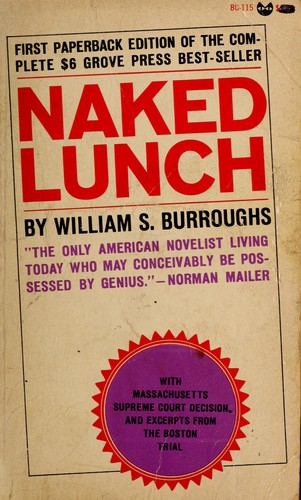
William S. Burroughs · Buy on Amazon
"William Burroughs was a leading figure of the Beat Generation along with Jack Kerouac, Allen Ginsburg, Neal Cassidy and all those people from Columbia University. I first encountered him on Peter Blake’s iconic record sleeve for the Beatles’ Sgt. Pepper album in 1967. Allen Ginsberg likened Burroughs to Sherlock Holmes because of his objective scientific approach to writing and his use of heroin and cocaine to cure ennui. Like Holmes, Burroughs was a solitary lonely figure. He was known for his icy silences and not infrequently retreated to his room for long periods. Burroughs and Holmes also shared a clairvoyance that allowed them to see things denied to others. Burroughs dressed like an English gentleman throughout his life and, like Holmes, carried a firearm. Both would probably be considered creative sociopaths today The character Doc Benway—the antithesis of good doctoring—in Burroughs’s best-known book Naked Lunch made me laugh. He was a parody of some of my own surgical teachers at the London Hospital and was partly based on Burroughs’s extensive personal interactions with physicians during his troubled life. I learned not to do the things Doc Benway did. Now I know more about Burroughs I’ve come to see that his writing was very modern. He studied English at Harvard and did postgraduate studies at Columbia in anthropology. As a troubled young man he became interested in psychology and even expressed an interest in becoming a psychiatrist. He enrolled as a medical student at the University in Vienna but dropped out after a term, shortly before World War II broke out. James Grauerholz, who wrote the foreword to my book, told me that many of his close friends breathed a sigh of relief when that happened. He would have made a terrible doctor. Support Five Books Five Books interviews are expensive to produce. If you're enjoying this interview, please support us by donating a small amount . The other aspect of my job is research. My generation of doctors were encouraged to combine research with good clinical medicine. I can’t envisage doing medicine for 30 years without trying to find cures and better treatments. It is in my research that Burroughs, as my lifelong invisible mentor, has helped me I learnt from Burroughs’s writing about control systems and institutional rigidity and that if I wanted to be a good researcher there would be occasions where I would have to challenge authority. It has become more and more difficult for younger doctors to stick their heads above the parapet—it’s quite a punitive system that we are working in now. Since Harold Shipman, we are not trusted to be professional or to have a calling for medicine. Everything is more and more regulated and controlled. Society has become so risk averse. Self-experimentation, of the sort that Burroughs inspired me to do, is very difficult because ethics committees think that if you take the medicine yourself your observations are meaningless and subjective. “Several of my research discoveries stemmed directly from Burroughs’s writing.” I now look upon the 1980s, when I did my most important research, as a period of immense academic freedom. We were encouraged to try medicines. It was considered the most ethical thing to do—to be the first to test the medicines you are going to prescribe to your patients. In my book I explain how, after reading Naked Lunch, Burroughs and I drew up a Faustian pact in which, provided I agreed to pay close attention to what he had to say about art and science, he would allow me to complete my medical studies and go on to explore the diseases of the brain. He warned me that universities could stifle creativity and that multinational pharmaceutical companies always put profit before patients. He taught me to question everything and encouraged me to make science more magical. Several of my research discoveries stemmed directly from Burroughs’s writing. For example, apomorphine. I used apomorphine, a drug which Burroughs was treated successfully with for heroin addiction, in my research and actually got it licensed 20 years ago as a treatment for Parkinson’s. It remains in the NICE guidelines for the treatment of Parkinson’s disease today. The idea to go back and repurpose this old and forgotten drug came directly from my reading of Naked Lunch. I’ve also done research on the Dream Machine – a kinetic light sculpture or strobe device that Burroughs and the artist Brion Gysin created in Paris in the early 1960s. It’s basically a cone light on a 78rpm turntable with a rotating cylinder around it. The idea is that if you stare at it you can have visions without drugs. We’ve used this technique to examine the visual hallucinations that people with Parkinson’s experience. We’ve incorporated Burroughs’s Dream Machine into modern functional magnetic-resonance imaging (fMRI) techniques. And he goes on inspiring some of my ideas for research. In later life, Burroughs became a performing artist and endeared himself to the post-punk generation, which is partly why he has lasted better than Kerouac, Ginsburg and some of the others. The music industry has given him a longer lease of life. I’m amazed how much women like his writing too—people like Laurie Anderson and Patti Smith—because he was a dreadful misogynist. Neurology is still a relatively small specialism in the UK but, like the rest of medicine, it is no longer male-dominated. It was one of the last bastions of male chauvinism, quite frankly, but happily that has changed now. What perhaps hasn’t changed is the superficial perception that while women are very good doctors, they aren’t very good at research. This, I must emphasize, isn’t true. I do not believe it for a minute—but the idea lingers. There are still more male neurologists than women but every year the numbers are getting closer to parity and in some European countries there are now considerably more female neurologists than males. To become a consultant neurologist today should not be any greater obstacle for a woman than for a man. Neurology has a false reputation of being a very difficult area of medicine requiring high intelligence. That’s a myth. But it does take many years of apprenticeship to become a competent neurologist. In my case, it took nine years of training after qualification. Follow your heart is the best advice I can give anyone considering a career in neuroscience—and stick to it even if feelings of disillusionment or inadequacy occur. Many of the greatest medical breakthroughs of the last hundred years have depended, to a considerable extent, on serendipity, the discovery of something that was not deliberately sought. Or, to put it another way: looking in a haystack for a needle and finding the farmer’s daughter. This is quite different from blind luck, or the testing of a hypothesis by experiment. My best research has been driven by curiosity stemming from clinical observations or patient discoveries. I think there is an important place for the maverick in medicine. There is also a need for patients and researchers to work much more closely together in designing trials. I also think there is a place for self-experimentation. I am not advocating a retreat into irrationality or magical thinking, but a less narrow-minded attitude to what constitutes ‘good science.’ Regulation of clinical research is now extraordinarily bureaucratic, expensive and confusing—and it’s getting worse. This needs to change and change quickly. “Now, of course, new drugs for psychiatry have almost dried up—for almost twenty years. There haven’t been any really effective new drugs since Prozac and, of course, Prozac itself is very controversial.” William Burroughs was famous for his drug use. I was always frightened to take drugs in the 1960s, especially LSD. I thought I’d go mad. Talking to people nowadays it seems that there is a great deal of experimentation with psychedelics again and people exploring it on a personal basis. Silicon Valley seems to be full of executives heading into the rainforest to sip tea. I have had one experience with a shaman in quite a reasonable setting in the jungle. It helped me to open up. One of the dangers of being a professor is that you become more and more narrow in your vision and this can become destructive. I was running out of ideas. This experience helped me. People always talk about what they see, when taking these drugs, the hallucinations, and I saw some of these things—coloured lights. But for me it was more the effect on my attitude that changed afterwards. At readings I’ve been asked if I think it is responsible for me to admit to having tried this drug. These comments have made me think very hard about what I’ve written. I don’t think I’ll be struck off the register for writing about my experiences. I’m not advocating other people take it. If I’d written it twenty years ago it would have been even more controversial. Now, of course, new drugs for psychiatry have almost dried up—for almost twenty years. There haven’t been any really effective new drugs since Prozac and, of course, Prozac itself is very controversial. This is partly because the pharmaceutical industry has become frightened of this area—the dangers of these drugs, the possibility that they can be hijacked and become street drugs. It has become a difficult area to work in. So this is partly why the moratorium on psychedelic drug research has been lifted. I’m sure you are aware of psilocybin and LSD being used in the treatment of depression, terminal care and post-traumatic stress disorder. And there is some interest in them to treat neurodegenerative disease. There is evidence to suggest that LSD might have beneficial changes on the diseased brain in Alzheimer’s. So, I think we will see more headlines about psychedelic drug studies. Hopefully we won’t make the same mistakes that were made in the 1960s when the studies where too subjective and it was all too gung ho. I hope future studies will be more carefully focussed. In fact, by a remarkable coincidence, I discovered that one of the components of ayahuasca—the substance I tried in the rainforest—was briefly used in the 1930s to treat Parkinson’s disease. If you look at the details in some of these old papers, the results look quite promising. The resurrection of old drugs is one of my ‘things’ after the success we had with apomorphine. We are now attempting a programme looking at one of the two plant components found in ayahuasca as a treatment for Parkinson’s. There are fashions in medical research. This is usually driven by scientific discovery but there is a great danger in putting all one’s eggs in one basket. My success in resurrecting apomorphine as a treatment for Parkinson’s disease made me realise that there are likely to be many more molecules that have been put to one side and forgotten on the shelves of the medical departments of pharmaceutical companies or in departments of medicinal chemistry which may have great potential. The repurposing of drugs licensed for one indication and found to have benefits for other conditions is another fertile new route of medication discovery."