Andrew Briggs's Reading List
Andrew Briggs is Professor of Nanomaterials in the Department of Materials at the University of Oxford. He has over 540 publications, the majority in internationally refereed journals, with over 7,000 citations. Briggs is a professorial fellow of St Anne’s College, emeritus fellow of Wolfson College and a Fellow of the Institute of Physics. He also has a degree in Theology from Cambridge University.
Open in WellRead Daily app →Nature of Reality (2016)
Scraped from fivebooks.com (2016-08-18).
Source: fivebooks.com

P D James · Buy on Amazon
"I’ve started and finished with books that are literary thought experiments. In science, you can learn a lot from a well-conceived thought experiment. In German, it’s called ‘gedankenexperiment,’ and we often use that word, even in English, because it’s such an important way of thinking. It was important in the development of quantum theory. The gedankenexperiment that PD James does here, is to say: ‘Suppose that nobody could have any children anymore. How then would we live? What would we live for? And what would our purpose be?’ She explores how different people would respond, and how different people would live in that situation. The people born in the last generation, called the Omega children, run amuck. Like in the last book we’ll look at, there are two people closely related who have different fortunes. In this case they’re cousins. There’s the narrator, who is an Oxford academic and his cousin, who ends up as the warden of the whole of England. It’s set in Oxford and book opens with the university trying to decide whether or not to reface the crumbling Sheldonian, and you think, ‘If there’s not going to be anyone to see it, why bother?’ And then you think of all the other things that are important to you, and you say, ‘Well, if there’s not going to be any future, why bother with those?’ It’s a very profound study. The cousin, whose name is Xan, wants to keep everything orderly, so that society keeps going until the very end. That’s his purpose. The Oxford academic finds a purpose in helping a group of five people who are trying to alleviate some of the immediate problems. Then, in part two of the book, he finds a deeper purpose. I mustn’t spoil the story. But the real value of the book, for me, is of forcing people to face this question. What is your purpose? What are you living for? And I think this thought experiment does it in a very remarkable way."

Andrew Steane · Buy on Amazon
"This is by a colleague here in Oxford. I’m writing my next book jointly with him and a philosopher at Princeton University. I first came to know about Andrew because he made a brilliant, brilliant theoretical breakthrough that changed the feasibility of quantum computing. For a long time, people thought that although quantum computing was a lovely concept, it would never be practical because errors would creep in and kill it off. There were very good reasons, in quantum theory, for not being able to do error correction in the way you can in a classical computer — namely that you can’t copy quantum information, you can’t have a quantum photocopier in the way you can for ordinary information. Andrew thought of a whole new way of overcoming that, which changed the field and made it feasible to have error correction. I hugely admire him, as a very distinguished scientist. And computers are like people: if you can’t cope with the defects you won’t get very far. “Computers are like people: if you can’t cope with the defects you won’t get very far” His book is very personal. There’s a chapter in the book that’s just autobiographical, it talks about his own spiritual journey. There’s another chapter where’s he made up a story — to bring alive something of the distinctiveness of humans. As a top physical scientist, what he’s doing is, first of all, showing that there’s much more to what it means to be a human than just the physical sciences. There are values, and meaning and purpose — in his case, through coming, in student days, to a relationship with God. Then what he does is unfolds that in a very thoughtful way. There’s no table banging. There is no assertion that he can’t substantiate. He’s very honest about his degrees of certainty about the different things he’s talking about and where he might be wrong and what the other possibilities are — but why he’s come to the conclusion he’s come to. One thing he wants to show is that science is an activity that is in the bloodstream of a reasonable faith. He does it with very little reference to other people’s thinking. He is extremely well read—he cites 13 other works in his bibliography—but he carries you along by the clarity of his own thinking, in a way that I find refreshing and invigorating. The scene in America is very different from the scene in Britain. There’s a very different history. In Britain we’ve got a very rich heritage of distinguished scientists who are people of strong Christian faith, and indeed of very distinguished churchmen, with a strong interest in science. One can give example after example of that. Therefore—and this is a theme running through the next two books—this enfolding of science as a religious activity and as a very strong and natural religious activity, is something that we bring out in our book, The Penultimate Curiosity , and it’s certainly something that Andrew describes here. “In Britain we’ve got a very rich heritage of distinguished scientists who are people of strong Christian faith” That’s not to say that all my colleagues are Christians or believe in God. Of course not — though the best surveys that have been done seem to indicate that a majority of elite scientists would describe themselves as spiritual persons. In science, there is a genuine pleasure from getting an experiment to work or developing a new technology, or solving a theoretical problem. That can be experienced by people whether or not they have a relationship with God. But I think what Andrew would say, and what I would say, is that that pleasure is hugely enriched when it’s in the context of a relationship with the Creator, whose work you’re studying."

Peter Harrison · Buy on Amazon
"Book number three is by one of the most distinguished historians of science and religion alive, to use a classification that this book rejects, at least for most of history. And I share the rejection. Peter Harrison starts with (another) striking thought experiment, if you like. He says if a historian were to contend that he or she had discovered evidence of a hitherto unknown war that had broken out in the year 1600 between Israel and Egypt, what would your response be? Exactly. In the 1600s, those territories didn’t exist with those designations. Of course the bits of land, the hills, the mountains existed, the topography existed, but not with those labels. What he is showing, in an immensely scholarly way, is that these labels of science and religion—although nowadays we think we know what they mean—are rather recent and no more applicable to most of intellectual and cultural history than the labels of Israel and Egypt would have been to those territories in 1600. And therefore a lot of misunderstandings arise because people are applying incorrect categories. “The idea of religion as a distinct body of knowledge is a surprisingly recent one” They’re arguing about distinctions—in some cases they’re alleging warfare—between things they’re wrongly categorising. In fact, if you want to push it a bit further you could say that both those bits of land were part of a single Empire and much of the discussion about things that we would now think of as religious and things we would now think of as scientific, were part of a single territory. In so far as words like religion and science—or their Latin equivalent—were in use in the Middle Ages, they were describing virtues. Sometimes now, in the popular mind, science is thought of as a body of knowledge. Probably among practising scientists it’s thought of as a way of arriving at a description of reality. Similarly, concepts like religion are sometimes used to describe a body of knowledge, and sometimes they’re used to describe a way of relating to God, and worshipping him. The idea of religion as a distinct body of knowledge is a surprisingly recent one, insofar as you can talk about when the change happened. I suppose it happened in the 17th century, to some extent here in Oxford. Similarly for science. But really these are rather weak ways of describing what was a process and, in many cases, a very integrated process. “Isaac Newton wrote more about religion than he ever wrote about science” So what Peter Harrison is saying is that first of all, if you’re trying to understand these alleged conflicts between science and religion, most of what you need to do is not so much look at the details but to realize you’re just applying inappropriate categories. Once you’ve cleared that misunderstanding away, then you can begin to look at the details . Absolutely. He saw his scientific pursuit as very strongly religiously motivated. Like most of us, Isaac Newton was a complex person, only more so. But he wrote more about religion than he ever wrote about science. It’s for his science that we now remember him because it was brilliant. But it’s true of him and it’s true of some of the greats that we know about, like Robert Boyle. Every school child learns Boyle’s law of gases. It’s true of Robert Grosseteste who is not so well known. He was probably the first to serve as chancellor at Oxford University, before becoming Bishop of Lincoln. He saw all his life’s work as motivated by his faith in God and made some very important advances, some of them specific—such as in optics, why a rainbow is coloured—and some of them about methodology. He was the first to formulate the idea of a control experiment, which is now standard in many branches of science. It was William Whewell, master of Trinity College, Cambridge, who coined the term. If you read the book God’s Philosophers , which is not one of my five, the subtitle is ‘How the Medieval World Lay the Foundations of Modern Science’; it’s a very good read. If I were allowed six books I might have included that one. ‘ Scientia ’ did exist as a word before then. It meant the character virtue of being an inquiring person, of seeking knowledge, of being curious. Scientia was not only a personal quality but one with a significant moral component. In the 17th century, Rene Descartes defines scientia as the skill to solve every problem. Religio , in the Middle Ages, was a virtue. It referred to internal acts of devotion and prayer. This interior dimension is more important than any outward expression—that’s according to Aquinas, in the 13th century. There is no sense in which religio refers to systems of proposition of beliefs, and no sense of different religions. They’re inner virtues."

Tom McLeish · Buy on Amazon
"This is another book by an eminent and distinguished scientist. Tom McLeish is professor of soft matter physics at the University of Durham. This is a book which, in many ways, is doing a similar job to Andrew Steane’s, but with a rather different approach. When he was thinking about theology and science, he was struggling with what you would say about theology and struggling with what you could say about science. Then he realised that the problem was not with either of those words, but with the word ‘and.’ He uses the metaphor of a tennis court. You’ve got the two halves of the tennis court and you could label one of them theology and the other one science and you could imagine two rather inexpert players trying to knock the ball over at each other and the coach is standing there at the side, trying to get each of them to return the ball when they hit it. Most of the time, the ball either goes out of the court or into the net. The problem is this net. He wants to remove it. He wants to say it’s all one court, it’s all one sphere of activity, it’s all one sphere of endeavour. Although you mustn’t pretend they’re the same—there are distinctions in the kinds of questions you ask, and the methodologies you use for addressing those questions—nevertheless, he wants to remove the net. And he wants to replace the ‘and’ with ‘of.’ He wants to talk about a theology of science. There’s a chapter in the book called the theology of science. You get the best sense of that from the chapter that precedes it, which is his reflections on the Book of Job. The book is worth it for that chapter alone. Job would have been a fantastic scientist. He didn’t have the mathematics that we have, he didn’t have the instruments we have, but out of the whirlwind God asks him well over 100 different questions about the material world—mainly the animal world, but not only. They’re all fabulous questions. In the context of these big ultimate questions Job is a very rich book. Tom McLeish discusses that very question in that chapter. He disagrees with probably the majority of commentators, who would say that what God says to Job out of the whirlwind does not answer Job’s questions. Tom McLeish faces that square on, he even disagrees with one of the leading scholars in the field, David Clines. But it’s not a one sentence, knockdown answer. And I don’t think these ultimate questions lend themselves to that. If you’re asking for an answer to the question, ‘Why do innocent people suffer?’ if someone said, ‘I can give you a one sentence, complete answer to that question,’ I would treat it with great scepticism. I don’t think it’s the sort of question that lends itself to a simple, formulaic answer. In our book we use the metaphor of a ‘slipstream’, which also occurs in a peloton in a cycle race like the Tour de France. One of the things that can occasionally happen—and it’s distressing and painful when it does—is you get what they call a ‘chute’—the French for a fall. To maximise the benefit of the slipstream of the rider in front, you try and close the gap up as much as possible, sometimes within a few centimetres, but then the wheels can touch. You can use that metaphor for what sometimes happened, that in the desire of science to maximise the benefit from the slipstream of ultimate questions, the temptation to get too close can be very strong. If the wheels do touch—by which I mean trying to make science answer religious questions or vice versa—then you can get a chute in which everyone falls over. Most of these chutes got rather exaggerated and became legendary with time. One of them would have been in Greece, when Socrates was made to drink hemlock. He was accused of denying the validity of the Greek gods. He was accused of saying the sun was not a God, but a fiery ball, to which his reply was: ‘I think you’re confusing me with Anaxagoras, because that is what he said.’ In fact, Anaxagoras’s books were on sale in the Theatre of Dionysius at the time. But that was not enough to save Socrates from compulsory suicide. “Socrates was accused of saying the sun was not a God, but a fiery ball. His reply was: ‘I think you’re confusing me with Anaxagoras’” Another example would be the Galileo case. Over time the story has become distorted and exaggerated. Galileo was another a complex character. He was quite capable of being tactless and he got into trouble as much for his tactlessness as for his science. Although he was put on trial, he was never sent to jail. The issue was more about whether or not Galileo was allowed to teach these things. Within 12 years, here in Oxford, John Wilkins, the warden of Wadham College, published a book on cosmology and the title page had Copernicus and Galileo as his two heroes, with Kepler peeping over Galileo’s shoulder. So within 12 years a strong churchman and scholar who formed an experimental club here in Oxford has written a book advocating the Copernican model."
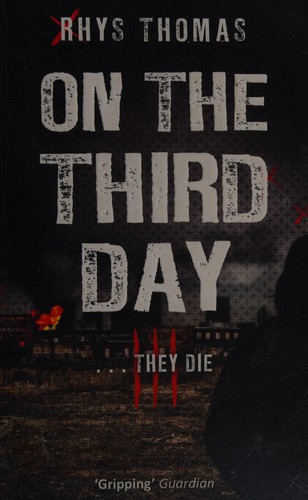
Piers Paul Read · Buy on Amazon
"It’s called On the Third Day and it’s by Piers Paul Reid. It’s another thought experiment: What would happen if incontrovertible evidence was found of the human remains of Jesus in Jerusalem? i.e. a skeleton was found that could undoubtedly be identified as the Jesus of Nazareth who was crucified? Piers Paul Reid is a brilliant novelist with terrific imagination, and what he does is to look at the responses of different individuals and different groups of people to the discovery that Jesus did not rise from the dead. Yes, he was the most senior character and probably the person of the greatest integrity. Within the thought experiment, he felt life was no longer worth living. There are others who respond in different ways. There’s a younger scholar who takes more time to think it through and renounces his religious vocation. There are ecclesiastical authorities who just change the message so they can keep their power. There are Jewish authorities, there is even a Soviet subplot. “Another thought experiment: What would happen if incontrovertible evidence was found of the human remains of Jesus in Jerusalem?” It’s about two brothers, one of whom is in a celibate religious order and seeks to rethink everything. His brother is an utterly secular person who is hugely successful in his career and has made a great deal of money. He has an attitude to women that requires no relationship to last more than three months. That brother also rethinks things, and his character develops as the novel goes on. I suppose there are different kinds of religious inquiry. There’s a kind of inquiry that asks what must God be like. That sort of inquiry can embrace things that we deduce about the nature of God from science, what used to be called ‘natural theology.’ That was itself an actual experiment—not a thought experiment—that lasted a couple of centuries, and can conveniently go under the label of ‘deism.’ Deism, in this context, means a belief in a God who was responsible for the creation of the world, but has no further involvement in it. Theologians would say no revelation. The demise of deism was inherent in it, because you can’t relate to such a do-nothing god. It makes no sense to pray to him or anything like that. That sort of thinking, by itself, is not nearly enough, and is sterile. But the Christian faith is a faith of events. It has what is sometimes called the ‘scandal of particularity.’ It’s based on a narrative of God’s particular involvement with particular people at particular times in particular places. So the Hebrew Bible is about his involvement primarily in and around the land we now call Israel. Then, in the Greek Testament, that becomes much, much more specific with the birth and the life and the death of Jesus. A key component of that narrative is the resurrection of Jesus. If we have a faith that depends on those events and their lasting and enduring consequences, then it makes a great deal of difference whether or not those events took place. The resurrection of Jesus is by far the best attested miracle in history, and therefore it makes sense to think to yourself, what are the consequences of that not having happened? Piers Paul Reid doesn’t give you an answer, because it’s a novel. But within the freedom of creativity he says, ‘Well if you’re this sort of person, you might react that way, and if you’re another sort of person, you might react another way.’ Here are the different possibilities. He’s much too sensible a novelist to ask, ‘Where do you stand?’ — but you might find yourself asking that question as you read it. We didn’t actually think much about Richard Dawkins when we were writing the book. I suppose we would want him to come away very much better informed and knowing that there is another story, which is different from one that is popularly put about, and which has the distinction of being true. I cycle past his house every day because we’re almost neighbours. Our daughters were in the same class at school. His research career ended fairly soon after his doctorate. You won’t find many scholarly papers by him in peer reviewed international journals. But the public engagement of science is a hugely important activity and he started out his career absolutely brilliant at it. If you just confine yourself to the science in The Selfish Gene —I’ll let others judge how much of it is his own original thinking—I would certainly say that it was a brilliant exposition of what, at the time, was contemporary thinking about the theory of evolution. For that I admire and applaud him. If you’re going to engage in an argument with people that you disagree with—which is a healthy activity, at least at Oxford—you need to engage with the best and the strongest of their arguments and not the weakest of their arguments and still more not with a caricature of them. Of course you can find silly Christians — you can find silly believers in any faith, and I’m sad to say you can find adherents of any religion who do bad things. You’ve only got to read the newspapers to see that. But that’s not the way to engage with the best of what they’re saying. I think most people think that he’s utterly failed to engage with the best of the theology that is espoused by Christians whose minds are scientific. Many people feel that his books have, as time has gone by, shouted louder and louder with weaker and weaker arguments. I don’t know of any scholar who takes the arguments in his more recent books at all seriously, except, perhaps, in one or two cases to counter them. There have been books by people like Keith Ward, who is a very distinguished philosopher, who knows a lot of science, and Alister McGrath who is the Andreas Idreos Professor of Science and Religion here. Actually my favourite answer to Richard Dawkins is by John Cornwell, who has written a lovely book entitled Darwin’s Angel: An Angelic Riposte to ‘The God Delusion.’ , in which the angel gives advice to Dawkins about how to think more clearly. John Cornwell is a great scholar and writes with a twinkle in his eye. He does it in a succinct but scholarly way. If I could have chosen a seventh book I would have chosen one by Dennis Alexander, who is a distinguished geneticist. It’s called Creation or Evolution: Do We have to Choose? It’s a book that carefully examines the relationship between the Biblical understanding of creation and modern scientific understanding of evolution. He’d be the first to say— and this is rather important when you think of Dawkins—that evolution is not one fixed thing that got set in stone in 1859 with Darwin. It’s a living, dynamic field of science with very exciting developments being made. He’s asking the question, ‘Do we have to choose between these two?’ and I’ll give you the answer now, no we don’t. He is a practising scientist with a much more distinguished research record than Richard Dawkins. He fully embraces Biblical teaching about creation as well as the ever richer theory of evolution as part of his intellectual toolbox as a practising biologist. You’ve put your finger on a key question. It’s a very important point and I’m glad you raised it. I talked a moment ago about what might be labelled ‘natural theology’ as taking you so far towards belief. But you need to go further than that, because you need the documentary records of particular events that have taken place. Now, supposing that someone through that process, or any other process for that matter, has come into a relationship with God, and supposing that their mind is scientifically inclined and they enjoy science and appreciate it. As they then learn more science—now I’m speaking very personally, but I think others would echo this—that becomes fuel for faith, because you’re learning more about the work of the Creator whom you already know. “As one learns more science, that becomes fuel for faith, because you’re learning more about the work of the Creator” You can think of an analogy of me enjoying Roger Wagner’s paintings, which I do. I could enjoy them just as anyone else could enjoy the paintings, they’re great works of art. But there’s an extra dimension of pleasure because I know the painter. And I think, ‘Oh these are Roger’s paintings!’ and I know something of his thinking that went into them, of why he did those things and his motivation and what he’s seeking to communicate. In fact, I understand him better now, from the paintings, than I would have just from talking to him. If you’ll allow that to be a little picture of what science is like for the person who knows God: there’s this extra dimension which enriches the relationship and gives an extra dimension of pleasure. Now, in my case, it happens to be through the physical sciences, because that’s the way my rather limited brain works. But I can well imagine, indeed I know it to be the case, that people in the life sciences who know God find a similar pleasure through their work. It’s different because the life sciences are different from the physical sciences and they require a different mindset and a different set of methodologies, different ways of thinking, different kinds of mathematics etc. Nevertheless, for all those differences, I think there are similarities. It doesn’t inevitably lead to belief in God. The very distinguished cosmologist, Martin Rees tells me that he does not believe in God. He’s written a book called Just Six Numbers , where he shows how very remarkable it is that these numbers are just right for carbon-based life as we know it, so that we are here and you and I are able to talk about it. He recognises that there is something very remarkable about this, without being led, in his case, to a belief in God. I think these things can be pointers, but they’re not knockdown arguments. For someone who for other reasons chooses not to believe in God, I don’t think they’ll by themselves persuade them to change their mind. But the more we learn about the universe the more amazing we find it to be, and for those who know God this gives added content to their worship."