Allen MacDuffie's Reading List
Allen MacDuffie received his PhD from Harvard in 2007 and is now a professor of literature at the University of Texas. Allen MacDuffie at the University of Texas
Open in WellRead Daily app →The Comic Novel (2009)
Scraped from fivebooks.com (2009-05-17).
Source: fivebooks.com

James Wood · Buy on Amazon
"Although I have a feeling he would hate that book. I’ve never seen him review a book about pirates in an adventure with anybody… Yes. And one of the things Wood talks about is the way that laughter is used in a way that says a lot about the author. So that Evelyn Waugh uses laughter in an often contemptuous way, while authors like Shakespeare , Dostoyevsky or Chekov use it in a more philanthropic kind of way… And this gets close to what I’m interested in, because what Wood’s also talking about is a fundamental historical shift. With the exception of Shakespeare, who I guess is a big exception, comedy had usually been a judgemental, derisory sort of affair. But what Wood puts his finger on in the late nineteenth century is the emergence of what he calls the comedy of forgiveness, as opposed to the comedy of correction and the satiric mode. Before this shift the comic mode had its roots in a quasi religious idea of correcting people’s faults and passing judgement on them. The books which I’ve chosen do not really stand back in judgement on Bertie Wooster or Mr Pooter or whomever it might be. It would just be incredibly boring if that was all that happened. Too easy, over too quickly. Rather it’s that the person who has all these manifest flaws is still a person who commands our sympathy and identification and recognition. And that this is really a creation of the novel, a secular creation which Wood puts like this: ‘if religious comedy is punishment for those who deserve it, secular comedy is forgiveness for those who don’t.’ Well Wood has written on Wodehouse. I think in the TLS, and I don’t know why it’s not in that volume. A marvellous piece on Wodehouse. I don’t know. It has something to do with the connection with the way I think of these novels now and the way I used to think of these novels when I was 13 or 14 years old, like science fiction or the Lord of the Ring s or something, where there’s this kind of – a fantastic space opened up within the ordinary, where people are made of mirth instead of flesh and bone. It’s that magical thinking, that magical thinking that everybody is allowed to indulge in for that short space of time in which the novel is allowed to persist, in spite of the pressures and the problems of reality. I mean in all these novels there’s a kind of background pressure of anxiety which is always just left there in the shadows. Just a little bit. And is always about to fatally puncture the pretentions of the characters but never quite does."
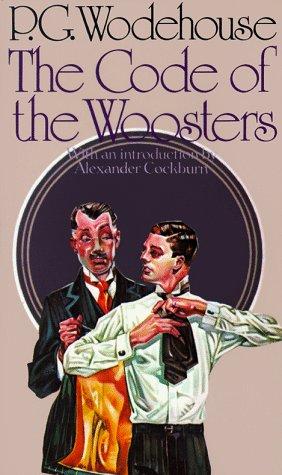
P. G. Wodehouse · Buy on Amazon
"Sure. Wodehouse became popular towards the end of the First World War and in its immediate aftermath – a very traumatic episode for everyone involved. An episode that shattered many of the assumptions of the pre-war period. But Wodehouse is one of those people who became famous for the art of ignoring all that … for being oblivious and yet also incredibly observant. It’s a totally preposterous range of characteristics in an author that he could have been at once so good at poking fun at people’s pretensions – that he could have had such an exquisite command of language and also, in his own way, of human psychology – and yet seem at times like he was bumping around the world like Bertie Wooster. Was it an act he was putting on? Wood talks in the article I mentioned about Wodehouse’s admiration for the Nazis. I can’t remember exactly how this admiration was described but I think it was something like: he liked the way they all marched in line and were nice to him. I mean it’s crazy stuff. But you just don’t know. Is it self parody? How could all these qualities exist in this person? Yes Jeeves also … but if you don’t think of Jeeves as a servant, or not only as a servant, then he’s also a kind of Mephistopheles. You sort of feel that the Bertie Woosters of this world – the people who want or can consider the world as a great confection of pleasure and of fun and trivia and nonsense and everything, are left open to all kinds of manipulation and scheming. Bertie Wooster has this simplicity that is just at the mercy of the world, and it just so happens that Jeeves always uses his power to help his boss, unless Bertie wears the wrong coloured socks one day and Jeeves wants to teach him a lesson. In that relationship there’s a real susceptibility that obviously never comes to any tragic end, but the innocence is … Bertie just doesn’t realize how manipulated and vulnerable he is …"

George Grossmith, Weedon Grossmith · Buy on Amazon
"Yes. Class is just all over this book, class jokes about Pooter’s aspirations to respectability – but to me, those jokes are the least charming parts of the book, like when Pooter sees his name in the paper and he’s really excited but it’s spelled wrong and so he writes a letter and it gets in the next day’s paper but it’s spelled wrong in a different way. You know. Laughing at that desire to be noted, and it’s funny and pitiable, but I think that there are subtler and stranger moments in that book that I find more intriguing. For example there’s a dinner party scene when Pooter is at an American businessman’s house, and this American, whose name is Mr Franching, is railing at middle class vulgarity, and he’s going on and on speechifying at dinner, about people who don’t understand their station and people who wear clip on ties and who hire waiters to make them seem like they’re more important when they throw a dinner party, and what’s so funny to me about that scene is that Pooter’s reaction is so mixed. There’s a sense in which he sort of recognizes himself in this depiction of this middle class aching after respectability, but he also doesn’t recognize it, so that sitting there listening to this guy – even though this guy is almost describing Pooter without actually having met him, rattling off one characteristic after another – Pooter’s having this slight queasy feeling, but is fascinated by it too, and laughs when the American laughs … Support Five Books Five Books interviews are expensive to produce. If you're enjoying this interview, please support us by donating a small amount . He sort of does and he sort of doesn’t. I mean, that’s what’s so interesting about it to me – it plays on that truth… that nobody thinks of themselves as vulgar. You think of other people as vulgar. You never imagine that you’re vulgar. So that even as this guy is standing there painting a portrait of Pooter, right in front of Pooter, Pooter is looking at it and doesn’t recognize himself and still wants to be on the side of the guy who looks down at the masses. So he’s sort of offended but he wants to let it be known that he wants to be this guy’s friend and doesn’t take it personally, and of course at the end of the book he takes a job with Mr Franching … So you mean that the way Pooter is reacting to the guy at the dinner table is the same way that we’re reacting to Pooter? That we have that mix of recognition and refusal of recognition? I think there’s a lot to that. That’s probably why The Office is so hard to watch. You’re pretty sure you’re not David Brent, so you can sit back and laugh. But it’s not without that inner wince … Pooter was probably the David Brent for the 1890’s, and perhaps now he doesn’t provoke quite the same kinds of anxieties, just because the historical difference allows enough separation. But that aspiring to be a greater man than he ever will be provokes a similar queasy reaction. I don’t know. That’s certainly true of Wodehouse and the Grossmiths and Jerome K. Jerome’s Three Men in a Boat and even in a way for Trollope . I mean there’s a way in which in Barchester Towers he created Middle Earth, with all its characters and that Trollope retains for himself this supervising, godlike power over everyone. But there’s a sense, too, that he’s not going to allow anything bad to happen to these people even though he’s stewing them and making them face, in some small way, their own short comings and inflated conceptions of themselves and so on. Which is sort of like Jerome K Jerome’s Three Men in a Boat . Except in this book, Jerome is actually one of the characters."
Jerome K. Jerome · Buy on Amazon
"Montmorency … Yes it does have that doggy life to it. But they’re also Victorians. Even as they’re going on that vacation, they can’t leave their puritanical selves behind. There’s this weird mixture of making plans, and trying to get up on time, and having this real sense of punctuality and what they want to see and having a schedule and everything, that’s in tension with just how pointless and meandering the whole project is. Perhaps. There’s this moment when the narrator gets up and looks over at George, and George has been talking the whole day before about how he wants to get up and get on with things. And the narrator gets up and Harris gets up and the dog gets up and they look over and George kind of has his knees up in the air and his mouth open and he’s snoring away. And J. gets so angry with him and just says, ‘I always get angry to watch another man sleep, because I think about how he’s wasting his life away.’ I love that part. It’s so funny that he’s looking at this guy and he’s blaming him for wasting his life, and all they’re going to do is sit on a boat and dangle their feet over the edge and eat bacon. You know? The idea that you can separate what’s wasteful and what’s not wasteful when you’re on vacation."

Samuel Beckett · Buy on Amazon
"Well, I don’t have a lot to say about the Second World War, but I think what I like about these books is more in terms of what happens to the comic novel later on in the twentieth century. Both these authors are interested in writing a kind of anti-novel. So if you think about Murphy , what happens if I evacuate character, plot and emotional interest, what remains to this novel? There’s a way in which, when people criticise Murphy , I understand, because there’s a lot that’s adolescent in it – the glee of taking the sacred cow and punching holes in it. But what I like about these books is that they both have a weird sort of warmth and energy and liveliness, almost as if they had tried to empty the novel of character and just can’t quite do it. And there’s a note, too, of genuine humility. Murphy , for example, who is a kind of a Beckett projection, mocks the Puritans, but hates sex. At least the Puritans wanted to have children. Murphy ’s not even sure if that’s a good idea. Well The Pirates is pretty funny. The plot is basically that Charles Darwin on the Beagle is boarded by pirates who befriend him. Then they go back to London and help him out with some problems. It’s like a Monty Python sketch in the form of the novel. Defoe’s clearly been watching Monty Python and listening to Eddy Izzard stand up routines because it has that strange combination of history and anachronism. It’s kind of an insane idea he has to create a novel with dozens and dozens and dozens of thin throw away characters that are brought on only to have a joke made at their expense and then thrown off the page again. He never stops with the silliness machine. It’s almost exhausting so that you realise that with Pirates Defoe has reached some kind of outer limit. Of what the novel form can stand. If you compare it to Wodehouse, for example, you can see the other work that Wodehouse does. Wodehouse creates a confection, but it’s a confection between substantial characters. Wodehouse believes in his characters. He actually needs his characters. Get the weekly Five Books newsletter That’s hard. There are different moods and different needs aren’t there? I guess I might say Flann O’Brien’s Third Policeman . There’s something about that novel. It’s just unlike anything I’ve ever read. You talk about it but you can’t quite put your finger on why it’s such fun. I’ve got this idea that the comic novel is like madness without mental illness, and it has to do with this protective bubble that the comic novel throws up around its characters and its readers. You get to experience people saying and doing completely insane things which in a different, or let’s say real context might have them either suffering from a very disturbing mental illness – visions or voices or whatever. Some of the ramblings you get from these people are not that different from what you might hear from a paranoid schizophrenic. But not having the darker problem of what it might be like to actually be a paranoid schizophrenic is the gift. It seems to me that Flann O’Brien has noticed that relationship between madness and mental illness in the comic novel and pushes it to the very outer limits. It’s incredibly funny. You feel constantly that there are no differentiating markers – that the world is about to turn into chaos, mush, soup, that there are no longer any familiar points by which you might get your bearings – but that the intelligence behind the confusion is essentially benign. It’s a feeling very like being tickled."