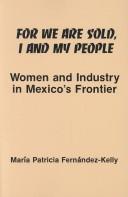
For We Are Sold, I and My People
by María Patricia Fernández-Kelly
Buy on AmazonIt’s something that anthropologists really struggle with. We have this legacy of thinking of ourselves as objective scientists. But, of course, when you work in a real world with rampant inequality it brings up lots of questions about what the anthropologist’s role is in exposing these inequalities. I think any time that you are working with human beings who are embedded in political situations then your work is inherently political. I think that anthropologists are starting to embrace that, as opposed to trying to pretend that it doesn’t exist and that we’re doing some kind of neutral work. It’s very hard to be neutral when you’re looking at exploitation and persistent inequality. One of the things I was struck with when I was reading her book is the dehumanisation of the women workers at the maquiladoras and how they’re not allowed to talk with one another. They’re often forced to take birth control. There’s a real argument to be made that this kind of large-scale dehumanisation sanctions in some way violence against these women. Unfortunately, maybe it’s not that shocking that people find these particular workers easy prey. I think that one of the jobs of anthropologists and journalists is to help humanise segments of the population that popularly are often dehumanised. Immigrants, and undocumented immigrants in particular, are a really good example of this. So ethnography, by allowing people’s voice to be heard, humanises them. You figure out people have problems raising their kids, and we can relate to that. They get mad at their roommates – we can relate to that. Allowing the everyday problems, the everyday challenges and the everyday successes of these marginalised people to be heard is humanising.