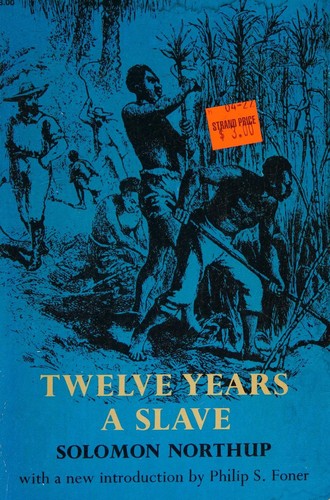
The story of Solomon Northup is a bizarre and incredible one. Born a free black in New York State in 1808, he was kidnapped in Washington, D.C., in 1841, and spent most of the next 12 years as a slave on a Louisiana cotton plantation. His years in this condition of servitude were filled with abuse, apprehension, and a profound fear for his life (he narrowly escaped lynching). Northup's years in captivity are dramatically recounted here, as are his attempts to bring charges against the men who originally abducted him. An educated man when he entered slavery, Northup was able to write about the institution as both an outsider and as one of its victims. The result was an exceptionally detailed and accurate description of slave life and plantation society.…
"It’s another firsthand account of Sudan and some of the worst aspects of living there. Mende Nazar is a Southerner, born and brought up in the Nuba mountains, in the borderland between the Muslim North and the Christian South, where the two sides of Sudan have mixed most impressively. A lot of families there will have Christian and Muslim members, and she writes about this well: reflecting which particular bunch of missionaries passed through when these people were being brought up. In that sense it’s always held up as one of the most relaxed, easily intermingled, inter-racial, inter-ethnic parts of Sudan. But when the civil war reignited in 1983, the Nuba mountains were in the front line. The North felt the SPLA were very present in the Nuba mountains, and their tactic was the classic Maoist counterinsurgency doctrine to ‘drain the sea to kill the fish’, attacking all villages and towns that might be supporting the SPLA. Nazar’s village was one of them, and the strategy was to kill as many of the men as possible and to enslave the women, young men and boys, who were taken to the North, mainly Khartoum, where they would act as essentially slaves in the houses of rich Khartoumese. Nazar tells of how she was captured and taken to Khartoum and then spent several years in the house of a relatively rich family before being taken off to England where she was expected to act as a slave in the household of an embassy official. It’s from there that she escaped with the help of a Sudanese she met in London, had a famous asylum procedure, and then wrote this book, or rather told it to the journalist Damien Lewis. The interesting thing from Sudan’s point of view is that, of course, it’s often taken to be a straight fight between Christians and Muslims there, but Mende Nazar herself was a Muslim, and she was abducted on the grounds that she was an African: so her book bears strong witness to the sheer racism of the country. Her Arab captors, and the Arab family who kept her in Khartoum, looked down on her because she was from an African tribe with very dark skin. Of course, her life was awful: she was treated as a dog, and that was the epithet her captors usually used for her. They disregarded any religious affinity, but treated her as a slave because she was an African. This recurs in Darfur in 2003, where the (Arab) Janjaweed went into action screaming ‘Kill the slaves’, because for them Africans – even fellow Muslims – were synonymous with slaves. So what you get is a very good insight into that particular aspect of Sudan’s conflicts, and then a very gripping but sad account of how Mende Nazar was treated in Khartoum, and the life of these people who regarded themselves as highly cultivated, highly civilised Arab families, with this 12-year-old Nuba girl tucked out in the back yard and treated as a dog. It also reminds you of the Nazis, because the attitude that she recounts of these Arab families in Khartoum was that this was their civilising mission: they regarded these African tribes as unworthy, as having no equal role to play in Sudan, and their best role would be to be slaves."