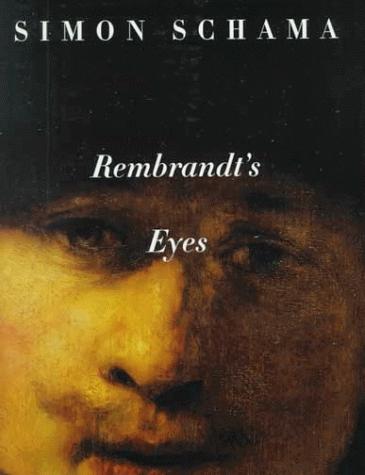
Rembrandt's Eyes
by Simon Schama
Buy on Amazon"Rembrandt's Eyes, about which Simon Schama has been thinking for more than twenty years, shows that the true biography of Rembrandt is to be discovered in his pictures. Through a succession of descriptions and interpretations of Rembrandt's paintings threaded into this narrative, he allows us to see Rembrandt's life clearly and to think about it afresh."--BOOK JACKET. "Rembrandt's Eyes shows us why Rembrandt is such a thrilling painter, so revolutionary in his art, so penetrating of the hearts of those who have looked for three hundred years at his pictures. Above all, Schama's understanding of Rembrandt's mind and the dynamic of his life allows him to re-create Rembrandt's life on the page."--BOOK JACKET.
Recommended by
"I chose this book because Simon Schama is such a wonderful writer. He has guts. He has muscles! He goes all the way, with all the senses engaged. Reading Schama is like stepping into a time machine. You can smell the paint, the poor quality of the air above Amsterdam’s canals, centuries ago. Someone like Van de Wetering might argue that Schama uses the facts too liberally. Rembrandt’s Eyes reads almost like a novel. He goes very far with some of his speculations, but I find it marvellous that Schama can do this about a foreign country—one that he didn’t even grow up in. It’s a real accomplishment of cultural empathy, and of course of bringing another time alive. He writes a book at once about a Dutch hero (and Rembrandt’s competition with Rubens, the Flemish master) and about Dutch history with the authority of a native. In Holland, art historians and others have been quite critical of his approach and have questioned Schama’s interpretation of the facts. They may sometimes be right. Nonetheless, if I had to choose between writing like Schama, finding a way to the hearts and minds of readers by writing in this way, and not, then I would always choose to do so. Perhaps it’s true that some of the details are exaggerated. Now and then, I thought Schama was taking it too far, but I’m absolutely willing to forgive him. You have to remember: the only way to write about history or about a fabulous figure like Rembrandt is by being a storyteller. You have to use words, images, metaphors to kiss the past alive—and that is exactly what Schama does. I admire him for it. And since we’re talking about art, so much comes down to interpretation. Adopting an interpretive technique I think is fitting for the subject matter. What he does is to create a richer picture for the reader."
Rembrandt · fivebooks.com