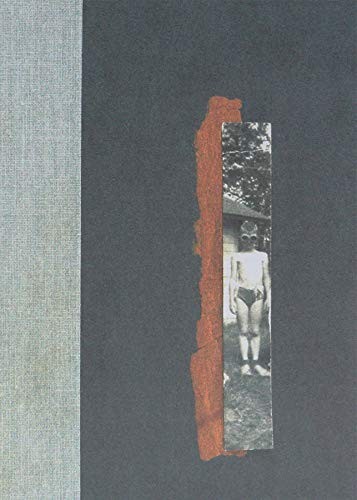
Nox
by Anne Carson
Buy on AmazonEssentially, it’s a box. (Rhymes with Nox .) Inside the box is a connected, folded concertina of pages. The recto and the verso often have very different functions. On one side of the page—the verso—she often gives a dictionary definition for the 63 words of Catullus’s poem, which is supposedly an elegy for his brother. So, it’s like a dictionary gloss, but it’s an imitation, to an extent, because she keeps on giving definitions that include the idea of ‘nox’, of night. Though I haven’t checked with a big Latin dictionary, I imagine many of them are quite accurate, but tilted, or slanted. On the other side of the page, we get an account—appropriately enough, for a meditation on Catullus’s poem—of her own brother’s death. She pieces together fragments of his life. Unlike in Catullus, who names almost everybody but doesn’t name his brother in the poem, Carson names her brother from the outset. The reader has to piece together the fragmented narrative, and some of the pages are formatted like photocopied, torn pages—the scattered leaves of a life. It’s like a memorial album, written in prose. If I’m not wrong, the exception is Catullus’s poem #101 to his brother. It’s an interesting, intelligent, but very flat translation. It isn’t a distinguished bit of poetry—I think you could find much more impressive translations of it. But it’s one that’s trying to accord itself with all of the nuances of each of the words. A map, perhaps. It’s an exercise not in the virtuosity of translation, but a more humble approach to the original, if you like, which relates to what I was talking about with the idea of knowing or not knowing a language when translating. She uses not only Catullus, but also bits of Herodotus and Plutarch in an ongoing meditation on history. She brings the knowledge she has as a Classics professor to bear on the work, yet it doesn’t feel like a weighty, academic tome—it’s light on its feet. She’s good, and has been from the start of her career, at what she excises or leaves out. The absences—the gaps—are crucially operative in her poems. That’s true also of “ The Glass Essay ” in Glass, Irony and God . You could say that Carson’s work has been a spur to the idea of the ‘lyric essay’. In Glass, Irony and God , there’s an academic essay at the end about the silencing of women’s voices in ancient Greek culture. It’s an engaging and polemical essay. As to whether you read it as poetry or not—I certainly didn’t, and probably still wouldn’t. I’m not really hung up on the nomenclature of ‘this is poetry; this isn’t’, but, having said that, I think there is a difference. Support Five Books Five Books interviews are expensive to produce. If you're enjoying this interview, please support us by donating a small amount . I’m not even sure if you have to consider Nox a poem, but it occupies that category. She uses prose so skillfully. This fragmentary element is a disruptive force to the flow of narrative. Therefore, you can’t quite read it as a short story or as a life-writing account. And it’s galvanised by this searing focus on Catullus. Carson’s been something of a pioneer, whether or not you would call this work or others examples of the ‘lyric essay’. Clearly Claudia Rankine thinks of Citizen as a ‘lyric’, given the subtitle. That has spawned a whole number of younger poets writing lyric essays. But in each case what the work achieves is far more important than the category it’s assigned. Though certainly the writings of a poet, I’d see Hill’s prose, compacted as it is, as closer to the academic. (Not for me a criticism, though I find his prose hard work.) Heaney always had that kind of lyrical gift in his criticism. I think perhaps the finest example of that quality can be found in Osip Mandelstam’s Conversations with Dante . From an intimate knowledge of Dante and Italian (acquired it seems on a youthful visit), he throws out metaphor after metaphor all of which are beautifully clarificatory about the movement of the Commedia . It’s one of the great masterpieces of poets’ prose in that mode. I wouldn’t deny this is a resource of poets writing on poetry. On the other hand, I also value a type of academic prose which doesn’t have a lyrical element, which is a solid work of scholarship: good critics who know how to use language well, and are interested to illuminate the text. “To me, the work of Rimbaud is the greatest example of the prose poem.” However, I’m also interested in some of the effects of hybrid forms of prose and poetry. I translate Antonella Anedda, and from an early stage—prior to Carson even, though she’s younger—she’s been using prose interspersed with poetry. To me, the work of Rimbaud, who for some reason keeps cropping up here, is the greatest example of the prose poem. He’s close to the beginning and to me, the apex of the prose poem. Perhaps that sounds rather valedictory, but I think he just got hold of the form in all its luminosity and did more with it than anyone has done since. In the UK, we’ve had Geoffrey Hill’s Mercian Hymns , which I think is very fine. I’m probably missing quite a number of exceptions, but essentially, it’s not a form that’s flourished in this country—more elsewhere, and France is really the centre of it, I think. Somehow the idea of any ‘dominant’ form makes me feel uneasy. Poets have to find their own forms, or rather poems have to. But the sonnet is a durable form as we’ve seen with Hayes, because it’s so flexible and compact. Its slight imbalance, entailed by the traditional eight-six line split, allows for so much variation. As we know, the history of early modern English poetry, with Wyatt and Surrey, starts with their responses to Petrarch. Over here, it may have been given a new lease of life with Paul Muldoon, with his inventive rhyming and stanzaic re-arrangements of the form. There are quite a few poets since, like Don Paterson, who’ve experimented fruitfully with the sonnet. It requires compression and speed: you can’t waste time in a sonnet, because every loose phrase shows. But that’s true of all kinds of short poem. Perhaps US poetry is more resistant to these inherited forms from Whitman onwards: at least one prominent tradition there is to invent form from scratch. And all this talk about sonnets that I’ve indulged in makes me warm to that.