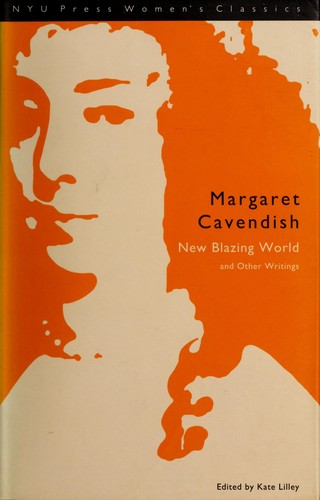
The New Blazing World
by Margaret Cavendish
Buy on AmazonI mentioned earlier that I think there are material and physical barriers to women and their reading, and then psychological barriers. I think what Margaret Cavendish was aware of was that books and reading could be an extraordinary imaginative liberation. And that imaginative liberation was really just as important as the physical liberation. She spells out in The Blazing World how it’s not possible for her to aspire to be a celebrated king and she talks about people like Alexander and Caesar – and Henry V and Charles II. She also acknowledges that she can’t operate in the world of politics and so she provides this extraordinary story in which she creates her own world and becomes “Margaret I”! In her world she has authority and control, and she essentially says to other women, “Look, you can enter this world that I’ve created, this world in which women are treated very much better, or you could even create your own world, ie, be authors of your own books and have control as authors yourselves.” Yes, she was, because as the Duchess of Newcastle she had the status to be able to do that. The Romans did have a notion of the pleasure – voluptas – of reading, so some non-essential reading happened in the classical world. But, it’s not really until the 18th century and the rise of the novel that people start to read in a way that’s much more like the way we read for pleasure. The reading of poetry and the reading of sermons and the reading of conduct books and the reading of plays is really what dominates until the 18th century. With the advent of the “modern” novel there’s the idea of private reading and being able to withdraw into the world of the novel, which is a secret pastime where you can be enlightened, titillated, frightened, entertained and so on. Pleasure becomes a reason for reading unlike before, where much of the reading that was done was practical – or for moral and spiritual edification.