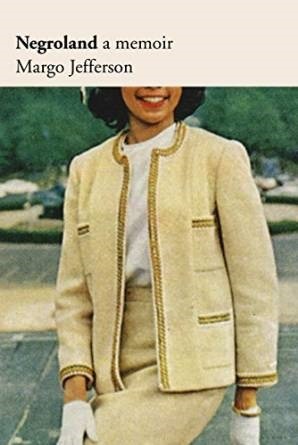
Negroland
by Margo Jefferson
Buy on AmazonThe Anti-racism collection has been created by Lethbridge Public Library and the City of Lethbridge Diversity and Inclusion Working Group to provide resources about anti-racism education, history, and perspective. Anti-racism is defined by the Alberta Civil Liberties Research Centre as the active process of identifying and eliminating racism by changing systems, organizational structures, policies, practices and attitudes, so that power is redistributed and shared equitably.
Recommended by
"The many modes of telling and the many types of trouble are what trailblazing journalist, longtime New York Times theater critic, and Pulitzer winner Margo Jefferson (b. October 17, 1947) explores in Negroland: A Memoir ( public library ) — a masterwork of both form and substance."
Best Books of 2015 · themarginalian.org
"That’s the one by Margo Jefferson, Negroland: A Memoir. Yes, so she’s writing about her upbringing and also the milieu that she came from, as a middle class African-American, living in Chicago. There are some overlapping themes in the other books but this one is completely different. It’s very much on its own. We tend to read about the civil rights struggle or the story of poor blacks in the South, but not so much middle class African-American society. It’s a side to American society that I didn’t know about. No, it’s a picture of successful, bourgeois, black American life, a place where you can do well as long as you accept that you’re still within constraints set by white society. She starts off by going back a little into the history of bourgeois African-American families. There’s this constant sense that they’ve been allowed to succeed to a certain degree but are still, ultimately, facing the same prejudices and discrimination. “She expresses very well that relative affluence but constantly bumping against the continued discrimination and bias.” I interviewed Condoleezza Rice a couple of weeks ago. She grew up in the South, at the time of the civil rights movement. Her parents, I think, were a bit like Margo Jefferson’s parents, from a bourgeois family. But her parents told her very zealously that there was nothing you can’t achieve, and that you should believe you can get to the White House. Jefferson’s parents were a bit more ambivalent, more aware of the limits. Jefferson writes it in a very personal way. She’s not just painting a portrait of her environment and her upbringing, she’s also talking about how she has developed as a person, the fact she ends up not having children and has chosen a certain life. When she is describing her childhood and the expectations people had of her. Little things. For example, her Mum comes out and stops them playing with the white girl next door, because she is getting them to play by being monkeys. They were very keen just to play, because it made them feel like they belonged, but this white girl was getting them to play a very racist game. She expresses very well that relative affluence but constantly bumping against the continued discrimination and bias. She also describes being in summer camp and being one of very few black children at the camp. They were the most assimilated part of African-American society. It’s partly a story about assimilation, but also the limits to assimilation."
Best Nonfiction Books of 2016 · fivebooks.com
By the Book: David Shields · nytimes.com