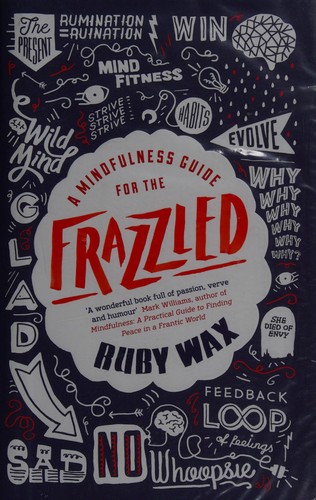
A Mindfulness Guide for the Frazzled
by Ruby Wax
Buy on AmazonFive hundred years ago no-one died of stress: we have invented this concept and now we let it rule us. Using hilarious personal anecdotes from her experiences in 'celebrity land' as well as insightful tales from her own battle with depression, Ruby Wax introduces a scientific solution to modern problems: mindfulness. Outrageously witty, smart and accessible, Ruby Wax shows ordinary people how and why to change for good. With practical exercises to incorporate into your daily life, and a step-by-step six-week course based on her studies at Oxford University, A Mindfulness Guide for the Frazzled is the only guide you need for a happier, calmer life.
Recommended by
"Ruby is very funny about what it means to be frazzled, to be constantly on edge. She’s very self-deprecating and she writes frankly about her own experience of mental health challenges—like Ed Halliwell, she has suffered from depression. Mindfulness is what helped her to get out of that. She’s down to earth, and completely allergic to anything that smacks of too much earth-mother, vegetarianism, and the like. She talks about how she thought, originally, that to meditate you had to sit on a gluten-free cushion. She’s great at making mindfulness accessible for people who aren’t in the least attracted to the hippie stereotype they think is attached to mindfulness, and she talks about the practical challenges of daily life. She’s got some great advice about bringing mindfulness into parenting, mindfulness for children of all ages, some really good exercises that she’s put into the book, and she also brings humour into it. She’s constantly telling us stories about how she fails in her mindfulness, and how she falls into what she calls ‘amygdala highjack’ which is when the primitive part of the brain that’s always looking out for threat goes into overdrive. She’s also very interested in neuroscience, and she makes the neuroscience of mindfulness very accessible. She talks about that, how she has a lot of stress around performance and a lot of stress around her own identity and being liked, and so on. She tells little stories about how when she walks into a room she feels the stress of having to be funny, having to be around the right people, and how mindfulness has enabled her to step back from that a bit. She’s very good on the way that mindfulness doesn’t necessarily fix all the neuroses that she has, but gives her a sense of perspective that means she doesn’t have to buy into them as much. Yes, it is incremental. There’s very good evidence that practising for just ten minutes a day, which is not a very big demand, over time can bring quite a few benefits in terms of focus and reduction of stress. If you want deeper benefits you do have to practise more: something like half an hour a day, and also go on some longer retreats. Ruby gives quite a funny account about going on a retreat, and her reaction to that, and her challenges with it. It’s really a matter of how much time and energy you want to invest in it. I think most people only really want to invest in it when they start to see the benefits for themselves. It’s generally a matter of dipping a toe in the water, and then some people find that they want to pursue it a lot further."
Mindfulness · fivebooks.com