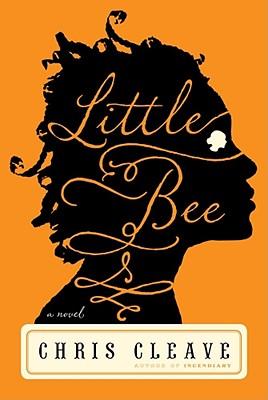
Millions of people have read, discussed, debated, cried, and cheered with Little Bee, a Nigerian refugee girl whose violent and courageous journey puts a stunning face on the worldwide refugee crisis. “Little Bee will blow you away.” —The Washington Post The lives of a sixteen-year-old Nigerian orphan and a well-off British woman collide in this page-turning #1 New York Times bestseller, book club favorite, and “affecting story of human triumph” (The New York Times Book Review) from Chris Cleave, author of Gold and Everyone Brave Is Forgiven. We don’t want to tell you too much about this book. It is a truly special story and we don’t want to spoil it. Nevertheless, you need to know something, so we will just say this: It is extremely funny, but the African beach scene is horrific.…
"It’s a remarkable book by a British author who spoke at an IRC event a couple years ago. It’s about ‘Little Bee,’ a Nigerian refugee. The opening page says, “Britain is proud of providing a safe haven for people fleeting [sic] persecution and conflict.” That’s from Life in the United Kingdom: A Journey to Citizenship , UK Home Office 2005, a guide given to those preparing for the citizenship exam. The book is about the relationship between two women, Little Bee and Sarah, a mother who becomes a widow. These characters come to live together when Little Bee presents herself at Sarah’s house for shelter, having been released from a UK refugee detention center. It’s a laugh-and-cry, not just dry, non-fiction. The book doesn’t dwell on the detention center point. But what is well-conveyed is the chaos as well as the dehumanization of detention centers. The people in the centers have such shattered lives that it’s almost like fragments of glass thrown together. There are people from Jamaica, people from Nigeria, people from Afghanistan, all in the same place. And it conveys a sense of how bureaucracy can lose sight of the human condition. Get the weekly Five Books newsletter We are a large international organization. We work in thirty war-torn countries as well as in twenty-six US cities, resettling refugees. We’re a 700 million dollar organization but we retain a human scale in the work that we do and the relationships we have with our partners. We are unique in that we are both an international humanitarian organization, which is the vast bulk of our work, but we’ve also resettled ten thousand refugees across the US. We meet them at the airport, we organize their housing, we get their kids in school, and we help the adults get a job. For the Syrian refugees we work with, eighty percent of households have someone in work within six months of arriving. Our work allows us to see the full arc of crisis, from the displacement right through to the resettlement. Resettlement is about one-eighth of our work, but it provides a unity to our work. Yearning is the first step toward disappointment, so I try to avoid that. In government you’ve got a lot of power and a lot of obstacles. In the NGO sector you’ve got much less power but fewer obstacles. So it’s different. Cruelty, stupidity, bureaucracy and shortsightedness are always maddening, whether you’re in government or in the NGO sector. The point is to try to overcome them."