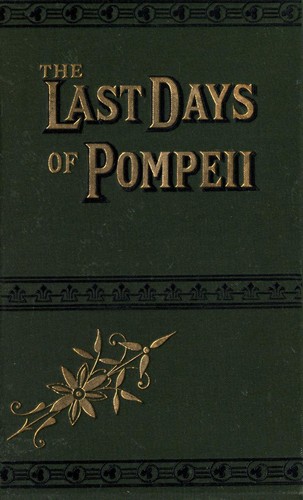
The Last Days of Pompeii
by E Bulwer Lytton
Buy on AmazonUn classique de la littérature qui redonne vie à la civilisation pompéienne disparue dans l'éruption du Vésuve. Pompéi, 24 août 79 après Jésus-Christ. Cette petite ville romaine du sud de l'Italie vit, sans le savoir, ses dernières heures. L'animation de cette cité florissante ne laisse en rien présager le désastre à venir. Pourtant, à quelques centaines de mètres de là, le Vésuve est en train de se réveiller... Pompéi, 24 août 79 après Jésus-Christ. Cette petite ville romaine du Sud de l'Italie vit, sans le savoir, ses dernières heures. L'animation de cette cité florissante ne laisse en rien présager le désastre à venir. Pourtant, à quelques centaines de mètres de là, le Vésuve est en train de se réveiller...
Recommended by
"Bulwer Lytton has this terribly bad press and there is even an annual competition in his name to find the worst opening to a book! Well, I’ve been drawn into this, partly because I’ve been writing about Pompeii . But also there is this incredible influence it has on anyone studying Pompeii. It’s the classic Pompeii disaster story everybody replays when they write about Pompeii. When he went to Pompeii it was a ruin. These days they’ve done a lot of work on it. What Lytton did was build it up layer by layer. And what you get is a fantastic reconstruction of the ancient world. Christians who are going to escape, the nasty priest of Isis, the sacrifices and the gladiators. The cultural backwash that came out of it was extraordinary. The characters, statues, movies. Support Five Books Five Books interviews are expensive to produce. If you're enjoying this interview, please support us by donating a small amount . Yes, what you have to understand is that this book was phenomenally successful in the 19th century. You can be sniffy about Harry Potter and you can be sniffy about Bulwer Lytton, but when these books touch a generation there’s a reason for it."
Ancient History in Modern Life · fivebooks.com
"This is an amazing book. It’s very Victorian and very pompous but absolutely accurate. It was written in 1835 and is a scrupulously well-researched piece of work about what it must have been like in Pompeii in the days leading up to the eruption. He builds brilliantly to the eruption of Vesuvius itself and describes the panic and how so many people died. Most of the people who were rescued were rescued by a blind woman called Nydia, because, of course, the blind can see when things go dark better than the sighted. When there are blackouts in New York you get the blind leading the way. No, that’s a fiction. It was a hugely popular book in the 19th century and perhaps it seems rather arch nowadays but it is very touching. It didn’t teach us much about the science of volcanoes but it taught us the aphorism that man lives on this planet subject to geological consent which can be withdrawn at any time. I think this book brought home to an English readership how capricious and powerful volcanoes are. He’d done a lot of research – there is good geology in it. He spoke to Charles Lyle, one of the founders of modern geology, and he told him all about what must have happened at Pompeii."
Volcanoes · fivebooks.com
Patrick Collison's Bookshelf · patrickcollison.com