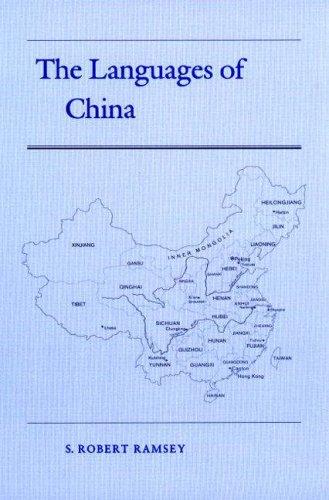
The Languages of China
by Robert S Ramsey
Buy on AmazonThe Languages of China is a 1987 book by American linguist S. Robert Ramsey. Ramsey surveys the linguistic landscape of the People's Republic of China. The work is divided into two parts of roughly equal length: the first demystifies the Chinese language, including its standardization, regional dialects, historical development, and writing system, while the second describes the minority languages spoken within China's borders, including Turkic, Mongolian, Tungus, Tai, Tibeto-Burman, Miao-Yao, and Mon-Khmer language families. Written for both general readers and specialists, the book adopts a sociolinguistic approach that places linguistic phenomena within their historical, political, and cultural contexts.…
Recommended by
"This book is an extremely exciting account of what Ramsey calls “China as a linguistic region”. He talks not just about the Chinese language but about all the various languages that are spoken within the territory of what we now call the People’s Republic of China, as well as Taiwan, Hong Kong and other places. He discusses not just Mandarin Chinese and related languages like Cantonese or Shanghainese but also languages like Mongolian, Tibetan and Uyghur, and, in the south, Zhuang and other Tai languages. It’s a wonderful history of Chinese dialectology, where these languages are spoken and how they developed. It’s also about the development of Mandarin as an official language. What’s most fascinating to me is how he brings in the languages of what he calls “the Chinese and their neighbours” – Manchurians, Mongolians, Tibetans. He talks about expanding our definition of what China is, and he broadens our view of what it means to think about China linguistically. If you look at a Chinese banknote, you will see a number of languages written on that currency: Chinese, but also Mongolian, Tibetan, Uyghur and Zhuang, four of the largest minority languages spoken in China. This book does a wonderful job of opening up the vision of China as a very diverse place. I guess you’re asking more of a political question about how they’ve been preserved? No – this is a book written for language lovers. It’s about the structure, development and history of these languages, and doesn’t deal very much with the status of minority languages in China today. It’s a very accessible linguistic introduction to them, and a celebration of the richness of China’s languages. I think many people would be surprised if they opened up a book called The Languages of China and discovered languages like Uyghur, spoken in [far western] Xinjiang province, which is written in the Arabic script, related to Turkic languages and spoken by people who – particularly from a Chinese lens – look very Caucasian. That’s another thing I like about the book. It gets into the history of Mandarin and shows you that, in a sense, it is no one’s native language. Mandarin is an artificial construct that developed over time so that people in various regions of China could communicate with each other. There’s always a debate in China about where the most standard Mandarin is spoken. Is it in the northeast? Is it in Beijing? At the end of the day, standard Mandarin is an artificial language which no one speaks as their native tongue. Almost every Chinese person is to some degree multilingual, or at least bilingual. If they live in the northeast or Beijing, what they speak with friends and family will be very close to Mandarin. If they live in the south, it might be quite different. Mandarin in itself is a lingua franca that was created over time as a common language for the whole country."
Books every Chinese Language Learner Should Read · fivebooks.com