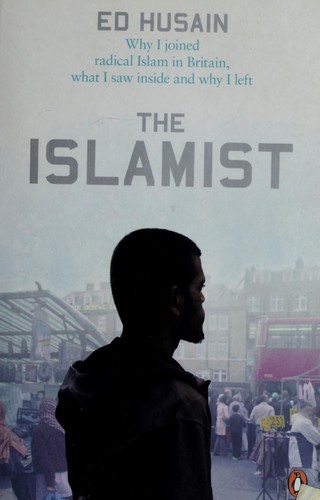
The true story of one mans journey to Islamic fundamentalism and backRaised in a devout but quiet Muslim community in London, at sixteen Ed Husain was presented with an intriguing political interpretation of Islam known as fundamentalism. Lured by these ideas, he committed his life to them. Five years later, he rejected extremism and tried to return to a normal life. But soon he realized that Islamic fundamentalists pose a threat that most peopleMuslim and non- Muslim alikesimply dont understand.Based on first-hand experiences and written with pervasive clarity, The Islamist delivers a rare inside glimpse of the devious methods used to recruit new members, and offers profound insight into the appeal fundamentalism has for young Muslims in the Western world.
"Yes, if you think of Sufi Islam at one end of the spectrum you’ve then got Jihadist Islam at the other end, and both are disapproving of each other. This is a very different type of book. While the first is very philosophical and mystical this one is looking at Britain in the 1990s and one boy’s experience of being drawn into a more extreme type of Islam. He was drawn into a group called the Hizb ut-Tahrir, which is regarded as an extremist group in many parts of the world. So it is a personal account of his life in Britain. But it is more than that because it is giving us an insight into the Muslim student movement in the 1990s. It gives a glimpse of what it was that got young boys into these types of groups. They felt excluded from Britain; they couldn’t relate to Britain or their parents; they needed a sense of belonging, and it touches on all these issues. It is a very frank discussion of what was going on in Britain at that time. It is also really interesting because he is talking about real people and real institutions and real Muslim groups in Britain and in particular London . As a Muslim I know the places he is talking about and it is really interesting to see what he has to say. It is a controversial book though. Particularly within Muslim quarters, not everyone received it very well. It was seen as a bit of a kiss and tell. People have questioned why he chose to write it. Yes, he has his own think tank and he is seen as an advisor on Muslim issues in the UK. I am not so up to date on what he is doing now but I found it interesting to read his personal story and a lot of that is because I was growing up at the same time. I think his family background was much more Sufi. And two things triggered his move away from extremism. In the book there was a young Nigerian Christian boy who was murdered and that really gave him a bit of a shock, and his future wife started to pull him away from extremism."